
Getting traffic to your website is only half the battle. You could rank on page one for your best keywords and still watch visitors leave without buying, signing up, or filling out a single form. That gap—between people landing on your site and people taking action—is exactly where SEO conversion rate optimization comes in.
When you combine smart SEO with thoughtful conversion rate optimization, you stop leaving money on the table. Instead of chasing more clicks, you make the clicks you already have work harder. The result? More leads, more sales, and a better return on every marketing dollar you spend.
In this guide, you’ll learn what SEO conversion rate optimization actually means, why it matters for your bottom line, and how to put it into practice. We’ll walk through practical steps, a simple conversion rate optimization checklist, and tips for platforms like Shopify—so you can turn passive browsers into paying customers.
What Is SEO Conversion Rate Optimization?
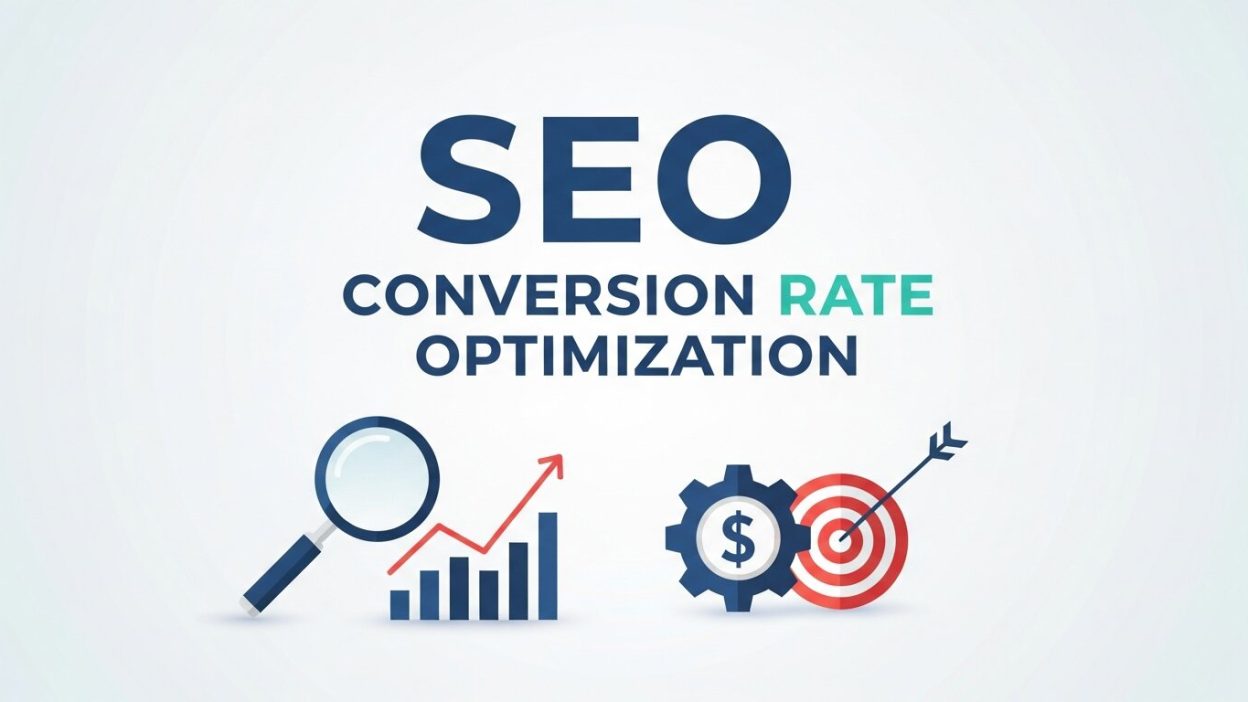
SEO conversion rate optimization is the practice of improving your website so it both ranks well in search engines and convinces visitors to take a desired action. Those actions might include making a purchase, requesting a demo, subscribing to a newsletter, or downloading a resource.
Think of it as two disciplines working together. SEO brings the right people to your door. Conversion rate optimization (CRO) makes sure they walk through it. On their own, each is useful. Combined, they create a powerful loop where qualified traffic meets a website designed to convert.
Your conversion rate is simply the percentage of visitors who complete a goal. If 1,000 people visit your landing page and 30 of them buy something, your conversion rate is 3%. The goal of SEO conversion rate optimization is to lift that number without necessarily increasing your traffic—though more traffic certainly helps.
Why SEO and CRO Work Better Together
 Many businesses treat SEO and CRO as separate projects. The SEO team focuses on rankings and traffic. The CRO team focuses on testing buttons and headlines. But when these efforts run in silos, you miss the biggest opportunities.
Here’s why pairing them pays off:
- You attract better-fit visitors. Strong SEO targets keywords that match user intent. When the right people arrive, they’re far more likely to convert.
- You make every visit count. CRO ensures that the traffic you worked so hard to earn doesn’t bounce. A well-optimized page guides visitors toward action.
- You improve rankings as a side effect. Search engines reward sites where users stick around and engage. Better conversions often mean lower bounce rates and longer session times—signals that can boost your rankings.
- You lower your cost per acquisition. Doubling your conversion rate has the same effect as doubling your traffic, but it’s usually far cheaper to achieve.
In short, SEO without CRO wastes traffic. CRO without SEO has nothing to optimize. Together, they fuel sustainable growth.
How SEO Conversion Rate Optimization Increases Leads
For service-based businesses and B2B brands, leads are the lifeblood. Here’s how aligning SEO and CRO helps you capture more of them.
Match Content to Search Intent
Every search query carries intent. Someone typing “best project management software” is comparing options. Someone typing “buy project management software” is ready to act. When your content matches that intent, visitors feel understood—and they’re more willing to share their contact details.
Map your keywords to the buyer’s journey. Create awareness-stage content for top-of-funnel searches and decision-stage pages for high-intent terms. Then add relevant calls to action on each, whether that’s a free guide or a demo request.
Optimize Landing Pages for Action
A landing page that ranks well but converts poorly is a missed opportunity. Make sure each page has a clear headline, a single focused goal, and an obvious next step. Remove distractions, use persuasive copy, and place your call to action where visitors can’t miss it.
Use Strong, Specific Calls to Action
Vague buttons like “Submit” rarely inspire action. Specific, benefit-driven CTAs like “Get my free quote” or “Start my 14-day trial” perform much better. Test different versions to see what resonates with your audience.
Build Trust With Social Proof
People hesitate to hand over their information to a site they don’t trust. Testimonials, reviews, client logos, and case studies reassure visitors that others have taken the same step and benefited. Add this proof near your forms and CTAs to ease any doubts.
How SEO Conversion Rate Optimization Increases Sales
For e-commerce stores and product-led businesses, the goal is sales. The same principles apply, with a few extra tactics worth highlighting.
Speed Up Your Site
Page speed affects both rankings and conversions. A slow site frustrates visitors and pushes them toward competitors. Studies consistently show that even a one-second delay can drag down conversion rates. Compress images, use caching, and clean up code to keep your pages fast.
Make the Path to Purchase Simple
Every extra click between interest and checkout is a chance for someone to drop off. Streamline navigation, simplify your forms, and reduce the number of steps required to buy. A frictionless experience keeps shoppers moving toward the “buy” button.
Write Product Descriptions That Sell
Product pages do double duty—they need to rank in search and persuade buyers. Use relevant keywords naturally, then focus on benefits, not just features. Answer common questions, highlight what makes the product special, and include high-quality images.
Recover Abandoned Carts
Not every shopper buys on the first visit. Use email reminders, retargeting ads, and exit-intent offers to bring people back. A gentle nudge—sometimes paired with a small discount—can recover sales that would otherwise be lost.
A Practical Conversion Rate Optimization Checklist
Ready to get started? Use this conversion rate optimization checklist to audit your site and find quick wins.
- Define your conversion goals: Know exactly what action you want each page to drive.
- Track your current conversion rates: You can’t improve what you don’t measure.
- Audit your top landing pages: Identify which high-traffic pages convert poorly—these are your biggest opportunities.
- Clarify your value proposition: Make sure visitors instantly understand what you offer and why it matters.
- Improve page speed: Test your load times and fix anything that slows you down.
- Optimize for mobile: A growing share of traffic comes from phones, so your site must look and work great on small screens.
- Strengthen your CTAs: Use clear, action-oriented language and make buttons easy to find.
- Add social proof: Place reviews, testimonials, and trust badges where they count.
- Simplify forms: Ask only for the information you truly need.
- Run A/B tests: Compare versions of headlines, layouts, and CTAs to learn what works.
Work through this list one item at a time. Small, consistent improvements add up to significant gains.
Choosing the Right Conversion Rate Optimization Software
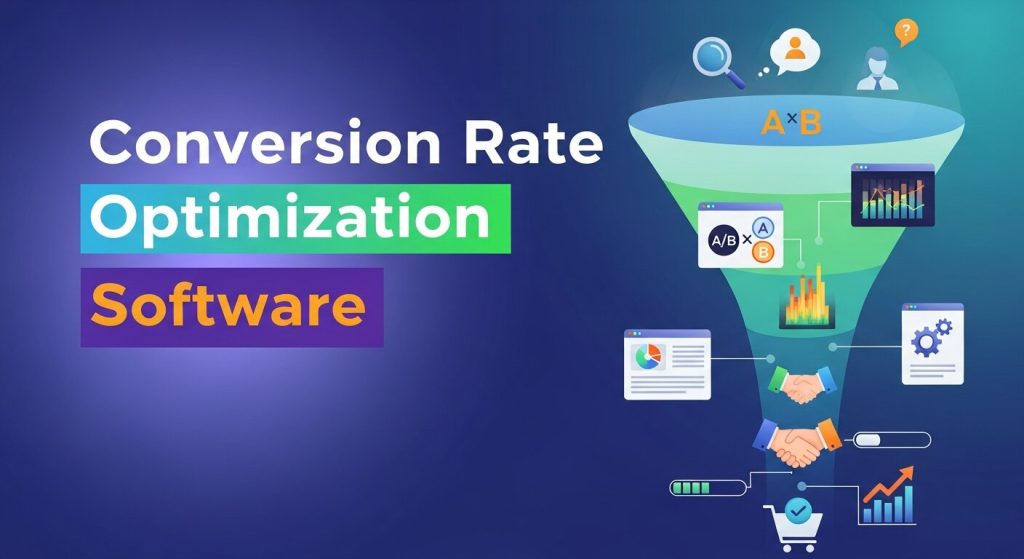 You don’t have to optimize blindly. The right conversion rate optimization software gives you the data and tools to make informed decisions. Look for solutions that offer:
- Analytics and heatmaps to show where visitors click, scroll, and drop off.
- A/B testing to compare different page versions and measure the impact.
- Session recordings to watch how real users navigate your site.
- Form analytics to spot where people abandon your forms.
Popular tools in this space help you understand user behavior and test changes without guesswork. Choose software that fits your team’s skill level and integrates with your existing stack. The goal is to turn insights into action quickly.
Conversion Rate Optimization for Shopify Stores
 If you run an online store, conversion rate optimization on Shopify deserves special attention. The platform makes selling easy, but a few tweaks can dramatically improve your results.
Start with your theme. Choose a fast, mobile-friendly design that puts products front and center. Then optimize your product pages with clear images, persuasive descriptions, and visible reviews. Shopify’s app ecosystem offers plenty of tools for adding social proof, running upsells, and recovering abandoned carts.
Pay close attention to your checkout. Offer multiple payment options, enable guest checkout, and remove any unnecessary steps. The fewer hurdles between a shopper and their purchase, the better your conversion rate will be. Finally, use Shopify’s built-in analytics to track performance and spot pages that need work.
Common Mistakes to Avoid
Even well-intentioned efforts can fall flat. Watch out for these pitfalls:
- Optimizing for the wrong keywords: High-volume terms mean little if they don’t match buyer intent.
- Ignoring mobile users: A clunky mobile experience kills conversions fast.
- Overloading pages: Too many offers, pop-ups, or links overwhelm visitors and dilute your message.
- Skipping testing: Assumptions are risky. Let data guide your decisions.
- Forgetting to track results: Without measurement, you can’t tell what’s working.
Avoiding these mistakes keeps your optimization efforts focused and effective.
The Role of User Experience in SEO Conversion Rate Optimization
User experience plays a major role in both search rankings and conversions. Visitors expect websites to be fast, easy to navigate, and visually appealing. If users struggle to find information or encounter confusing layouts, they are likely to leave without taking action. Improving navigation, reducing page clutter, and ensuring mobile responsiveness can significantly increase engagement and conversion rates. Search engines also favor websites that provide a positive user experience, making UX improvements beneficial for SEO performance as well. By focusing on user needs and removing friction throughout the customer journey, businesses can create a website that attracts visitors and encourages meaningful actions.
Measuring the Success of Your SEO Conversion Rate Optimization Strategy
Effective SEO conversion rate optimization requires ongoing measurement and analysis. Tracking key performance indicators such as conversion rate, bounce rate, average session duration, and goal completions helps you understand whether your optimization efforts are working. Tools like analytics platforms and heatmaps provide valuable insights into user behavior and identify areas for improvement. It’s important to compare performance before and after implementing changes to determine their impact. Regular monitoring allows businesses to refine strategies, improve user experiences, and maximize results over time. A data-driven approach ensures that SEO and CRO efforts continue delivering measurable growth in leads, sales, and overall website performance.
Turn Traffic Into Revenue
SEO conversion rate optimization isn’t about choosing between traffic and conversions—it’s about making both work together. When you attract the right visitors and design your site to guide them toward action, you unlock more leads, more sales, and stronger growth without constantly increasing your ad spend.
Start small. Pick one high-traffic page that underperforms, apply the tactics from this guide, and measure the results. Then move on to the next. With each improvement, you’ll squeeze more value from the traffic you already have.
The businesses that win online aren’t always the ones with the most visitors. They’re the ones that turn those visitors into customers. Put SEO conversion rate optimization to work, and you’ll do exactly that.