
Generating traffic to your website requires significant time, energy, and resources. You publish blog posts, run paid advertisements, and engage with followers on social media. Yet, getting visitors to your site is only the first hurdle. The real challenge lies in persuading those visitors to take a meaningful action once they arrive. If your website visitors leave without subscribing to your newsletter, downloading your guide, or making a purchase, your marketing efforts lose their impact.
This is exactly where HubSpot conversion rate optimization becomes a critical focus for growing businesses. Simply put, conversion rate optimization (CRO) is the systematic process of increasing the percentage of website visitors who take a desired action. When you execute this process within a robust ecosystem like HubSpot, you unlock a wealth of data, personalization tools, and automation capabilities that make optimizing your funnel easier and more effective.
Many businesses mistakenly believe that they need to completely redesign their website to see more conversions. In reality, consistent and data-driven tweaks often yield the most impressive results. By leveraging the right features within your marketing platform, you can identify exactly where users drop off and implement targeted solutions. This guide explores the most effective strategies for maximizing your conversion rates using HubSpot, helping you transform passive readers into engaged customers.
Selecting the Right Conversion Rate Optimization Software
 Before diving into specific tactics, it helps to understand the foundational tools at your disposal. Modern marketers rely on specialized platforms to track user behavior, test different messaging, and serve personalized content. While there are countless standalone tools available, using comprehensive conversion rate optimization software like HubSpot provides a distinct advantage. It unifies your website analytics, customer relationship management (CRM) data, and marketing automation in a single hub.
When your CRO tools integrate seamlessly with your CRM, you stop looking at anonymous traffic and start seeing actual human behavior. You can track how a specific contact interacted with your pricing page before they finally filled out a consultation form. This unified view prevents data silos and ensures your marketing, sales, and service teams are all operating from the same playbook.
Furthermore, having all your tools in one place simplifies the testing process. You do not need to export data from a heat-mapping tool, import it into a separate analytics dashboard, and manually cross-reference it with your sales numbers. Everything communicates natively. This efficiency allows your team to launch campaigns faster, analyze results more accurately, and pivot strategies based on real-time feedback.
Your HubSpot Conversion Rate Optimization Checklist
To keep your optimization efforts organized and effective, you need a systematic approach. Working through a structured conversion rate optimization checklist ensures you cover all the essential elements of your website. Here are the core best practices you should implement within your HubSpot portal.
Craft Highly Targeted Landing Pages
Landing pages serve as the ultimate conversion vehicle. Unlike your homepage, which acts as a broad directory for your entire business, a landing page focuses on a single objective. HubSpot makes it incredibly easy to build, test, and refine these pages without needing a developer.
Start by ensuring your headline clearly communicates the value of your offer. If a visitor cannot understand what they get within three seconds, they will leave. Next, align your landing page copy with the advertisement or promotional email that brought the user there. This message match builds trust and reassures the visitor that they are in the right place. Finally, remove site navigation links from your landing pages. You want to eliminate any distractions that could lead the user away from the primary form or checkout button.
Leverage Smart Content and Personalization
One of HubSpot’s most powerful features is its ability to serve dynamic content based on a user’s characteristics or past behavior. Generic messaging rarely converts as well as personalized copy. With Smart Content, you can alter the text, images, and calls-to-action (CTAs) depending on who is viewing the page.
For instance, a first-time visitor might see a CTA inviting them to download a beginner’s guide. A returning visitor who has already downloaded that guide could see a CTA prompting them to schedule a free consultation. You can also personalize content based on the visitor’s geographic location, device type, or referral source. By delivering a tailored experience, you significantly increase the likelihood that the user will engage with your offer.
Streamline Your Lead Capture Forms
Forms stand as the final barrier between a visitor and a conversion. If your form asks for too much information, users will abandon the process. If it asks for too little, your sales team might struggle to qualify the lead. Finding the perfect balance is essential for effective HubSpot conversion rate optimization.
Use progressive profiling to gather information gradually. Instead of asking a user for ten different details on their first visit, ask for just their name and email address. The next time that same user encounters a form on your site, HubSpot will automatically recognize them and ask for new information, such as their company size or job title. This frictionless approach keeps conversion rates high while still building a comprehensive profile for your sales team.
Implement Rigorous A/B Testing
Guesswork has no place in a successful marketing strategy. The only way to truly know what resonates with your audience is to test different variations against each other. HubSpot provides robust A/B testing capabilities for landing pages, emails, and CTAs.
When conducting a test, always isolate a single variable. If you change the headline, the button color, and the hero image all at the same time, you will not know which change actually influenced the conversion rate. Start with high-impact elements like the primary headline or the CTA copy. Run the test until you reach statistical significance, implement the winning variation, and then move on to testing the next element.
Bridging the Gap: Conversion Rate Optimization Shopify Tactics
 For e-commerce businesses, the stakes for optimization are incredibly high. Even a fraction of a percent increase in conversion rates can translate to thousands of dollars in additional revenue. Integrating your HubSpot account with your online store opens up powerful new avenues for growth. This is especially true when applying conversion rate optimization Shopify strategies.
By connecting Shopify to HubSpot, you sync your customer data, order history, and abandoned cart metrics directly into your CRM. This data allows you to create highly segmented email campaigns aimed at recovering lost sales. For example, you can set up an automated workflow that triggers an email offering a small discount if a user leaves items in their cart for more than 24 hours.
You can also use this integration to personalize post-purchase follow-ups. If a customer buys a specific type of product, HubSpot can automatically send them an email featuring complementary items or a request for a review. These targeted interactions improve customer lifetime value and turn one-time buyers into loyal brand advocates. The seamless flow of data between your e-commerce platform and your marketing hub turns complex optimization tasks into straightforward, automated processes.
Using HubSpot Analytics to Identify Conversion Bottlenecks
One of the biggest advantages of HubSpot conversion rate optimization is access to detailed analytics that reveal exactly where visitors disengage. Instead of making assumptions, businesses can use data to uncover weak points in their sales funnel. HubSpot’s reporting tools allow marketers to track page views, bounce rates, session durations, and conversion paths across the entire customer journey. By analyzing these metrics, you can identify pages with high traffic but low conversion rates and prioritize them for improvement. Whether the issue is confusing messaging, slow-loading pages, or ineffective calls-to-action, HubSpot provides the visibility needed to make informed decisions. Regularly reviewing performance data helps organizations refine their strategies, eliminate friction points, and create a smoother user experience that encourages more conversions.
Optimizing Calls-to-Action for Higher Engagement
Calls-to-action (CTAs) play a crucial role in turning website visitors into leads and customers. Even small improvements to CTA design, placement, or wording can significantly impact conversion rates. HubSpot enables marketers to create customizable CTAs and monitor their performance through detailed reporting dashboards. Effective CTAs should communicate a clear benefit, use action-oriented language, and stand out visually from surrounding content. Businesses should experiment with different button text, colors, and locations to determine which variations generate the best results. Personalized CTAs can be especially powerful because they align with a visitor’s interests or stage in the buyer’s journey. Consistently testing and refining CTAs ensures that every page on your website contributes more effectively to your overall conversion goals.
Building Automated Lead Nurturing Workflows
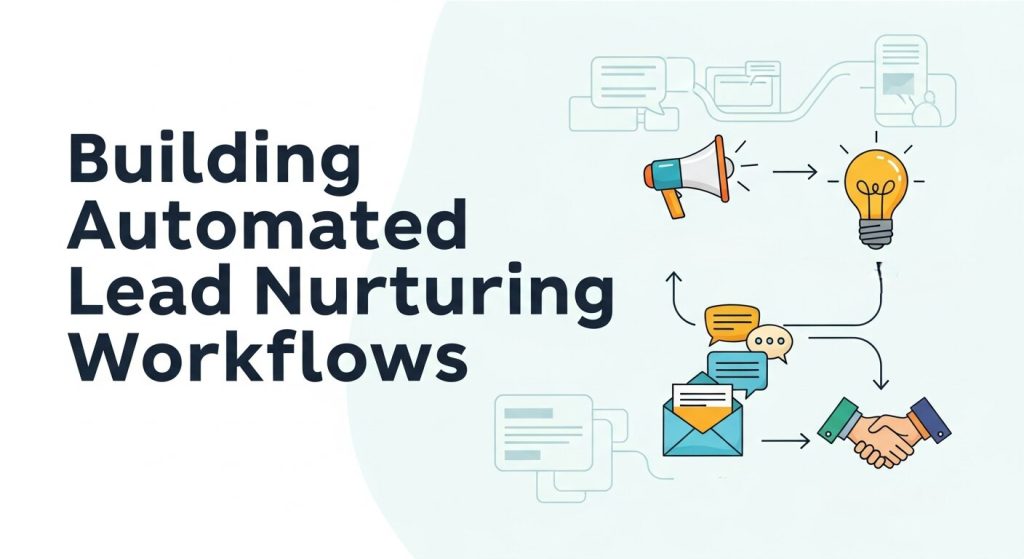 Generating a lead is only the beginning of the conversion process. Many prospects require additional information and engagement before they are ready to make a purchasing decision. HubSpot’s automation tools allow businesses to build sophisticated lead nurturing workflows that guide contacts through the sales funnel automatically. These workflows can deliver educational content, product recommendations, case studies, and follow-up emails based on user behavior. For example, a prospect who downloads an ebook can be enrolled in a targeted email sequence that addresses their specific challenges and introduces relevant solutions. Automated nurturing keeps your brand top-of-mind while delivering value at every stage of the buyer journey. As a result, businesses can improve lead quality, shorten sales cycles, and increase overall conversion rates.
Frequently Asked Questions (FAQs)
1. What is HubSpot conversion rate optimization?
HubSpot conversion rate optimization (CRO) is the process of improving website pages, forms, calls-to-action, and user experiences to increase the percentage of visitors who complete a desired action, such as filling out a form, booking a demo, or making a purchase.
2. How does HubSpot help improve conversion rates?
HubSpot provides tools such as landing page builders, A/B testing, Smart Content, analytics dashboards, CRM integration, and marketing automation. These features help businesses identify conversion barriers and optimize user journeys more effectively.
3. What is a good conversion rate for a HubSpot landing page?
Conversion rates vary by industry, offer type, and audience. However, many successful landing pages achieve conversion rates between 2% and 10%, while highly optimized campaigns can perform even better.
4. Why is personalization important for conversion rate optimization?
Personalized content makes visitors feel understood and relevant to the offer being presented. HubSpot’s Smart Content feature allows businesses to display customized messages, CTAs, and offers based on visitor behavior, location, or lifecycle stage, often leading to higher engagement and conversions.
5. How often should I perform A/B testing in HubSpot?
A/B testing should be an ongoing process. Regularly testing headlines, CTA buttons, form lengths, images, and page layouts helps identify opportunities for continuous improvement and prevents conversion rates from stagnating.
6. What are the most important elements of a high-converting landing page?
A successful landing page typically includes a compelling headline, clear value proposition, strong call-to-action, concise copy, trust signals, and a simple form. Eliminating distractions and maintaining message consistency also contribute to higher conversions.
7. How can HubSpot forms increase lead generation?
HubSpot forms support features like progressive profiling, smart fields, and CRM integration. These capabilities reduce friction for users while collecting valuable lead information over time, resulting in better conversion rates and lead quality.
8. Can HubSpot integrate with Shopify for conversion optimization?
Yes. HubSpot integrates with Shopify, allowing businesses to track customer behavior, automate abandoned cart emails, segment audiences, and create personalized marketing campaigns that help improve e-commerce conversion rates.
9. What metrics should I monitor when optimizing conversions?
Key metrics include conversion rate, bounce rate, click-through rate (CTR), form completion rate, average session duration, cart abandonment rate, and lead-to-customer conversion rate. Monitoring these metrics helps identify areas for improvement.
10. Is conversion rate optimization a one-time project?
No. CRO is an ongoing process that requires regular analysis, testing, and refinement. Customer behaviors, market trends, and business goals change over time, making continuous optimization essential for long-term growth and better marketing performance.
Driving Lasting Business Growth
Improving your website’s performance is an ongoing journey rather than a one-time project. Consumer behaviors shift, new competitors enter the market, and technological standards evolve. To stay ahead, you must treat your website as a living, breathing asset that requires continuous refinement.
By utilizing the full capabilities of your marketing platform, you equip your team with the insights necessary to make informed, profitable decisions. Start by assessing your current conversion bottlenecks. Identify the pages with the highest traffic but the lowest engagement, and apply the strategies outlined above. Test your headlines, personalize your CTAs, and ensure your forms are as frictionless as possible. As you systematically apply these HubSpot conversion rate optimization best practices, you will watch your traffic transform into a predictable, scalable engine for lasting business growth.