
Every click, scroll, and pause tells a story. The question is whether your business is listening. Most companies collect mountains of data about their customers, yet few translate that data into meaningful improvements. That gap—between knowing what users do and understanding why they do it—is where great customer experiences are won or lost.
User behavior analysis bridges that gap. By studying how people actually interact with your website, app, or product, you can spot friction points, predict needs, and design experiences that feel almost intuitive. The payoff is real: happier customers, stronger loyalty, and higher conversions.
In this post, you’ll learn what user behavior analysis is, why it matters for customer experience, and how to use it to drive customer journey optimization across your business. Whether you run an e-commerce store or a SaaS platform, these insights will help you turn raw data into decisions that matter.
What Is User Behavior Analysis?
User behavior analysis is the practice of collecting, measuring, and interpreting how people interact with your digital products. It looks beyond surface-level metrics like page views and dives into the actions that reveal intent: where users click, how far they scroll, which features they ignore, and where they abandon a task.
Think of it as a feedback loop between your users and your design choices. Instead of guessing what customers want, you observe what they actually do. This shift from assumption to evidence is what makes behavior analysis so powerful.
There are two broad categories of behavioral data:
- Quantitative data: The numbers. This includes bounce rates, time on page, conversion rates, click-through rates, and exit pages. It tells you what is happening.
- Qualitative data: The context. This includes heatmaps, session recordings, user surveys, and feedback forms. It helps explain why something is happening.
The best insights come from combining the two. A high exit rate on your checkout page (quantitative) might be explained by a confusing form layout revealed in session recordings (qualitative). Together, they paint a complete picture.
Why User Behavior Analysis Matters for Customer Experience
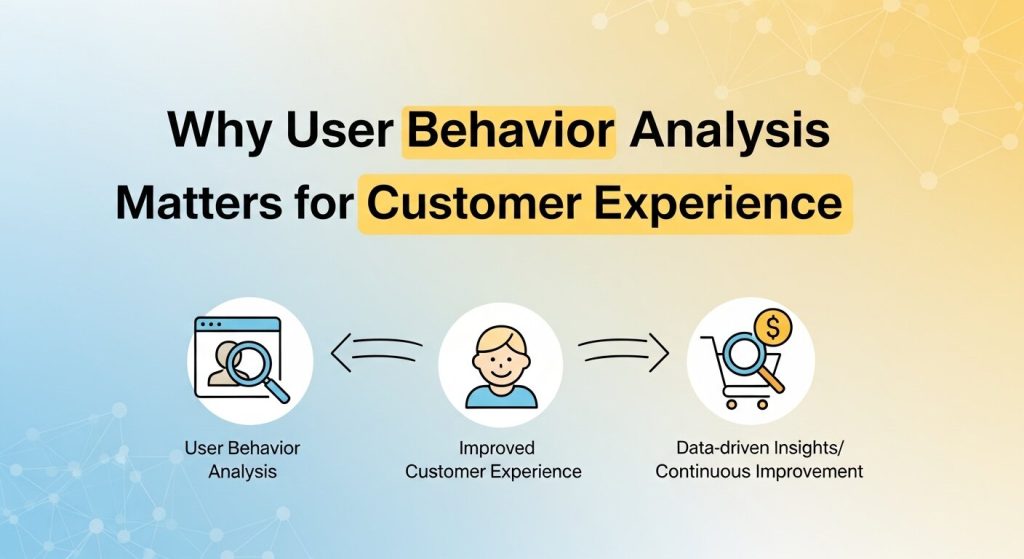 Customer experience is no longer a nice-to-have. It’s a core differentiator. People remember how a brand made them feel, and a single frustrating interaction can send them straight to a competitor.
Here’s why studying user behavior is so closely tied to experience quality.
It Reveals Friction You Can’t See
You designed your website. You know exactly where every button is and what every menu does. That familiarity is a blind spot. Your customers don’t share it.
Behavior analysis exposes the moments where users hesitate, get confused, or give up. Maybe they rage-click a button that isn’t actually clickable. Maybe they scroll past your most important call to action without noticing it. These small frustrations add up, and you’d never spot them from your own perspective.
It Replaces Opinions With Evidence
Internal debates about design often come down to personal taste. Should the signup button be green or blue? Should the pricing page come before or after the features? Behavior data settles these arguments with facts. When you can see which version keeps users engaged, you stop guessing and start improving.
It Powers Personalization
Customers increasingly expect experiences tailored to their needs. By analyzing patterns in behavior, you can segment users by intent and serve them more relevant content, offers, and recommendations. A first-time visitor and a loyal repeat buyer should not see the same homepage—and behavior analysis tells you how to treat each one.
Key Metrics and Methods for Tracking User Behavior
To improve customer experience, you first need to know what to measure and how. Here are the core methods that drive effective user experience optimization.
Heatmaps
Heatmaps visualize where users click, move, and scroll on a page. Click maps show which elements attract attention, while scroll maps reveal how far down a page people actually go. If your key message sits below the point where most users stop scrolling, a heatmap will make that painfully clear.
Session Recordings
Session recordings capture individual user journeys as they happen. Watching real visitors navigate your site can be humbling—and eye-opening. You’ll see exactly where people stumble, backtrack, or abandon their goals. A handful of recordings often surface problems that months of guesswork never would.
Funnel Analysis
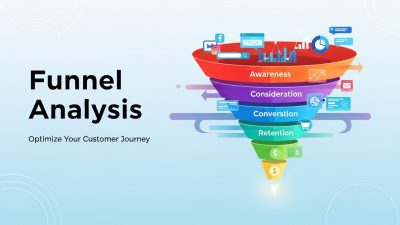
A conversion funnel maps the steps a user takes toward a goal, such as completing a purchase or signing up. Funnel analysis shows where people drop off. If 80% of users reach your cart but only 30% complete checkout, you’ve found a leak worth fixing. This kind of analysis is central to SEO conversion rate optimization, since it pinpoints exactly where traffic is being wasted.
Cohort Analysis
Cohort analysis groups users by shared characteristics—like signup date or acquisition channel—and tracks their behavior over time. It helps you understand retention and spot trends. For example, you might discover that users who came from a specific campaign stick around far longer than others.
Surveys and Feedback Tools
Sometimes the simplest method is to ask. On-site surveys, exit-intent popups, and post-purchase questionnaires capture the why behind the numbers. Pairing this direct feedback with behavioral data creates a richer understanding of your audience.
How to Use Behavior Insights to Optimize the Customer Journey
Collecting data is only the first step. The real value comes from acting on it. Here’s a practical approach to turning behavioral insights into a smoother customer journey.
Step 1: Map the Full Customer Journey
Before you analyze anything, document the path your customers take—from first discovery to purchase and beyond. Identify each touchpoint: the landing page, the product pages, the cart, the checkout, the follow-up emails. A clear map gives your data context and helps you spot where the experience breaks down.
Step 2: Identify Drop-Off Points
Use funnel and heatmap analysis to find where users disengage. Look for pages with high exit rates, forms with low completion rates, or steps where momentum stalls. These are your highest-priority targets for customer journey optimization, because small fixes here often deliver outsized gains.
Step 3: Form a Hypothesis
Once you spot a problem, ask why it’s happening. If users abandon a long signup form, your hypothesis might be that the form asks for too much information upfront. A good hypothesis is specific and testable. It connects an observed behavior to a likely cause.
Step 4: Test Your Changes
Don’t roll out major changes based on a hunch. Run A/B tests to compare your proposed solution against the current version. Maybe a shorter form, a clearer headline, or a more prominent button improves completion rates. Let the data confirm what works before you commit.
Step 5: Measure and Iterate
User experience optimization is never finished. After you implement a change, keep watching the metrics. Did the fix improve conversions? Did it create new friction elsewhere? Treat every improvement as part of an ongoing cycle, not a one-time project.
Common Mistakes to Avoid
Even well-intentioned teams make missteps when working with behavioral data. Watch out for these traps.
- Tracking everything and acting on nothing: Data overload is real. Focus on the metrics that connect directly to your business goals rather than collecting numbers for their own sake.
- Ignoring qualitative context: Numbers tell you what happened, but they rarely explain why. Without session recordings, surveys, or interviews, you risk drawing the wrong conclusions.
- Optimizing in isolation: A change that boosts one metric can hurt another. Always consider the full customer journey, not just a single page or step.
- Forgetting privacy: Collecting behavioral data comes with responsibility. Be transparent about what you track, respect consent, and comply with regulations like GDPR and CCPA.
Real-World Impact of Behavior Analysis
 Consider an online retailer struggling with cart abandonment. By reviewing session recordings, the team discovers that shoppers abandon their carts when unexpected shipping costs appear at checkout. Armed with this insight, they display shipping estimates earlier in the journey. The result: fewer surprises, less frustration, and a measurable lift in completed orders.
Or take a SaaS company with low feature adoption. Heatmaps reveal that a key feature is buried in a menu most users never open. After moving it to a more visible spot, engagement climbs. No new code, no expensive campaign—just a smarter use of existing behavior data.
These examples share a common thread. Each improvement started not with a guess, but with an observation. That’s the heart of behavior-driven design: let your users show you the way.
Best Practices for Effective User Behavior Analysis
Getting value from user behavior analysis requires more than collecting data. Start by defining clear goals so you know which metrics matter most. Focus on the behaviors that directly impact customer experience, such as navigation patterns, conversions, and retention. Combine quantitative and qualitative insights instead of relying on a single source of information. Review data regularly, as user expectations and habits change over time. Most importantly, turn insights into action quickly. Small, consistent improvements often produce better long-term results than occasional large-scale redesigns. A disciplined approach ensures your analysis leads to measurable business outcomes rather than unused reports.
Future Trends in User Behavior Analysis
 User behavior analysis continues to evolve as technology advances. Artificial intelligence is making it easier to predict customer actions and uncover hidden patterns in large datasets. Real-time analytics now allow businesses to respond instantly to user behavior, creating more dynamic experiences. Privacy-first tracking methods are also becoming increasingly important as regulations tighten and customers demand greater transparency. Meanwhile, cross-platform analysis helps companies understand how users move between websites, mobile apps, and social channels. Businesses that embrace these emerging trends will be better equipped to deliver personalized experiences and maintain a competitive advantage in an increasingly digital marketplace.
Turning Insight Into Action
User behavior analysis transforms vague intuition into a clear direction. It shows you where customers struggle, what they value, and how to serve them better. From heatmaps and session recordings to funnel and cohort analysis, the tools are more accessible than ever—and the competitive advantage they offer is hard to overstate.
Start small. Pick one important page or one critical step in your funnel, study how users interact with it, and make one improvement based on what you learn. Then measure, refine, and repeat. Over time, these incremental gains compound into an experience that feels effortless to your customers and pays dividends to your business.