
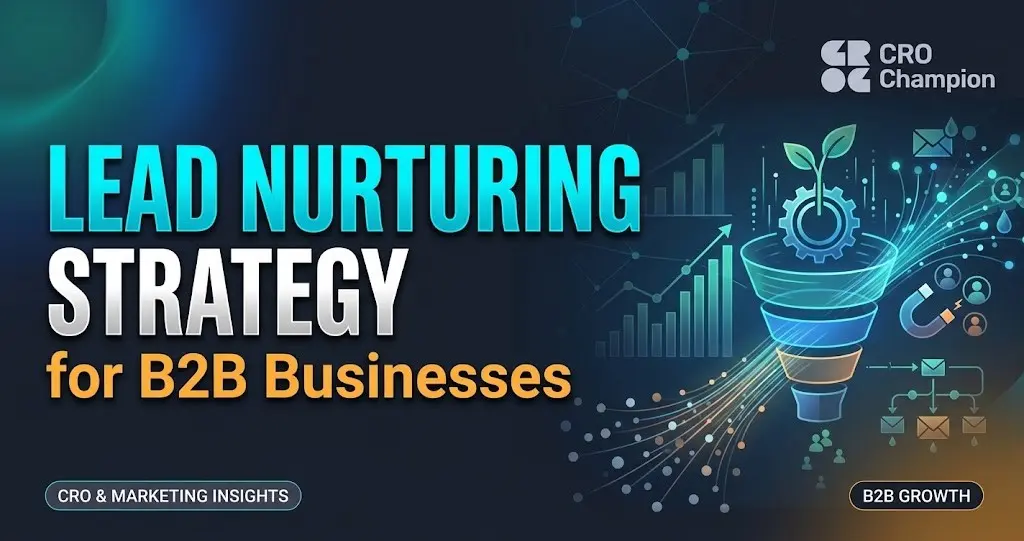
A successful Lead Nurturing Strategy helps B2B businesses build meaningful relationships with potential customers, guide prospects through the buying journey, and turn qualified leads into long-term clients. Because business purchasing decisions often involve multiple stakeholders, detailed research, and longer sales cycles, companies need consistent communication and valuable content to maintain prospect interest.
By combining personalized email marketing, marketing automation, customer relationship management, and data-driven insights, businesses can improve conversions and strengthen customer trust. Integrating Sales Funnel Optimization, efforts to Boost website engagement, and Page speed optimization can further improve the digital experience and support sustainable B2B growth.
Understanding Lead Nurturing Strategy in B2B Marketing
A Lead Nurturing Strategy is a structured approach to developing relationships with prospects who are interested in a company’s products or services but are not yet ready to purchase. B2B businesses use relevant content, timely communication, and targeted follow-ups to help prospects understand their options, evaluate solutions, and make informed decisions throughout the sales journey.
Why Lead Nurturing Matters for B2B Businesses
B2B purchases frequently involve careful evaluation, budget approvals, and discussions among decision-makers. Prospects may need several interactions before they feel confident choosing a service provider. Lead nurturing keeps businesses connected with potential customers by addressing their concerns, demonstrating expertise, and providing useful information at each stage of the buying process.
The Connection Between Lead Generation and Lead Nurturing
Lead generation attracts potential customers through search engines, social media, advertising, and other marketing channels. Lead nurturing builds on those initial interactions by helping prospects move closer to a purchasing decision. When both activities work together, businesses can develop a more consistent pipeline, improve lead quality, and create stronger alignment between marketing and sales teams.
Identify Your Target Audience and Segment B2B Leads
 Effective lead nurturing begins with understanding who your prospects are and what influences their purchasing decisions. B2B businesses should identify their ideal customer profiles, industry requirements, company sizes, and decision-making roles. Segmenting leads according to these characteristics helps marketers deliver relevant messages instead of sending identical communications to every contact.
Create Detailed Buyer Personas
Buyer personas represent the goals, challenges, responsibilities, and preferences of the people involved in purchasing decisions. For example, a business owner may prioritize cost and return on investment, while an IT manager may focus on security, compatibility, and technical support. Understanding these differences helps businesses develop content that addresses each stakeholder’s specific concerns.
Use Behavioral Data for Better Personalization
Behavioral data can reveal which pages prospects visit, which resources they download, and which emails they engage with. Businesses can use these signals to understand potential interests and determine suitable follow-up communications. However, data collection should respect user privacy, applicable regulations, and consent requirements. Responsible personalization makes communication more relevant without becoming intrusive.
Develop Valuable Content for Every Stage of the Sales Funnel
Content plays an important role in guiding B2B prospects from initial awareness to final purchasing decisions. A strong content strategy answers questions, explains solutions, and demonstrates expertise without applying unnecessary sales pressure. By matching content to each stage of the buying journey, businesses can improve engagement, address objections, and support more informed decisions throughout the sales funnel.
Awareness Stage: Educate Potential Customers
At the awareness stage, prospects are identifying problems and exploring possible solutions. Educational blog posts, industry reports, introductory guides, and informative videos can help businesses explain common challenges and demonstrate their knowledge. Rather than immediately promoting a product, companies should provide clear answers that help potential customers understand their needs and discover relevant approaches.
Consideration Stage: Demonstrate Value and Expertise
During consideration, prospects compare different solutions and evaluate providers. Case studies, detailed service pages, webinars, comparison guides, and practical demonstrations can help explain how a business addresses specific challenges. This content should communicate realistic benefits, explain important features, and provide evidence that supports purchasing decisions without relying on exaggerated claims.
Decision Stage: Encourage Qualified Leads to Convert
At the decision stage, prospects often need reassurance about pricing, implementation, reliability, and expected outcomes. Personalized consultations, product demonstrations, transparent proposals, and relevant testimonials can address these concerns. Clear calls to action make it easier for qualified prospects to schedule meetings, request quotes, or discuss their requirements with the sales team.
Use Email Marketing and Automation to Nurture Leads
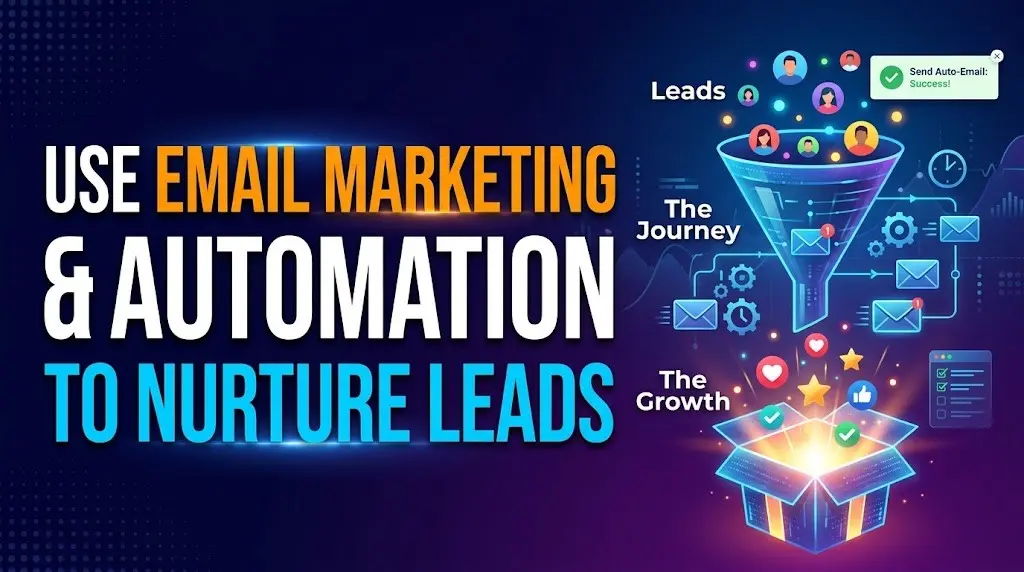 Email marketing enables B2B businesses to maintain communication with prospects over time. Marketing automation can organize follow-up sequences, deliver relevant resources, and trigger messages based on defined actions. When these tools are configured carefully, companies can provide consistent communication at scale while preserving personalization and giving sales teams more time to focus on qualified opportunities.
Build Personalized Email Nurturing Campaigns
Effective email nurturing provides information that matches a prospect’s interests and buying stage. A new subscriber might receive an educational guide, while someone who requests a service proposal may need detailed information about implementation and pricing. Clear subject lines, useful content, and relevant calls to action can improve engagement without overwhelming recipients with unnecessary messages.
Automate Follow-Ups at the Right Time
Automation can help businesses follow up after a resource download, webinar registration, or consultation request. However, every sequence should have clear goals, sensible timing, and appropriate stopping conditions. Businesses should also monitor engagement and allow recipients to unsubscribe easily. Thoughtful automation supports timely communication while protecting the quality of the customer experience.
Improve Sales Funnel Optimization for Better Conversions
Sales Funnel Optimization helps B2B businesses identify obstacles that prevent prospects from progressing toward a purchase. By analyzing each stage of the funnel, companies can determine where leads lose interest, which communications perform well, and which website experiences need improvement. Combining these insights with lead nurturing creates a more organized path from initial interest to qualified sales opportunities.
Analyze Funnel Performance and Identify Bottlenecks
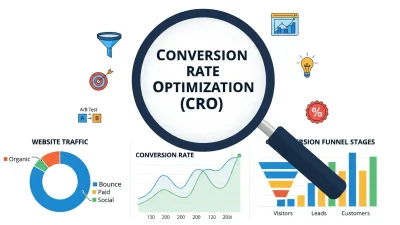
Businesses should examine conversion rates between awareness, consideration, and decision stages. If many prospects engage with educational content but few request consultations, the company may need stronger calls to action, clearer service explanations, or more relevant consideration-stage resources. Regular analysis helps teams make informed adjustments instead of relying on assumptions about customer behavior.
Align Marketing and Sales Teams
Marketing and sales teams should agree on what qualifies as a marketing-qualified lead and a sales-qualified lead. Marketing can nurture early-stage prospects, while sales representatives focus on contacts showing stronger purchasing intent. Sharing feedback, defining handoff procedures, and maintaining accurate CRM records helps prevent promising leads from being overlooked or contacted at inappropriate times.
Boost Website Engagement Through Better User Experience
Your website is often a central destination for prospects researching B2B products and services. To Boost website engagement, businesses should make information easy to understand, simplify navigation, and provide relevant next steps. A clear user experience helps visitors explore solutions, access useful resources, and move naturally from researching a problem to considering a business relationship.
Create Clear Calls to Action and Relevant Landing Pages
Landing pages should communicate a clear value proposition and explain what visitors can expect after taking action. A page offering a consultation should focus on the benefits of speaking with an expert, while a downloadable guide should clearly explain its practical value. Matching landing page content with campaign messaging creates a more consistent experience and encourages qualified prospects to engage.
Apply Page Speed Optimization to Reduce Friction
Page speed optimization helps create a faster and more responsive website experience. Slow-loading pages can frustrate visitors, interrupt research, and make it harder for prospects to complete forms or access important resources. Businesses can improve performance by compressing images, reducing unnecessary scripts, enabling caching, and using reliable hosting. Monitoring real-world performance helps teams identify issues that affect usability.
Implement CRM and Lead Scoring for Smarter Nurturing
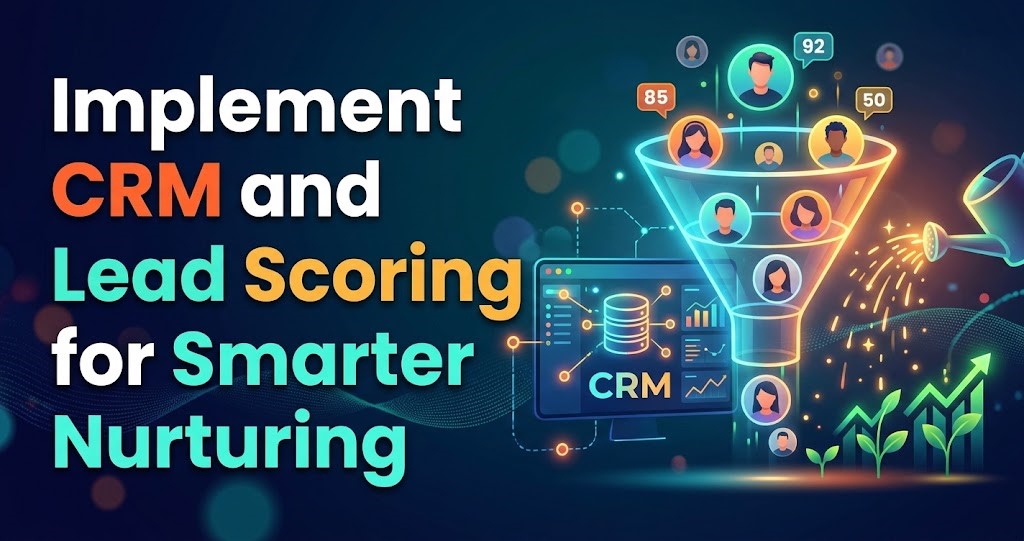 Customer relationship management software helps businesses organize prospect information, record interactions, and coordinate follow-ups. When combined with lead scoring, CRM systems can help sales and marketing teams prioritize contacts according to their fit and engagement. These capabilities support a more structured Lead Nurturing Strategy by helping businesses identify promising opportunities and deliver relevant communications.
Use Lead Scoring to Prioritize Prospects
Lead scoring assigns values to selected characteristics and behaviors, such as company fit, relevant page visits, consultation requests, and content engagement. Businesses can use these scores to identify prospects who may be ready for direct sales conversations. Scoring models should be reviewed regularly to ensure that the selected signals reflect genuine buying intent rather than superficial engagement alone.
Maintain Accurate CRM Data
Accurate CRM records help teams understand each prospect’s communication history, interests, and current position in the buying journey. Businesses should establish clear data-entry standards, remove unnecessary duplicates, and update outdated information. Good data quality improves segmentation, reporting, and follow-up coordination, allowing marketing and sales teams to make more informed decisions.
Measure and Improve Your Lead Nurturing Strategy
Measuring performance helps businesses understand whether nurturing activities contribute to stronger relationships and improved sales outcomes. Companies should evaluate engagement, lead quality, funnel progression, and revenue-related results rather than relying on email opens alone. Regular reporting makes it easier to identify successful campaigns, uncover weak points, and improve the overall customer journey through evidence-based decisions.
Track Meaningful Marketing and Sales Metrics
Important metrics include email click-through rates, qualified lead volume, meeting bookings, lead-to-customer conversion rates, sales cycle length, and campaign-attributed revenue. Businesses should select measures that align with their objectives and evaluate trends over time. Since individual metrics can be influenced by several factors, combining multiple indicators provides a more complete understanding of campaign performance.
Test and Refine Campaigns Continuously
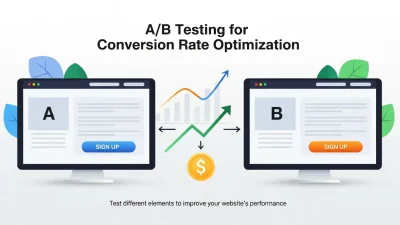
A/B testing can help businesses compare different subject lines, calls to action, landing page layouts, and email content. Testing one major variable at a time makes it easier to understand which changes influence results. Companies should also review sales feedback and prospect questions to improve their messaging, remove friction, and keep nurturing campaigns aligned with changing customer needs.
Frequently Asked Questions
1. What is a Lead Nurturing Strategy?
A Lead Nurturing Strategy is a planned process for building relationships with potential customers through relevant content, personalized communication, and timely follow-ups until they are ready to purchase.
2. Why is lead nurturing important for B2B businesses?
B2B purchases often involve long sales cycles, multiple decision-makers, and detailed evaluations. Lead nurturing helps businesses maintain engagement, build trust, answer questions, and guide prospects toward informed purchasing decisions.
3. How does email marketing support lead nurturing?
Email marketing delivers educational content, relevant updates, and personalized follow-ups directly to prospects. It helps businesses maintain relationships and encourage appropriate next steps throughout the buying journey.
4. What is the role of marketing automation in lead nurturing?
Marketing automation schedules communications, triggers follow-ups based on defined actions, and organizes nurturing workflows. It improves consistency and efficiency when supported by relevant messaging and responsible data practices.
5. How does Sales Funnel Optimization improve lead nurturing?
Sales Funnel Optimization identifies stages where prospects disengage or fail to convert. Businesses can use these insights to improve content, calls to action, follow-up processes, and the overall customer journey.
6. How can businesses boost website engagement during lead nurturing?
Businesses can improve website engagement with useful content, clear navigation, relevant landing pages, strong calls to action, and responsive website performance that makes information easy to access.
7. Why is Page speed optimization important for B2B websites?
Page speed optimization reduces unnecessary loading delays and improves the browsing experience. A faster website makes it easier for prospects to research services, access resources, and complete important actions.
8. What is lead scoring in B2B marketing?
Lead scoring assigns values to prospect characteristics and behaviors to help businesses prioritize promising opportunities. It supports better coordination between marketing and sales when scoring criteria reflect genuine buyer intent.
9. How can businesses measure lead nurturing success?
Businesses can measure success through qualified leads, email engagement, meeting bookings, conversion rates, sales cycle length, and revenue-related outcomes. The most useful metrics depend on campaign objectives and the sales process.
10. How long does it take for a lead nurturing strategy to produce results?
The timeline varies according to industry, purchase complexity, lead quality, and sales cycle length. Businesses should monitor performance consistently and refine campaigns based on engagement, conversions, and feedback from sales teams.
Conclusion
A well-planned Lead Nurturing Strategy helps B2B businesses develop stronger prospect relationships, deliver relevant information, and improve conversion opportunities throughout the buying journey. By combining audience segmentation, valuable content, email automation, CRM systems, and continuous performance measurement, companies can create a more effective marketing process. Integrating Sales Funnel Optimization, efforts to Boost website engagement, and Page speed optimization further reduces friction and supports a better digital experience. With consistent testing and close collaboration between sales and marketing, businesses can build a sustainable approach to B2B growth.