
Customer Buying Behavior plays an important role in understanding how consumers discover products, compare available options, evaluate prices, and make purchasing decisions. Businesses that understand these patterns can develop more effective marketing strategies, improve customer experiences, and increase sales. By examining customer preferences, shopping habits, motivations, and purchasing barriers, companies can identify what encourages customers to buy and what prevents them from completing a purchase.
Analyzing Customer Buying Behavior also helps businesses develop valuable Customer insights that support smarter decisions across marketing, sales, and product development. From understanding browsing activity to improving Mobile optimization and Product Page Optimization, businesses can use behavioral data to create more relevant shopping experiences. These improvements help customers find the information they need, evaluate products confidently, and complete transactions with less friction.
What Is Customer Buying Behavior?
Customer Buying Behavior refers to the actions, preferences, and decision-making processes consumers follow when choosing and purchasing products or services. It includes how customers recognize a need, search for information, compare alternatives, evaluate value, complete purchases, and assess their experiences afterward.
Understanding these behaviors allows businesses to identify the factors that influence purchasing decisions. Price, product quality, convenience, brand reputation, customer reviews, and personal preferences can all affect whether someone chooses to buy. Analyzing these factors helps companies understand their audiences and create marketing strategies that address real customer needs.
Why Customer Buying Behavior Matters for Sales
Customer buying behavior analysis helps businesses understand why customers purchase particular products and why others abandon their shopping journeys. These insights can reveal opportunities to improve product selection, pricing, website usability, promotional messaging, and customer support.
When businesses understand what motivates their audiences, they can deliver more relevant offers and remove obstacles from the purchasing process. This can improve conversion rates, reduce abandoned carts, and support repeat purchases. Although behavioral analysis cannot guarantee higher sales, it provides a stronger foundation for making informed marketing decisions.
Identify the Factors Influencing Customer Buying Behavior
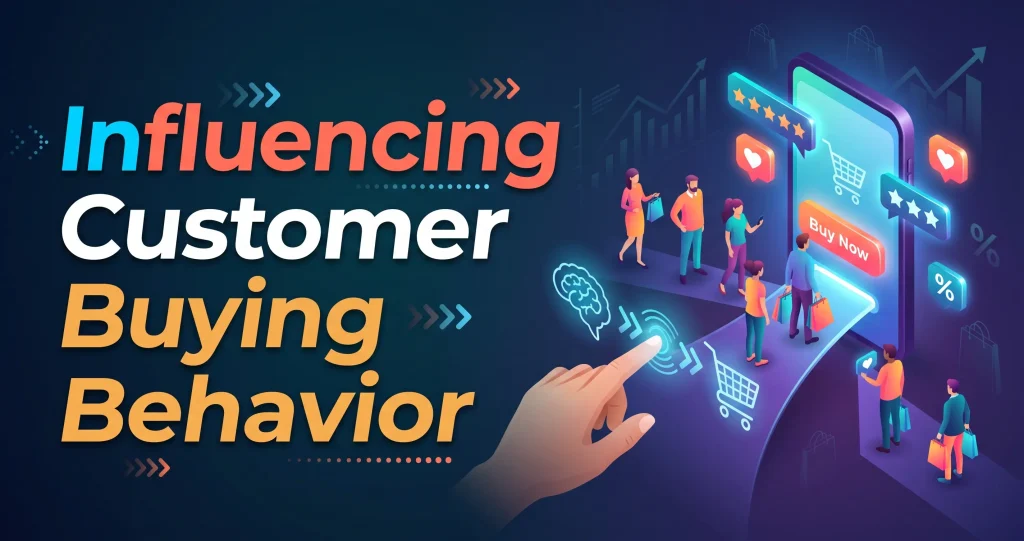 Customer buying decisions are influenced by psychological, social, economic, and personal factors. Understanding these influences helps businesses explain why different customers respond differently to the same product, advertisement, or promotion. A successful analysis considers both practical needs and emotional motivations instead of assuming that every customer makes decisions in the same way.
Businesses should examine how customer expectations, budget limitations, product preferences, and purchasing circumstances interact. Combining these observations with Customer insights can help marketers develop audience segments, improve communication, and create experiences that reflect the needs of potential buyers.
Psychological and Emotional Factors
Customer motivation, perception, attitudes, and emotions can significantly influence purchasing decisions. Some consumers prioritize convenience, while others value quality, reliability, status, or long-term benefits. Previous experiences with a brand may also influence whether customers trust its products or consider alternative options.
Businesses can analyze these influences through surveys, interviews, customer feedback, and behavioral analytics. Understanding the reasons behind purchasing decisions helps marketers communicate relevant benefits and address customer concerns. Marketing messages should remain accurate and respectful rather than exploiting emotional vulnerabilities or creating unnecessary pressure.
Social and Economic Influences
Family recommendations, peer opinions, online reviews, cultural expectations, and social media discussions can influence customer buying behavior. Economic factors, including income, product affordability, inflation, and perceived value, also shape purchasing decisions.
Businesses should consider these influences when developing pricing strategies, customer segments, and promotional campaigns. For example, budget-conscious customers may respond to transparent pricing and practical product benefits, while other audiences may prioritize convenience or premium features. Recognizing these differences helps companies create more relevant offers without relying on broad assumptions about their customers.
How to Collect Customer Insights for Buying Behavior Analysis
Customer insights provide a clearer understanding of the motivations, preferences, and challenges behind purchasing decisions. Businesses can gather these insights from website analytics, customer surveys, sales records, product reviews, support conversations, and customer relationship management systems. Each source reveals different aspects of the customer experience.
The most useful analysis combines quantitative information, such as purchase frequency and conversion rates, with qualitative feedback that explains why customers behave in particular ways. Businesses should collect only the information they need, protect customer privacy, and use appropriate consent practices when required.
Use Website Analytics and Purchase Data
Website analytics can reveal how visitors discover a business, which pages they explore, and where they leave the purchasing process. Businesses can examine traffic sources, product views, add-to-cart activity, completed transactions, and repeat visits to identify behavioral patterns.
Purchase data also helps companies understand popular products, average order values, seasonal trends, and repeat buying habits. By comparing these metrics across relevant customer segments, marketers can identify opportunities to improve product recommendations, landing pages, and promotional campaigns. Data should be interpreted carefully because changes in traffic quality, pricing, and seasonality can influence results.
Conduct Customer Surveys and Feedback Research
Customer surveys and feedback research help explain the reasons behind purchasing decisions. Customers can share what attracted them to a product, which alternatives they considered, what concerns they experienced, and what could improve their shopping experience.
Businesses can collect feedback after purchases, through website surveys, or during customer interviews. Short, relevant questions generally make it easier for customers to respond. Combining their answers with analytics data helps businesses distinguish between observed behavior and the motivations that may explain it.
Analyze the Customer Buying Journey
The customer buying journey describes the stages people move through before, during, and after purchasing a product or service. Understanding these stages allows businesses to identify what customers need at each point and where potential sales opportunities may be lost. Different customers may move through the journey at different speeds or revisit earlier stages before making a decision.
A detailed buying journey analysis connects customer research with website performance, advertising activity, and sales data. Businesses can use this information to deliver appropriate content, answer common questions, and reduce friction throughout the purchasing process.
Understand Awareness and Consideration
During the awareness stage, customers recognize a problem or discover a product that may meet their needs. They may find businesses through search engines, social media, advertising, recommendations, or educational content. At this stage, clear messaging helps visitors understand what the business offers and why it may be relevant.
During consideration, customers compare products, read reviews, examine features, and evaluate prices. Detailed product information, useful comparison content, transparent policies, and credible customer testimonials can help them make informed decisions. Businesses should identify the questions customers commonly ask and ensure that relevant answers are easy to find.
Identify Purchase Barriers
Purchase barriers are obstacles that prevent customers from completing a transaction. Common examples include unexpected shipping fees, complicated checkout forms, unclear product descriptions, limited payment options, slow-loading pages, and concerns about product quality.
Businesses can identify these barriers by examining checkout abandonment, customer support questions, user testing, and feedback from unsuccessful transactions. Addressing the most significant problems can create a smoother purchasing experience. Rather than changing everything simultaneously, companies should prioritize improvements based on customer impact and measurable business objectives.
Improve Mobile Optimization to Increase Sales
 Mobile optimization is essential for understanding and responding to modern customer buying behavior because many consumers research products and make purchases through smartphones. A mobile website that loads slowly, displays poorly, or makes navigation difficult can prevent customers from exploring products or completing transactions.
Businesses should evaluate mobile usability across product discovery, product comparison, cart management, and checkout. Responsive layouts, readable text, accessible buttons, and streamlined forms can make shopping more convenient. Mobile optimization should also include performance testing and reliable payment experiences so customers can complete important actions without unnecessary interruptions.
Create a Smooth Mobile Shopping Experience
A smooth mobile shopping experience allows customers to find products, understand their benefits, and complete purchases with minimal effort. Businesses should simplify navigation, make search functions accessible, and ensure that product images and descriptions display correctly on smaller screens.
Mobile checkout should request only necessary information and provide clear instructions at every stage. Testing different devices and screen sizes can uncover usability issues that standard desktop testing may miss. By reducing unnecessary steps and improving accessibility, businesses can make mobile shopping more convenient and support stronger conversion performance.
Use Product Page Optimization to Influence Buying Decisions
Product Page Optimization helps businesses present product information in a way that supports customer understanding and purchasing confidence. Product pages often represent a critical decision point because visitors use them to evaluate features, prices, benefits, availability, and suitability for their needs.
Businesses should ensure that product descriptions are clear, images accurately represent the product, and important details are easy to locate. Relevant customer reviews, transparent shipping information, clear return policies, and visible calls to action can help answer common questions. Effective optimization focuses on providing accurate information and reducing uncertainty rather than pressuring customers into purchasing.
Improve Product Descriptions and Visual Content
Product descriptions should explain what a product does, who it is designed for, and which practical benefits it offers. Specific information about materials, dimensions, compatibility, functionality, or service conditions can help customers determine whether the product meets their requirements.
High-quality images and relevant videos can provide additional context when they accurately represent the offering. Businesses should avoid exaggerated claims and ensure that important limitations remain clear. Combining informative descriptions with useful visuals helps customers evaluate products more confidently and can reduce confusion after purchase.
Use Reviews and Clear Calls to Action
Customer reviews provide valuable evidence of real experiences and can help potential buyers evaluate product quality, usability, and reliability. Businesses should display authentic reviews where customers can easily find them and respond professionally when concerns arise.
Calls to action should clearly communicate the next step, such as adding a product to the cart or requesting a quotation. Consistent placement, readable labels, and a straightforward page layout can make purchasing actions easier to understand. Testing different page elements helps businesses identify which changes improve customer engagement and conversion performance.
Use Customer Buying Behavior Data to Improve Marketing Strategies
 Customer buying behavior analysis becomes more valuable when businesses apply their findings to marketing decisions. By understanding product preferences, purchasing frequency, common objections, and customer motivations, companies can develop more relevant campaigns and allocate marketing resources more effectively.
Behavioral data can support audience segmentation, personalized recommendations, email marketing, retargeting, and customer retention initiatives. However, personalization should remain relevant and respectful of customer privacy. Businesses should use reliable data, explain important practices transparently, and avoid making assumptions that could lead to inappropriate or misleading targeting.
Segment Customers Based on Purchasing Patterns
Customer segmentation groups buyers according to shared characteristics, needs, or behaviors. Businesses may distinguish between first-time customers, repeat purchasers, high-value buyers, occasional shoppers, and customers who frequently abandon carts. These groups can respond differently to marketing messages and purchasing incentives.
Understanding these patterns allows businesses to tailor communications more effectively. New customers may need educational content and reassurance, while returning customers may appreciate relevant product recommendations or updates about products they already use. Segmentation should be based on meaningful patterns and updated as customer needs change.
Test and Measure Marketing Performance
Marketing experiments help businesses determine whether changes based on customer buying behavior actually improve results. Companies can test product page layouts, promotional messages, email subject lines, pricing presentations, and calls to action while monitoring appropriate performance indicators.
Conversion rates, average order value, customer acquisition cost, repeat purchase rate, and revenue per visitor can provide useful evidence of campaign performance. Businesses should define their objectives before testing and avoid drawing conclusions from insufficient data. Continuous measurement helps teams improve their strategies using observed results rather than assumptions.
Conclusion
Analyzing Customer Buying Behavior helps businesses understand what customers need, how they evaluate products, and why they decide to purchase or leave without buying. By combining website analytics, customer feedback, buying journey analysis, and behavioral segmentation, companies can identify opportunities to improve marketing performance and customer satisfaction.
Investing in Mobile optimization and Product Page Optimization can also make purchasing experiences easier and more informative. When businesses use accurate customer data to remove buying barriers, communicate relevant benefits, and improve website usability, they can create stronger opportunities for conversions and repeat purchases.
Frequently Asked Questions (FAQs)
1. What Is Customer Buying Behavior?
Customer Buying Behavior refers to the way consumers recognize needs, research products, compare alternatives, evaluate prices, and make purchasing decisions. It also includes post-purchase experiences that influence satisfaction, repeat purchases, and recommendations.
2. Why Is Customer Buying Behavior Analysis Important?
It helps businesses understand customer motivations, identify purchase barriers, improve marketing campaigns, and develop better shopping experiences. These insights support informed decisions about product positioning, pricing, website design, and customer retention.
3. How Can Businesses Analyze Customer Buying Behavior?
Businesses can analyze customer behavior through website analytics, purchase records, customer surveys, product reviews, sales data, and customer interviews. Combining behavioral metrics with direct feedback provides a more complete understanding of customer needs and purchasing decisions.
4. What Factors Influence Customer Buying Behavior?
Important factors include price, product quality, personal preferences, income, brand reputation, customer reviews, convenience, and recommendations from others. The relative importance of these factors varies according to the customer, product, and purchasing situation.
5. How Do Customer Insights Help Increase Sales?
Customer insights help businesses understand what customers value, which concerns prevent purchases, and what information they need before buying. Companies can use these findings to improve product pages, personalize relevant communications, and remove unnecessary purchasing barriers.
6. Why Is Mobile Optimization Important for Customer Buying Behavior?
Mobile optimization makes it easier for customers to browse products, compare options, and complete purchases using smartphones. Responsive design, fast-loading pages, accessible navigation, and simple checkout processes can reduce friction and support better mobile shopping experiences.
7. What Is Product Page Optimization?
Product Page Optimization involves improving product descriptions, images, reviews, pricing information, page usability, and calls to action. Its purpose is to help customers understand an offering, evaluate its suitability, and make informed purchasing decisions.
8. How Does the Customer Buying Journey Affect Sales?
The customer buying journey influences how people discover products, evaluate alternatives, and complete purchases. Understanding each stage helps businesses provide relevant information, address concerns, and identify obstacles that may prevent customers from buying.
9. Which Metrics Help Measure Customer Buying Behavior?
Useful metrics include conversion rate, average order value, cart abandonment rate, repeat purchase rate, product page engagement, and customer acquisition cost. Businesses should select metrics that match their goals and interpret them alongside customer feedback.
10. How Often Should Businesses Analyze Customer Buying Behavior?
Businesses should review customer buying behavior regularly, with the frequency depending on sales volume, business goals, and changes in the market. Monthly reviews may suit many businesses, while high-traffic stores may monitor key metrics more frequently to identify emerging problems and opportunities.