

Product Page Optimization is an important part of creating a successful ecommerce website because product pages often influence whether visitors decide to purchase. A well-optimized product page provides the information, visuals, trust signals, and user experience customers need before making a buying decision. When these elements work together, businesses can create a smoother path from product discovery to checkout.
Optimized product pages can also help businesses understand customer behavior and identify opportunities to improve engagement. From product descriptions and images to calls to action, pricing information, reviews, and mobile usability, every element can influence the overall shopping experience.
For ecommerce businesses focused on sustainable growth, Product Page Optimization is not simply about making pages look attractive. It involves continuously evaluating customer interactions, testing different elements, and improving the page based on measurable results.
What Is Product Page Optimization?
Product Page Optimization involves improving individual ecommerce product pages to make them more useful, engaging, trustworthy, and conversion-focused. The objective is to help visitors understand the product quickly and make informed purchasing decisions.
An effective product page combines persuasive content with functional design. Product images should present the item clearly, while descriptions should explain important features and benefits. Pricing, availability, shipping information, reviews, specifications, and calls to action should also be easy to locate.
Optimization should consider both desktop and mobile users. Since customers may arrive from search engines, social media, advertisements, or other channels, the product page needs to provide a consistent experience regardless of where the visitor comes from.
Why Product Page Optimization Matters for Conversions
 Product pages can be a critical stage in the ecommerce customer journey. A visitor may already have some interest in a product, but uncertainty about price, quality, features, delivery, or return policies can prevent a purchase.
Optimization helps reduce unnecessary friction by presenting relevant information clearly. When customers can quickly understand what a product offers and why it may meet their needs, they can move through the purchasing process with greater confidence.
A well-structured product page can also make important actions more visible. Clear calls to action, simple navigation, and accessible product information can make it easier for visitors to continue toward checkout.
Creating Clear and Persuasive Product Information
Writing Product Descriptions That Address Customer Needs
Product descriptions should explain more than what an item is. They should communicate how the product works, what problem it addresses, and which benefits customers can expect. Clear language can help visitors understand the value of the product without forcing them to search through unnecessary information.
Descriptions should also be accurate and specific. Overly generic content can make products difficult to differentiate from competitors. Businesses can improve product communication by focusing on practical details, use cases, materials, dimensions, compatibility, and other information relevant to the purchasing decision.
Using Benefits Alongside Product Features
Features describe what a product includes, while benefits explain why those features matter to customers. Combining both can create more useful product content.
For example, instead of only describing a technical specification, a product page can explain how that specification affects everyday use. This approach helps customers connect product characteristics with their own needs and expectations.
Using High-Quality Product Images and Videos
Visual content plays a major role in ecommerce because customers cannot physically examine products through an online store. High-quality images can provide important visual information that supports purchasing decisions.
Product images should show relevant details, different angles, scale, colors, textures, and important features where appropriate. Zoom functionality can also help customers examine smaller details.
Videos can provide additional context by showing how a product works or looks in real-world situations. However, visual content should be optimized carefully so that large media files do not negatively affect page performance.
Strengthening Trust on Product Pages
Adding Customer Reviews and Ratings
Customer reviews can provide social proof and help visitors evaluate products based on experiences from other buyers. Reviews may answer questions that are difficult to address through standard product descriptions.
Displaying ratings and written reviews in a clear location can make customer feedback easier to find. Businesses should maintain authentic review practices and avoid presenting misleading or manipulated information.
Detailed reviews can be particularly valuable because they may provide practical insights about product quality, usability, sizing, performance, or other customer concerns.
Providing Clear Policies and Purchase Information
Customers may hesitate to purchase when they are uncertain about shipping, returns, refunds, warranties, or payment methods. Product pages can reduce this uncertainty by presenting important policies in an accessible format.
Clear information can help customers understand what happens after an order is placed. Transparency around these details can contribute to greater purchasing confidence and create a more predictable shopping experience.
Improving Calls to Action
A product page should make the next step clear. Whether the desired action is adding an item to a cart, purchasing immediately, selecting a variation, or requesting additional information, the relevant call to action should be easy to understand.
Calls to action should be visually distinguishable without becoming distracting. The surrounding content should also provide enough information for visitors to understand what will happen when they click.
Testing different button wording, placement, size, and surrounding content can help businesses identify approaches that perform better for their specific audience.
Optimizing Product Pages for Mobile Users
 Mobile optimization is essential because many ecommerce visitors browse and shop using smartphones. A product page that works well on a large desktop screen may become difficult to use on a smaller display.
Images should scale correctly, product information should remain readable, and interactive elements should be easy to tap. Important information should not be hidden behind complicated navigation.
The purchasing process should also remain simple on mobile devices. A customer should be able to select product variations, review pricing, add an item to the cart, and continue toward checkout without unnecessary obstacles.
Improving Page Speed and Usability
Reducing Unnecessary Loading Delays
Page speed can influence how visitors interact with ecommerce websites. When product pages take too long to load, visitors may leave before viewing the product information.
Businesses can improve performance by optimizing images, reducing unnecessary scripts, using efficient hosting, implementing caching where appropriate, and reviewing third-party integrations.
Performance optimization should balance visual quality and technical efficiency. Product pages need enough visual content to support purchasing decisions without becoming unnecessarily heavy.
Simplifying Product Page Navigation
Customers should not have to search extensively for basic product information. Important details such as price, availability, variations, shipping information, and purchase actions should be organized logically.
A clear information hierarchy allows visitors to scan the page and find what they need quickly. This can be particularly useful for customers who are comparing several products before making a decision.
Using Website Experiments to Improve Product Pages
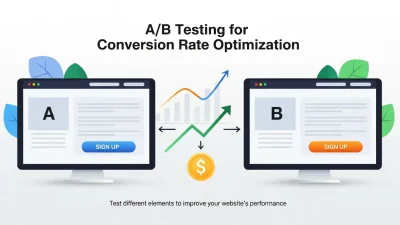
Website experiments can help ecommerce businesses evaluate how specific product page changes affect visitor behavior. Instead of making permanent changes based only on assumptions, businesses can test different versions of selected elements.
For example, a business might compare different product images, headlines, descriptions, calls to action, review placements, or page layouts. The results can provide data about how visitors respond to each variation.
Testing should be structured around a clear objective and relevant measurement. A single experiment should focus on meaningful changes so that businesses can better understand which factors may have influenced the outcome.
Using Data to Identify Conversion Opportunities
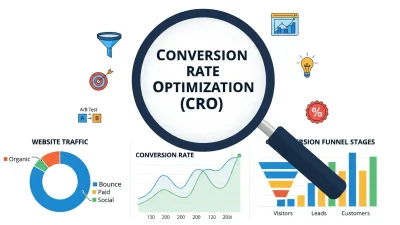
Product Page Optimization becomes more effective when businesses use website analytics and behavioral data to understand visitor activity. Metrics such as product views, add-to-cart actions, checkout progression, and completed purchases can reveal where users may be experiencing friction.
Businesses can also examine user behavior through suitable analytics tools, heatmaps, and session analysis. These insights can help identify areas where visitors may be struggling to find information or complete important actions.
Data should be interpreted within the context of the entire customer journey. A low conversion rate may not always be caused by the product page itself. Traffic quality, pricing, product availability, checkout experience, and other factors can also influence results.
Connecting Product Pages With Lead Generation Optimization
Although ecommerce product pages are often designed around purchases, some businesses also need to capture leads from visitors who are not ready to buy immediately. Lead Generation Optimization can help businesses create alternative conversion opportunities.
For example, a product page may allow visitors to request additional information, subscribe to product updates, join a waitlist, request a quote, or receive notifications about availability.
These options can be useful for high-consideration products where customers may need more time before making a purchase. Capturing relevant leads allows businesses to continue communicating with interested prospects while they evaluate their options.
How Product Pages Can Boost Website Engagement
A strong product page should encourage visitors to explore relevant information rather than immediately leave the website. Related products, comparison features, product guides, customer reviews, videos, and useful FAQs can encourage deeper interaction.
Businesses can use these elements to Boost website engagement while helping customers make better purchasing decisions. The goal should not simply be to increase the amount of time users spend on a page, but to make their interactions more useful.
Relevant internal links can also help visitors discover complementary products or related content without disrupting the purchasing journey.
Personalizing the Product Experience
Personalization can make product pages more relevant to different customer segments. Depending on the available data and privacy requirements, businesses may tailor recommendations, product suggestions, messages, or offers according to user behavior.
For example, returning customers may see related products based on previous interactions, while new visitors may receive introductory information.
Personalization should remain useful and transparent. Excessive or irrelevant personalization can make the experience confusing rather than improving it.
Continuously Improving Product Page Performance
 Product Page Optimization should be treated as an ongoing process rather than a one-time project. Customer expectations, market conditions, product offerings, technology, and competitive environments can change over time.
Businesses should regularly review product page performance and identify opportunities for improvement. Analytics, customer feedback, experiments, and conversion data can provide valuable information for future optimization.
Continuous improvement also allows businesses to respond to changes in device usage, search behavior, customer expectations, and ecommerce trends.
Conclusion
Product Page Optimization can play an important role in improving ecommerce conversion rates by making product information clearer, strengthening customer trust, simplifying navigation, improving mobile usability, and creating stronger calls to action. Successful optimization requires more than changing a button or rewriting a description. Businesses need to consider the complete customer experience, from the moment visitors arrive on a product page to the point where they purchase or take another valuable action.
By combining relevant content, high-quality visuals, trust signals, performance improvements, Website experiments, Lead Generation Optimization, and strategies designed to Boost website engagement, ecommerce businesses can create product pages that better serve both customers and business objectives.
Frequently Asked Questions
1. What is Product Page Optimization?
Product Page Optimization is the process of improving ecommerce product pages to make them clearer, more useful, engaging, and conversion-focused. It can involve product descriptions, images, reviews, calls to action, page speed, mobile usability, and other elements.
2. How does Product Page Optimization improve conversion rates?
Optimization can reduce customer uncertainty, improve usability, communicate product value, and make important purchasing actions easier to find. These improvements can create a smoother path from product discovery to purchase.
3. Why are product descriptions important?
Product descriptions provide customers with information about features, benefits, specifications, usage, and other relevant details. Clear descriptions can help visitors understand whether a product matches their needs.
4. Do product images affect ecommerce conversions?
High-quality product images can help customers understand an item visually when they cannot examine it physically. Multiple relevant views, detailed images, and appropriate videos can provide additional information for purchasing decisions.
5. How can customer reviews improve product pages?
Customer reviews provide social proof and practical information from previous buyers. Authentic reviews can help potential customers evaluate product quality, usability, performance, and other considerations.
6. What are Website experiments in ecommerce?
Website experiments involve testing different versions of website elements to understand how they affect user behavior. Ecommerce businesses can test product page layouts, images, calls to action, descriptions, and other elements.
7. How can businesses Boost website engagement on product pages?
Businesses can improve engagement by providing useful product information, relevant recommendations, videos, reviews, comparison options, FAQs, and related content. These elements should help visitors make decisions rather than simply increase page activity.
8. What is Lead Generation Optimization for ecommerce?
Lead Generation Optimization focuses on creating opportunities to capture information from interested visitors who are not ready to purchase. Examples can include product alerts, waitlists, quote requests, newsletters, or information requests.
9. Should product pages be optimized for mobile devices?
Yes. Mobile-friendly product pages should provide readable content, responsive images, accessible buttons, simple navigation, and an efficient purchasing experience across different screen sizes.
10. How often should product pages be optimized?
There is no universal schedule. Businesses should regularly review analytics, customer feedback, conversion performance, and experiment results to identify when improvements may be appropriate. Ongoing optimization helps product pages adapt to changing customer needs and business objectives.