

In the competitive world of online retail, attracting visitors to an ecommerce website is only the first step toward generating revenue. Businesses also need to turn those visitors into customers by creating smooth shopping experiences, presenting relevant product information, and removing barriers that prevent purchases. This is where Ecommerce Conversion Optimization becomes an important part of a successful digital commerce strategy.
Ecommerce Conversion Optimization focuses on improving the percentage of website visitors who complete valuable actions, such as purchasing a product, adding an item to the cart, signing up for an offer, or submitting an inquiry. When businesses combine conversion strategies with reliable customer data, they can better understand shopping behavior and make informed decisions about website design, product pages, checkout processes, and marketing campaigns.
What Is Ecommerce Conversion Optimization?
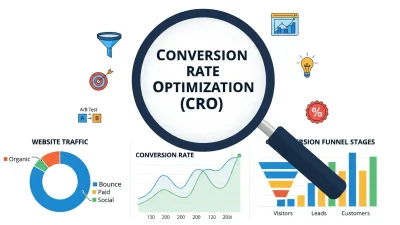
Ecommerce Conversion Optimization is the process of improving an online store so that a larger percentage of visitors complete desired actions. These actions can include purchases, product views, cart additions, account registrations, or other commercially valuable interactions.
Why Conversion Rate Matters
Conversion rate provides an indication of how effectively an ecommerce website turns visitors into customers. A store receiving thousands of visitors may still generate limited revenue if visitors struggle to find products, understand pricing, trust the business, or complete checkout.
Improving conversion performance can therefore help businesses generate more value from their existing traffic. Rather than focusing exclusively on attracting additional visitors, optimization examines how effectively the current audience moves through the purchasing journey.
The Role of Data in Optimization
Data provides evidence about how customers interact with an online store. Analytics can reveal which pages receive the most attention, where users leave, which products generate interest, and which traffic sources produce sales.
These insights help businesses identify potential problems and opportunities. Data does not automatically provide the solution, but it gives marketers a stronger foundation for testing and decision-making.
Understanding Ecommerce Customer Behavior
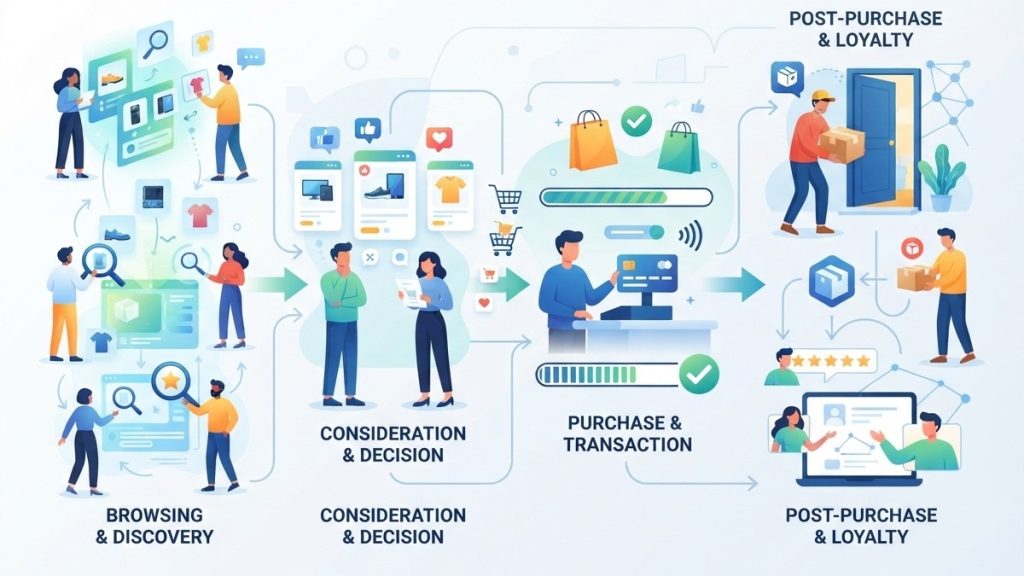 Understanding customer behavior is essential for making effective optimization decisions. Visitors may arrive with different levels of purchase intent, expectations, and product knowledge.
Analyzing User Journeys
An ecommerce customer journey can include search, product discovery, product evaluation, cart addition, checkout, and post-purchase engagement. Data can help businesses understand how visitors move between these stages.
If many users visit product pages but rarely add products to their carts, the issue may involve product information, pricing, trust signals, images, or calls to action. If many customers abandon carts during checkout, the problem may be related to shipping costs, payment options, account requirements, or unnecessary steps.
Identifying High-Intent Visitors
Not all website visitors have the same commercial value. Some may be researching products, while others may already be ready to purchase. Behavioral data can help businesses identify high-intent actions such as repeated product visits, cart additions, checkout initiation, or interactions with product comparisons. Understanding these behaviors allows marketers to create more relevant experiences for different customer groups.
Using Analytics for Ecommerce Conversion Optimization
Analytics tools provide valuable information about website performance and customer behavior. However, the most useful insights come from connecting multiple data points rather than looking at a single metric.
Measuring Important Conversion Metrics
Businesses can monitor metrics such as product-page engagement, add-to-cart rate, checkout completion rate, purchase conversion rate, average order value, revenue per visitor, and cart abandonment rate.
These metrics help identify where customers may be experiencing difficulties. For example, a high add-to-cart rate combined with a low purchase completion rate may indicate that checkout requires closer examination.
Combining Quantitative and Qualitative Data
Numbers explain what is happening, but they may not always explain why it is happening. Customer surveys, reviews, support conversations, usability testing, and feedback can provide additional context.
Combining behavioral analytics with direct customer feedback can help businesses develop more complete hypotheses for optimization. This approach reduces the risk of making major decisions based solely on assumptions.
Improving Product Pages for Higher Conversions
Product pages are among the most important conversion points in an ecommerce store. Customers use these pages to evaluate whether a product meets their needs before deciding whether to purchase.
Creating Clear Product Information
Product descriptions should answer important customer questions clearly. Relevant specifications, dimensions, materials, compatibility details, usage information, pricing, availability, and delivery details can help customers make informed decisions.
When important information is difficult to find, customers may leave the page to search elsewhere. Clear content can reduce uncertainty and make the purchasing decision easier.
Using High-Quality Product Images
Images provide visual information that customers cannot obtain by physically examining an online product. Multiple views, detailed images, lifestyle photography, and appropriate zoom functionality can help shoppers understand what they are considering.
For certain products, demonstrations or videos may provide additional context. Visual content should support the purchasing decision rather than simply decorate the page.
Improving Website Experience to Boost Website Engagement
 A smooth website experience can encourage visitors to explore products and continue through the purchasing journey. Businesses that want to Boost website engagement should examine navigation, page speed, content clarity, search functionality, and mobile usability.
Simplifying Website Navigation
Customers should be able to locate product categories and important information without unnecessary effort. Logical menus, filters, search functionality, and category structures can help visitors find relevant products more efficiently.
Complex navigation can create frustration, especially when a store offers a large number of products. An organized information structure makes product discovery easier.
Improving Mobile Shopping
Mobile users represent an important part of ecommerce traffic. A website that looks good on desktop but performs poorly on mobile can lose potential customers.
Responsive layouts, readable text, accessible buttons, simple forms, and fast-loading pages can improve mobile usability. Businesses should test important shopping actions across different screen sizes and devices.
Optimizing the Checkout Experience
Checkout is one of the most sensitive stages of the ecommerce journey. Customers who have already selected products can still abandon their purchase if the checkout experience creates unnecessary friction.
Reducing Unnecessary Checkout Steps
Long forms, complicated navigation, mandatory account creation, unclear shipping information, and unexpected costs can discourage customers from completing purchases.
Businesses can examine checkout analytics to identify where abandonment occurs. Simplifying unnecessary steps and providing clear information can create a more efficient purchasing experience.
Providing Appropriate Payment Options
Customers may have different payment preferences depending on their location, device, and shopping habits. Providing suitable payment methods can reduce friction at the final stage of a purchase. Payment information should also be presented clearly so customers understand the process before submitting their order.
Improving Landing Page Conversion Rate
Landing pages are often used for advertising campaigns, promotions, product launches, and specific offers. A strong Landing Page Conversion Rate can make paid and organic traffic more valuable.
Matching Landing Pages With Customer Intent
The content of a landing page should match the reason a visitor arrived. If an advertisement promotes a specific product or discount, the landing page should make that offer easy to find.
A mismatch between the marketing message and landing page can create confusion and reduce conversions. Consistency helps visitors understand that they have reached the right destination.
Creating Clear Calls to Action
A call to action should communicate the next step clearly. Depending on the purpose of the page, this might involve purchasing a product, adding an item to a cart, requesting information, or signing up for an offer. Calls to action should be visually identifiable and positioned where users can find them without unnecessary effort.
Using Personalization to Improve Ecommerce Sales
Personalization can make online shopping experiences more relevant by using information about customer interests, behavior, and previous interactions.
Recommending Relevant Products
Product recommendations can help customers discover related or complementary items. Recommendations based on browsing behavior, previous purchases, or product categories can create additional opportunities for sales.
However, recommendations should remain relevant. Showing unrelated products can distract customers and reduce the usefulness of the shopping experience.
Personalized Offers and Messages
Businesses may use customer segments to present different messages or offers. Returning customers may see recommendations based on previous purchases, while new visitors may receive introductory information. Personalization should be based on appropriate data practices and should respect customer privacy.
Improving Lead Conversion for Ecommerce Businesses
Although ecommerce websites are primarily focused on purchases, some businesses also depend on inquiries, consultations, registrations, or other lead-generation actions. Lead conversion can therefore be an important part of ecommerce optimization for certain business models.
Capturing Interested Visitors
Some visitors may not be ready to purchase immediately. Newsletter subscriptions, product alerts, consultation requests, downloadable resources, and other relevant offers can help businesses maintain communication with interested prospects. The value of these offers should be clear and connected to the customer’s needs.
Nurturing Potential Customers
A visitor who does not purchase during the first session may still become a customer later. Email communication, useful educational content, product reminders, and personalized follow-up can support the customer journey. Businesses should focus on providing genuine value rather than overwhelming potential customers with excessive promotional messages.
Using A/B Testing to Improve Conversion Performance
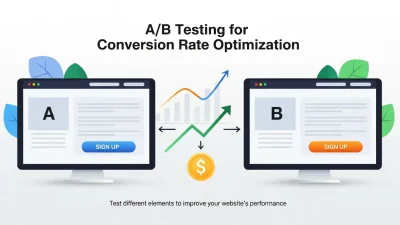
A/B testing allows businesses to compare two versions of a website element and measure how users respond.
Testing Product Page Elements
Businesses can test headlines, product descriptions, images, calls to action, trust signals, page layouts, and other elements. The objective is to determine whether a specific change produces a measurable improvement. Testing should be structured carefully so that businesses can identify which change contributed to the observed result.
Testing Checkout and Landing Pages
Checkout forms and landing pages can also be tested. Businesses may compare different layouts, form lengths, calls to action, promotional messages, or trust elements.
The results can provide useful evidence for future optimization decisions. Testing should continue over time because customer behavior and market conditions can change.
Building Trust to Increase Ecommerce Conversions
 Trust is an important factor in online purchasing decisions. Customers need confidence that a business can deliver what it promises and handle transactions appropriately.
Using Reviews and Customer Feedback
Authentic customer reviews can provide useful social proof. Product ratings, detailed reviews, testimonials, and customer experiences may help shoppers evaluate products with greater confidence. Businesses should present customer feedback transparently and avoid misleading practices.
Providing Clear Policies
Shipping, returns, refunds, warranties, privacy information, and payment details should be easy to locate. Clear policies reduce uncertainty and help customers understand what to expect after placing an order. Transparency can contribute to a more trustworthy shopping experience.
Measuring the Results of Optimization
Ecommerce Conversion Optimization requires continuous measurement. A website change should be evaluated based on relevant business outcomes rather than assumptions.
Tracking Revenue and Customer Value
Conversion rate is useful, but it should not be the only metric. Businesses should also consider revenue, average order value, repeat purchases, customer lifetime value, and profitability.
A change that increases conversions but significantly reduces order value may not produce the desired business outcome. Looking at multiple metrics provides a more complete picture.
Reviewing Results Regularly
Customer behavior can change because of seasonality, pricing, competition, promotions, technology, or market conditions. Regular performance reviews help businesses identify new opportunities and emerging problems. Continuous analysis allows optimization to become an ongoing business process rather than a one-time website project.
Creating a Long-Term Ecommerce Optimization Strategy
Successful optimization requires consistency. Businesses should establish a process for collecting data, identifying opportunities, developing hypotheses, testing changes, and measuring results.
A long-term strategy can include improving product pages, simplifying navigation, optimizing checkout, strengthening mobile experiences, refining landing pages, and developing personalized customer journeys.
Conclusion
Data-driven Ecommerce Conversion Optimization gives online businesses a structured way to understand customer behavior and improve the purchasing journey. By analyzing website performance, product-page interactions, checkout behavior, customer feedback, and marketing data, businesses can identify opportunities to reduce friction and improve conversions.
Improving website usability can Boost website engagement, while optimized landing pages can strengthen the Landing Page Conversion Rate. For businesses that rely on inquiries or other pre-purchase actions, better lead conversion can also contribute to overall growth.
Frequently Asked Questions
1. What is Ecommerce Conversion Optimization?
Ecommerce Conversion Optimization is the process of improving an online store so that more visitors complete valuable actions such as purchases, cart additions, registrations, or inquiries. It uses customer behavior, analytics, testing, and usability improvements to strengthen the shopping experience.
2. Why is data important for Ecommerce Conversion Optimization?
Data helps businesses understand how visitors interact with their websites. Analytics can reveal where customers engage, where they leave, and which actions contribute to sales, allowing businesses to make optimization decisions based on measurable evidence.
3. How can Ecommerce Conversion Optimization increase sales?
Optimization can improve product pages, navigation, checkout, landing pages, mobile experiences, and customer journeys. When unnecessary barriers are reduced, more qualified visitors may complete purchases, potentially increasing revenue from existing traffic.
4. How can businesses Boost website engagement?
Businesses can Boost website engagement by improving navigation, website speed, mobile usability, product discovery, content quality, search functionality, and interactive shopping experiences. The right improvements depend on customer behavior and website data.
5. What is Landing Page Conversion Rate?
Landing Page Conversion Rate measures the percentage of visitors who complete a desired action on a landing page. The action may include making a purchase, submitting a form, signing up, or requesting additional information.
6. How does lead conversion relate to ecommerce?
Lead conversion is relevant when an ecommerce business collects inquiries, registrations, consultations, subscriptions, or other potential customer actions. Improving these processes can help turn interested visitors into customers over time.
7. What ecommerce metrics should businesses track?
Businesses can monitor conversion rate, add-to-cart rate, checkout completion, cart abandonment, average order value, revenue per visitor, customer acquisition cost, repeat purchase rate, and customer lifetime value.
8. Does website speed affect ecommerce conversions?
Website speed can influence user experience because slow pages may create frustration and cause visitors to leave. Businesses can monitor performance and identify pages where loading issues may be affecting the shopping journey.
9. How does A/B testing help ecommerce websites?
A/B testing compares different versions of a website element to measure user responses. Businesses can test product pages, headlines, calls to action, landing pages, forms, and other elements to identify measurable opportunities for improvement.
10. How often should an ecommerce website be optimized?
Optimization should be an ongoing process rather than a one-time activity. Businesses can regularly review analytics, customer feedback, conversion metrics, and testing results to identify new opportunities and respond to changing customer behavior.