
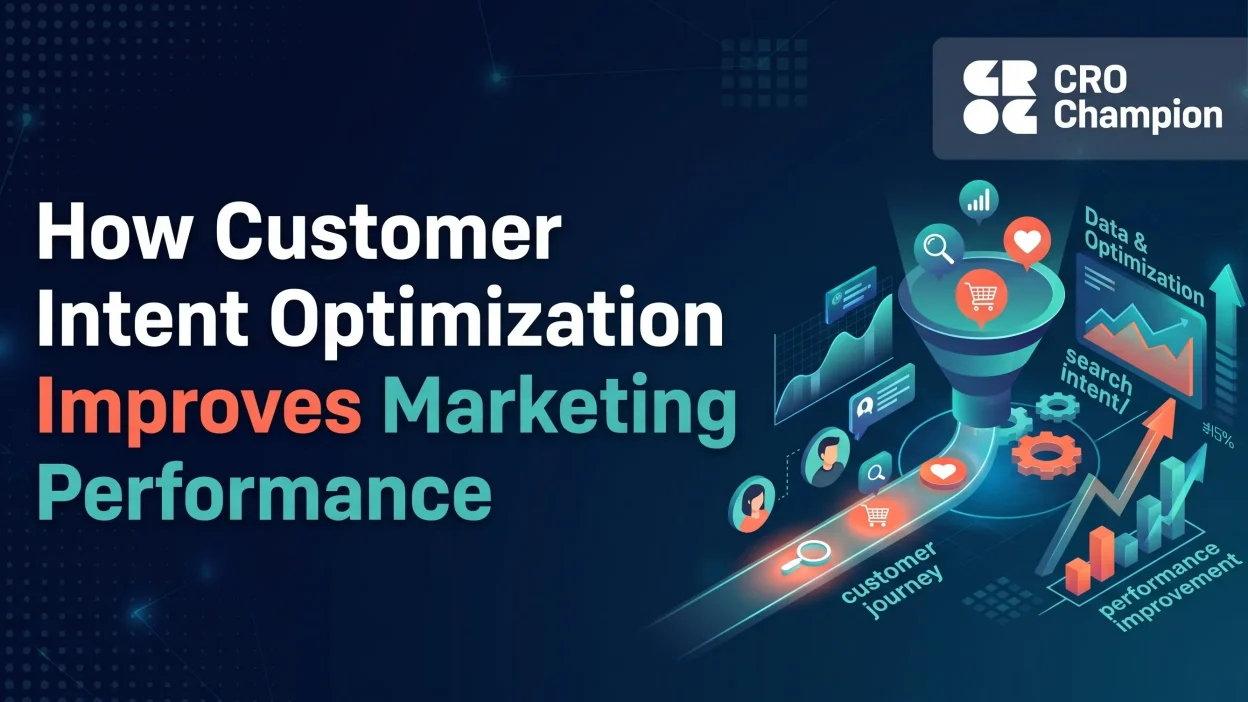
Customer Intent Optimization is an important digital marketing strategy that helps businesses understand what potential customers want and deliver relevant experiences throughout their buying journey. Modern consumers interact with brands through search engines, websites, social media platforms, email campaigns, and online advertisements before making purchasing decisions. Understanding these interactions allows businesses to create marketing campaigns that match customer expectations and encourage meaningful engagement.
Traditional marketing often focuses on reaching a large audience without fully understanding individual customer needs. However, intent-based marketing focuses on identifying why people search for specific products, services, or information. By analyzing customer behavior, search queries, browsing patterns, and engagement activities, businesses can develop more relevant marketing messages and improve conversion opportunities. Effective Customer Intent Optimization also supports better Landing Page Performance, improves Ecommerce User Experience, and strengthens a company’s Lead Nurturing Strategy. These elements work together to create a smoother customer journey, reduce unnecessary interactions, and help potential buyers make confident decisions.
Understanding Customer Intent Optimization
Customer Intent Optimization involves analyzing customer needs, interests, and behavioral signals to deliver relevant marketing experiences. It helps businesses understand what customers are trying to accomplish when they search online, visit a website, or interact with marketing content.
What Is Customer Intent?
Customer intent refers to the motivation behind a customer’s online activity or purchasing decision. Someone searching for information about a product may have different needs from someone comparing prices or looking for a place to purchase it.
Understanding these differences allows marketers to develop content and campaigns that address specific customer requirements. It also helps businesses communicate more effectively at different stages of the buying journey.
Why Does Customer Intent Matter?
Customer intent matters because it connects marketing messages with actual customer needs. When businesses understand what their audiences want, they can deliver more useful information, relevant recommendations, and appropriate offers.
This approach reduces irrelevant marketing communication and improves the overall customer experience. It also helps businesses allocate marketing resources toward audiences with stronger engagement and purchasing potential.
Identify Different Types of Customer Intent
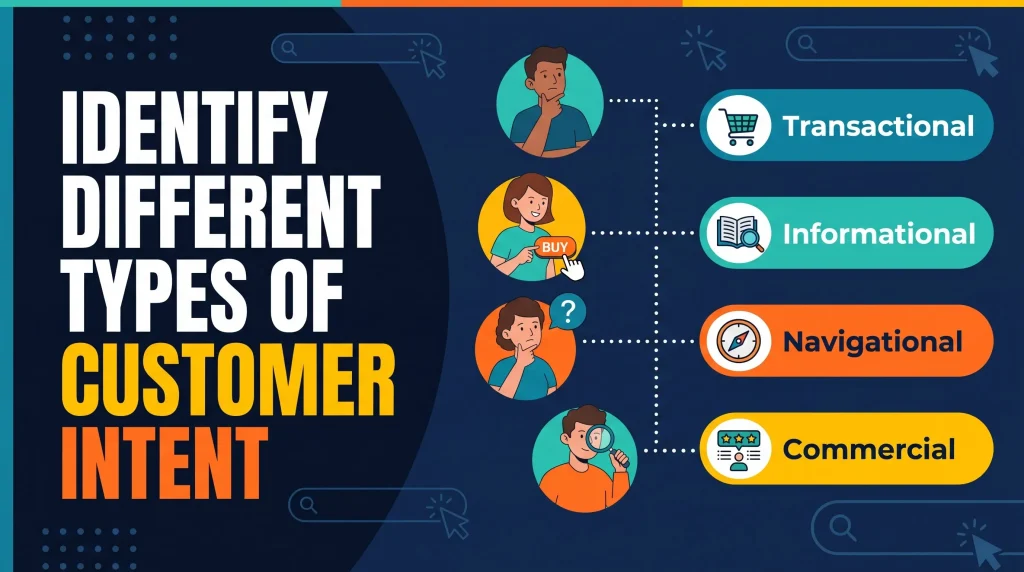 Understanding different types of customer intent helps marketers determine what information or experience potential customers expect. Each intent category represents a different stage of the decision-making process, allowing businesses to develop more relevant content and marketing campaigns.
Informational Intent
Informational intent occurs when customers search for answers, explanations, or educational resources. For example, someone searching for digital marketing strategies may want to understand how different marketing channels work before choosing a service.
Businesses can address this intent through educational blog posts, guides, tutorials, and informative videos. Providing valuable information helps establish credibility and introduces potential customers to the brand.
Commercial and Transactional Intent
Commercial intent appears when customers compare products, evaluate services, or research available solutions. Transactional intent occurs when they are ready to complete an action, such as purchasing a product or requesting a consultation.
Businesses can target commercial intent through comparison pages, product reviews, case studies, and service explanations. Transactional intent can be addressed through clear pricing information, product pages, and straightforward purchasing options.
Improve Audience Targeting Through Customer Intent
Customer intent provides valuable information about audience interests and purchasing behavior. Instead of targeting people only through general demographics, marketers can use intent signals to create more focused audience segments and deliver campaigns that match specific customer requirements.
Analyze Customer Behavior
Businesses can analyze website visits, search queries, page interactions, content engagement, and previous purchases to understand customer interests. These behavioral signals help identify which products, services, or topics attract the most attention.
Marketing analytics platforms can provide insights into how customers interact with different digital channels. By reviewing these insights, marketers can identify audience patterns and improve campaign targeting decisions.
Create Relevant Audience Segments
Audience segmentation allows businesses to group potential customers according to their interests, needs, and purchasing readiness. For example, visitors researching a service may require educational content, while returning visitors comparing pricing may respond better to product demonstrations or consultation offers.
This segmentation helps marketers deliver more relevant communication. It also reduces unnecessary advertising expenses by focusing on audiences whose interests align with business offerings.
Improve Landing Page Performance With Intent-Based Content
 Landing Page Performance plays an important role in converting website visitors into leads or customers. When visitors arrive on a landing page, they expect information that matches the advertisement, search result, or marketing message they interacted with previously.
Match Landing Page Content With Search Intent
A landing page should directly address the reason visitors arrived on the website. If someone searches for affordable SEO services, the landing page should explain available SEO solutions, pricing information where appropriate, and the benefits of those services.
When landing page content matches customer expectations, visitors can find relevant information more easily. This improves the overall experience and creates better opportunities for conversion.
Optimize Calls to Action
Calls to action encourage visitors to complete specific activities, such as requesting a quote, signing up for a newsletter, downloading a guide, or purchasing a product.
The CTA should match the visitor’s intent and decision-making stage. Someone exploring a service may prefer a free consultation, while a visitor ready to purchase may respond better to a direct purchase option.
Improve Page Speed and Navigation
Fast loading times, mobile-friendly layouts, and clear navigation help visitors access information without unnecessary delays. Businesses should regularly evaluate their landing pages to identify technical problems and usability issues.
Combining relevant content with a smooth browsing experience can improve engagement and support stronger conversion performance.
Enhance Ecommerce User Experience
Ecommerce User Experience directly influences how customers discover products, compare available options, and complete purchases. Customer Intent Optimization helps online stores understand what shoppers need at different stages of the buying process and organize their digital experiences accordingly.
Provide Personalized Product Recommendations
Product recommendations can help shoppers discover items that match their interests and previous interactions. Ecommerce businesses can use browsing behavior, purchase history, and product preferences to suggest relevant products.
Personalized recommendations make product discovery easier and can encourage customers to explore additional offerings. However, recommendations should remain relevant rather than overwhelming visitors with unnecessary suggestions.
Simplify the Purchasing Process
A complicated checkout process can discourage customers from completing their purchases. Online stores should provide clear product information, transparent pricing, convenient payment methods, and simple checkout procedures.
Understanding customer intent helps businesses identify where shoppers experience difficulties. Improving these areas can reduce unnecessary friction and create a more satisfying purchasing experience.
Develop an Effective Lead Nurturing Strategy
A strong Lead Nurturing Strategy helps businesses maintain relationships with potential customers who are interested in their products or services but are not yet ready to purchase. Customer intent provides useful information for determining which messages, resources, and follow-up activities are most appropriate.
Deliver Relevant Email Campaigns
Email marketing allows businesses to communicate with potential customers based on their interests and previous interactions. For example, someone downloading an educational guide may receive additional learning resources, while someone requesting service information may receive relevant case studies or consultation details.
Segmented email campaigns can make communication more useful and personalized. Businesses should focus on providing value instead of sending repetitive promotional messages.
Use Automated Follow-Up Communication
Marketing automation helps businesses deliver timely messages based on customer actions. When a visitor downloads content, subscribes to a newsletter, or requests information, automated workflows can provide relevant follow-up communication.
These workflows help maintain consistent engagement without requiring marketers to manage every interaction manually. Businesses should also respect communication preferences and provide clear unsubscribe options.
Use Data Analytics to Understand Customer Intent
 Data analytics helps businesses identify patterns in customer behavior and evaluate whether their marketing strategies are meeting audience expectations. By collecting and analyzing relevant performance data, marketers can make more informed decisions and improve campaign effectiveness.
Track Important Marketing Metrics
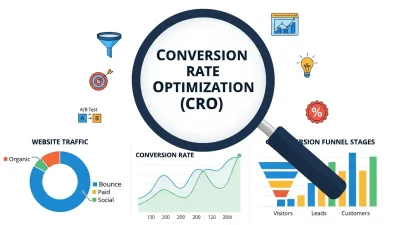
Businesses should monitor metrics such as website engagement, conversion rates, click-through rates, lead generation, and customer acquisition costs. These indicators provide insights into how audiences interact with marketing campaigns.
However, metrics should always be interpreted according to business objectives. A high number of website visits does not necessarily indicate strong marketing performance if visitors are not finding relevant information or completing desired actions.
Identify Customer Journey Problems
Analytics can help marketers understand where potential customers leave the buying process. For example, visitors may leave after viewing a pricing page, abandoning a shopping cart, or encountering complicated forms.
Identifying these issues allows businesses to improve content, navigation, and conversion processes. Regular performance reviews help ensure that marketing strategies remain aligned with customer expectations.
Apply AI and Automation to Customer Intent Optimization
Artificial intelligence and automation technologies are changing how businesses understand customer behavior and deliver personalized marketing experiences. These technologies can process large amounts of behavioral information, identify patterns, and support faster marketing decisions.
Use AI-Powered Customer Insights
AI-powered analytics tools can help businesses analyze search behavior, customer interactions, and engagement patterns. These insights can support audience segmentation, content recommendations, and campaign planning.
However, AI-generated insights should be reviewed carefully. Businesses need accurate data and appropriate privacy practices to ensure that marketing decisions remain relevant and responsible.
Personalize Customer Communication
Automation tools can help businesses deliver personalized messages according to customer interests and interactions. For example, an ecommerce website may recommend relevant products, while a service provider may automatically share information based on a visitor’s selected interests.
Combining automation with customer intent data helps businesses create more consistent marketing experiences while reducing repetitive manual work.
Align Content Marketing With Customer Intent
Content marketing becomes more effective when it addresses the questions and challenges customers experience during their buying journey. Customer Intent Optimization helps businesses select relevant topics, develop useful resources, and connect content with specific audience needs.
Create Content for Different Buying Stages
Customers require different information depending on their level of awareness. People in the early research stage may need educational articles, while customers comparing solutions may benefit from detailed guides, testimonials, and comparison resources.
Businesses should organize content around these different requirements. This makes it easier for visitors to discover relevant information and move toward informed purchasing decisions.
Optimize Content for Search Intent
Search intent optimization involves creating content that matches the purpose behind a search query. Marketers should analyze relevant keywords, understand what searchers expect, and develop content that provides useful answers.
A well-organized content strategy can improve search relevance, attract qualified organic traffic, and strengthen brand authority over time.
Measure and Continuously Improve Marketing Performance
Customer Intent Optimization requires ongoing evaluation because customer preferences, market conditions, and digital behavior change over time. Businesses should regularly review campaign performance and adjust their strategies according to measurable results.
Conduct A/B Testing
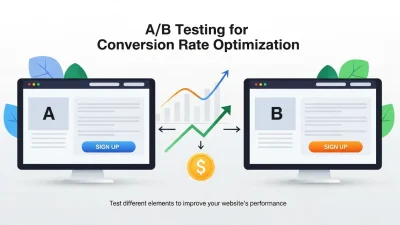
A/B testing allows marketers to compare different versions of marketing elements, such as landing page headlines, CTA buttons, email subject lines, and page layouts.
By analyzing which version performs better against a defined objective, businesses can make evidence-based improvements. Testing should focus on meaningful changes rather than modifying too many elements simultaneously.
Collect and Apply Customer Feedback
Customer feedback provides direct insights into expectations, concerns, and satisfaction levels. Surveys, reviews, support conversations, and customer interviews can reveal problems that may not be visible through analytics alone.
Businesses should use this feedback to improve their messaging, website experience, and service delivery. Continuous improvement helps maintain stronger customer relationships and sustainable marketing performance.
Conclusion
Customer Intent Optimization improves marketing performance by helping businesses understand customer needs and deliver relevant experiences throughout the buying journey. From identifying different types of customer intent to improving audience targeting, every strategy contributes to more meaningful customer interactions.
Improving Landing Page Performance, enhancing Ecommerce User Experience, and developing an effective Lead Nurturing Strategy can help businesses create smoother customer journeys and improve conversion opportunities. Data analytics, AI-powered insights, and intent-focused content marketing further strengthen these efforts.
Frequently Asked Questions (FAQs)
1. What is Customer Intent Optimization?
Customer Intent Optimization is a marketing strategy that analyzes customer needs, interests, and behavioral signals to deliver relevant content, advertisements, products, and digital experiences.
2. Why is Customer Intent Optimization important?
It helps businesses understand customer expectations, improve audience targeting, create relevant marketing messages, and increase opportunities for engagement and conversions.
3. What are the main types of customer intent?
The main types include informational, navigational, commercial, and transactional intent. Each represents a different purpose behind customer searches and online activities.
4. How does Customer Intent Optimization improve conversion rates?
It improves conversions by matching marketing messages, landing page content, and calls to action with customer expectations and purchasing readiness.
5. How does customer intent affect Landing Page Performance?
Customer intent helps businesses create landing pages that provide relevant information and appropriate CTAs, making it easier for visitors to find solutions and complete desired actions.
6. How does Customer Intent Optimization improve Ecommerce User Experience?
It helps ecommerce businesses provide relevant product recommendations, improve product discovery, simplify checkout processes, and create more personalized shopping experiences.
7. What is the role of a Lead Nurturing Strategy?
A Lead Nurturing Strategy maintains relationships with potential customers through relevant emails, educational content, automated follow-ups, and personalized communication.
8. How can businesses identify customer intent?
Businesses can analyze search queries, website behavior, browsing history, purchase patterns, customer feedback, and engagement data to understand customer intent.
9. Can AI improve Customer Intent Optimization?
Yes. AI can analyze customer behavior, identify patterns, support audience segmentation, and help businesses deliver personalized recommendations and marketing communication.
10. How can businesses measure Customer Intent Optimization success?
Businesses can evaluate conversion rates, engagement, lead quality, click-through rates, customer acquisition costs, and customer journey performance to measure the effectiveness of their strategies.