
The Customer Decision Journey plays a crucial role in determining how people discover a brand, evaluate available options, and decide whether to purchase a product or service. In today’s competitive digital marketplace, businesses must understand every interaction customers have with their brand to create a smoother buying experience. A well-optimized journey helps reduce friction, build trust, and encourage potential customers to move toward conversion.
Optimizing this journey requires a combination of customer research, relevant content, personalized communication, and effective website design. Businesses must also understand the Purchase Decision Process, identify opportunities for Website Conversion Improvement, and implement effective Product Page Optimization techniques. By aligning marketing strategies with customer expectations, businesses can improve engagement, increase conversions, and build lasting customer relationships.
Understanding the Customer Decision Journey
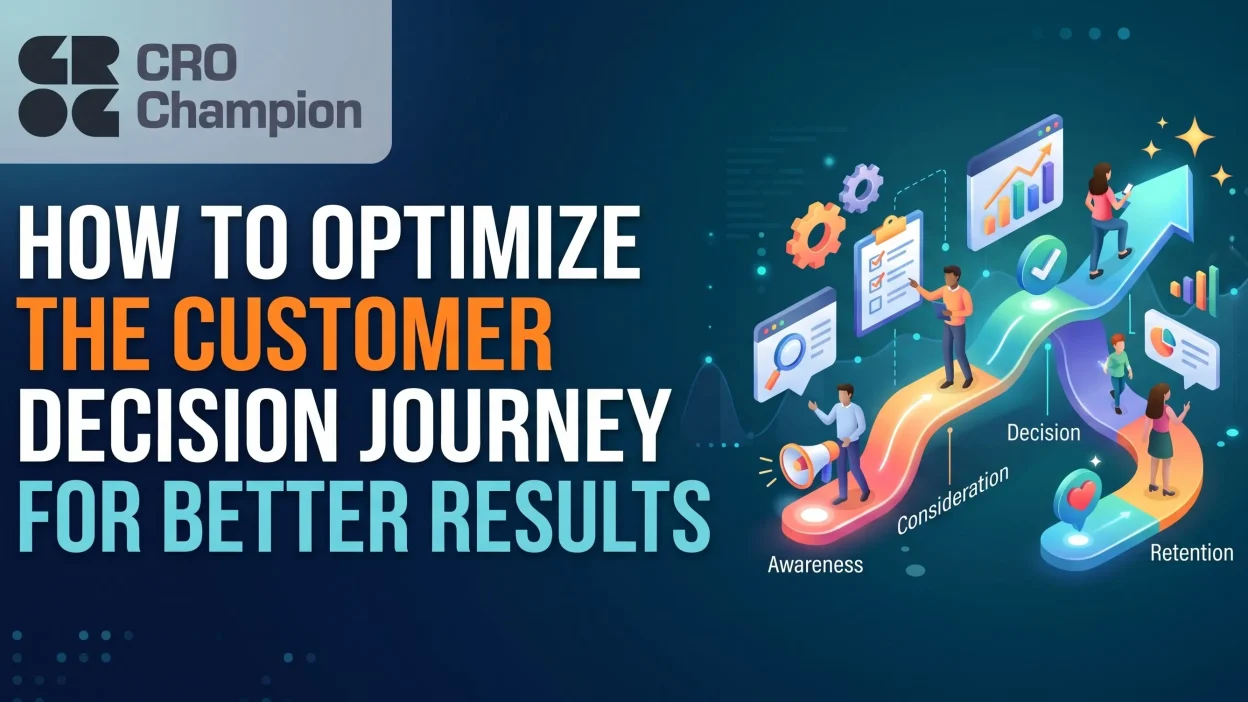
The Customer Decision Journey describes the stages customers experience when considering and purchasing a product or service. Understanding these stages helps businesses identify customer needs, deliver relevant information, and remove obstacles that may prevent a purchase. A clear understanding of customer behavior also allows marketing teams to create more effective campaigns and improve the overall customer experience.
Recognizing the Main Stages of the Journey
Customers generally move through awareness, consideration, evaluation, purchase, and post-purchase engagement. During awareness, they recognize a problem or discover a potential solution. In the consideration stage, they explore different products and services. During evaluation, they compare features, pricing, reviews, and benefits before making a final decision.
The journey does not always follow a straight line. Customers may revisit earlier stages, compare alternatives, or delay their decisions. Businesses should therefore provide consistent information across different touchpoints. Understanding these patterns helps companies develop marketing strategies that support customers wherever they are in the decision-making process.
Understanding Customer Expectations
Customer expectations vary depending on the product, industry, price, and urgency of the purchase. Some buyers prioritize affordability, while others focus on quality, convenience, reliability, or customer support. Identifying these preferences helps businesses communicate the most relevant benefits at each stage of the journey.
Customer surveys, website analytics, interviews, and feedback forms can reveal what customers value most. Businesses can use these insights to improve messaging, address common concerns, and create experiences that match customer expectations. A customer-focused approach makes the decision journey more relevant and reduces unnecessary confusion.
Mapping the Purchase Decision Process
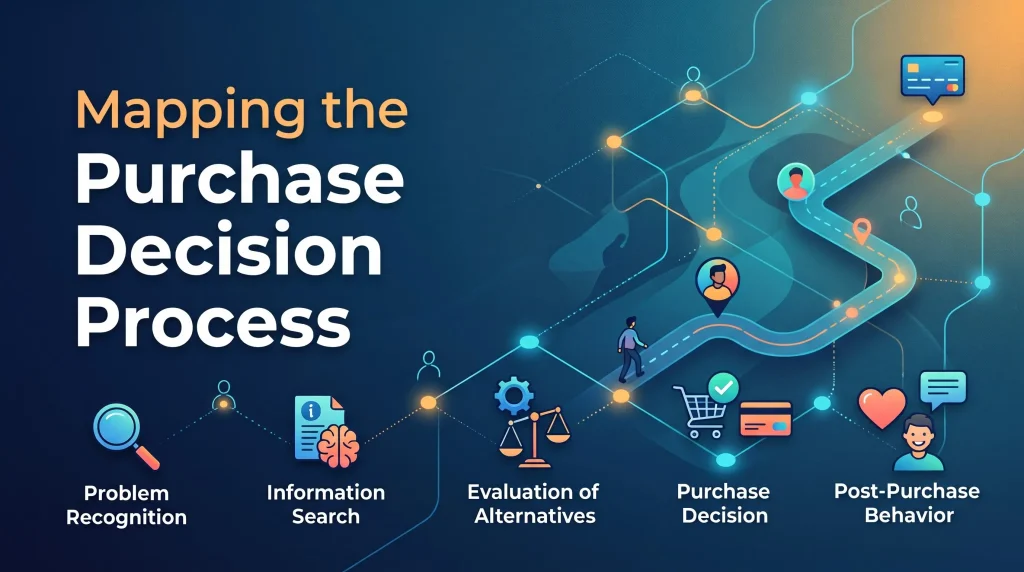 Mapping the Purchase Decision Process helps businesses understand how customers interact with their brand before making a purchase. It identifies important touchpoints, customer questions, and potential barriers that may interrupt the buying experience. A detailed journey map allows businesses to connect marketing activities with customer needs and prioritize improvements that can generate measurable results.
Identifying Important Customer Touchpoints
Customer touchpoints include search engine results, social media posts, advertisements, website pages, product demonstrations, email communications, and customer support interactions. Each touchpoint contributes to how customers perceive a brand and evaluate its offerings.
Businesses should examine these interactions to determine whether customers receive consistent and useful information. For example, an advertisement may promise a particular benefit, but the landing page must clearly explain how the product delivers it. Maintaining consistency across touchpoints strengthens trust and helps customers progress through the decision journey with greater confidence.
Finding Barriers to Purchase
Purchase barriers are obstacles that make customers hesitate or abandon their decisions. Common examples include unclear pricing, complicated navigation, limited product information, unexpected shipping charges, slow page loading, and insufficient trust signals.
Businesses can identify these problems by analyzing conversion funnels, customer feedback, support inquiries, and checkout abandonment rates. Once the main barriers are understood, companies can prioritize practical solutions. Simplifying forms, clarifying policies, and improving product information can make the purchase process easier and more transparent.
Improving Website Conversion Through Better User Experience
Website Conversion Improvement depends on making it easy for visitors to understand an offer and take the next step. A website should provide clear navigation, useful information, consistent messaging, and accessible calls to action. When visitors can quickly find what they need, they are more likely to engage with the business and complete meaningful actions.
Simplifying Website Navigation
Clear website navigation helps customers discover products, compare options, and locate important information without unnecessary effort. Businesses should organize pages into logical categories, use descriptive menu labels, and make essential information accessible across desktop and mobile devices.
A complicated navigation structure can create frustration and increase the likelihood that visitors leave before finding relevant products or services. Reviewing navigation paths through analytics and usability testing helps identify confusing areas. Improving these paths creates a smoother customer experience and supports better movement through the decision journey.
Creating Effective Calls to Action
Calls to action guide visitors toward specific actions, such as exploring a product, requesting a consultation, signing up for a newsletter, or completing a purchase. Effective calls to action use clear language that communicates what happens next.
Placement also matters. A relevant call to action should appear when customers have enough information to make an informed decision. Businesses should avoid overwhelming visitors with competing messages. Testing different wording, placement, and presentation can help identify which approaches encourage meaningful engagement and support conversion goals.
Strengthening Product Page Optimization
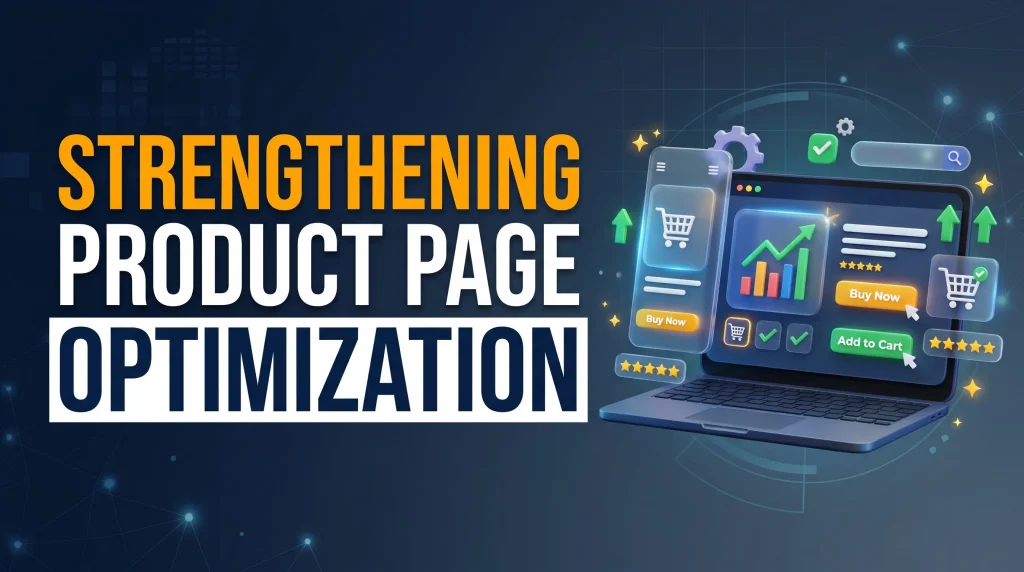 Product Page Optimization is essential because product pages often serve as the final evaluation point before customers make a purchase. These pages should answer important questions, explain product benefits, establish credibility, and make purchasing straightforward. Well-designed product pages reduce uncertainty and help customers determine whether an offering meets their requirements.
Writing Clear and Persuasive Product Descriptions
Product descriptions should explain what a product does, who it serves, and why its features matter. Rather than listing specifications without context, businesses should connect those specifications to practical customer benefits. Clear descriptions help visitors understand the product’s value and determine whether it fits their needs.
Relevant keywords can improve organic search visibility when incorporated naturally into product titles, headings, and descriptions. Businesses should avoid exaggerated claims and provide accurate information about product functionality, compatibility, pricing, and limitations. Transparent communication builds confidence and supports better purchasing decisions.
Using Product Images, Reviews, and Trust Signals
High-quality product images help customers understand a product’s appearance, features, and details. Where appropriate, multiple angles, demonstrations, and videos can provide additional context. Customer reviews and testimonials offer social proof by showing how other buyers have experienced the product.
Trust signals may include transparent return policies, secure payment information, warranties, verified reviews, and accessible customer support details. These elements can reduce perceived risk, particularly when customers are unfamiliar with a brand. Businesses should ensure that all claims and trust indicators are accurate, relevant, and easy to verify.
Personalizing the Customer Decision Journey
Personalization helps businesses deliver relevant content, offers, and recommendations based on customer interests and behavior. When used responsibly, it makes the decision journey more useful by reducing irrelevant information and helping customers discover suitable products. Effective personalization should respect privacy, maintain transparency, and avoid making assumptions that could create an uncomfortable customer experience.
Delivering Relevant Content at Each Stage
Customers need different information depending on where they are in the decision journey. Awareness-stage visitors may benefit from educational articles and introductory guides, while consideration-stage customers may prefer comparisons, case studies, and product demonstrations. Buyers closer to purchasing may need detailed specifications, pricing information, and clear answers to common concerns.
Matching content to customer intent improves relevance and helps people make informed decisions. Businesses can organize content around common questions and customer needs, ensuring that useful resources are available at appropriate moments throughout the buying process.
Using Email Marketing and Retargeting
Email marketing can support the customer journey by delivering helpful information, product updates, and relevant reminders to subscribers who have provided appropriate consent. For example, an educational email series can help prospective customers understand a product before they decide whether to purchase it.
Retargeting can reconnect with previous website visitors through relevant advertising, subject to applicable privacy requirements and platform policies. Businesses should avoid excessive repetition and ensure that advertisements provide genuine value. Measuring engagement, conversions, and unsubscribe rates helps determine whether these strategies are improving the customer experience.
Measuring and Improving Customer Journey Performance
 Measuring customer journey performance helps businesses determine whether their optimization strategies are effective. Analytics reveal how visitors move between pages, where they abandon the process, and which interactions contribute to conversions. Regular performance reviews allow companies to identify problems, test improvements, and allocate resources toward activities that support their business objectives.
Tracking Relevant Conversion Metrics
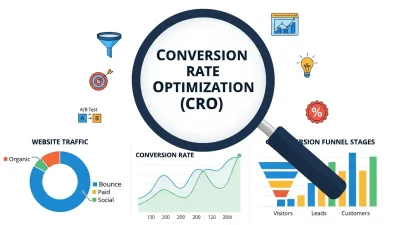
Important metrics include conversion rate, bounce or engagement indicators, cart abandonment, average order value, and customer acquisition cost. Businesses may also examine landing page performance, product page engagement, and the completion rate of important forms.
Each metric provides a different perspective on customer behavior. For example, high product page traffic combined with low purchases may indicate missing information, pricing concerns, or usability problems. Reviewing metrics together helps businesses investigate potential causes rather than relying on a single number to explain performance.
Using A/B Testing to Improve Results
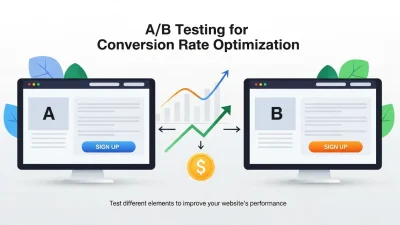
A/B testing compares two versions of a webpage or element to evaluate which performs better against a defined objective. Businesses might test different headlines, product descriptions, page layouts, or calls to action to understand how changes influence customer behavior.
Reliable testing requires a clear hypothesis, an appropriate measurement method, and sufficient data to support a useful conclusion. Businesses should avoid changing too many elements simultaneously when they need to identify the cause of a performance difference. Continuous testing supports evidence-based improvements throughout the Customer Decision Journey.
Conclusion
Optimizing the Customer Decision Journey requires businesses to understand customer expectations, map important touchpoints, reduce purchase barriers, and deliver relevant experiences at every stage. Improvements to website navigation, product pages, personalization, and calls to action can help customers make confident decisions while supporting stronger conversion performance.
Businesses should also measure their results and use customer feedback to guide ongoing improvements. By combining a better understanding of the Purchase Decision Process with effective Website Conversion Improvement and Product Page Optimization, companies can create a more seamless buying experience, increase customer satisfaction, and support sustainable business growth.
Frequently Asked Questions
1. What Is the Customer Decision Journey?
The Customer Decision Journey describes how customers discover a product, evaluate alternatives, make purchasing decisions, and interact with a brand after buying. Understanding this journey helps businesses deliver relevant information and improve customer experiences.
2. Why Is the Customer Decision Journey Important?
It helps businesses understand customer behavior, identify purchasing barriers, and improve interactions across marketing and sales channels. A well-managed journey can support better customer satisfaction, stronger conversions, and long-term relationships.
3. What Are the Main Stages of the Customer Decision Journey?
Common stages include awareness, consideration, evaluation, purchase, and post-purchase engagement. The exact journey varies by customer and product, and buyers may revisit earlier stages before making a decision.
4. How Can Businesses Map the Purchase Decision Process?
Businesses can combine customer research, website analytics, feedback, and conversion funnel analysis to identify key touchpoints. Mapping these interactions reveals customer questions, friction points, and opportunities to improve the buying experience.
5. How Does Website Conversion Improvement Support the Customer Journey?
Website Conversion Improvement focuses on reducing friction and making important actions easier to complete. Clear navigation, relevant content, faster page loading, and effective calls to action can help visitors progress toward conversion.
6. Why Is Product Page Optimization Important?
Product Page Optimization helps customers understand product features, benefits, pricing, and purchase conditions. Clear descriptions, useful images, genuine reviews, and transparent policies can reduce uncertainty and support informed decisions.
7. How Can Personalization Improve Customer Decisions?
Personalization delivers relevant content and recommendations based on customer interests and interactions. When implemented responsibly, it can reduce information overload and help customers find products or services that better match their needs.
8. Which Metrics Measure Customer Decision Journey Performance?
Useful metrics include conversion rate, cart abandonment, customer acquisition cost, average order value, and engagement with important pages. Businesses should select metrics that reflect their objectives and evaluate them together for better insights.
9. How Often Should Businesses Optimize the Customer Decision Journey?
Businesses should review performance regularly and prioritize changes based on customer feedback, analytics, and business goals. Major updates, changes in customer behavior, and declining conversion rates may indicate a need for additional optimization.
10. Can Optimizing the Customer Decision Journey Increase Sales?
It can contribute to increased sales by reducing friction, improving product understanding, and helping customers make informed decisions. Actual results depend on factors such as product quality, pricing, market demand, customer trust, and the effectiveness of implementation.