
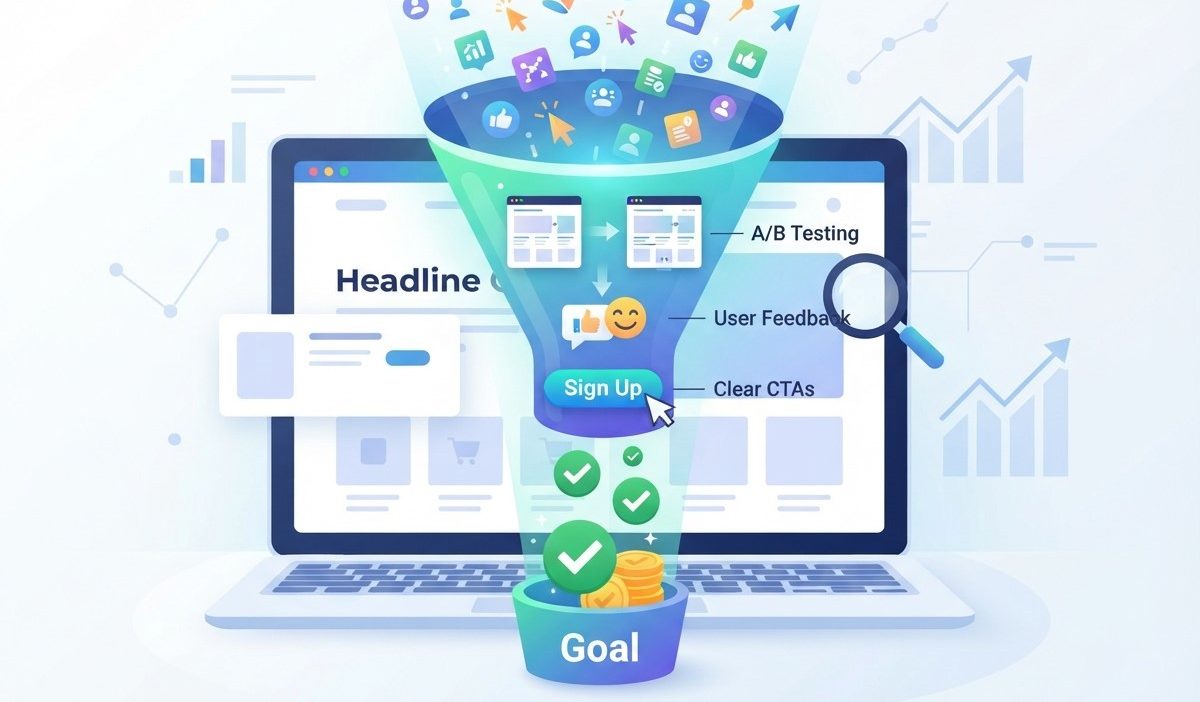
Website Conversion Improvement is one of the most effective ways to turn existing website traffic into valuable leads, customers, and revenue. Many businesses invest heavily in SEO, advertising, social media, and content marketing to attract visitors, but generating traffic is only the first step. If visitors leave without contacting the business, signing up, requesting a quote, or making a purchase, much of that marketing investment may not deliver its full potential.
Website conversion improvement focuses on making the entire user journey easier, clearer, and more persuasive. It involves understanding visitor behavior, identifying problems, improving website experiences, and testing different elements to discover what works best. When supported by website analytics, businesses can understand where users leave and which pages contribute to conversions.
A strong approach also uses Data-driven optimization instead of relying on assumptions. By combining user insights, testing, performance data, and a well-planned Conversion Optimization Strategy, businesses can improve conversion rates and create sustainable online growth.
What Is Website Conversion Improvement?
Website conversion improvement is the process of increasing the percentage of website visitors who complete a desired action. The desired action depends on the business and may include purchasing a product, submitting a contact form, booking an appointment, requesting a quotation, subscribing to an email list, or registering for a service. The goal is not simply to increase the number of actions. Businesses should aim to attract quality conversions from users who are genuinely interested in their products or services.
Conversion improvement examines different aspects of the website, including page design, content, navigation, calls to action, forms, loading performance, mobile experience, trust signals, and overall usability. Improving these elements can reduce friction and encourage more visitors to move toward becoming customers.
Why Website Conversion Improvement Matters
Get More Value From Existing Traffic
Increasing website traffic can require significant time and investment. Businesses may spend money on advertising or dedicate resources to SEO and content creation. However, if the website does not convert visitors effectively, additional traffic may not produce proportional business growth.
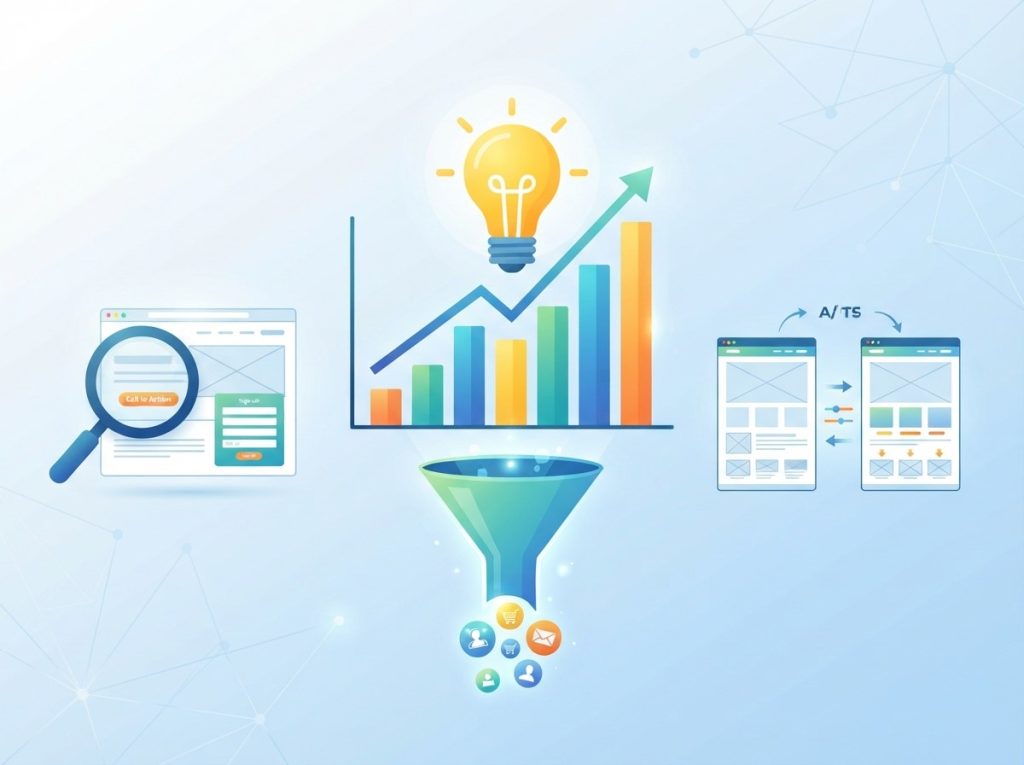
Website conversion improvement allows businesses to make better use of their existing audience. Even a small increase in conversion performance can generate additional leads or sales without requiring the same increase in traffic. For example, a website receiving thousands of monthly visitors may generate only a limited number of inquiries. Improving the landing page, call to action, form experience, and trust elements can help more visitors take action.
Improve Marketing ROI
Conversion improvement can also increase the return on marketing investment. When more visitors become customers, the cost associated with acquiring each customer can become more efficient. This is particularly valuable for paid advertising. If an advertising campaign sends users to a poorly optimized landing page, the business may pay for clicks without receiving enough conversions. Improving the destination page can help turn more of those clicks into meaningful business opportunities.
Use Website Analytics to Understand Visitor Behavior
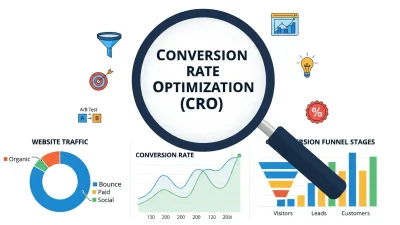
Website analytics provides valuable information about how people interact with a website. Instead of guessing why visitors are not converting, businesses can examine actual behavior and identify potential problems. Analytics can show which pages receive the most traffic, where users spend time, which pages have high exit rates, and which traffic sources generate conversions. This information helps businesses identify pages that require further investigation.
For example, if a service page attracts substantial organic traffic but produces very few inquiries, the problem may not be traffic quality. The page could have unclear messaging, weak calls to action, insufficient trust signals, or a complicated contact process. Analytics should therefore be considered an important foundation for conversion improvement. It helps businesses prioritize changes based on evidence rather than assumptions.
Create a Strong Conversion Optimization Strategy
A successful Conversion Optimization Strategy should begin with clear business goals. Before changing a website, businesses need to understand what they want visitors to accomplish. The strategy should also consider the customer journey. A visitor who has just discovered a business may not be ready to purchase immediately. They may first want to learn about the service, compare alternatives, read reviews, or understand pricing.
Match Content With User Intent
Website content should match what visitors are looking for. A person searching for an informational topic may need educational content, while someone comparing service providers may need pricing, features, testimonials, and proof of expertise. When content matches user intent, visitors can find relevant information more easily. This can increase confidence and make the next step more natural.
Make Calls to Action Clear
Calls to action help visitors understand what to do next. A website should not make users search for the next step. Whether the goal is contacting a business, requesting a consultation, downloading a guide, or purchasing a product, the call to action should be clear and relevant to the page.
The wording should also communicate value. A visitor is more likely to take action when they understand what they will receive after clicking or submitting information.
Improve Landing Page Performance
 Landing pages are often critical conversion points. Visitors may reach these pages from Google search results, advertisements, social media posts, email campaigns, or other marketing channels. A strong landing page should communicate its main message quickly. The headline should explain the value of the offer, while supporting content should answer important questions and reduce uncertainty.
Visual distractions should also be controlled. Too many competing messages, unnecessary design elements, or unrelated links can make it harder for visitors to focus on the primary action. Trust signals can further strengthen landing pages. Customer reviews, testimonials, case studies, professional credentials, guarantees, and transparent information can help visitors feel more comfortable taking action.
Simplify Website Navigation
Website navigation can strongly influence conversion performance. When visitors cannot easily find information, they may become frustrated and leave. Navigation should provide a logical path between important pages. Service details, contact information, product pages, pricing, and other important resources should be easy to access.
A simple navigation structure also helps visitors understand what the business offers. When the website feels organized and predictable, users can move through the customer journey with less friction.
Optimize Forms for More Conversions
Forms are often essential for generating leads, but complicated forms can reduce completion rates. Visitors may abandon a form if it requests too much information or appears difficult to complete. Businesses should make forms as straightforward as possible. Each field should have a clear purpose, and users should understand what information they need to provide.
The form should also provide helpful feedback when something is entered incorrectly. Clear error messages can prevent confusion and make the submission process smoother. After submission, a confirmation message can reassure users that their request was successfully received. This small detail can improve the overall experience.
Improve Mobile User Experience
A large portion of online activity happens on mobile devices, making mobile usability an important part of conversion improvement. A website that looks excellent on a desktop may still create problems on smartphones. Mobile users should be able to read content comfortably, navigate pages easily, tap buttons, and complete forms without unnecessary difficulty.
Businesses should regularly review important conversion pages on different screen sizes. Mobile testing can reveal problems such as small buttons, difficult navigation, excessive scrolling, or poorly formatted forms. A smooth mobile experience can help reduce friction and give visitors more confidence in the business.
Improve Website Speed
Website performance can have a direct impact on user experience. When pages take too long to load, visitors may leave before seeing the content or completing an action. Improving page performance involves reviewing images, scripts, hosting, caching, code, and other technical elements that influence loading time.
Businesses should pay particular attention to important landing pages, product pages, service pages, and checkout experiences. Faster pages create a smoother browsing experience and can support better conversion performance.
Use Data-Driven Optimization
Data-driven optimization means making website improvements based on measurable evidence rather than personal preferences or assumptions. Businesses can analyze conversion rates, user behavior, traffic sources, form submissions, sales data, and other relevant metrics to identify opportunities.
For example, if one landing page has a much lower conversion rate than similar pages, it can be investigated further. Testing a different headline, offer, layout, or call to action may reveal opportunities for improvement. The important point is that optimization should be continuous. A single change may improve performance, but ongoing analysis and testing can uncover additional opportunities.
Test Different Website Elements
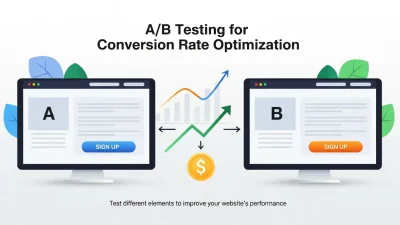
A/B testing is a useful method for comparing different versions of a webpage or specific conversion element. Businesses can test headlines, button text, forms, layouts, images, offers, and other components. Testing should have a clear objective. Instead of changing multiple unrelated elements at the same time, businesses should focus on meaningful variables and measure the results carefully.
Over time, testing can reveal what resonates with the target audience. These insights can then influence future website improvements and marketing campaigns.
Build Trust Throughout the Website
Trust is an important factor in conversion decisions. Visitors may hesitate to contact or purchase from a business if they cannot find enough evidence that the company is reliable.
Professional design, transparent information, customer reviews, testimonials, case studies, secure payment options, clear policies, and accurate contact information can strengthen credibility. Businesses should also avoid exaggerated claims. Honest and useful information creates a stronger foundation for long-term customer relationships.
Personalize the Customer Experience
Personalization can make website experiences more relevant to different types of visitors. Businesses can use information about user behavior, traffic sources, previous interactions, or customer segments to deliver more appropriate messaging.
For example, a returning visitor may be shown content that relates to their previous interest. Visitors arriving from a particular marketing campaign can also be directed to pages that closely match the campaign message. Effective personalization should make the experience more useful rather than intrusive. The objective is to help users find relevant information and make decisions more easily.
Measure the Impact of Conversion Improvements
 Every conversion improvement should be connected to measurable results. Businesses can track metrics such as conversion rate, lead volume, form completion, sales, revenue, and customer acquisition performance.
It is also important to compare performance before and after major changes. This helps determine whether an improvement actually produced positive results. A successful optimization process is not based on one metric alone. Businesses should consider both conversion quantity and quality. Increasing leads is valuable, but generating more qualified leads can provide greater long-term business value.
Common Website Conversion Mistakes
One common mistake is focusing entirely on website appearance. A beautiful website can still perform poorly if its messaging, navigation, offer, or conversion process is unclear. Another mistake is making changes without analyzing data. Businesses may redesign pages based on personal opinions rather than understanding what users actually need.
Ignoring mobile users is another problem. A website that performs poorly on smartphones can lose potential customers even when its desktop experience is strong. Businesses should also avoid adding too many calls to action. When every element asks visitors to do something different, the primary conversion goal can become unclear.
How Website Conversion Improvement Supports Long-Term Growth
Website conversion improvement can contribute to long-term business growth by creating a stronger relationship between marketing activity and business results. When a website converts more effectively, SEO traffic, advertising traffic, social media visitors, referral traffic, and email traffic can all have greater commercial value.
Improved conversion performance can also provide better customer insights. Businesses learn which messages, offers, pages, and experiences encourage customers to act. These insights can influence future marketing strategies and product development. Most importantly, conversion improvement creates a culture of continuous optimization. Instead of treating a website as a finished project, businesses can continue improving it as customer expectations and market conditions change.
Conclusion
Website Conversion Improvement can help businesses transform more website visitors into leads and customers while making better use of their existing marketing investment. From analyzing visitor behavior with website analytics to improving landing pages, forms, navigation, mobile experiences, and calls to action, every part of the user journey can contribute to better conversion performance.
A successful approach requires a clear Conversion Optimization Strategy supported by Data-driven optimization. Businesses that consistently analyze performance, test new ideas, and improve user experience can create stronger conversion opportunities and build sustainable online growth.
Frequently Asked Questions
What is Website Conversion Improvement?
Website Conversion Improvement is the process of improving a website so a higher percentage of visitors complete valuable actions such as making purchases, submitting forms, booking services, or contacting a business.
Why is Website Conversion Improvement important?
It helps businesses generate more value from existing website traffic. Instead of focusing only on attracting additional visitors, businesses can improve the percentage of current visitors who become leads or customers.
How does website analytics help conversion improvement?
Website analytics helps businesses understand visitor behavior, traffic sources, page performance, and conversion activity. These insights can reveal where users experience problems or leave the website.
What is a Conversion Optimization Strategy?
A Conversion Optimization Strategy is a structured plan for improving website elements and user experiences to increase desired actions. It can include testing, analytics, landing page improvements, and user experience optimization.
What does Data-driven optimization mean?
Data-driven optimization means making website and marketing decisions based on measurable evidence. Businesses use analytics, conversion data, testing results, and user behavior rather than relying only on assumptions.
How can landing pages improve conversions?
Landing pages can improve conversions by clearly communicating an offer, addressing visitor needs, building trust, and providing a simple path toward the desired action.
Can mobile optimization increase conversions?
Yes. A mobile-friendly website makes it easier for smartphone users to read content, navigate pages, complete forms, and interact with calls to action.
How can businesses improve website forms?
Businesses can improve forms by reducing unnecessary fields, using clear labels, making errors easy to understand, and providing a simple submission process.
How often should businesses optimize their websites?
Website optimization should be an ongoing process. Businesses should regularly review analytics, monitor conversion performance, test important elements, and make improvements based on new data.
Does conversion improvement increase revenue?
It can increase revenue by helping more qualified visitors become customers. When conversion rates improve, businesses can potentially generate more sales from the same level of website traffic.