
Conversion Rate Optimization (CRO) improves website effectiveness by turning visitors into customers, leads, or engaged users. By analyzing behavior, testing changes, simplifying experiences, and personalizing content, businesses boost conversions, revenue, and growth without increasing traffic or marketing spend.
Traffic alone doesn’t determine the success of a website. What really matters is what visitors do once they arrive. Whether your goal is selling products, capturing leads, or driving app signups, it all comes down to turning visitors into action-takers. That’s where Conversion Rate Optimization (CRO) comes in.
CRO is more than tweaking buttons or headlines—it’s about understanding your visitors, removing obstacles, and guiding them toward the actions that matter most. Even small improvements in conversion rates can have a significant impact on revenue without increasing traffic or marketing spend.
In this blog, we’ll explore what CRO really means and why it matters, look at why small increases in conversion rates can create big business results, show practical ways to optimize your website for higher conversions, share real-world examples of CRO in action, and highlight steps you can take today to start improving your website’s performance.
By the end, you’ll understand how Conversion Rate Optimization can turn website traffic into measurable business outcomes, making your marketing more efficient and your growth more sustainable.
What is Conversion Rate Optimization (CRO)?
Before exploring why CRO matters, it’s important to understand what Conversion Rate Optimization is and how it impacts your business.
Conversion Rate Optimization (CRO) is the systematic process of improving your website, landing pages, or digital platforms to encourage more visitors to take the specific actions you want. These actions, known as conversions, can vary depending on your business goals:
- Purchasing on your e-commerce site.
- Filling out a contact form or requesting a quote.
- Signing up for a newsletter or email list.
- Downloading an app, guide, or resource.
At its core, CRO is about making the most of the traffic your website already receives. Instead of focusing solely on attracting more visitors, CRO ensures that more of your current audience takes meaningful actions, turning casual visitors into loyal customers, leads, or engaged users.
Why CRO matters in simple terms:
- It improves the return on investment (ROI) of your existing traffic.
- It provides insights into user behavior that inform broader marketing strategies.
- It allows your business to grow sustainably without always relying on new traffic sources.
Think of CRO as optimizing your website’s ability to convert interest into action. Even small changes—like tweaking a call-to-action, simplifying forms, or highlighting a key benefit—can result in measurable improvements in conversions and revenue.
In today’s competitive digital landscape, Conversion Rate Optimization isn’t optional. It’s a critical part of turning website visits into tangible business results.
Why Conversion Rates Matter
Your website’s conversion rate is one of the most important metrics for measuring online success. It tells you how effectively your site turns visitors into customers, leads, or engaged users. Without tracking and optimizing this rate, all your traffic-driving efforts—SEO, ads, social media—may not translate into real business results.
The calculation is simple:
Conversion Rate (%) = (Number of Conversions ÷ Total Visitors) × 100
Example:
Suppose your website attracts 1,000 visitors in a month, and 25 of them make a purchase. Your conversion rate is:
Now, imagine applying Conversion Rate Optimization (CRO) techniques to increase that rate from 2.5% to 4%. On the same 1,000 visitors, that’s 40 purchases instead of 25, without spending any additional money to acquire traffic.
| Conversion Rate | Visitors | Conversions | Revenue Impact |
|---|---|---|---|
| 2.5% | 1,000 | 25 | Baseline revenue |
| 4% | 1,000 | 40 | +60% revenue increase |
This shows the power of CRO: small improvements in your conversion rate can generate significant revenue growth without increasing marketing spend. In competitive markets, every percentage point counts, and optimizing your website’s ability to convert visitors is far more cost-effective than only driving more traffic.
Why It’s Critical to Your Business:
- Maximizes ROI: Leverages existing traffic more effectively.
- Drives Sustainable Growth: Each visitor becomes more valuable over time.
- Reveals Customer Insights: CRO helps you understand what motivates your audience to act.
- Reduces Customer Acquisition Cost (CAC): More conversions from current traffic mean less dependency on expensive ads.
In short, your conversion rate is the bridge between traffic and revenue. Investing in Conversion Rate Optimization ensures that your website doesn’t just attract visitors—it turns them into loyal customers.
The Key Benefits of Conversion Rate Optimization
1. Maximum ROI for Existing Traffic
One of the advantages of CRO is to truly maximize the traffic you’ve already got. No matter whether you’re running ads, investing in content marketing, or managing SEO, acquiring traffic for a site is expensive. As a result, CRO can provide a much more immediate return on that investment, meaning you are able to convert many of the website visitors paid for and hard-won into customers or lead contacts.
Take the following example: Suppose that an improved page design and one more call-to-action button can double your sales. In that case, it’s like doubling the income from your present level of traffic without any additional marketing expenses.
2. Improves User Experience
Real CRO isn’t at all about the latest “growth hacks” you read on the blog that are supposed to entice users into action by questionable means. Instead, it tries to grasp how people think and what they need.
CRO frequently identifies places–for instance, on your website and in its navigation, or particularly in pages dealing with transactions–where visitors are likely to become angry or uncooperative. By addressing these points of pain, you not only get more conversions but also higher overall user satisfaction, which makes people more likely to return.
3. Drives Sustainable Business Growth
Paid ad portfolios and convergence funnels: the first has limits that it can’t exceed the second hits point of diminishing returns before too long. By contrast, CRO offers sustainable growth: it just means constantly improving your website’s performance. A higher conversion rate means every new visitor brings more and more value to your business, thus creating an escalating base for future revenue generation.
Businesses emphasizing CRO often have the ability to respond more quickly than those only targeting traffic of all kinds. They adapt much quicker to changes in the market and customer behavior.
4. Creates Richer Customer Insights
By testing and analyzing, website conversion gives unique insights into what your customers like and how they behave. Does urgency prompt them to buy more readily, such as by pointing out that only so many days remain for something at all now (like with a countdown timer)? Or does a simple, uncluttered design (anything else compared to other sites in your field) generate interest and clicks?
It goes beyond your website: such learnings can impact overall branding, marketing campaigns, product design and sales strategies alike—so as one unified whole bring more effective customer experiences to bear widely throughout all activities within the company.
5. Gets You Ahead Of the Competition
The digital space gets more crowded every day. Regardless of industry, your target audience is besieged by offerings from competing brands. As such, concentrating on CRO allows you to make your business stand out by offering unique and fluid experiences that transcend competitors’ offerings.
Even minor adjustments, for example, changing copy on a CTA or inserting displays with real consumer reviews impact on people’s purchasing decisions. And they help you win untapped markets of prospective clients.
6. Lower Customer Acquisition Cost
It is expensive to attract new business – according to HubSpot, the cost of acquiring a customer has gone up almost 50% in the last five years. CRO helps to offset these rising costs by getting a better yield out of your current traffic, making the acquisition of customers cheaper.
Instead of raising ad spend in order to increase revenue, you can work smarter by converting more of the traffic for which you are already paying.
How Conversion Rate Optimization Works in Real Life
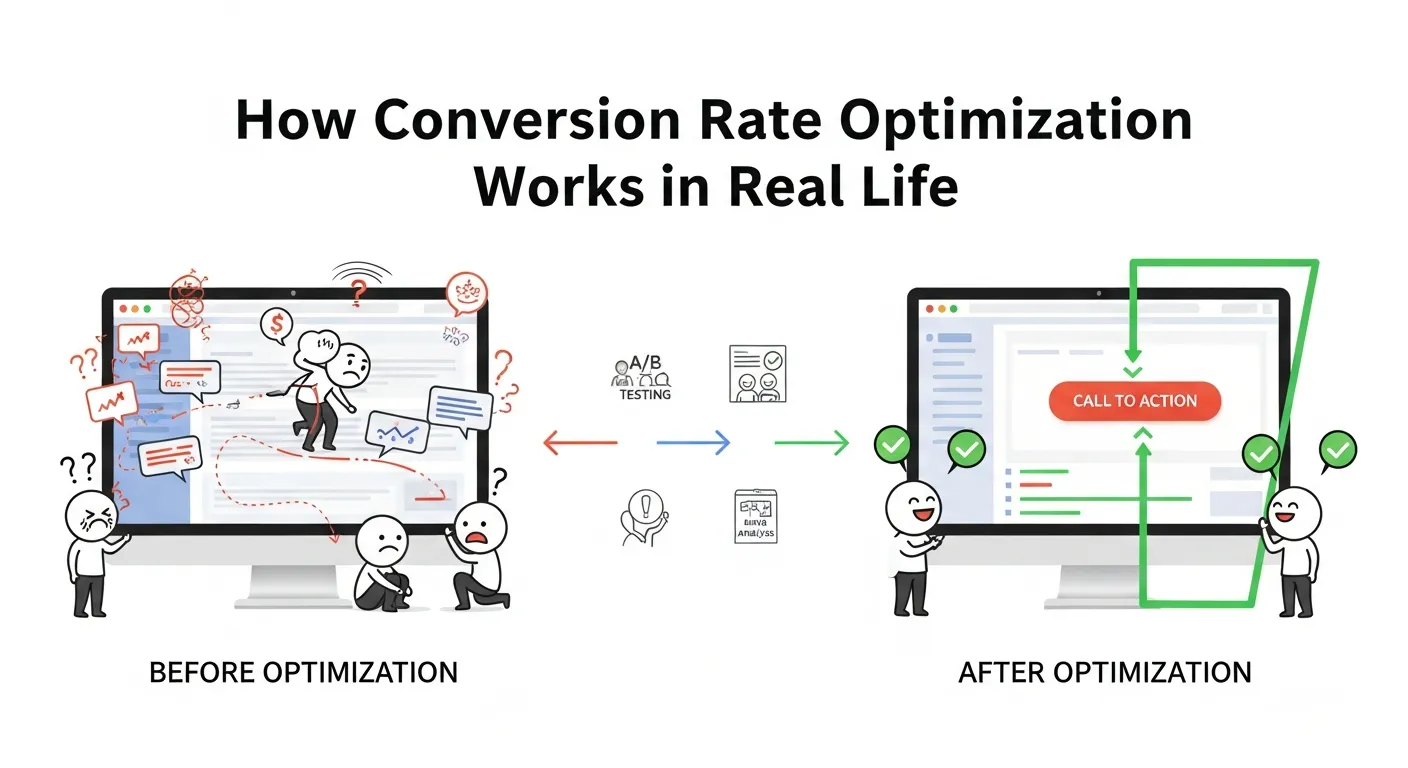
Conversion Rate Optimization (CRO) is not a one-size-fits-all strategy—it’s a structured process that relies on data, testing, and continuous improvement. Here’s how it works in practice and why these steps are essential for boosting conversions on your website:
1. Analyzing User Behavior
The first step in any CRO strategy is understanding how visitors interact with your website. Tools like Google Analytics, Hotjar, and Crazy Egg provide valuable insights into user behavior, such as:
- Where users click and how far they scroll.
- Pages where visitors frequently drop off.
- Features or content that cause confusion or frustration.
By studying this data, you can pinpoint the exact bottlenecks in your conversion funnel. For instance, if users consistently abandon the checkout page after a long form, simplifying that form can directly improve your conversion rate.
Pro Tip: Track behavior separately for desktop vs. mobile users, as conversion blockers often differ between devices.
2. Doing A/B Tests
A/B testing is a cornerstone of Conversion Rate Optimization. This involves creating multiple versions of a page or element and measuring which performs best. It allows decisions to be made based on real visitor behavior rather than assumptions.
Examples of A/B tests:
- Testing the color, placement, or wording of a “Buy Now” button.
- Adding a testimonial or trust badge under a product description.
- Comparing long-form vs. short-form landing pages.
- Testing different headline copy for urgency or clarity.
| Test Element | Variation | Conversion Insight |
|---|---|---|
| CTA button color | Red vs. Green | Red button increased clicks by 18% |
| Product testimonial | Present vs. Absent | +12% conversions when a testimonial is added |
| Landing page length | Short vs. Long | Longer page improved clarity but reduced engagement slightly |
A/B testing ensures that your CRO efforts are evidence-based, preventing costly assumptions from impacting results.
3. Simplifying Your Website
Complexity kills conversions. Conversion Rate Optimization often involves removing friction points that slow down or frustrate users. Common simplification tactics include:
- Reducing the number of steps in checkout or signup forms.
- Streamlining navigation menus to make content easier to find.
- Optimizing page load times and eliminating unnecessary pop-ups.
- Ensuring your website is fully mobile-friendly for on-the-go visitors.
The simpler and more intuitive your site, the more likely visitors will complete their desired action.
Example: A website that reduced checkout steps from 7 to 4 saw a 20% increase in completed transactions, showing the power of simplification in CRO.
4. Creating Clear Calls-to-Action (CTAs)
CTAs are the signposts guiding users to take the next step. Conversion Rate Optimization ensures that these CTAs are clear, prominent, and persuasive.
Best practices for CTAs in CRO:
- Use action-oriented language: “Shop Now,” “Get My Free Trial,” or “Download Today.”
- Ensure CTAs stand out visually with contrasting colors and prominent placement.
- Place multiple CTAs strategically on high-traffic pages without overwhelming users.
- Align CTA messaging with the user’s stage in the customer journey.
Well-designed CTAs can dramatically improve conversion rates, sometimes by over 30%, with just small changes to copy or placement.
5. Personalizing the Experience
Today’s best-performing CRO strategies go beyond general optimizations—they personalize the user experience. Personalized experiences make users feel valued and guide them toward relevant actions.
Personalization tactics for CRO:
- Showing first-time visitors a welcome discount or introductory offer.
- Displaying product recommendations based on browsing history.
- Tailoring landing page content based on traffic source (social, email, paid ads).
- Using dynamic content to highlight items related to past purchases or interests.
Example: An e-commerce store that dynamically displayed recommended products to returning users increased average order value by 25% while also improving repeat conversions.
Leveraging AI and Chatbots to Boost Conversions
Conversion Rate Optimization today goes beyond just tweaking buttons or redesigning pages—it’s about creating personalized, real-time experiences for every visitor. AI-powered chatbots are becoming indispensable tools for this. They act like digital sales assistants, instantly answering questions, recommending products, and even nudging users toward a purchase. This not only reduces friction in the buying process but also helps brands engage customers at the exact moment they’re most likely to convert.
For instance, a visitor browsing a complex product page might hesitate because they aren’t sure about sizing, features, or shipping options. A well-programmed chatbot can provide instant answers, suggest alternatives, and even offer limited-time promotions, turning a potentially lost visitor into a paying customer. Over time, these interactions generate rich behavioral data that can feed back into your CRO strategy, helping you understand patterns and pain points across your audience.
Key Strategies Using Chatbots:
- Provide real-time assistance to reduce cart abandonment and improve engagement.
- Recommend products dynamically based on visitor behavior or previous purchases.
- Offer time-sensitive promotions, discounts, or limited stock alerts to encourage immediate action.
- Collect visitor feedback through automated surveys to identify UX pain points.
- Personalize content for first-time vs. returning visitors, increasing relevance and conversion potential.
| Chatbot Benefit | Conversion Impact | Example |
|---|---|---|
| Real-time assistance | +15% engagement | Visitors get instant help for product questions |
| Personalized product recommendations | +20% upsell | Suggesting complementary items increases order value |
| Abandoned cart notifications | +25% recovery | Reminds visitors of items left in the cart |
| Feedback collection | Insight for CRO | Optimizes the site based on real user behavior |
For more on AI-driven sales optimization, check out E-commerce Conversion Chatbots for Higher Sales.
Building Trust Through Reputation Management
Another critical aspect of Conversion Rate Optimization is trust-building. In the digital world, visitors make decisions quickly—and they often rely on social proof to validate their choices. A high-converting website is not just user-friendly; it also establishes credibility at every touchpoint. Effective reputation management ensures your audience feels confident that their purchase or engagement will be valuable and secure.
CRO and reputation management intersect because trust influences behavior. A visitor who sees authentic customer reviews, clear return policies, or consistent branding is more likely to proceed with an action. Ignoring reputation can lead to hesitation, higher bounce rates, and lost sales, even if your website design is flawless.
Ways to Build and Leverage Trust:
- Display verified customer reviews prominently on product pages. Positive feedback reassures hesitant buyers.
- Showcase awards, certifications, and media mentions to reinforce credibility.
- Engage proactively with social media feedback, responding to questions or complaints transparently.
- Maintain consistent messaging and branding across all channels to strengthen recognition and loyalty.
- Use testimonials or case studies to illustrate real-world success and results.
| Trust-Building Tactic | CRO Effect | Key Metric |
|---|---|---|
| Customer reviews | +12% conversion | Number of verified reviews per product |
| Social media engagement | +10% trust | Comments, shares, and mentions |
| Consistent branding | +8% conversion | Bounce rate reduction |
| Testimonials on landing pages | +15% conversion | Click-through on CTA buttons |
Learn more about managing your online credibility at Mastering Personal Reputation Management.
Using Paid Campaigns Strategically for CRO
Paid advertising is often seen as a traffic-driving tactic, but when paired with Conversion Rate Optimization, it becomes a powerful tool for revenue growth. CRO helps you ensure that every dollar spent on ads reaches users who are more likely to convert, while the insights gained from these campaigns inform website improvements. Essentially, CRO turns paid traffic into high-quality, measurable outcomes rather than just numbers on a dashboard.
For example, a CPC campaign might bring 10,000 visitors to your site, but only 2% convert. Through CRO, you can analyze which landing pages and ad creatives drive the best results, make data-backed changes, and retarget users who didn’t convert the first time. This approach not only increases ROI but also reduces wasted ad spend, lowers customer acquisition cost, and enhances long-term business growth.
CPC Strategies for Higher Conversions:
- Target audiences based on intent, behavior, and demographics for higher-quality traffic.
- Perform A/B testing of ad creatives—headlines, images, and CTAs—to identify the highest-performing combinations.
- Retarget users who interacted but didn’t convert, gently nudging them back to the site.
- Align ad messaging with on-site content for a seamless experience from click to conversion.
- Use dynamic product ads to show personalized recommendations based on previous browsing.
| Campaign Type | CRO Benefit | KPI to Track |
|---|---|---|
| Search Ads | Increases qualified leads | CTR, conversion rate |
| Retargeting Ads | Recovers lost visitors | ROAS, CPA |
| Social Media Ads | Enhances engagement | Likes, shares, CTR |
| Dynamic Product Ads | Personalized recommendations | Conversion rate per product |
Discover more about maximizing ad ROI with CPC Advertising for E-commerce.
An Example of CRO’s Impact in the Real World
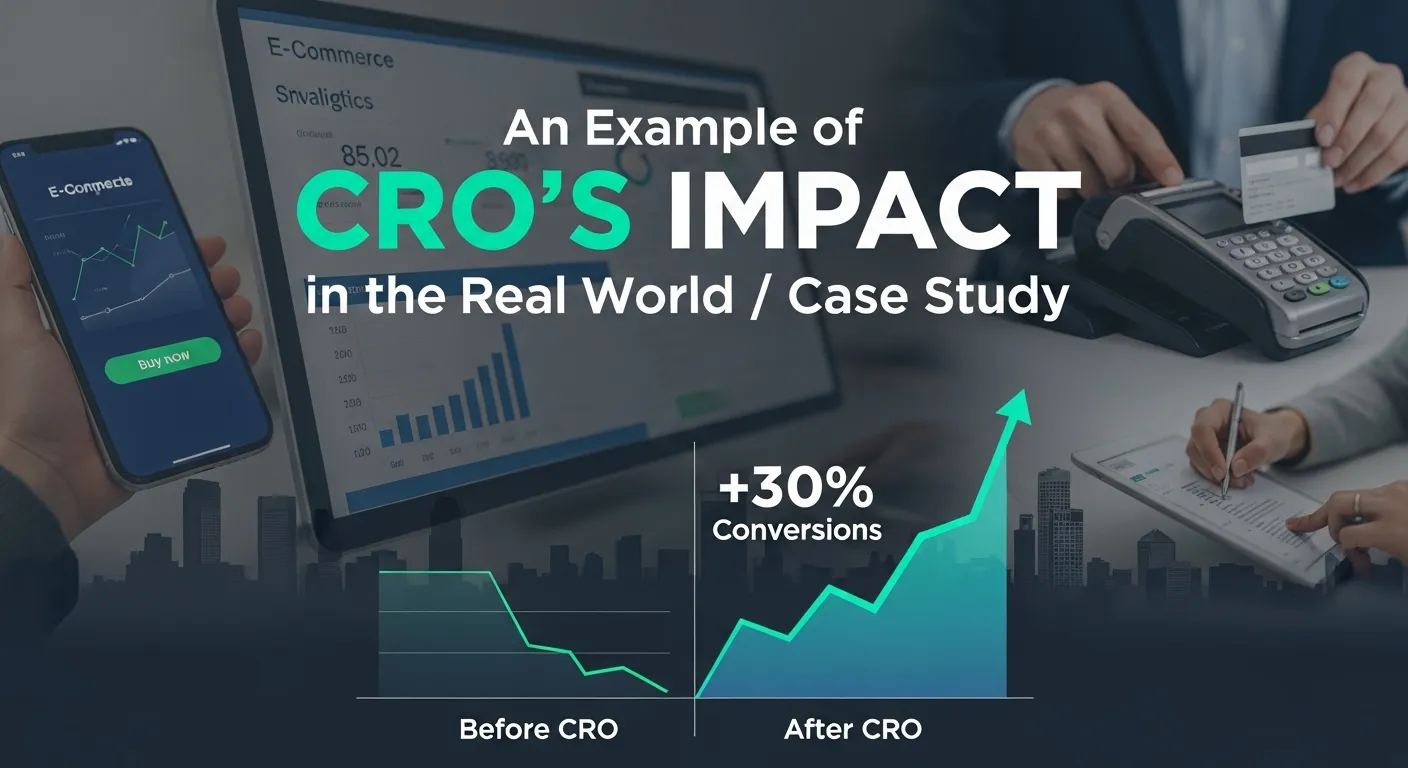
Case Study: E-commerce Success
A mid-sized e-commerce brand specializing in athletic wear implemented a Conversion Rate Optimization (CRO) strategy targeting their checkout process—the stage where the most revenue was being lost. Prior to optimization, the company was losing a staggering 65% of potential customers at checkout due to friction, confusion, and limited options.
Through detailed analysis of user behavior using heatmaps, session recordings, and analytics, the company identified key pain points that prevented visitors from completing their purchases. The team then applied targeted CRO strategies to address these obstacles:
- Removed unnecessary information fields: Simplifying the checkout reduced friction, making it faster and easier for customers to complete their purchase.
- Added multiple payment options: Including credit cards, PayPal, and digital wallets, which accommodated diverse customer preferences, increasing completion rates.
- Highlighted free shipping: Prominently displaying free shipping incentives created urgency and added perceived value, encouraging users to finalize their order.
- Optimized mobile checkout experience: With more than 50% of visitors using mobile devices, improving mobile usability prevented drop-offs and enhanced engagement.
- Introduced exit-intent pop-ups: Targeted offers or reminders were presented to users attempting to leave without purchasing, capturing otherwise lost revenue.
The results were immediate and measurable. The company achieved a 30% boost in overall conversion rate, translating directly into higher revenue without additional marketing spend. This demonstrates that even small, focused CRO improvements can create exponential business impact.
| CRO Strategy | Implementation | Conversion Impact |
|---|---|---|
| Simplified checkout forms | Removed unnecessary fields | Reduced abandonment rate by 18% |
| Multiple payment options | Added PayPal, Apple Pay, etc. | Increased completed purchases by 12% |
| Free shipping promotion | Highlighted at checkout | Boosted urgency-driven conversions by 10% |
| Mobile optimization | Improved UX on smartphones | +15% mobile conversion rate |
| Exit-intent offers | Targeted leaving visitors | Recovered 8% of lost sales |
Actions to Begin Improving Your Conversion Rate Optimization ROI
If your business is to thrive in a digital-first world, Conversion Rate Optimization is no longer optional—it is essential. Optimizing conversions ensures that every visitor has a higher chance of taking meaningful action, whether that’s completing a purchase, signing up for a newsletter, or engaging with your content.
Here’s how you can start implementing CRO strategies today:
- Audit Your Website Using Data-Driven Tools:
Use heatmaps, session recordings, and analytics platforms to identify where visitors drop off or hesitate. These insights form the foundation for targeted CRO efforts. - Identify and Prioritize Underperforming Pages:
Focus on pages with high traffic but low conversion rates first. Optimizing these “bottleneck” pages often yields the biggest ROI improvements. - Apply Gradual, Incremental Changes:
Conduct A/B testing to compare different layouts, headlines, button colors, and CTAs. Incremental changes help you identify the strategies that work best without disrupting overall site performance. - Focus on Visitor Feedback and Pain Points:
Gather insights via surveys, chatbot interactions, or support tickets to understand what stops visitors from converting. Addressing these pain points directly increases both conversion rate and user satisfaction. - Leverage CRO Tools and Expertise:
Platforms like Hotjar, Crazy Egg, and Google Optimize can streamline testing and analysis. Partnering with a CRO professional or agency ensures strategic guidance and faster results. - Continuously Monitor and Iterate:
Conversion Rate Optimization is not a one-time task—it’s an ongoing process. Continuously test new elements, monitor results, and refine strategies to sustain growth.
Remember, improving conversion rates isn’t just about tweaking your website—it’s about optimizing the entire customer journey. By implementing CRO strategies, you’re setting your business up for scalable, sustainable success, turning more visitors into loyal customers and maximizing the ROI of every marketing effort.
Frequently Asked Questions About Conversion Rate Optimization (CRO)
1. What is Conversion Rate Optimization (CRO) and why is it important?
Conversion Rate Optimization (CRO) is the process of improving your website or digital platforms to turn more visitors into customers, leads, or engaged users. It ensures that your traffic delivers measurable business outcomes and maximizes ROI from existing marketing efforts.
2. How can CRO improve my website’s performance?
CRO identifies friction points and areas where visitors drop off. By optimizing page layout, CTAs, forms, and content, businesses can increase engagement, reduce bounce rates, and ultimately improve conversions without spending more on traffic acquisition.
3. What are micro-conversions, and how do they help in CRO?
Micro-conversions are small actions users take that indicate interest, such as signing up for a newsletter or clicking a product video. Tracking and optimizing these can boost overall conversions and engagement. Learn more at Boost Engagement With Micro-Conversions.
4. How do landing pages impact conversion rates?
Landing pages are the first interaction point for many visitors. Optimizing them with clear headlines, persuasive copy, and focused CTAs is critical. For detailed guidance, see How to Create Landing Pages.
5. Which metrics should I track for effective CRO?
Key metrics include conversion rate, bounce rate, average session duration, exit rate, and user engagement. Monitoring these helps identify underperforming pages and informs data-driven CRO strategies.
6. What role does A/B testing play in CRO?
A/B testing allows you to compare different page versions to determine which performs best. By experimenting with headlines, buttons, forms, and layouts, businesses can make evidence-based decisions that significantly improve conversion rates.
7. How does personalization affect Conversion Rate Optimization?
Personalized content, product recommendations, and tailored offers make visitors feel valued, increasing their likelihood of taking action. CRO strategies increasingly focus on dynamic experiences for first-time and returning users.
8. Can CRO strategies be applied to marketing campaigns?
Absolutely. CRO isn’t limited to websites—it can improve the effectiveness of email campaigns, paid ads, and social media funnels. A comprehensive approach ensures every touchpoint drives conversions. Learn more in the Guide to CRO Marketing Strategies.
9. How long does it take to see results from CRO?
Results vary depending on website traffic, test frequency, and the size of changes implemented. Small optimizations can show measurable improvements in weeks, while broader CRO initiatives may take several months to fully scale.
10. Is CRO cost-effective compared to acquiring new traffic?
Yes. By focusing on converting existing visitors, CRO improves ROI without the continuous expense of acquiring new traffic. Even minor improvements in conversion rate can generate substantial revenue growth from the same audience.