
Conversion Rate Optimization (CRO) improves your website to turn visitors into customers, subscribers, or leads. By testing design, messaging, and functionality, CRO maximizes value from existing traffic, enhances user experience, and drives measurable business growth.
If you run a website, every visitor counts. But attracting traffic alone isn’t enough — the real challenge is turning those visitors into customers, subscribers, or loyal followers. This is where Conversion Rate Optimization (CRO) comes in.
In this guide, we’ll break down what Conversion Rate Optimization is, how it works, and why it’s an essential strategy for businesses that want to maximize online success. Whether you’re looking to boost sales, generate leads, or improve engagement, understanding CRO can help you get more value from the same amount of traffic
What is Conversion Rate Optimization?
Conversion Rate Optimization (CRO) is the process of improving your website to encourage visitors to take a specific action, known as a conversion. Conversions can include purchasing a product, signing up for a newsletter, registering for a webinar, or downloading a free e-book.
Your conversion rate is the percentage of visitors who complete these desired actions. For example, if 1,000 visitors come to your website and 50 of them make a purchase, your conversion rate is 5%.
CRO is an ongoing strategy, not a one-time task. By testing and refining website design, messaging, and functionality, you can discover what resonates best with your audience. This continuous experimentation improves both user experience (UX) and business revenue.
A higher conversion rate means more value from the same amount of traffic, allowing you to generate increased results without necessarily increasing marketing spend. By focusing on Conversion Rate Optimization, businesses can maximize the impact of every visitor, turning casual users into loyal customers.
Why Does Conversion Rate Optimization Matter?
A higher conversion rate means more value from the same amount of traffic. Here are a few reasons why CRO is essential for online success:
- Maximizes ROI
Pay-per-click ads, SEO campaigns, and social media all come with costs. CRO ensures you’re making the most out of your investment by turning visitors into customers efficiently.
- Enhances User Experience
CRO often focuses on removing friction points in the user’s path. When people enjoy their visit to your website, they’re more likely to convert.
- Competitive Edge
Many businesses focus solely on driving more traffic. Fewer focus on converting the traffic they already have. CRO gives you a chance to stand out from the competition by offering a smoother, smarter experience.
- Sustainable Growth
Instead of constantly hunting for new traffic sources, CRO allows for growth from your current audience.
Now, let’s explore exactly how CRO works.
Key Steps to How Conversion Rate Optimization Works
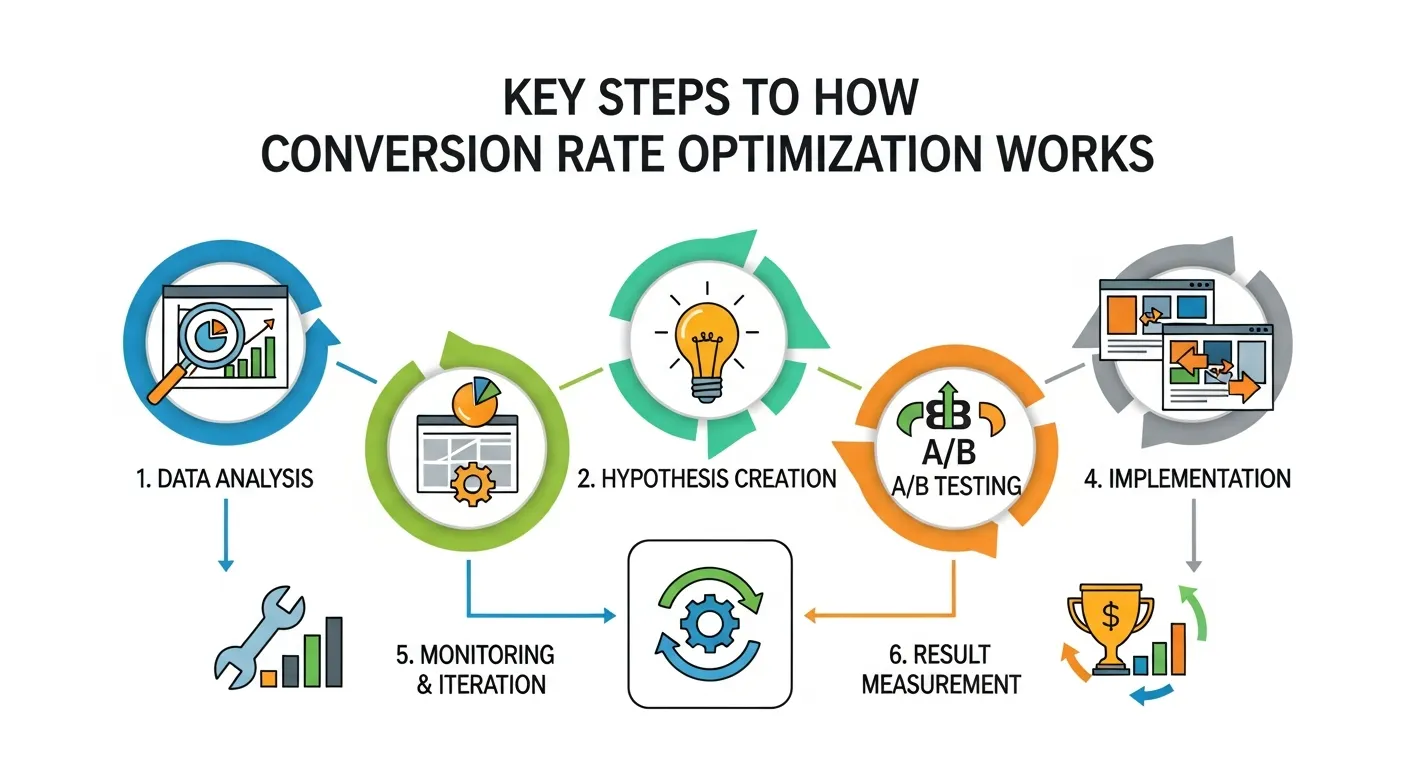
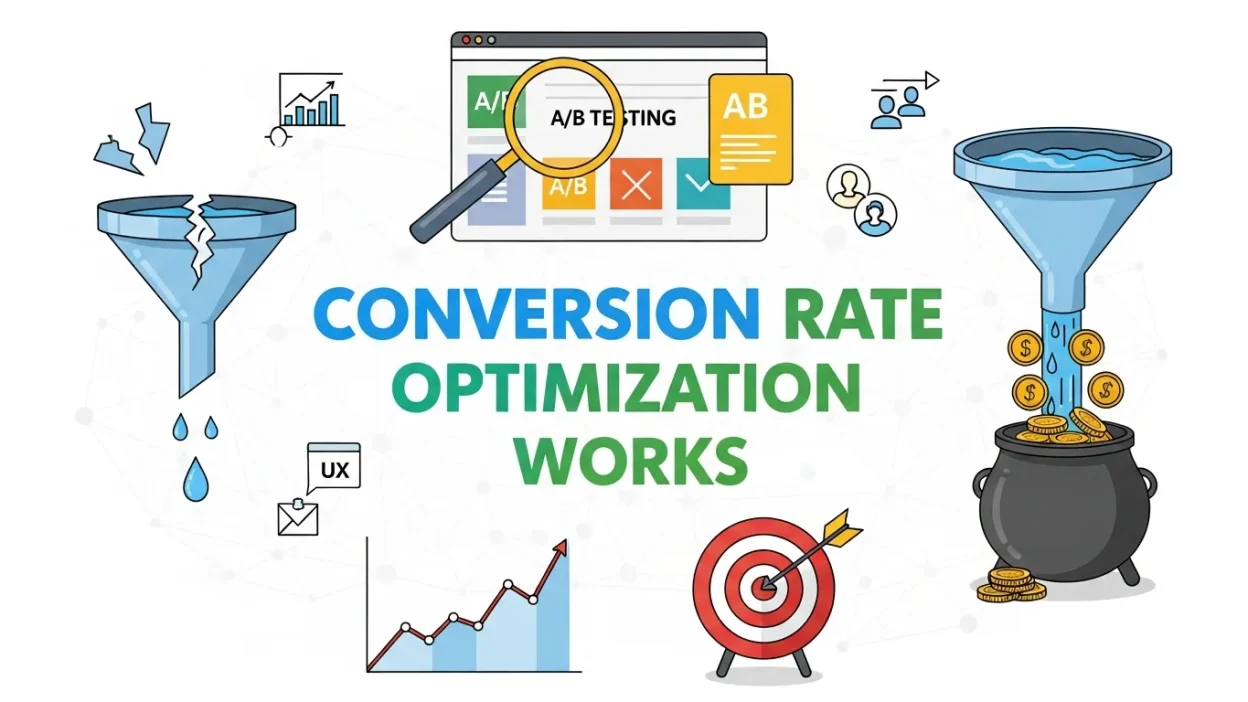
Conversion Rate Optimization (CRO) is a systematic, data-driven process that helps businesses turn more visitors into customers, subscribers, or leads. Following structured steps ensures your efforts are measurable, effective, and scalable.
1. Define a Clear Goal
Every CRO initiative begins with a specific, measurable objective. Ask yourself: what action should visitors take on your website? Examples include:
- Purchase a product
- Sign up for a free trial or webinar
- Submit a contact form
- Download a free e-book
Be precise. For instance, “Increase newsletter sign-ups by 15% within three months” is far more actionable than a vague goal like “Get more sign-ups.” Clear goals allow you to track progress and measure success accurately.
Tip: Use SMART criteria (Specific, Measurable, Achievable, Relevant, Time-bound) to frame each goal.
2. Understand Your Audience
To optimize effectively, you must know who your visitors are and what they want. A deep understanding of your audience is the foundation of successful CRO.
Strategies to understand your audience:
- Analyze Website Analytics: Tools like Google Analytics reveal visitor demographics, traffic sources, and drop-off points.
- Conduct Surveys: Collect direct feedback to uncover pain points, preferences, and motivations.
- Build User Personas: Develop profiles of typical visitors based on demographics, behavior, and goals. This allows you to tailor website content and offers.
Example: A SaaS company identified that small business owners abandoned the trial sign-up form due to unclear pricing. Adjusting the messaging and simplifying steps increased trial completions by 22%.
3. Identify Bottlenecks and Friction Points
Once you understand your audience, the next step is to pinpoint where visitors struggle or drop off.
Common tools to identify friction:
- Heatmaps (e.g., Hotjar): See where users click, scroll, or hover.
- Session Recordings (e.g., Crazy Egg): Replay individual user journeys to observe behavior.
- Funnel Analysis (Google Analytics): Track user journeys through purchase or registration funnels.
Actionable Insight: If users abandon the cart frequently, investigate the checkout process for unnecessary steps or confusing form fields. Small adjustments can have a major impact on conversion rates.
4. Run A/B Testing
After identifying problem areas, A/B testing allows you to test hypotheses and make data-driven improvements.
How A/B testing works:
- Create two versions of a page: Version A (control) and Version B (variant with changes).
- Split traffic evenly between the versions.
- Measure key metrics like click-through rate, form submissions, or completed purchases.
- Determine which version performs better and implement changes site-wide.
Example: Testing a “Buy Now” button in red vs green increased clicks by 18%, proving color can significantly influence user behavior.
Pro Tip: Always test one variable at a time for accurate results.
5. Optimize Website Design and UX
A smooth, engaging user experience is at the heart of CRO. Visitors should never feel lost or frustrated.
Key UX optimizations include:
- Clear Calls-to-Action (CTA): Each page should have action-oriented CTAs like “Get Started” or “Download Now.”
- Mobile Optimization: With over half of web traffic from mobile devices, ensure responsive design and fast loading times.
- Engaging Visuals: Use high-quality images, videos, and clean layouts to guide attention and maintain interest.
- Simplified Forms: Only request essential information to reduce friction.
Example: An e-commerce store reduced checkout fields from 10 to 5 and added trust badges, resulting in a 32% increase in completed purchases.
6. Monitor, Measure, and Repeat
Conversion Rate Optimization is never a one-time effort. Continuous monitoring allows you to iterate and improve over time.
Key metrics to track:
- Conversion Rate
- Bounce Rate
- Time on Page
- Click-through Rate
- Cart Abandonment Rate
Actionable Step: Use data insights to refine your strategy. If a change doesn’t work, adjust and test again. CRO is an ongoing cycle of experimentation, learning, and optimization.
Example: A subscription site tested multiple landing page headlines over three months. Iterative improvements increased newsletter sign-ups by 40% without increasing traffic.
Real-Life Example of CRO in Action
Example
A subscription box company noticed high cart abandonment rates. By utilizing heatmaps, they discovered that visitors were overwhelmed by the checkout form, which asked for unnecessary information.
Solution? Simplified the form to include only essential fields (name, email, payment info) and added trust signals like SSL certificates. The result? A 32% increase in completed checkouts within a month.
Leveraging Chatbots for Higher Conversions
Chatbots have become a game-changer for online businesses looking to improve conversion rates. Gone are the days when users had to wait hours for support or navigate multiple pages to find the information they need. Today, chatbots provide real-time guidance, personalized recommendations, and automated follow-ups, all of which can dramatically increase engagement and sales.
Many visitors leave a site simply because their questions are unanswered or the checkout process is confusing. Chatbots can step in at critical moments, helping users complete purchases, sign up for newsletters, or request additional resources. Beyond immediate support, chatbots also collect insights on user behavior, which can inform broader CRO strategies.
Why Chatbots Work for CRO:
- Instant Support: Immediate answers reduce drop-offs.
- Personalized Recommendations: Chatbots suggest products or services based on user behavior.
- Proactive Engagement: Triggered messages can nudge hesitant visitors toward conversion.
- Cart Recovery Automation: Gentle reminders and prompts recover abandoned carts.
- Data Insights: Collect behavioral data to identify bottlenecks and friction points.
An online retailer noticed a 40% cart abandonment rate. After implementing a chatbot to answer questions during checkout and suggest relevant products, the retailer saw a 25% increase in completed purchases and a 15% rise in average order value within two months.
Chatbot Impact on Conversion Metrics
| Metric | Before Chatbot | After Chatbot | % Improvement |
|---|---|---|---|
| Cart Abandonment Rate | 45% | 28% | +17% |
| Average Order Value | $75 | $92 | +23% |
| Customer Engagement (Sessions) | 1.8 | 3.2 | +78% |
| Newsletter Sign-Ups | 120/month | 185/month | +54% |
Implementing chatbots doesn’t have to be complex. For businesses exploring practical ways to increase e-commerce conversions, tools and case studies are available at Chatbots for Higher Sale, showing how AI-driven chat support can boost revenue while improving user experience.
Reputation Management and CRO
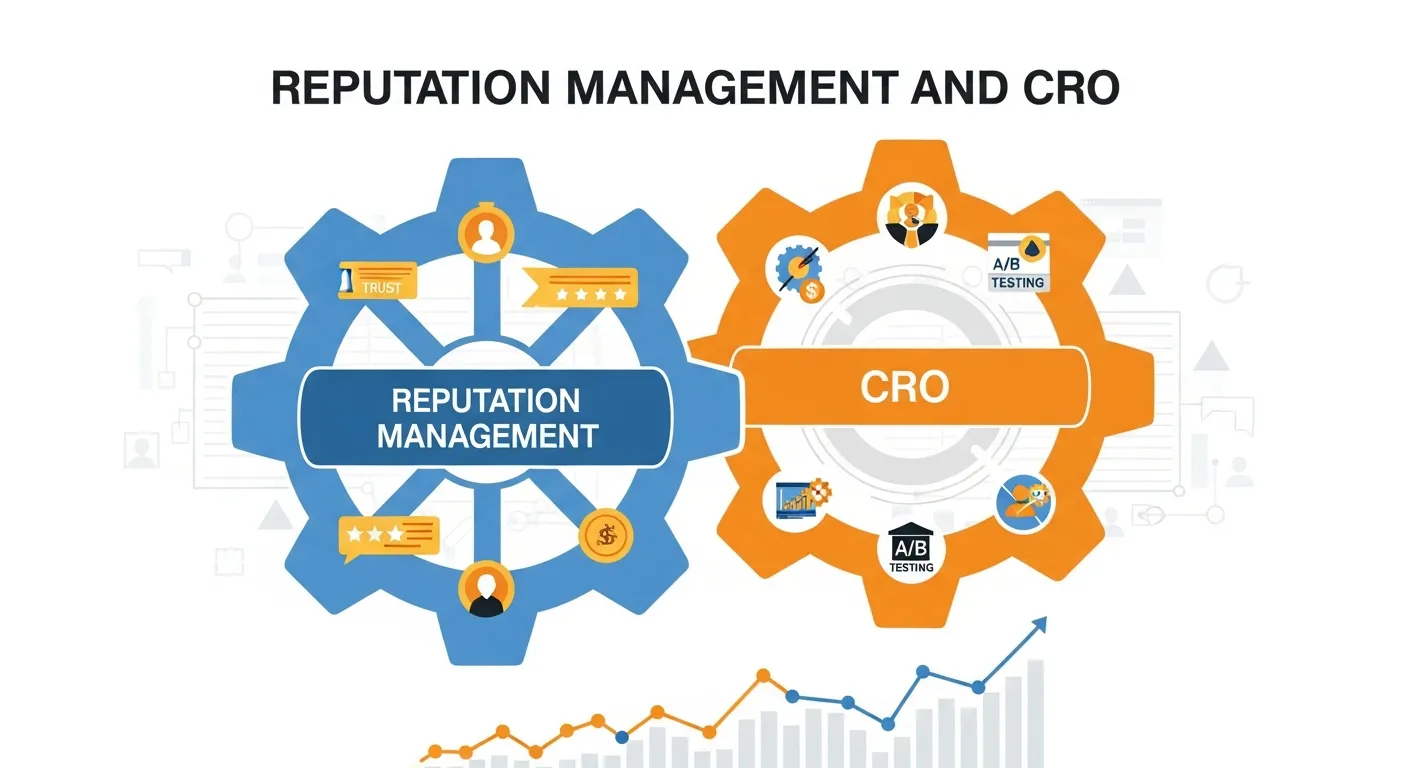
A website’s reputation is one of the most overlooked factors in Conversion Rate Optimization. While design and UX are critical, users often decide whether to convert based on credibility, reviews, and social proof. A business with consistent branding, authentic testimonials, and responsive customer communication will almost always convert better than one without.
Reputation management is not only about damage control—it’s a proactive CRO tool. Positive reviews, professional profiles, and social proof reduce friction in the buyer’s journey and make visitors more confident in taking action.
Key Reputation Strategies for CRO:
- Monitor Reviews Regularly: Prompt responses to feedback, both positive and negative, signal trustworthiness.
- Showcase Testimonials: Highlight stories from real customers, including metrics or visuals when possible.
- Maintain Consistent Branding: Align messaging, visuals, and tone across website, social media, and ads.
- Optimize Professional Profiles: Keep Google Business, LinkedIn, and other listings complete and up-to-date.
- Leverage Social Proof: Display trust badges, certifications, or user-generated content to reinforce credibility.
Reputation Factors vs Conversion Impact
| Reputation Factor | Effect on Conversions |
|---|---|
| Positive Reviews (>4 stars) | +20–35% |
| Prompt Response to Complaints | +15–25% |
| Active Social Presence | +10–18% |
| Consistent Branding | +12–22% |
| Display of Certifications/Badges | +8–15% |
A SaaS company increased trial sign-ups by 28% after adding verified customer testimonials, responding to all product reviews, and ensuring consistent branding across all social media channels.
For businesses looking to master personal and business reputation to directly improve conversions, check out Personal Reputation Management, which provides actionable strategies for credibility and trust-building.
Paid Advertising and CRO
Paid advertising, especially CPC campaigns, can significantly enhance your CRO efforts. While optimizing your site improves conversions from existing traffic, paid ads bring in high-intent visitors who are already searching for products or services you offer. When combined with CRO, paid campaigns maximize ROI and reduce wasted ad spend.
For paid campaigns to truly support CRO, it’s not enough to simply drive traffic. Landing pages must be conversion-optimized, messaging must align with ads, and campaigns should include retargeting for users who didn’t convert initially.
Best Practices for CPC + CRO Integration:
- Target High-Intent Keywords: Focus on search terms that indicate strong purchasing intent.
- Design Optimized Landing Pages: Ensure pages are tailored for conversions with clear CTAs and minimal distractions.
- A/B Test Ad Copy and Landing Pages: Small tweaks in headlines, buttons, and offers can improve CTR and conversion.
- Implement Retargeting Campaigns: Bring back visitors who abandoned carts or forms.
- Analyze and Iterate: Use analytics to refine ads and website content continuously.
CPC vs CRO Performance Metrics
| Metric | Standard CPC | Optimized with CRO | Improvement |
|---|---|---|---|
| Click-Through Rate (CTR) | 2.3% | 3.8% | +1.5% |
| Conversion Rate | 4.5% | 7.2% | +2.7% |
| Cost per Acquisition (CPA) | $25 | $16 | -$9 |
| Revenue per Visitor | $1.20 | $1.85 | +54% |
An online store running CPC campaigns noticed low conversions initially. By creating dedicated, CRO-focused landing pages, implementing retargeting ads, and continuously testing ad copy, the store reduced CPA by 36% while increasing total conversions by 60%.
For businesses seeking to boost sales quickly with CPC advertising while integrating CRO principles, see CPC Advertising for E-Commerce for actionable strategies.
Tips to Boost Conversion Rates Quickly with Conversion Rate Optimization
Not every Conversion Rate Optimization (CRO) strategy has to be complex. Small, smart improvements can have a significant impact on turning visitors into customers. Here are some quick wins to boost your conversion rates effectively:
- Simplify Navigation – Clear menus and intuitive site structure help visitors find what they’re looking for, reducing frustration and improving conversions.
- Use Live Chat Support – Providing real-time answers can prevent drop-offs and increase the likelihood of completing a purchase or signing up.
- Add Testimonials or Reviews – Social proof builds trust, reassuring visitors that others have had positive experiences with your products or services.
- Create Scarcity – Limited availability or time-sensitive offers, like “Only 3 left in stock,” encourage quicker decision-making and drive conversions.
These small, actionable steps can produce immediate results and improve the overall user experience. Incorporating Conversion Rate Optimization into even minor site changes ensures that every visitor interaction is optimized for maximum impact.
Convert More Visitors Today with Conversion Rate Optimization
Increasing your conversion rate is about creating meaningful experiences that guide visitors toward action. Every improvement, from refining a form to enhancing a call-to-action, plays a role in Conversion Rate Optimization.
How to get started:
- Start Small – Identify a single friction point on your site that may be causing visitors to drop off.
- Test Your Hypothesis – Make a change, track the results, and analyze what works best.
- Build a Strategy Gradually – Use data-driven insights from each test to develop a long-term CRO plan.
For those ready to accelerate results, investing in CRO tools or collaborating with professionals can provide guidance, identify overlooked opportunities, and drive higher conversions. Remember, the path to better performance begins with small, strategic steps—but with Conversion Rate Optimization, those steps can significantly grow your business.
Conversion Rate Optimization FAQ
1. What is Conversion Rate Optimization (CRO)?
Conversion Rate Optimization (CRO) is the process of improving your website or landing pages to encourage visitors to take specific actions, such as making a purchase, signing up for a newsletter, or filling out a form. CRO combines design, messaging, and data analysis to increase the percentage of visitors who complete these desired actions, maximizing value from existing traffic.
2. Why is Conversion Rate Optimization important for my business?
CRO helps businesses get more value from the same traffic without necessarily increasing marketing spend. By improving user experience and addressing friction points, CRO boosts sales, leads, and engagement while enhancing ROI. Businesses that neglect CRO risk losing potential conversions despite high traffic.
3. How do I define conversion goals for my website?
Defining clear and measurable goals is the first step in CRO. Identify the actions you want users to take, such as purchases, trial sign-ups, or content downloads. Make goals specific and measurable, for example: “Increase newsletter sign-ups by 20% in three months.” Proper goal-setting ensures you can track progress and measure success.
4. What are micro-conversions and why are they important?
Micro-conversions are small actions that indicate visitor engagement, like signing up for a newsletter, adding items to a wishlist, or clicking on a product demo. They are crucial because they signal progress toward a larger conversion. Tracking micro-conversions can provide actionable insights to improve overall CRO. For more on boosting engagement with micro-conversions, check out Boost Engagement with Micro-Conversions.
5. How can I use landing pages for better conversion rates?
Optimized landing pages focus visitor attention on a single objective, reducing distractions and improving conversions. Use clear headlines, concise messaging, strong calls-to-action, and relevant visuals. Each landing page should match the intent of the traffic source, whether from ads, social media, or email campaigns. Learn more about creating high-converting landing pages here: How to Create Landing Pages.
6. What role does user experience (UX) play in CRO?
A seamless, intuitive UX directly impacts conversion rates. Visitors should navigate your site easily, find information quickly, and experience minimal friction in completing actions. Elements like fast loading times, mobile optimization, clear CTAs, and logical navigation all contribute to a better user experience and higher conversions.
7. How does A/B testing improve conversion rates?
A/B testing compares two versions of a page, form, or CTA to determine which performs better. By testing one element at a time—like button color, headline, or layout—you can make data-driven decisions rather than relying on assumptions. Continuous A/B testing allows incremental improvements over time.
8. How can analytics help with Conversion Rate Optimization?
Analytics tools track user behavior, conversion paths, and drop-off points. Metrics like bounce rate, time on page, and click-through rate provide insight into friction areas and help identify opportunities for CRO. Regularly analyzing analytics data is essential for refining strategy and maximizing conversions.
9. What marketing strategies complement CRO efforts?
CRO works best when integrated with broader marketing strategies, including email campaigns, content marketing, paid ads, and social media engagement. Combining CRO with marketing insights allows for targeted messaging, improved user journeys, and higher ROI. For a detailed guide on marketing strategies that work with CRO, see Guide to CRO Marketing Strategies.
10. How long does it take to see results from Conversion Rate Optimization?
Results vary depending on website traffic, complexity, and the changes implemented. Some improvements, like simplifying forms or adjusting CTA wording, may yield quick wins within weeks. Other strategies, such as redesigning landing pages or running extensive A/B tests, may take months. CRO is an ongoing process of testing, learning, and optimizing for consistent long-term growth.