
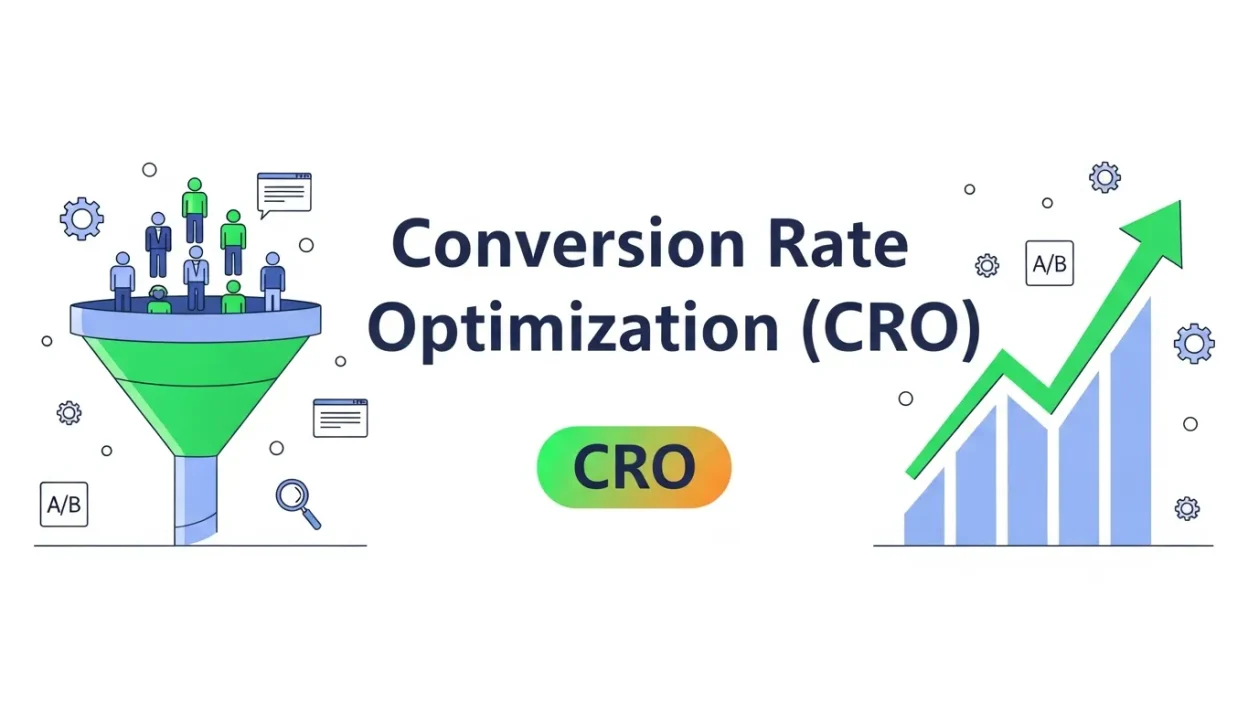
Conversion Rate Optimization (CRO) helps online businesses turn visitors into customers by improving website performance. Using the right tools, you can enhance user experience, guide actions, and boost conversions, maximizing the value of every visitor effectively.
If you run an online shop, you’re likely asking yourself how to turn more of your visitors into paying customers. This is where conversion rate optimization (CRO) comes into play — the practice of maximizing the percentage of users who take desired actions on your website. Whether your goal is to sell products, collect email subscriptions, or have visitors complete forms, effective CRO strategies and tools can guide users toward these outcomes.
With so many CRO tools available, it can be overwhelming to know which ones are worth your time. This comprehensive guide explains the essential tools for conversion rate optimization, showing how each can enhance your website’s performance. By the end, you’ll understand which tools truly help optimize your site and drive more successful conversions, turning casual visitors into loyal customers.
What is Conversion Rate Optimization (CRO)?
Conversion rate optimization (CRO) is a system for improving website performance that involves various methods to increase the percentage of visitors who complete desired actions. Such transactions include buying things online, making yourself a subscriber, getting a piece from each news source (but too soon if you want those things at no cost!)– following some ‘come now’ plea they made to me via email–all sorts can be taken into account.
Conversion rate is calculated by this formula: number of conversions divided by total visitors times 100 equals conversion rate%. For example, if 1,000 visitors come to your landing site expecting to see your collection of stylish stone insoles, and 50 take a stone, the conversion rate is 5% (50÷1,000 = 0.05).
CRO focuses on finding what works best for your audience and applying these insights to drive better results. It is about getting more from the traffic that you are already receiving than any additional marketing expenditure.
Why Is Conversion Rate Optimization (CRO) Important for Your Website?
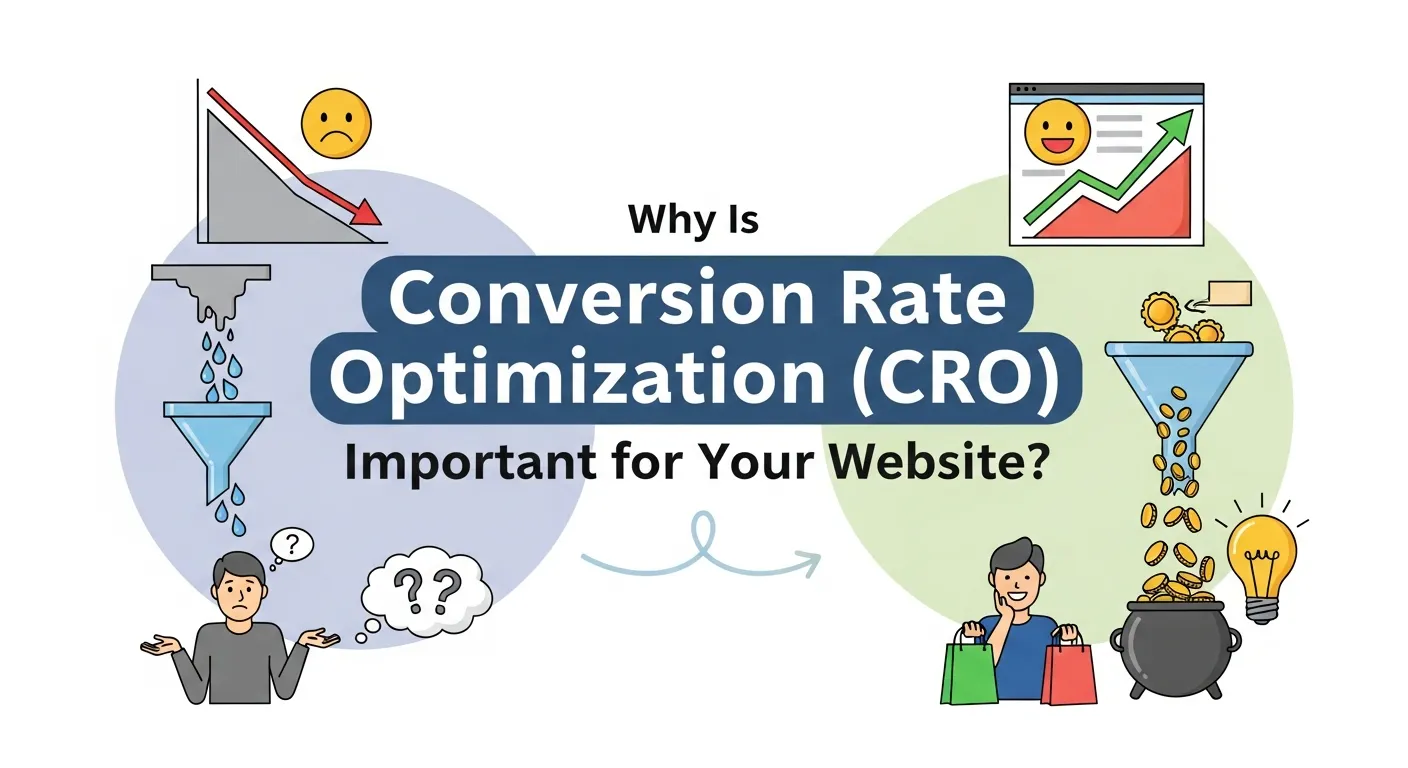
In today’s competitive digital landscape, simply attracting traffic to your website isn’t enough — the true measure of success lies in how effectively you can turn that traffic into tangible results. This is where conversion rate optimization (CRO) becomes indispensable. It ensures that every click, every visit, and every interaction delivers maximum value to your business.
Let’s explore why CRO is essential for every website striving to grow, engage, and convert visitors into loyal customers.
1. Maximizes ROI (Return on Investment)
Investing in paid ads, SEO campaigns, and content creation can be costly. Without an optimized website, much of that effort is wasted if visitors leave without taking action. Conversion rate optimization helps you extract more value from your existing traffic — meaning you don’t have to spend more to earn more.
How CRO Maximizes ROI:
- Converts a higher percentage of visitors into buyers or leads without increasing ad spend.
- Reduces customer acquisition costs by improving the efficiency of current marketing channels.
- Increases profitability by boosting the output of every campaign, ad, and piece of content.
By focusing on optimizing conversions, you make every marketing dollar count — ensuring that your growth is both scalable and sustainable.
2. Enhances User Experience (UX)
At its core, conversion rate optimization is about understanding user behavior and removing friction points that prevent visitors from achieving their goals. A positive user experience doesn’t just increase conversions — it builds long-term trust and brand loyalty.
How CRO Improves UX:
- Simplifies navigation and makes it easier for visitors to find what they’re looking for.
- Speeds up loading times, ensuring users don’t abandon pages out of frustration.
- Refines design and structure for clarity and accessibility across devices.
- Makes the site more intuitive, leading to smoother interactions and higher satisfaction.
When users find your website enjoyable and effortless to use, they stay longer, engage more deeply, and are far more likely to return — key outcomes of successful conversion rate optimization.
3. Offers Measurable and Clear Outcomes
Unlike traditional marketing strategies that can feel abstract or difficult to quantify, conversion rate optimization is entirely data-driven. Every test, change, and improvement is backed by measurable metrics that show what’s working and what’s not.
CRO Provides Clarity by:
- Tracking how even minor design or content changes affect conversion rates.
- Offering insights through analytics, A/B tests, and heatmaps.
- Allowing you to measure progress in real time and make evidence-based decisions.
- Eliminating guesswork from your marketing approach.
This clarity transforms website improvement from guesswork into a predictable, repeatable growth process. CRO turns small, data-informed tweaks into significant long-term gains.
4. Supports Business Development and Long-Term Growth
Every business wants sustainable growth — and conversion rate optimization directly supports that goal. By improving how efficiently your site converts visitors, CRO not only increases immediate revenue but also strengthens customer acquisition and retention over time.
How CRO Fuels Business Growth:
- Drives more leads and sales from the same volume of traffic.
- Improves customer satisfaction and loyalty through better experiences.
- Builds stronger brand credibility and trust through consistent, optimized interactions.
- Creates a scalable model where performance improves continuously with testing and insights.
Whether you’re a startup trying to gain traction or an established brand scaling globally, CRO is the growth engine that maximizes your website’s potential.
5. Gives You a Competitive Advantage
In crowded markets, two businesses might attract the same number of visitors — but the one using conversion rate optimization will consistently earn more customers, more revenue, and more long-term success.
Your Advantage Through CRO:
- Outperform competitors with smarter design and content decisions.
- Adapt quickly to user feedback and emerging digital trends.
- Build a conversion-focused culture across your marketing and product teams.
By continuously optimizing, testing, and learning, your website stays ahead of changing user expectations and competitor strategies — a key to staying relevant and profitable.
Conversion rate optimization isn’t just about tweaking pages — it’s a strategic framework for maximizing value, enhancing user experience, and driving measurable growth.
When you invest in CRO, you’re not only improving your website’s performance but also securing your business’s long-term competitive edge.
The Main Elements of Website Conversion Rate Optimization
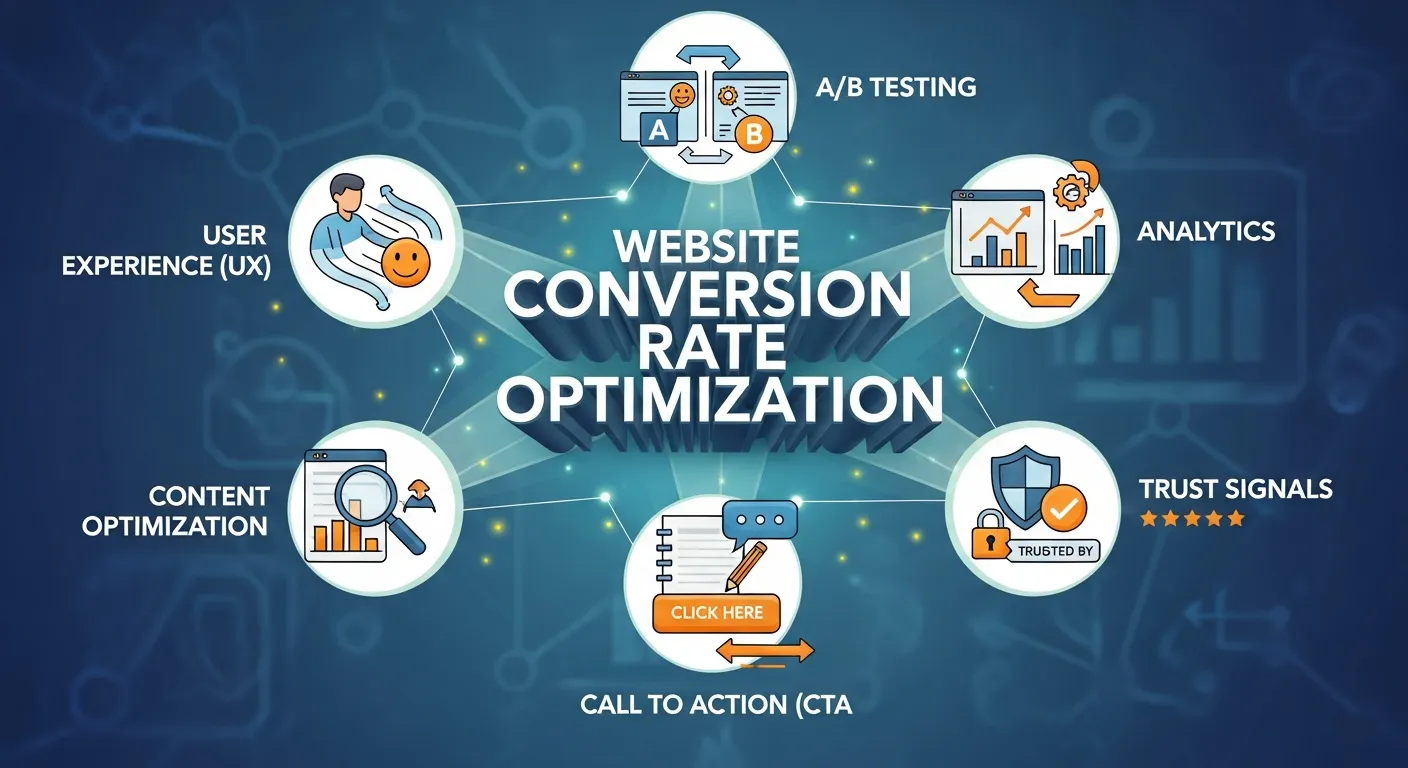
To fully understand conversion rate optimization (CRO), it’s essential to break it down into its key components. Each element contributes to improving how effectively your website turns visitors into customers, subscribers, or leads. Together, these building blocks form the foundation of a high-performing, conversion-focused website.
1. Identifying User Pain Points and Drop-Off Areas
Before you can improve conversions, you must first understand where users are getting stuck, losing interest, or abandoning your site altogether. This diagnostic phase is the backbone of successful conversion rate optimization — it helps you locate exactly where improvements are needed.
Using tools like Google Analytics, Hotjar, and Crazy Egg, you can gain valuable insights into:
- Bounce rates: Which pages make visitors leave immediately?
- Session recordings: How do users navigate your site before dropping off?
- Heatmaps: Where do users click, scroll, or ignore key content?
- Exit rates: Which pages or steps in your funnel lose the most users?
Once you identify these problem areas, you can prioritize fixes that have the greatest potential impact — whether that’s improving page load speed, clarifying navigation, or optimizing checkout forms.
2. Optimizing Website Design
Design plays a crucial role in conversion rate optimization. A website that looks appealing but confuses users will never convert effectively. The goal is to create a design that is clean, intuitive, and strategically structured to guide visitors toward desired actions.
Best Practices for CRO-Focused Website Design:
- Use clear and visible CTA buttons: Make primary actions like “Buy Now,” “Sign Up,” or “Get Started” easy to spot.
- Simplify navigation: Reduce the number of clicks it takes to find key pages or products.
- Ensure mobile responsiveness: A large portion of users browse and buy via mobile; your site must adapt perfectly to all screens.
- Prioritize speed: A one-second delay can reduce conversions by up to 7%. Optimize image sizes and server response times.
- Design for the eye path: Guide visitors’ attention with visual hierarchy, color contrast, and whitespace.
A conversion-optimized design removes distractions and makes every interaction effortless — turning casual visitors into active participants.
3. Crafting Compelling, High-Converting Copy
In conversion rate optimization, your words can make or break the sale. Effective website copy isn’t just about sounding good — it’s about speaking directly to your audience’s motivations, challenges, and desires. The right message can evoke trust, excitement, and urgency, encouraging users to take action.
Tips for Writing Copy That Converts:
- Highlight your Unique Value Proposition (UVP): Make it immediately clear why your offer is better than competitors.
- Focus on benefits, not features: Tell users how your product or service improves their lives.
- Use persuasive CTAs: Replace generic text like “Submit” with “Get My Free Quote” or “Start Saving Now.”
- Address objections: Anticipate doubts or fears and counter them with reassurance or guarantees.
- Use conversational tone: Write like you’re speaking directly to your audience, not broadcasting to them.
Strong, benefit-oriented copy helps bridge the emotional and logical gap between browsing and buying.
4. Running Effective A/B Tests
Also known as split testing, A/B testing is a cornerstone of conversion rate optimization. It allows you to compare two or more versions of a webpage to determine which one performs better based on real user data.
Examples of What to Test in CRO:
- Page layouts and design variations
- Headline wording and subheadings
- Call-to-action (CTA) button color, size, or placement
- Images, videos, or testimonials on key pages
- Pricing structure or promotional offers
For instance, testing two CTA colors could reveal that one increases clicks by 15%. Tools like VWO and Optimizely make running such experiments seamless, allowing you to make informed, data-driven decisions instead of relying on assumptions.
5. Personalizing the User Experience
Personalization is one of the most powerful levers in modern conversion rate optimization. By tailoring content, offers, and messages to individual users, you can create more relevant experiences that drive higher engagement and conversions.
Examples of Personalization in Action:
- Showing product recommendations based on previous browsing behavior
- Displaying dynamic headlines that match a user’s location or referral source
- Sending personalized follow-up emails to users who abandoned carts
- Using smart content that changes based on customer segments or interests
Top Personalization Tools for CRO:
- HubSpot – for dynamic website and email personalization
- Optimizable – for AI-driven on-site experience customization
- Dynamic Yield – for advanced audience segmentation and tailored content delivery
Personalization makes visitors feel understood — and that emotional connection can dramatically increase conversion rates.
6. Building Trust and Creating Social Proof
Trust is the final ingredient in the conversion rate optimization formula. Even the best design and copy won’t work if visitors don’t believe your brand is credible. Social proof builds that trust by showing that others have already chosen — and loved — your product or service.
Effective Ways to Add Social Proof:
- Display verified customer reviews and ratings prominently.
- Include case studies highlighting measurable results.
- Showcase user-generated content (e.g., photos, testimonials).
- Feature logos of well-known clients or partners.
- Use statistics to build authority (e.g., “Over 10,000 satisfied customers”).
When potential customers see real stories from real people, hesitation drops, and confidence grows.
Each of these elements — design, copy, testing, personalization, and social proof — works together as part of a continuous conversion rate optimization cycle. By analyzing user behavior, testing new ideas, and refining based on results, you can transform your website into a high-converting, customer-focused platform that drives sustained business growth.
Key CRO Tool Categories
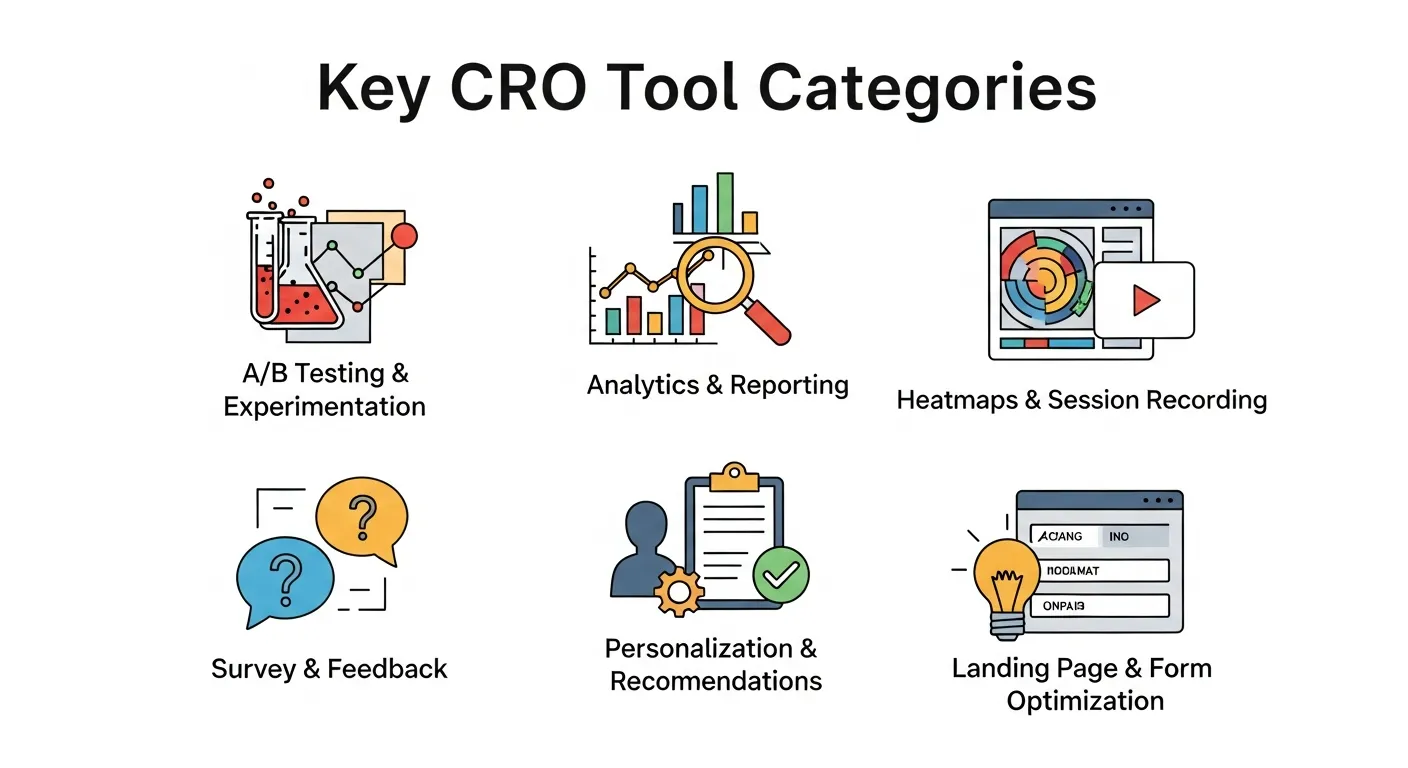
Choosing the right tools is essential to execute effective conversion rate optimization (CRO) strategies. Each tool serves a unique purpose — from understanding visitor behavior to testing design changes and improving engagement. When used together, they create a complete CRO ecosystem that helps you analyze, experiment, and refine your website for maximum results.
Below are the main categories of CRO tools and how they support your optimization efforts:
1. Analytics Tools
Analytics tools form the foundation of any conversion rate optimization strategy. They reveal how users interact with your website — which pages attract attention, where they drop off, and what actions lead to conversions.
Popular Analytics Tools:
Google Analytics (GA):
A free, robust platform from Google that provides deep insights into your website traffic, audience demographics, and behavior flow. GA helps you identify which pages perform best, which campaigns drive results, and where optimization is needed.
Hotjar:
Hotjar visualizes user activity through heatmaps, scroll maps, and session recordings, allowing you to see exactly how visitors navigate your pages. This visual data highlights points of friction or confusion in the user journey.
How Analytics Tools Help with CRO:
- Identify high-exit or low-performing pages.
- Analyze user flow through your conversion funnel.
- Track conversion goals and campaign performance.
- Reveal bottlenecks that prevent users from completing desired actions.
Data is the backbone of conversion rate optimization — and analytics tools give you the visibility to make data-driven improvements confidently.
2. A/B Testing Tools
A/B testing (or split testing) is one of the most effective ways to improve conversions. These tools allow you to present two or more versions of a webpage to different visitors to see which performs better.
Leading A/B Testing Tools:
Optimizely:
An industry leader that lets you experiment with page elements such as headlines, images, CTAs, and layouts. Optimizely’s robust analytics ensure every decision is backed by measurable results.
VWO (Visual Website Optimizer):
VWO offers a user-friendly platform for running A/B, multivariate, and split URL tests. It simplifies experimentation and delivers clear reports on which version converts better.
Use Case Example:
If you’re unsure whether a green “Buy Now” button outperforms a red one, A/B testing tools provide concrete data to determine which design drives higher conversions.
Why It Matters:
A/B testing is central to conversion rate optimization, allowing you to refine your website continually based on real-world performance rather than assumptions.
3. Heatmap and Session Recording Tools
While analytics show what users do, heatmaps and recordings show how they do it. These tools provide visual insights into user interaction patterns — where they click, scroll, or get stuck.
Top Heatmap Tools:
Crazy Egg:
Offers a detailed view of user engagement through heatmaps, scroll maps, and click maps. It helps identify which areas of your page attract the most attention and which are ignored.
FullStory:
Combines session replay with deep analytics, letting you replay user journeys to diagnose experience issues and uncover optimization opportunities.
Why They’re Essential for CRO:
- Identify elements users overlook or struggle to interact with.
- Visualize where attention drops off on long pages.
- Detect UX issues like unresponsive buttons or confusing layouts.
Heatmap tools are indispensable for conversion rate optimization, translating user behavior into clear visual data that fuels smarter design decisions.
4. Customer Feedback Tools
Numbers tell part of the story — but direct user feedback reveals the “why” behind those numbers. Customer feedback tools collect insights directly from real users, helping you align your conversion rate optimization efforts with their expectations.
Popular Feedback Tools:
Qualtrics:
A comprehensive survey platform that measures customer satisfaction and gathers detailed feedback across various touchpoints.
Usabilla:
Enables visitors to leave instant feedback on your website — whether to rate their experience, report a problem, or suggest improvements.
When to Use Feedback Tools:
If feedback shows that users often abandon your checkout page, you can redesign it to be more intuitive and friction-free. This real-time insight directly improves your conversion rates.
Listening to your users is one of the most powerful steps in conversion rate optimization — it helps you prioritize changes that matter most to your audience.
5. Live Chat and Chatbot Tools
Instant support can make or break a conversion. Live chat and chatbot tools engage visitors in real-time, answer questions, and guide them through your sales funnel.
Recommended Chat Tools:
Intercom:
A powerful live chat and automation tool that allows you to provide personalized customer support, send targeted messages, and assist users instantly.
Drift:
Known for its AI-driven chatbots, Drift qualifies leads, answers FAQs, and helps users navigate your products — all while capturing valuable contact information.
How They Boost Conversions:
- Provide 24/7 automated customer support.
- Resolve buying hesitation with instant answers.
- Guide visitors toward completing purchases or signups.
Integrating live chat into your conversion rate optimization plan builds trust and minimizes drop-offs caused by unanswered questions.
6. Landing Page Optimization Tools
Landing pages are critical to turning visitors into leads or customers. These tools help you design, test, and optimize landing pages without extensive coding knowledge.
Top Landing Page Builders:
Unbounce:
A no-code platform with drag-and-drop functionality that lets you create conversion-focused landing pages quickly.
Instapage:
Offers customizable templates, personalization options, and built-in heatmaps to analyze performance post-launch.
Practical Example:
If you’re running a campaign for a specific product, tools like Instapage let you create a dedicated landing page that matches your ad copy — significantly improving conversion rates.
Landing page builders are indispensable for conversion rate optimization, ensuring every visitor from your ads or emails arrives at a page perfectly tailored to their intent.
7. Email Marketing and Automation Tools
Email remains one of the highest-converting marketing channels. When aligned with conversion rate optimization, automated email workflows can re-engage leads, recover abandoned carts, and encourage repeat purchases.
Leading Email Tools:
Mailchimp:
An intuitive tool for building email campaigns, automating follow-ups, and segmenting audiences for personalized outreach.
HubSpot Marketing Hub:
A comprehensive solution that combines CRM, automation, and email marketing to deliver tailored experiences to each customer segment.
CRO Impact:
A well-timed email can remind users of abandoned carts, share limited-time offers, or encourage reviews — all of which contribute directly to higher conversions.
8. Behavioral Analytics Tools
Behavioral analytics tools dive deep into how users interact with your website or app over time. They reveal patterns, habits, and conversion triggers that help refine your CRO strategy.
Top Behavioral Tools:
Mixpanel:
Tracks specific user actions, such as signups or feature usage, and helps pinpoint where users drop off in the conversion process.
Amplitude:
Analyzes user behavior trends across sessions, identifying friction points and opportunities for improvement.
Why Use Behavioral Analytics in CRO:
- Understand long-term engagement trends.
- Discover what actions lead to conversions.
- Detect recurring pain points in the user journey.
Behavioral insights provide the “big picture” view necessary for sustainable conversion rate optimization, ensuring your website evolves based on real user behavior — not assumptions.
The best conversion rate optimization tools are those that work together seamlessly — integrating analytics, testing, automation, and feedback into one continuous improvement cycle.
Before selecting your CRO toolkit, assess your business goals, target audience, and current challenges. A balanced combination of analytics, A/B testing, and customer insight tools will give you the clarity and control needed to boost conversions effectively and sustainably.
Leveraging AI Chatbots to Drive E-commerce Conversions
AI-powered chatbots have evolved far beyond simple question-and-answer tools. Today, they act as intelligent virtual sales assistants capable of nurturing customers throughout their buying journey. By understanding user intent, chatbots can guide visitors from curiosity to conversion in seconds — creating smoother, faster, and more human-like digital experiences.
A well-optimized chatbot can greet visitors, offer product suggestions, recover abandoned carts, and even upsell relevant items — all while maintaining a conversational tone that feels natural and personalized. This makes chatbots one of the most cost-effective CRO solutions available for modern e-commerce.
Why AI Chatbots Improve Conversion Rates:
- Instant Engagement: No waiting time — visitors get answers immediately, reducing bounce rates.
- Personalized Interaction: Chatbots can analyze browsing behavior and purchase history to tailor suggestions.
- Abandoned Cart Recovery: Automated reminders or incentives (like a small discount) encourage users to complete their purchase.
- 24/7 Availability: Your store remains active and helpful, even outside business hours.
- Lead Qualification: AI identifies high-value visitors and routes them to human sales teams when necessary.
Performance Comparison: AI Chatbot vs. Manual Support
| Metric | Without Chatbot | With AI Chatbot |
|---|---|---|
| Average Response Time | 5+ minutes | Instant |
| Cart Abandonment Rate | 70% | 45% |
| Conversion Rate | 2.3% | 4.9% |
| Customer Satisfaction | 78% | 92% |
If you’re looking to integrate automation that actually converts, explore this expert breakdown on E-commerce Conversion Chatbots for Higher Sales. It explains how AI chatbots can dramatically lift sales performance while keeping customer experience personal and efficient.
Building Trust and Loyalty Through Online Reputation Management
Trust is the foundation of every successful conversion. Even the best-designed website will struggle to convert visitors if potential customers question its credibility. That’s why reputation management has become a critical pillar of Conversion Rate Optimization. It ensures that your business not only attracts visitors but also reassures them that they’re making the right choice by buying from you.
Online reputation management (ORM) involves monitoring what customers say about your brand, responding strategically, and consistently reinforcing positive sentiment. This shapes the public perception of your business — the emotional factor that often decides whether a visitor clicks “buy” or “leave.”
Key Benefits of Strong Reputation Management:
- Higher Trust, Higher Conversions: People prefer brands with positive reviews and testimonials.
- Reduced Buyer Anxiety: Transparent communication builds confidence in product quality and service reliability.
- Improved SEO Visibility: Positive reviews and engagement can boost search rankings, leading to more organic traffic.
- Customer Retention: Satisfied customers who feel heard are more likely to return.
- Crisis Prevention: Prompt responses to complaints prevent small issues from escalating into brand-damaging events.
Reputation Strength vs. Conversion Impact
| Reputation Score | Average Conversion Rate | Repeat Purchase Rate | Brand Advocacy |
|---|---|---|---|
| Excellent (4.5–5★) | 6.3% | 80% | Very High |
| Average (3–4★) | 3.8% | 55% | Moderate |
| Poor (<3★) | 1.6% | 30% | Low |
To gain deeper insights into protecting and enhancing your business reputation, read Mastering Personal Reputation Management: From First Impression to Impact. It explores how a thoughtful reputation strategy can turn customer perception into one of your strongest conversion levers.
Amplifying Conversions with Strategic CPC Advertising
Even the most optimized website needs consistent traffic to fuel conversions — and that’s where Cost-Per-Click (CPC) advertising comes in. When managed effectively, CPC campaigns can attract high-intent visitors who are already searching for your products or services. The key lies in merging paid traffic with CRO insights to make every click count.
A successful CPC strategy goes beyond bidding and keywords. It combines data analysis, user psychology, and conversion-focused landing pages to ensure every visitor from an ad finds exactly what they expected — and takes action.
Core Components of an Effective CPC Conversion Strategy:
- Keyword Intent Targeting: Focus on commercial-intent keywords that signal buying readiness.
- Ad Message Testing: Continuously A/B test headlines, CTAs, and visuals to discover what drives clicks and conversions.
- Landing Page Alignment: Each ad should direct to a tailored, relevant page that fulfills the promise of the ad copy.
- Remarketing Campaigns: Re-engage visitors who didn’t convert the first time by showing them targeted follow-up ads.
- Data-Driven Budget Allocation: Analyze ROI per campaign and channel to maximize ad spend efficiency.
ROI Performance by Advertising Type
| Campaign Type | Click-Through Rate (CTR) | Conversion Rate | ROI (%) |
|---|---|---|---|
| Organic Search | 2.4% | 3.1% | 140% |
| Paid Search (CPC) | 6.7% | 6.0% | 275% |
| Display Ads | 1.2% | 1.5% | 90% |
| Remarketing | 7.5% | 8.3% | 320% |
When paired with CRO techniques, CPC campaigns become incredibly powerful. To explore the best ways to structure and optimize paid campaigns for fast results, check out CPC Advertising for E-commerce: Boost Sales Fast.
Choosing the Right Tools for Your Business
Many tools are on offer, and selecting the right ones can feel bewildering. Begin by identifying your present challenges. Are users abandoning you at a specific stage in the customer journey? Do you lack insight into reader behaviour? Your priorities must match those needs for tools.
For many businesses, a combination of analytics, testing, and customer feedback tools works best. All of them must integrate well together; otherwise the optimization process becomes too complicated and ends up taking longer.
Five Proven Conversion Rate Optimization (CRO) Strategies That Work Today
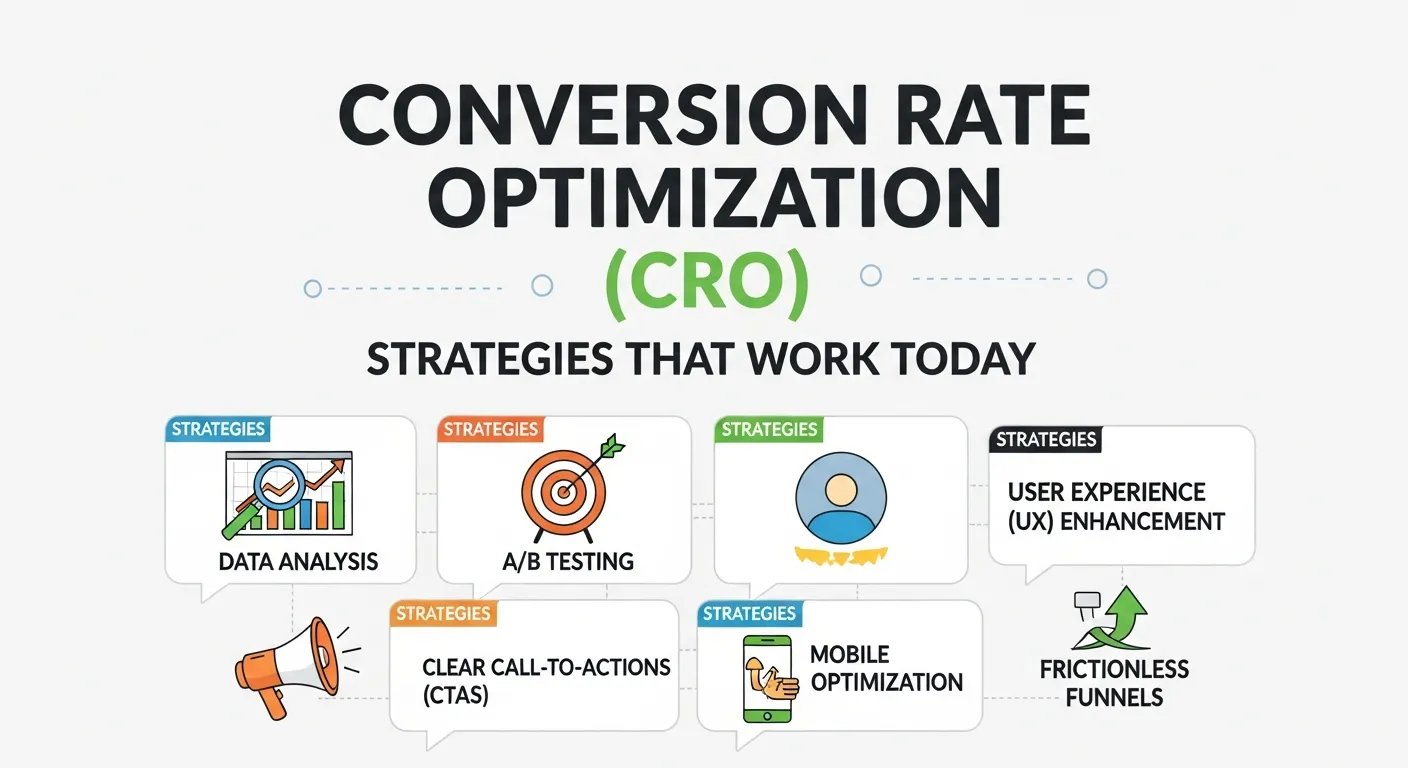
Successful conversion rate optimization is not about guessing — it’s about using proven, data-backed strategies that consistently increase user engagement and drive action. Whether you run an e-commerce store, SaaS platform, or service-based website, applying these tried-and-tested CRO techniques can dramatically boost your conversion rates and overall business growth.
Let’s explore five proven strategies that deliver measurable results:
1. Optimize Your Landing Pages
Your landing page is often the first impression a visitor gets — and in many cases, it’s your single chance to convert them. A well-optimized landing page combines compelling copy, trust-building visuals, and a clear call-to-action (CTA) that guides users effortlessly toward conversion.
Key Landing Page Optimization Tips:
- Keep your message focused on one core offer or action.
- Use attention-grabbing headlines that highlight benefits, not just features.
- Include visual trust signals such as testimonials, star ratings, or security badges.
- Minimize distractions — remove unnecessary links, pop-ups, or external navigation.
- Ensure your CTA stands out with contrasting colors and persuasive text (e.g., “Get Started Today”).
A clean, conversion-oriented design supported by persuasive copy can transform your landing page into a high-performing conversion engine.
2. Fold In and Simplify Your Forms
Complicated or lengthy forms are one of the biggest barriers to conversion. Visitors often abandon forms when they feel overwhelmed or uncertain about why their information is needed. Effective conversion rate optimization focuses on creating forms that are short, transparent, and frictionless.
Best Practices for CRO-Optimized Forms:
- Reduce the number of fields to only what’s essential.
- Use autofill and inline validation to speed up form completion.
- Clearly explain why each piece of information is required.
- Add trust elements like “We never share your email” for reassurance.
- Place your form above the fold for maximum visibility.
Even small tweaks — such as removing one unnecessary field — can significantly increase submission rates and lower abandonment.
3. Implement Exit-Intent Popups to Capture Leaving Visitors
Exit-intent popups trigger just as a user is about to leave your site, providing a last chance to convert them into subscribers or customers. When used strategically, these pop-ups can rescue a significant portion of your lost traffic and turn it into valuable leads.
Effective Exit-Intent Popup Tactics:
- Offer an incentive such as a discount code, free guide, or newsletter signup.
- Keep messaging concise and benefit-driven (“Wait! Get 10% Off Before You Go!”).
- A/B test different designs and messages to see which captures attention best.
- Avoid intrusive popups that appear too early or block navigation.
Properly timed exit-intent campaigns can improve conversion rates by giving hesitant users a compelling reason to stay engaged.
4. Test and Refine Your CTAs (Calls to Action)
The CTA is where your conversion rate optimization efforts culminate — it’s the moment of decision. A weak or unclear CTA can undermine even the best content or design. Testing different versions helps determine which wording, placement, or color encourages the most clicks.
Proven CTA Optimization Tips:
- Use action-oriented language (“Get Started,” “Join Free,” “Try It Now”).
- Place CTAs strategically — at the top, middle, and end of long pages.
- Experiment with button colors that contrast with your background.
- Test variations of text length and tone to match user intent.
- Ensure your CTA remains consistent with your overall messaging.
Continuous A/B testing of CTAs helps identify the subtle factors that make users take action.
5. Provide Social Proof and Build Trust
In today’s competitive digital space, trust is one of the strongest conversion triggers. Visitors are more likely to engage when they see others have already done so and had positive experiences. Social proof validates your brand’s credibility and helps reduce buyer hesitation.
Ways to Integrate Social Proof into Your CRO Strategy:
- Display customer testimonials and star ratings near CTAs.
- Highlight real-time activity (e.g., “2,500+ users signed up this week”).
- Feature recognizable client logos or press mentions.
- Use case studies or success stories to demonstrate tangible results.
- Encourage user-generated content and customer reviews on product pages.
Authentic, visible proof of customer satisfaction can be the final push a visitor needs to convert.
6. Pay Attention to Mobile Optimization
Mobile devices now account for more than half of all online traffic, so conversion rate optimization must extend beyond desktop experiences. A mobile-optimized site ensures that visitors on any device enjoy a smooth, fast, and intuitive journey from entry to checkout.
Mobile CRO Best Practices:
- Use responsive design to fit all screen sizes seamlessly.
- Optimize loading times by compressing images and minimizing scripts.
- Simplify menus and navigation for thumb-friendly usability.
- Use mobile-specific CTAs that are large enough to tap easily.
- Test forms, checkout pages, and popups for flawless mobile functionality.
A well-optimized mobile experience can significantly increase engagement and prevent potential customers from abandoning your site due to frustration.
In summary, these five (plus one) proven conversion rate optimization strategies are the backbone of modern CRO success. When implemented systematically — and tested continuously — they can turn casual visitors into committed customers while maximizing your return on every marketing dollar.
Common Mistakes to Avoid in Conversion Rate Optimization (CRO)
Even with the best intentions, many businesses make critical errors that limit the effectiveness of their conversion rate optimization efforts. CRO is both a science and an art — one that requires consistent analysis, testing, and refinement. Understanding what not to do is just as important as knowing which strategies to implement.
Below are some of the most common pitfalls to avoid when optimizing your website for better conversion performance:
1. Neglecting Data and Relying on Assumptions
One of the biggest mistakes in conversion rate optimization is making changes based on personal opinions or trends instead of real user data. Decisions made without data can lead to wasted resources and declining performance.
What to Do Instead:
- Use analytics tools like Google Analytics, Hotjar, or Mixpanel to understand how visitors interact with your site.
- Track key performance metrics such as bounce rate, session duration, and funnel drop-offs.
- Base every change on measurable insights and A/B testing results, not intuition.
When you let data guide your CRO strategy, you gain a clear view of what actually influences your audience to convert.
2. Overloading Pages with Too Many CTAs
A cluttered page full of call-to-action (CTA) buttons may seem persuasive, but in reality, it confuses and overwhelms users. Instead of encouraging clicks, it causes hesitation and frustration, leading to lower conversion rates.
Best Practice for Conversion Rate Optimization:
- Focus on a single, clear CTA per page or per key section.
- Make the CTA visually distinct and action-oriented (e.g., “Get Started Now” or “Add to Cart”).
- Keep the surrounding design clean and distraction-free to draw attention naturally to the action point.
A well-placed CTA that matches user intent performs far better than multiple scattered ones that compete for attention.
3. Ignoring Mobile Optimization
With more than half of online traffic coming from mobile devices, ignoring mobile users is one of the fastest ways to lose conversions. Poorly designed mobile experiences — from slow load times to difficult navigation — cause visitors to bounce before engaging with your content or products.
Mobile-Focused Conversion Rate Optimization Tips:
- Ensure your website design is responsive and adapts smoothly to any screen size.
- Compress images and optimize site speed to reduce load times on mobile networks.
- Simplify forms, buttons, and navigation for touch-friendly interaction.
- Test mobile checkout flows regularly to ensure a frictionless experience.
By prioritizing mobile usability, you can capture a massive share of users who are ready to buy but demand a seamless experience.
4. Ignoring Continuous Testing
Many businesses treat conversion rate optimization as a one-time project — launching a few tests, implementing minor changes, and assuming the job is done. CRO, however, is an ongoing process that must evolve alongside user behavior, design trends, and technology.
What to Remember:
- Conduct A/B or multivariate tests regularly to evaluate new design ideas.
- Monitor metrics after each update to ensure improvements actually drive conversions.
- Keep an experimentation log to track what worked, what didn’t, and why.
Testing continuously ensures your website remains optimized for the changing expectations of your audience.
5. Overlooking the Importance of User Experience (UX)
If your website looks appealing but is difficult to navigate, users won’t stay long enough to convert. Great UX is at the heart of successful conversion rate optimization, ensuring that visitors enjoy an intuitive, engaging experience from start to finish.
How to Improve UX for Better CRO:
- Maintain a logical layout with clear content hierarchy.
- Use consistent visuals and colors to build brand trust.
- Eliminate unnecessary steps in checkout or form submission processes.
- Incorporate feedback mechanisms to identify usability pain points.
When your website’s UX aligns with user expectations, every interaction becomes an opportunity to convert.
6. Failing to Segment and Personalize
Treating all visitors the same way ignores the diversity of your audience. Personalized experiences consistently outperform generic ones in conversion rate optimization.
How to Personalize Effectively:
- Segment visitors based on behavior, demographics, or source of traffic.
- Display personalized product recommendations or dynamic content.
- Send tailored email follow-ups that reflect individual browsing activity.
Personalization builds trust and relevance, leading to higher engagement and conversion rates.
7. Ignoring Post-Conversion Optimization
CRO doesn’t end when a customer makes a purchase or fills out a form. The post-conversion experience — confirmation pages, thank-you emails, or onboarding flows — plays a major role in retention and repeat conversions.
Enhance Post-Conversion CRO by:
- Using thank-you pages to suggest related products or next steps.
- Requesting feedback or reviews to boost social proof.
- Offering referral incentives to increase customer lifetime value.
By optimizing beyond the first conversion, you strengthen long-term growth and customer loyalty.
Avoiding these mistakes will help ensure your conversion rate optimization efforts are focused, efficient, and effective. Remember — CRO success isn’t about making massive overhauls; it’s about making the right data-driven adjustments, testing them continuously, and staying aligned with user needs.
Elevate Your Website with Conversion Rate Optimization
Conversion Rate Optimization (CRO) is not a one-time project — it’s a continuous, data-driven process that helps your website evolve with your audience. Every click, scroll, and purchase tells a story about what your visitors want. By analyzing these behaviors and implementing targeted improvements, you can systematically increase conversions and elevate your overall site performance.
True conversion rate optimization goes beyond aesthetics. It’s about understanding why users act the way they do, identifying what motivates them to convert, and removing barriers that stop them. Whether your goal is more product sales, email signups, or lead submissions, CRO gives you a structured framework to achieve measurable growth.
Here’s how you can elevate your website through Conversion Rate Optimization:
- Analyze User Behavior:
Use behavioral analytics tools to study how visitors interact with your pages. Track heatmaps, clicks, and navigation paths to pinpoint friction points or drop-offs in the user journey. - Improve User Experience (UX):
Simplify your layout, ensure fast loading times, and make navigation intuitive. A smooth, enjoyable browsing experience is one of the strongest contributors to higher conversion rates. - Optimize Key Pages Continuously:
Focus on improving high-impact pages — such as your home page, product pages, and checkout forms. Regular A/B testing of elements like headlines, CTAs, and visuals helps refine what works best. - Leverage Data-Driven Insights:
Conversion rate optimization relies on real numbers, not guesses. Use analytics to test assumptions and implement only those changes that produce proven, positive results. - Build Trust Through Transparency:
Display testimonials, customer reviews, and trust badges to create credibility. When users feel secure, they’re more likely to complete desired actions. - Personalize the Customer Journey:
Deliver tailored experiences based on location, behavior, or purchase history. Personalization makes users feel valued and directly impacts conversion rates. - Set Clear, Action-Oriented CTAs:
Every page should guide visitors toward one clear goal. Use strong, benefit-driven call-to-actions that encourage immediate engagement. - Track and Refine Regularly:
Conversion rate optimization is an ongoing process. Regularly review metrics like bounce rate, session duration, and conversion rate percentage to identify what’s improving — and where more testing is needed.
By embracing a mindset of continuous optimization, your website becomes more than just a digital storefront — it becomes a dynamic system designed to convert interest into action.
Start with small, data-backed improvements, keep testing, and let conversion rate optimization transform your online performance step by step.
Frequently Asked Questions (FAQ) about Conversion Rate Optimization (CRO)
1. What is the main goal of Conversion Rate Optimization (CRO)?
The primary goal of CRO is to increase the percentage of website visitors who take a desired action—such as making a purchase, subscribing to a newsletter, or filling out a contact form—without necessarily increasing overall traffic. It’s about making your existing traffic work harder by improving the experience, design, and persuasion elements that guide users toward conversion. A well-executed CRO strategy turns casual visitors into loyal customers.
2. How does CRO differ from traditional marketing strategies?
Traditional marketing focuses on attracting visitors through advertising, SEO, or social media. CRO, on the other hand, focuses on what happens after the visitor lands on your website. It’s a systematic approach to improving on-site performance using behavioral data, user testing, and analytics. While marketing gets people through the door, CRO ensures that once they’re inside, they actually take the desired action.
3. Why are micro-conversions important in CRO?
Micro-conversions are small but meaningful actions that users take before completing a final conversion, such as adding a product to a cart, signing up for a free trial, or clicking a CTA button. Tracking these smaller milestones helps you understand user intent and identify where the conversion journey breaks down.
To learn how small improvements can lead to major engagement growth, read this concise guide on Boosting Engagement with Micro-Conversions.
4. What are the most common CRO tools?
Some of the most widely used tools include Google Analytics, Hotjar, Crazy Egg, VWO, and Optimizely.
These tools help track user interactions, visualize behavior through heatmaps, and run A/B tests to identify what design or content changes lead to higher conversions. The right combination of tools depends on your website size, traffic, and goals.
5. How do you create a high-converting landing page?
Creating an effective landing page requires a combination of clarity, visual hierarchy, and persuasive content. The message should be laser-focused on one goal, with minimal distractions and a compelling call-to-action. High-quality visuals, social proof, and trust signals can make a big difference.
If you want step-by-step guidance, this resource on How to Create Landing Pages offers a clear roadmap for building pages that actually convert.
6. How can A/B testing improve conversion rates?
A/B testing—also known as split testing—is one of the most powerful CRO techniques. It involves comparing two versions of a webpage to see which performs better. By systematically testing elements like headlines, button colors, and CTAs, businesses can make data-driven decisions rather than relying on assumptions. Over time, A/B testing reveals what resonates most with your audience and leads to continuous conversion improvements.
7. What metrics should I track to measure CRO success?
The most critical CRO metrics include:
- Conversion Rate (%): The percentage of visitors completing a desired action.
- Bounce Rate: The percentage of visitors leaving after viewing only one page.
- Average Session Duration: Indicates how engaging your content is.
- Click-Through Rate (CTR): Measures the effectiveness of calls-to-action.
- Exit Rate: Helps identify which pages cause users to drop off.
Together, these metrics give a holistic view of where users are engaging, hesitating, or abandoning the process.
8. How does CRO align with the overall digital marketing strategy?
CRO complements digital marketing by maximizing the results of every campaign. For instance, traffic generated through SEO, PPC, or email marketing becomes far more valuable when the destination pages are optimized for conversions.
For a deeper strategic view, explore this expert Guide to CRO Marketing Strategies that explains how optimization integrates with advertising, analytics, and customer psychology.
9. What are some common CRO mistakes businesses make?
Businesses often fail in CRO when they:
- Make decisions without data or testing.
- Overload pages with too many CTAs or distractions.
- Ignore mobile optimization and site speed.
- Rely on short-term tricks instead of understanding user intent.
- Don’t document or analyze test results for future learning.
CRO is an ongoing process of learning and refining, not a one-time fix. The most successful brands treat it as a continuous cycle of hypothesis, testing, and improvement.
10. How long does it take to see results from CRO efforts?
CRO results vary depending on traffic volume, test duration, and the complexity of your site. Generally, small improvements—like better CTAs or form simplification—can show measurable changes within a few weeks, while larger strategic overhauls may take two to three months to generate significant ROI. The key is patience and persistence: CRO is about long-term gains built through consistent experimentation.