
This blog explores the rising demand for Conversion Rate Optimization (CRO), its key elements, industry applications, and benefits. It includes actionable insights, new sections on automation and AI, and a detailed FAQ to guide businesses and professionals.
You might have encountered the term “Conversion Rate Optimization” (CRO) if you’ve spent any time in the digital marketing or e-commerce space. But is it just another industry buzzword, or is there a genuine, pressing demand for it? The reality is that the need for effective Conversion Rate Optimization has never been greater. Faced with the pressures of skyrocketing advertising costs, intense market competition, and increasingly discerning customers, businesses are turning to CRO experts to maximize the value of every single website visit.
This comprehensive blog post will explore precisely why Conversion Rate Optimization is experiencing a significant surge in demand. We will dissect the key factors driving its growth, analyze its impact across various industries, and outline what this trend means for both businesses and marketing professionals. Whether you are a seasoned marketer, an e-commerce entrepreneur, or simply curious about the mechanics of online success, you will find practical and actionable insights ahead.
What Is Conversion Rate Optimization? A Foundational Overview
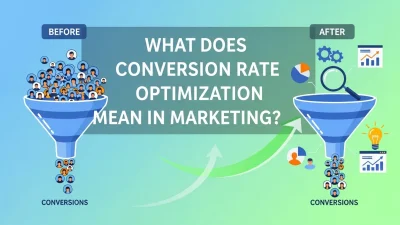
Before we explore the demand trends and advanced strategies, let’s establish a clear and solid understanding of the fundamentals. Conversion Rate Optimization (CRO) is the systematic process of increasing the percentage of website visitors who take a desired action. This “conversion” can be any valuable action, from making a purchase and signing up for a newsletter to filling out a contact form or downloading a whitepaper.
To put it into a real-world context, imagine you own a physical retail store. You might rearrange the layout, play inviting music, or offer samples to encourage more passersby to enter and make a purchase. Conversion Rate Optimization is the digital equivalent of these efforts. It uses a combination of data analysis, user feedback, and structured experimentation to improve the user experience and guide visitors toward completing a specific goal. The core principle of Conversion Rate Optimization is to understand what drives, stops, and persuades your users, so you can give them the best experience possible.
Why is this so critically important? A business can spend a significant budget on driving traffic to its website through paid ads, content marketing, or search engine optimization (SEO). However, if that traffic doesn’t convert, the investment is largely wasted. Effective Conversion Rate Optimization ensures that you are not just attracting visitors, but are also efficiently turning them into customers or leads, thereby maximizing your return on investment.
Key Elements of Conversion Rate Optimization
A successful Conversion Rate Optimization strategy is not a single action but a multifaceted discipline built upon several core components. Each element plays a crucial role in diagnosing issues, formulating hypotheses, and implementing changes that lead to measurable improvements.
A/B Testing (Split Testing)
This is the cornerstone of modern Conversion Rate Optimization. A/B testing involves creating two or more versions of a webpage or element (like a headline or a button) and showing them to different segments of your audience simultaneously. By tracking which version leads to more conversions, you can make data-driven decisions about which changes to implement permanently. This removes guesswork and bases your website evolution on actual user behavior.
User Experience (UX) Design
User experience is central to Conversion Rate Optimization. UX design focuses on making your website intuitive, accessible, and enjoyable to use. A site that is confusing, slow, or difficult to navigate will frustrate visitors and cause them to leave. By improving the overall UX—through clearer navigation, faster load times, mobile responsiveness, and logical page structures—you remove friction from the user journey, making it easier for visitors to convert.
Website Analytics and Data Analysis
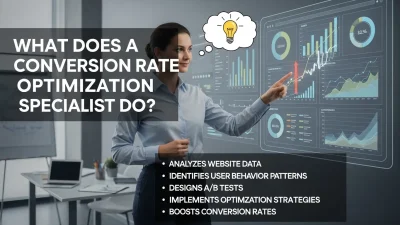
You cannot optimize what you do not measure. Website analytics tools like Google Analytics provide a wealth of data on user behavior. A CRO specialist dives deep into this data to understand the user journey, identify drop-off points in the conversion funnel, and pinpoint pages with high bounce rates. This quantitative analysis is the starting point for identifying potential problems and opportunities for improvement in any Conversion Rate Optimization campaign.
Calls to Action (CTAs)
A Call to Action is an instruction designed to prompt an immediate response. Phrases like “Buy Now,” “Sign Up Today,” or “Learn More” are all CTAs. A critical part of Conversion Rate Optimization involves testing the wording, color, size, and placement of these CTAs to determine what most effectively compels users to take the next step. A weak or unclear CTA can be a major barrier to conversion.
Landing Page Optimization
Landing pages are often the first point of contact a visitor has with your brand, especially from an ad campaign. Landing page optimization is a specialized subset of Conversion Rate Optimization that focuses on ensuring every element of the page—from the headline and copy to the images and form fields—is perfectly aligned to achieve a single, focused conversion goal.
The Driving Forces Behind the Surge in CRO Demand
The popularity of Conversion Rate Optimization is not accidental; it’s a direct response to fundamental shifts in the digital landscape. Several powerful trends have converged to make CRO an essential strategy for any business serious about online growth. Understanding these forces reveals why companies are prioritizing optimization now more than ever.
The Soaring Cost of Digital Advertising
One of the most significant catalysts for the rise of Conversion Rate Optimization is the relentless increase in online advertising costs. Platforms like Google Ads and Meta (Facebook) operate on an auction-based system, and as more businesses compete for the same audience, the cost-per-click (CPC) and cost-per-mille (CPM) inevitably rise. In some competitive industries, a single click can cost tens or even hundreds of dollars.
These steep advertising fees make it financially unsustainable for businesses to rely solely on acquiring more traffic. A strategy focused only on pouring more money into the top of the funnel for traffic that doesn’t convert leads to diminishing returns. Conversion Rate Optimization offers a powerful alternative. By focusing on converting the traffic you already have, you can increase your customer base and revenue without increasing your ad spend. This focus on efficiency and maximizing the value of every marketing dollar delivers a significantly higher return on investment (ROI), making Conversion Rate Optimization a strategic imperative for profitability.
The Explosive Growth and Fierce Competition in E-Commerce
The global e-commerce market has experienced monumental growth, and this expansion has brought with it an unprecedented level of competition. It is no longer enough to simply have an online store; businesses must now compete in a saturated marketplace where consumers have endless choices at their fingertips. In this environment, a visually appealing website is just the baseline.
Success now depends on creating a data-driven, highly optimized digital storefront that turns casual browsers into loyal customers. Conversion Rate Optimization provides the tools and methodologies to achieve this. By systematically testing and refining every aspect of the shopping experience—from product page layouts and checkout processes to site search functionality and promotional offers—e-commerce businesses can gain a crucial competitive edge. Even minor improvements in the conversion rate can translate into substantial revenue gains, making CRO a non-negotiable discipline for survival and growth in the e-commerce sector.
A Strategic Shift from Customer Acquisition to Retention
For many years, the primary focus of digital marketing was on customer acquisition. However, marketers are increasingly recognizing the immense value of customer retention. The widely cited statistic that it costs five times more to attract a new customer than to retain an existing one highlights this economic reality. Retaining customers builds a more stable and predictable revenue base and fosters brand loyalty.
Conversion Rate Optimization strategies align perfectly with a retention-focused approach. CRO is fundamentally about improving the user experience, and a positive experience is a key driver of customer loyalty. By personalizing content, simplifying processes, and actively listening to user feedback, you not inly convert new visitors but also delight existing customers. This encourages repeat purchases and strengthens the customer relationship. Techniques such as creating personalized landing pages for returning users or optimizing the journey to join a loyalty program are prime examples of how Conversion Rate Optimization supports long-term customer retention.
The Mainstreaming of Data-Driven Marketing and Personalization
Today’s consumers have high expectations. They expect seamless, personalized, and relevant digital experiences. Research consistently shows that a majority of customers expect companies to understand their individual needs and preferences. If a website is slow, confusing, or presents irrelevant information, potential customers will quickly leave and go to a competitor. The patience for poor user experiences has all but vanished.
This is where the analytical power of Conversion Rate Optimization becomes indispensable. CRO is the very definition of data-driven marketing. It replaces assumptions and guesswork with empirical evidence gathered from user behavior. By leveraging analytics and testing, businesses can ensure that every touchpoint in the customer journey is smooth, intuitive, and tailored to user needs. This commitment to a data-backed, user-centric approach not only engages visitors more effectively but also builds the trust and credibility necessary to foster lasting customer relationships.
The Role of Automation in Modern Conversion Rate Optimization
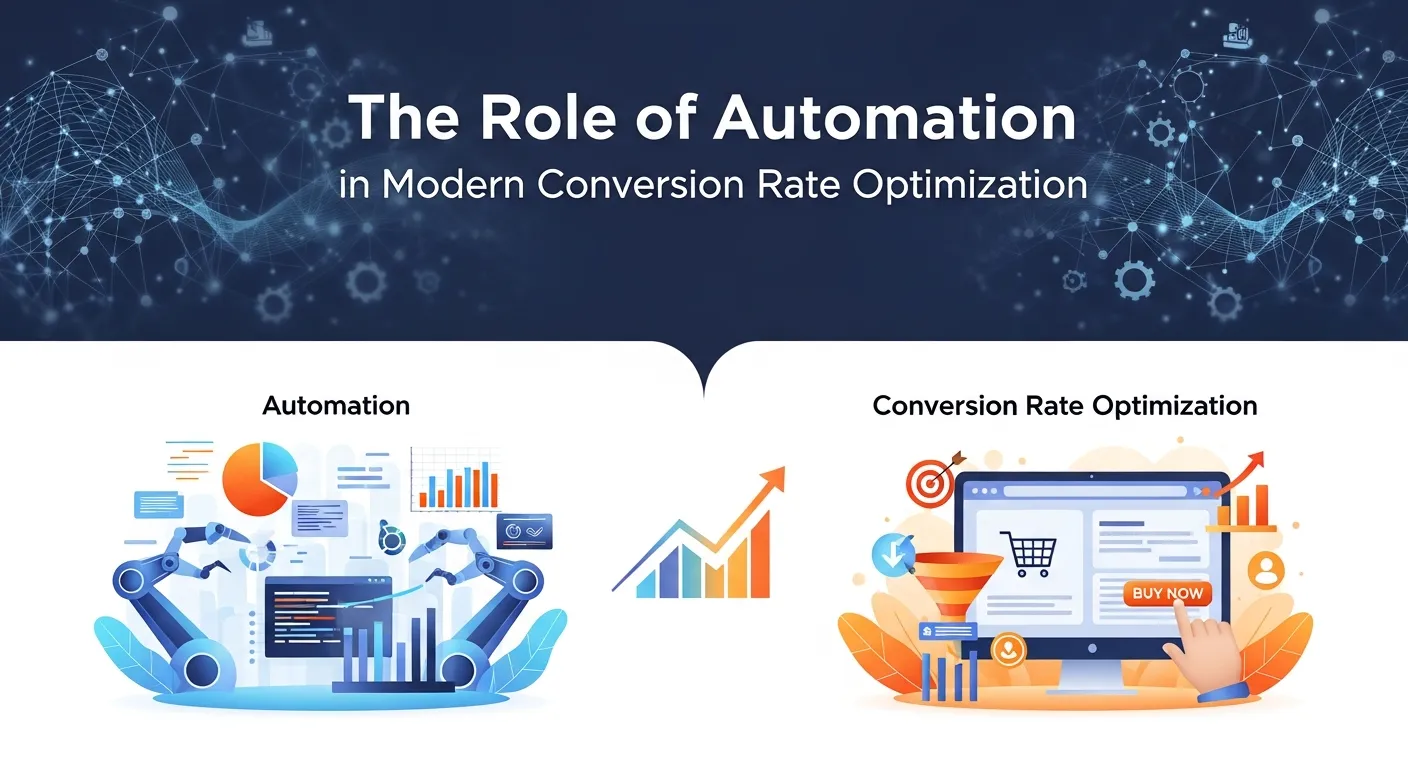
As Conversion Rate Optimization has matured as a discipline, technology has played an increasingly vital role in scaling its impact. Manual analysis and implementation can be time-consuming and prone to human error, especially for large websites with high traffic volumes. Automation has emerged as a powerful ally for CRO professionals, enabling them to work more efficiently, gather deeper insights, and implement more sophisticated optimization strategies. From data collection to personalized user interactions, automation is transforming the landscape of CRO. For example, businesses leverage solutions like cross-platform data entry automation to streamline the management and integration of large datasets from multiple sources, fueling more effective optimization efforts.
One critical area where automation provides significant leverage is in data management. A robust Conversion Rate Optimization program relies on accurate and timely data from multiple sources, including web analytics, CRM systems, and user feedback tools. Manually collating and cleaning this data is a monumental task. This is where tools for cross-platform data entry automation come into play. By automating the aggregation of data, CRO specialists can spend less time on manual data handling and more time on strategic analysis and hypothesis generation. For example, an automated workflow could pull conversion data from an e-commerce platform, user behavior data from Google Analytics, and customer support tickets from a CRM into a single, unified dashboard for holistic analysis. This provides a complete view of the customer journey, making it easier to identify friction points that span across different platforms and touchpoints.
Key Areas Where Automation Enhances CRO
|
Area of CRO |
How Automation Helps |
Example Tools/Technologies |
|---|---|---|
|
Data Collection & Aggregation |
Automatically pulls data from various sources (analytics, CRM, etc.) into a central repository, ensuring data consistency and saving time. |
Zapier, Integromat, Custom APIs |
|
A/B Testing & Personalization |
Dynamically serves different content variations to user segments based on behavior, demographics, or traffic source. |
Google Optimize, Optimizely, VWO |
|
User Feedback Collection |
Triggers automated surveys or feedback forms based on specific user actions, such as cart abandonment or page exit intent. |
Hotjar, Qualaroo, SurveyMonkey |
|
Reporting & Monitoring |
Generates automated performance reports and alerts for significant changes in key metrics, allowing for rapid response. |
Google Data Studio, Tableau |
By integrating automation, Conversion Rate Optimization becomes a more dynamic and proactive process. It allows for continuous optimization cycles that can adapt in near real-time to user behavior, ultimately leading to more significant and sustained improvements in conversion rates.
Conversational AI: The New Frontier of Engagement and Conversion

A significant evolution within the realm of user experience and Conversion Rate Optimization is the rise of conversational AI. Traditional websites often present a one-way communication channel, where the business presents information and the user must navigate to find what they need. Conversational AI, primarily through the use of intelligent chatbots and virtual assistants, flips this model on its head. It creates a two-way dialogue, allowing users to ask questions in natural language and receive instant, relevant answers, guidance, and support. As explored in conversational marketing AI chatbots for engagement, these tools revolutionize how businesses engage visitors, fostering deeper connections and driving conversions. This interactive approach has profound implications for engagement and conversion.
Instead of forcing a user to search through complex navigation menus or FAQ pages, an AI-powered chatbot can act as a personal concierge. For instance, a visitor on an e-commerce site can ask, “Do you have blue running shoes in a size 10?” and receive an immediate link to the relevant product page. This removes friction and directly addresses user intent, dramatically shortening the path to conversion. Furthermore, the principles of conversational marketing AI chatbots for engagement are built around being helpful and present at the exact moment a customer needs assistance. This proactive support can prevent site abandonment and turn moments of potential frustration into positive, conversion-oriented interactions.
How Conversational AI Drives Conversion Rate Optimization
- 24/7 Lead Qualification: Chatbots can engage visitors around the clock, asking qualifying questions to identify high-intent leads and routing them to the appropriate sales team, even outside of business hours.
- Reduced Cart Abandonment: An AI chatbot can trigger when a user shows intent to leave the checkout page, offering assistance, a discount code, or answers to last-minute questions about shipping or returns.
- Personalized Recommendations: By analyzing a user’s browsing behavior and direct queries, conversational AI can offer tailored product or content recommendations, creating a more personalized and engaging experience that boosts average order value.
- Streamlined Data Collection: Instead of long, intimidating forms, a chatbot can collect user information in a friendly, conversational manner, increasing form completion rates for newsletter sign-ups or lead generation.
The integration of conversational AI represents a sophisticated layer of Conversion Rate Optimization. It moves beyond optimizing static page elements and creates dynamic, personalized journeys that cater to the individual needs of each user, fostering a level of engagement that was previously unattainable at scale.
Scaling CRO with AI-Powered Customer Interaction
The true power of AI in Conversion Rate Optimization is realized when it moves beyond simple, scripted chatbots and evolves into a comprehensive system for understanding and optimizing customer interactions at scale. Advanced AI models can analyze vast datasets of user conversations, website behavior, and transaction histories to uncover deep insights that would be impossible for a human to identify. This allows businesses to not only react to customer needs but to proactively anticipate them—an approach championed by solutions like AI chatbots for customer engagement and conversions, which enable companies to turn every user interaction into an opportunity for growth and personalization.
AI-powered platforms can orchestrate highly personalized user journeys in real time. For example, an AI system might identify that visitors from a specific marketing campaign who read two particular blog posts are highly likely to convert if shown a specific case study. The system can then automatically ensure that this exact content journey is delivered to similar visitors in the future. This level of dynamic optimization goes far beyond traditional A/B testing of isolated elements. It involves optimizing the entire sequence of interactions. Utilizing AI chatbots for customer engagement and conversions allows a business to learn from every single interaction, creating a self-improving system where the user experience continuously becomes more relevant and effective.
Strategic AI Applications for Advanced Conversion Rate Optimization
|
AI Application |
Description |
Impact on CRO |
|---|---|---|
|
Predictive Personalization |
AI models predict the content, products, or offers most likely to appeal to an individual user and dynamically adjust the website experience accordingly. |
Increases relevance, engagement, and conversion rates by showing users what they want before they ask. |
|
Sentiment Analysis |
AI analyzes the language used in chat logs, reviews, and surveys to gauge customer sentiment (positive, negative, neutral) at different stages of the journey. |
Helps identify key points of frustration or delight, providing clear direction for optimization efforts. |
|
Dynamic Pricing Optimization |
For certain industries, AI can analyze market demand, competitor pricing, and user behavior to suggest or implement real-time pricing adjustments to maximize revenue. |
Balances competitiveness with profitability, directly impacting the bottom line. |
|
Automated Journey Mapping |
AI can analyze aggregate user data to automatically map out the most common conversion paths, as well as the most common drop-off points. |
Provides a clear, data-driven visualization of the user journey, highlighting the most critical areas for Conversion Rate Optimization. |
By harnessing these advanced AI capabilities, Conversion Rate Optimization transitions from a series of discrete experiments into a holistic, intelligent, and continuously adapting business strategy. It allows companies to deliver personalization at a scale and with a precision that builds stronger customer relationships and drives sustainable growth.
Who Needs Conversion Rate Optimization? An Industry Breakdown
While the principles of Conversion Rate Optimization are universally applicable, the demand and specific application of CRO strategies are particularly pronounced in certain industries where the digital user journey is directly tied to revenue and core business objectives. For these sectors, CRO is not just a best practice; it is a fundamental driver of success.
Here’s a closer look at the key industries that have the most urgent need for a robust Conversion Rate Optimization program:
E-commerce and Retail
This is perhaps the most obvious and critical industry for CRO. For an online retailer, every step of the customer journey—from the homepage to the product page, the shopping cart, and the checkout process—is a potential conversion point or a point of failure. Conversions are directly equivalent to revenue. Even a fractional improvement in the conversion rate can result in millions of dollars in additional sales for a large retailer. E-commerce businesses use Conversion Rate Optimization to test everything from product imagery and descriptions to checkout form design and promotional messaging to reduce cart abandonment and increase average order value.
SaaS (Software as a Service)
The SaaS business model is typically built around acquiring users for a free trial or a freemium plan and then converting them into paying subscribers. The entire user journey, from the initial landing page to the in-app onboarding experience, is a complex conversion funnel. Conversion Rate Optimization is essential for SaaS companies to maximize the number of sign-ups for their trials and, more importantly, to improve the trial-to-paid conversion rate. This involves optimizing pricing pages, showcasing feature benefits effectively, and refining the onboarding flow to demonstrate the product’s value as quickly as possible.
Lead Generation (B2B and B2C Services)
For businesses that rely on generating leads for their sales team—such as financial services, insurance, real estate, and B2B technology companies—the primary conversion goal is often the submission of a form or a request for a quote. Conversion Rate Optimization in this context focuses on building trust, clearly communicating the value proposition, and making it as easy as possible for a user to provide their information. This includes optimizing landing pages, testing the number of fields in a form, and crafting compelling calls to action that encourage users to take the next step in the sales process.
Online Education and E-Learning
Platforms offering online courses, certifications, or webinars have a clear conversion goal: getting users to sign up and pay for their educational content. CRO is vital for these platforms to effectively communicate the value of their courses, showcase testimonials and social proof, and streamline the enrollment process. They use Conversion Rate Optimization to test different course descriptions, instructor bios, pricing structures, and calls to action to maximize student enrollment.
Healthcare
In the healthcare industry, digital conversions can take many forms, from booking an appointment online and filling out a patient intake form to making an inquiry about a specific medical service. A seamless and trustworthy user experience is paramount. Conversion Rate Optimization helps healthcare providers build patient trust by ensuring their websites are easy to navigate, provide clear information, and offer simple ways to book appointments. This not only improves administrative efficiency but also enhances the overall patient experience.
Travel and Hospitality
For hotels, airlines, and online travel agencies, the digital booking process is the heart of their business. A conversion is a booked flight, a reserved hotel room, or a purchased vacation package. The competition is fierce, and users often compare multiple sites before making a decision. Conversion Rate Optimization is used extensively in this industry to simplify the search and booking process, display pricing and availability clearly, use high-quality imagery to entice users, and create a sense of urgency to encourage immediate bookings.
The In-Demand Skills for a Conversion Rate Optimization Professional
To effectively harness the power of Conversion Rate Optimization, businesses need to build teams with a unique and diverse set of skills. A successful CRO professional is a hybrid talent, blending the analytical rigor of a data scientist with the user empathy of a designer and the persuasive ability of a marketer. This interdisciplinary nature is what makes skilled CRO practitioners so valuable and in high demand.
If you are considering a career in this growing field, or if you are a business leader looking to build a CRO team, here are the essential skills to focus on developing and hiring for:
Core Technical and Analytical Skills
Deep Data Analysis
This is the non-negotiable foundation of all Conversion Rate Optimization. A CRO expert must be proficient in using web analytics platforms like Google Analytics, Adobe Analytics, and others. The skill goes beyond simply reading reports; it involves the ability to segment data, identify trends, and translate raw numbers into actionable insights. They need to understand metrics like bounce rate, exit rate, time on page, and conversion funnel drop-off and, more importantly, understand the “why” behind these numbers. This analytical mindset allows them to form data-backed hypotheses about what to test.
A/B and Multivariate Testing Expertise
A deep, practical understanding of experimentation is at the heart of the role. This includes knowing how to properly set up, run, and analyze A/B tests, split URL tests, and multivariate tests using tools like Google Optimize, Optimizely, or VWO. This skill set involves understanding statistical concepts like sample size, statistical significance, and confidence levels to ensure that test results are valid and not just due to random chance. They must be able to design experiments that isolate variables and deliver clear, unambiguous results.
Proficiency with CRO and Analytics Tools
Beyond foundational analytics and testing platforms, a CRO specialist should be familiar with a broader suite of tools that provide deeper user insight. This includes user behavior analytics tools like Hotjar or Crazy Egg, which provide heatmaps, scroll maps, and session recordings to visualize how users interact with a page. It also includes user feedback and survey tools like Qualaroo or SurveyMonkey for gathering qualitative data directly from users.
Creative and Psychological Skills
User Experience (UX) and User Interface (UI) Principles
While a CRO specialist may not be a dedicated designer, they must have a strong understanding of UX and UI design principles. They need to be able to identify elements of a design that cause friction, confusion, or frustration for the user. This includes knowledge of information architecture, navigation design, mobile-first design, and accessibility standards. This “user-centric” perspective is crucial for developing hypotheses that are focused on improving the actual experience of the visitor.
Persuasive Copywriting
Words have immense power to influence user behavior. A skilled CRO professional understands how to write compelling and persuasive copy. This includes crafting attention-grabbing headlines, clear and concise value propositions, and powerful calls to action (CTAs) that motivate users to click. They understand the psychology of persuasion and can tailor their language to resonate with the target audience and guide them toward the conversion goal.
Understanding of Consumer Psychology
Ultimately, Conversion Rate Optimization is about understanding and influencing human behavior. A strong CRO specialist has a keen interest in consumer psychology. They understand cognitive biases (like social proof, scarcity, and authority) and persuasion principles (like Cialdini’s Principles of Influence) and know how to ethically apply them in their tests. This psychological insight allows them to develop hypotheses that tap into the underlying motivations and decision-making processes of their users.
The Tangible Business Benefits of Investing in CRO

Implementing a structured Conversion Rate Optimization program delivers far more than just an improved website. Its impact reverberates across the entire business, leading to more efficient marketing, increased profitability, and a stronger competitive position. The benefits are tangible, measurable, and often have a compounding effect over time.
Financial and Performance Benefits
Significantly Reduced Customer Acquisition Costs (CAC)
This is one of the most immediate and powerful financial benefits. By increasing the percentage of visitors who convert, you get more customers from the same amount of traffic. This means the money you spend on advertising, content creation, and SEO to acquire that traffic becomes more efficient. As your conversion rate goes up, your cost to acquire each new customer goes down, directly improving your marketing ROI and overall profitability.
Substantial Increases in Revenue
Even small, incremental improvements in your conversion rate can lead to significant growth in top-line revenue. Consider a website with 100,000 monthly visitors and an average order value of $50. Improving the conversion rate from 2% to 2.5% doesn’t sound like much, but it translates to 500 additional orders per month, or an extra $25,000 in monthly revenue. For high-traffic sites, these gains can be exponential. Conversion Rate Optimization unlocks the hidden revenue potential within your existing traffic.
Enhanced Scalability
When your website and conversion funnels are highly optimized, scaling your business becomes much simpler and more predictable. As you increase your marketing budget to drive more traffic, you can be confident that this new traffic will convert at an efficient rate. An optimized site provides a stable foundation for growth, allowing you to scale your advertising efforts without seeing a dramatic decline in your return on ad spend (ROAS).
Customer-Centric and Strategic Benefits
A Superior Customer Experience
At its core, Conversion Rate Optimization is about understanding your customers better and removing the obstacles that frustrate them. The process inherently focuses on creating a smoother, more intuitive, and more valuable experience for the user. This leads to happier customers who are more likely to return, make repeat purchases, and become loyal advocates for your brand. This focus on the customer experience builds trust and long-term equity.
A Sustainable Competitive Advantage
Many of your competitors are likely focused solely on acquiring more traffic. By investing in Conversion Rate Optimization, you are focusing on an area they may be neglecting: getting the most value out of that traffic. A highly optimized website that provides a superior user experience can become a powerful moat that protects your business from the competition. It allows you to capture more market share and outperform competitors, even if they have larger marketing budgets.
Frequently Asked Questions (FAQ) About Conversion Rate Optimization
1. What is a good conversion rate?
There is no single “good” conversion rate, as it varies dramatically by industry, traffic source, and the type of conversion. For e-commerce, an average rate might be 2-3%, while a lead generation form for a niche B2B service might convert much higher. The key is to benchmark against your own historical performance and focus on continuous improvement rather than a universal number.
2. How long does it take to see results from CRO?
Results depend on your website traffic and the significance of the changes you test. For a high-traffic site, you might get statistically significant results from an A/B test in a matter of days or weeks. For lower-traffic sites, it could take a month or more to gather enough data. Conversion Rate Optimization is a long-term, iterative process, not a one-time fix.
3. Is Conversion Rate Optimization a one-time project?
No, effective CRO is an ongoing process of continuous improvement. Customer expectations, market trends, and technology are constantly changing. What works today might not work tomorrow. A structured program of continuous testing and learning is necessary to maintain and improve conversion rates over time.
4. What is the difference between CRO and SEO?
While they are related and work best together, they have different primary goals. SEO (Search Engine Optimization) focuses on increasing the quantity and quality of organic traffic to your website from search engines. CRO focuses on maximizing the percentage of that traffic that converts. In short, SEO gets people to your door, and CRO persuades them to come inside. For more on how these disciplines connect, see CRO part of SEO?—a helpful overview on their relationship.
2. How long does it take to see results from CRO?
Results depend on your website traffic and the significance of the changes you test. For a high-traffic site, you might get statistically significant results from an A/B test in a matter of days or weeks. For lower-traffic sites, it could take a month or more to gather enough data. Conversion Rate Optimization is a long-term, iterative process, not a one-time fix.
3. Is Conversion Rate Optimization a one-time project?
No, effective CRO is an ongoing process of continuous improvement. Customer expectations, market trends, and technology are constantly changing. What works today might not work tomorrow. A structured program of continuous testing and learning is necessary to maintain and improve conversion rates over time.
4. What is the difference between CRO and SEO?
While they are related and work best together, they have different primary goals. SEO (Search Engine Optimization) focuses on increasing the quantity and quality of organic traffic to your website from search engines. CRO focuses on maximizing the percentage of that traffic that converts. In short, SEO gets people to your door, and CRO persuades them to come inside. Understanding if CRO is part of SEO helps clarify how these two vital disciplines collaborate.
5. Can CRO be done on a small budget?
Absolutely. While enterprise-level tools can be expensive, there are many free and low-cost options available. Google Analytics is free and powerful for data analysis. Google Optimize is a free A/B testing tool. Tools like Hotjar offer free plans for heatmaps and session recordings. The biggest investment is time and a commitment to a data-driven process.
6. What is the first step to starting with Conversion Rate Optimization?
The first and most crucial step is to properly set up your web analytics. You cannot optimize what you don’t measure. Ensure you have clear conversion goals defined in a tool like Google Analytics. Once you have reliable data, the next step is to analyze it to identify problem areas, such as pages with high exit rates or drop-offs in your conversion funnel.
7. What is website conversion rate optimization?
At its heart, it is the practice of enhancing your website to increase the number of visitors who perform a desired action. This could be anything from buying a product to signing up for a service. For a deeper dive, check out what is website conversion rate optimization for a comprehensive foundation if you’re starting out in this field.
8. Why is Conversion Rate Optimization so important for business growth?
CRO is vital because it allows you to grow your business without needing to proportionally increase your traffic. By making your existing marketing efforts more efficient, you increase revenue and reduce customer acquisition costs. For more insights, see why conversion rate optimization need for growth, which highlights its strategic importance in building a profitable and scalable business model.
9. Do I need a lot of traffic to do CRO?
While more traffic allows you to run tests and get results faster, you don’t need massive numbers to start. Even with lower traffic, you can still gather qualitative data through user surveys, feedback polls, and session recordings to identify user friction points. These insights can lead to significant improvements that you can later validate with A/B tests as your traffic grows.
10. What’s more important: quantitative or qualitative data in CRO?
Both are critically important and serve different purposes. Quantitative data (from analytics) tells you what is happening and where the problems are. Qualitative data (from surveys, heatmaps, and user feedback) tells you why it’s happening. The most powerful Conversion Rate Optimization strategies combine insights from both types of data to form strong, well-rounded hypotheses.
Conclusion: Embracing CRO as a Core Business Strategy
Conversion Rate Optimization is no longer a niche tactic for digital marketers; it has become a fundamental and indispensable component of modern business strategy. In an era defined by rising acquisition costs, fierce competition, and high consumer expectations, the ability to efficiently convert website visitors into customers is what separates thriving businesses from those that struggle to survive.
The demand for skilled CRO professionals and effective Conversion Rate Optimization programs will only continue to grow. By embracing a culture of data-driven experimentation and focusing relentlessly on improving the user experience, you can unlock significant growth, reduce costs, and build a sustainable competitive advantage. Whether you are a business owner, a marketer, or a designer, now is the time to learn, test, and adapt. The journey into Conversion Rate Optimization requires effort, but the rewards are well worth the investment.