
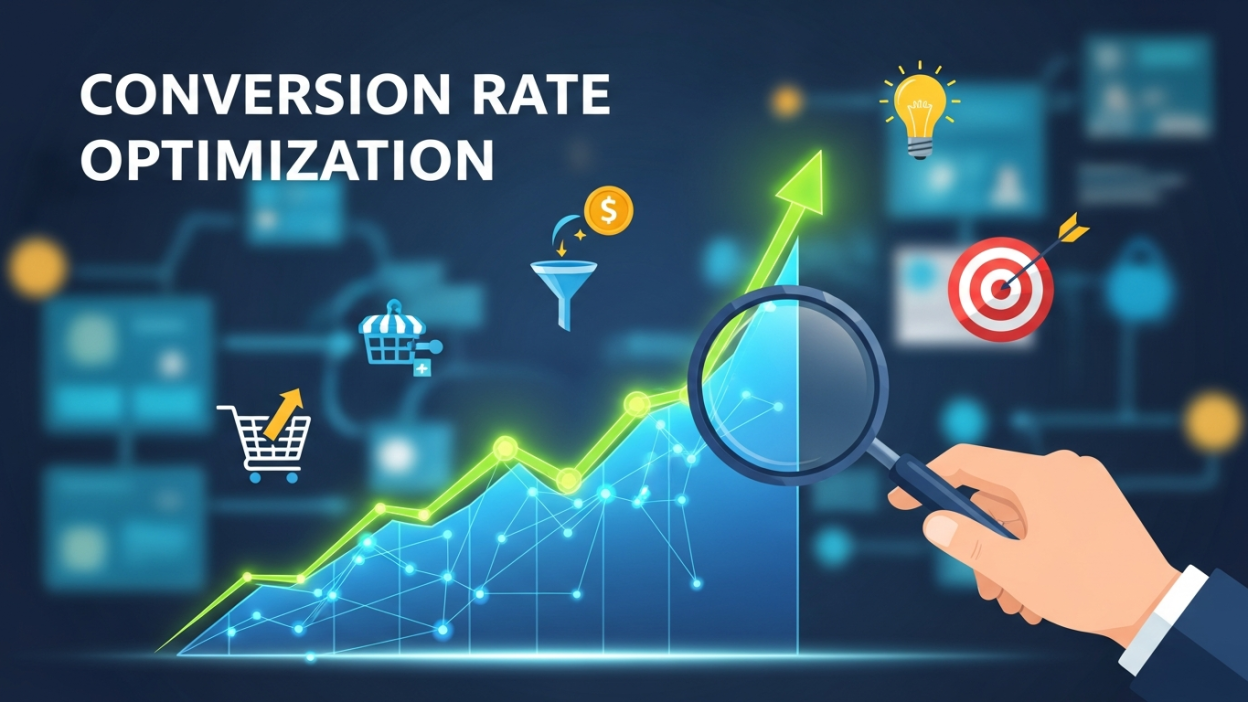
Unlock the future of digital growth by integrating predictive AI into your Conversion Rate Optimization strategy. This roadmap explores how machine learning anticipates user behavior to maximize ROI and scale results.
This comprehensive guide examines the intersection of artificial intelligence and Conversion Rate Optimization. We cover predictive modeling, behavioral analytics, and automated testing frameworks, providing a data-driven blueprint to outpace competitors, eliminate friction, and transform passive visitors into loyal, high-value customers through advanced algorithmic insights.
The Evolution of Digital Growth: Why Predictive AI is Non-Negotiable
The landscape of digital marketing has shifted from reactive adjustments to proactive anticipation. Traditionally, Conversion Rate Optimization relied heavily on historical data—looking at what users did to guess what they might do next. Today, predictive AI allows us to analyze massive datasets in real-time to forecast future actions with startling accuracy.
By leveraging Predictive Analytics, businesses no longer wait for a sample size to reach statistical significance in an A/B test. Instead, AI models simulate outcomes, allowing for a Data-Driven Strategy that prioritizes the most impactful changes first. This shift is essential for staying relevant in a market where user expectations for personalization are at an all-time high.
Understanding the Shift from Heuristics to Algorithms
In the early days of the web, optimization was driven by “best practices” or heuristics—rules of thumb like “make the CTA button red.” While these had their place, they lacked the nuance of individual user intent. Predictive AI introduces a layer of Behavioral Economics into the mix, identifying patterns that the human eye simply cannot see.
Core Pillars of an AI-Driven Roadmap
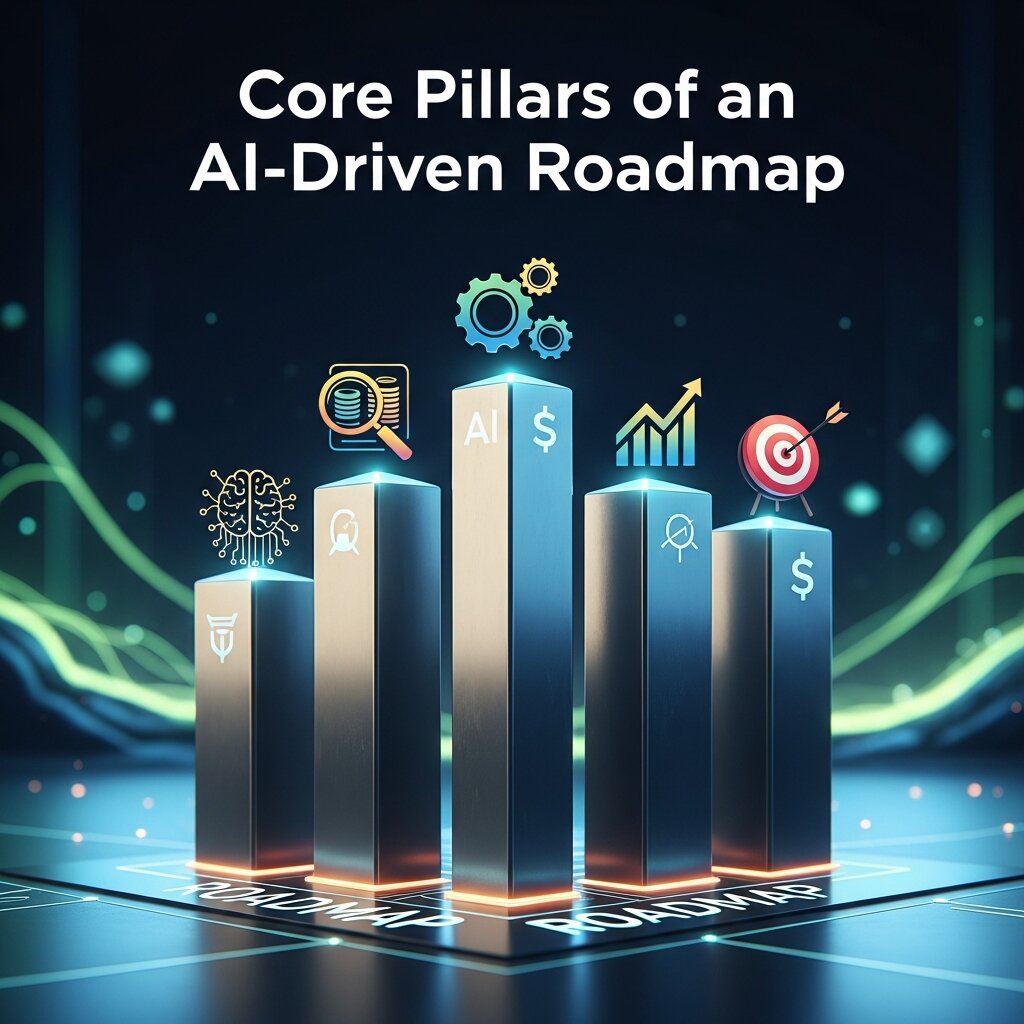
To build a successful roadmap, one must understand the foundational elements that support an intelligent optimization engine.
1. Data Aggregation and Unified Customer Profiles
You cannot predict what you do not measure. The first step involves consolidating data from your CRM Integration and web analytics. This creates a single source of truth. When your AI understands a user’s journey across email, social media, and your website, it can provide a more accurate Customer Lifetime Value (CLV) prediction.
2. Machine Learning and Pattern Recognition
Machine learning models excel at identifying which variables actually move the needle. By analyzing Search Intent Alignment, AI can determine if a user is looking for information or ready to buy, adjusting the page layout dynamically to match that intent.
3. Real-Time Personalization Engines
Modern Conversion Rate Optimization is moving toward “segments of one.” This means the website experience changes for every individual visitor. If the AI predicts a high bounce probability, it might trigger a specific Lead Generation Strategy or a discount code tailored to that user’s browsing history.
Predictive AI vs. Traditional A/B Testing
| Feature | Traditional A/B Testing | Predictive AI Optimization |
| Data Usage | Historical / Static | Real-time / Dynamic |
| Speed | Slow (requires high traffic) | Fast (uses synthetic testing) |
| Personalization | Group-based | Individual-based |
| Decision Making | Human-led | Algorithmic-assisted |
| Scalability | Limited by manual input | Highly scalable |
How Predictive AI Enhances User Experience
A major Content Gap in many marketing strategies is the failure to address user friction before it happens. Predictive AI identifies “rage clicks” or “dead clicks” before they become a trend, allowing developers to implement Business Automation fixes immediately.
Enhancing Visual Hierarchy with Eye-Tracking AI
Before launching a landing page, AI-powered heatmaps can predict where a user’s eyes will land. This ensures that your Brand Messaging and primary CTA are in the optimal “sweet spots,” significantly increasing the likelihood of a conversion.
Dynamic Pricing and Offer Optimization
For e-commerce, predictive AI can adjust pricing based on demand, user loyalty, and stock levels. This is a sophisticated form of Account-Based Marketing (ABM) for B2C, ensuring the right offer reaches the right person at the peak of their interest.
Technical Requirements for Implementation
Integrating AI into your Conversion Rate Optimization workflow requires more than just a software subscription. It requires a cultural shift toward Digital Transformation.
-
API Readiness: Your tech stack must be able to “talk” to the AI engine.
-
Data Quality: Clean data is the fuel for AI. Inaccurate data leads to “hallucinated” insights.
-
Skill Set: You may need to invest in Marketing Analytics experts who understand how to interpret AI outputs.
The Role of Natural Language Processing (NLP)
NLP helps in analyzing customer reviews and support tickets to find qualitative data. By feeding this into your Conversion Rate Optimization model, you can address common objections directly in your sales copy, satisfying Search Intent more effectively.
Pro Tip: The 80/20 Rule of AI
Don’t try to automate everything at once. Use AI to optimize the 20% of your pages that generate 80% of your revenue. This provides the fastest ROI and builds stakeholder confidence in Business Automation Technologies.
Data Collection and Quality Management

High-quality data is the foundation of any predictive framework. To prepare for predictive AI for Conversion Rate Optimization, begin by auditing your analytics implementation. Confirm that every critical event—clicks, form interactions, video plays, and page scrolls—is tracked accurately. Supplement first-party data with clean third-party signals, such as intent scores or CRM attributes, to enrich user profiles.
Data Hygiene and Centralization
Clean data pipelines remove duplicates and outliers that can skew model training. Use a data warehouse or a customer data platform (CDP) to centralize streaming events, normalize schemas, and enforce consistency. For guidance on data management best practices, refer to the National Institute of Standards and Technology (NIST) at https://www.nist.gov, which provides frameworks for reliable and secure data handling.
Privacy and Compliance Considerations
When collecting personal identifiers and behavioral signals, ensure compliance with data protection regulations. Anonymize or pseudonymize personally identifiable information (PII) before training models. This year (2026), organizations operating in multiple regions must adhere to GDPR rules outlined by the European Commission at https://ec.europa.eu/info/law/law-topic/data-protection_en and CCPA requirements within the United States. Embedding privacy by design into your data workflows protects user trust and reduces legal risk.
Building and Validating Predictive Models
Once data pipelines are in place, the next step in predictive AI for Conversion Rate Optimization is model development. Begin by defining clear business objectives—such as increasing form submissions or reducing cart abandonment. Select an algorithm aligned with these goals. For conversion probability, logistic regression or gradient boosting machines often provide a strong balance of performance and interpretability. When predicting time-to-churn, survival analysis techniques may be more suitable.
Training, Validation, and Testing
Divide your dataset into training (70 percent), validation (15 percent), and test (15 percent) subsets. Use cross-validation during hyperparameter tuning to prevent overfitting. Key performance metrics include area under the receiver operating characteristic curve (AUC-ROC) for classification tasks and mean absolute error (MAE) for regression outputs. Monitoring these metrics on the validation set ensures that models generalize well.
Explainability and Fairness
In today’s data-driven environment, stakeholders require transparency into model decisions. Techniques such as SHAP (SHapley Additive exPlanations) or LIME (Local Interpretable Model-agnostic Explanations) reveal feature contributions for individual predictions. Additionally, assess models for bias across demographic groups to maintain fairness. Resources from the Stanford Artificial Intelligence Laboratory at https://ai.stanford.edu provide research insights into ethical AI practices that support responsible deployment.
Overcoming Common Hurdles in AI Optimization
Many organizations fail because they treat AI as a “set it and forget it” tool. Continuous Website Traffic Growth requires constant model retraining.
Common Mistakes to Avoid
-
Over-Reliance on Small Data: AI needs volume. If your traffic is low, focus on SEO Strategies to build a baseline before implementing complex predictive models.
-
Ignoring the Human Element: AI provides the “what,” but humans provide the “why.” Don’t lose your brand voice in a quest for algorithmic perfection.
-
Data Silos: If your Marketing Analytics data isn’t shared with your sales team, you’re missing out on full-funnel optimization.
Advanced Strategies: ABM and Predictive AI
For B2B companies, Account-Based Marketing (ABM) is the gold standard. Predictive AI takes this further by identifying “In-Market” accounts before they even visit your site. By analyzing third-party data, your Conversion Rate Optimization efforts can be hyper-targeted toward specific high-value companies, increasing the efficiency of your Lead Generation Strategy.
Mapping the Buying Committee
AI can help identify the different roles within a target account. It can then serve different content to the “Decision Maker” versus the “End User,” ensuring that every touchpoint in the B2B Precision Growth cycle is relevant.
The Future of Search and Optimization
As we look toward 2027 and beyond, Voice Search and visual search will play a larger role in how users interact with websites. Your Conversion Rate Optimization roadmap must account for these non-traditional entry points. AI will be the bridge that translates a spoken query into a high-converting web experience.
Predictive SEO and Organic Synergy
Predictive AI isn’t just for on-page changes. It can predict which keywords will become trendy in the next quarter, allowing you to create content that captures Search Engine Optimization value before the competition even notices the shift. This proactive approach to Search Ranking Strategies ensures a steady flow of high-intent traffic.
Steps to Launch Your Predictive Roadmap
-
Audit Your Data: Use Intelligent Document Processing to digitize and clean historical records.
-
Select a Pilot Project: Choose one high-traffic funnel for your first AI-driven Conversion Rate Optimization experiment.
-
Define Success Metrics: Move beyond “conversion rate” and look at Marketing ROI and customer retention.
-
Iterate Rapidly: Use AI to run 50 micro-tests simultaneously rather than one giant A/B test.
-
Scale and Integrate: Once proven, roll the AI engine out to your entire site and integrate it with your CRM Data Entry systems.
Ethical Considerations in AI Optimization
As we use more data to drive Conversion Rate Optimization, we must remain transparent. Privacy-first marketing is becoming a legal requirement. Ensure your AI models are compliant with global regulations and that your Digital Transformation efforts respect user boundaries.
Conclusion
Predictive AI is the ultimate multiplier for Conversion Rate Optimization. By moving from manual guesswork to algorithmic precision, businesses can achieve unprecedented levels of growth and efficiency. Start building your data-driven roadmap today to ensure your brand remains at the forefront of digital excellence. Ready to scale? Start your Digital Transformation now.
Frequently Asked Questions
1. What is the difference between AI and traditional CRO?
Traditional CRO relies on looking at past data and manual A/B testing to see what worked for a group. AI-driven Conversion Rate Optimization uses machine learning to predict what will work for a specific individual in real-time, allowing for much faster and more personalized adjustments.
2. How much traffic do I need to use predictive AI?
While AI thrives on big data, many modern tools can use “synthetic testing” to predict outcomes even with moderate traffic. However, for the most accurate Data-Driven Strategy, having at least 10,000 monthly visitors is recommended.
3. Will AI replace human CRO specialists?
No. AI is a tool that handles the heavy lifting of data analysis. Human experts are still needed for Brand Messaging, creative strategy, and ensuring the AI’s goals align with the overall business vision.
4. How does predictive AI improve the user experience?
It reduces friction by anticipating what a user needs. For example, if a user is struggling with a form, the AI can simplify the layout or offer a help chat instantly, making the journey smoother and increasing the Conversion Rate Optimization potential.
5. Can predictive AI help with B2B lead generation?
Absolutely. Through Account-Based Marketing (ABM) integrations, AI can identify which businesses are most likely to convert and serve them personalized case studies or whitepapers tailored to their specific industry.
6. What are the costs associated with AI for CRO?
Costs vary depending on the complexity of the tech stack. However, the increase in Marketing ROI usually offsets the initial investment in Business Automation Technologies within the first six to twelve months.
7. Does AI-driven optimization affect SEO?
Yes, positively. By improving user engagement metrics like dwell time and reducing bounce rates, AI-driven Conversion Rate Optimization sends positive signals to search engines, aiding your overall Search Engine Optimization efforts.
8. What is “Synthetic Testing” in AI?
Synthetic testing uses AI to simulate thousands of user sessions based on known behavioral patterns. This allows you to test page variations without waiting for real human traffic, significantly speeding up your Search Ranking Strategies.
9. How do I start with AI if I have a small team?
Look for “plug-and-play” AI tools that integrate with your existing CMS. Focus on Business Automation for simple tasks like headline testing before moving into complex predictive modeling.
10. Is data privacy a concern with predictive AI?
Yes. It is crucial to use AI platforms that prioritize data anonymity and comply with GDPR/CCPA. Transparent Digital Transformation builds trust, which is a key component of long-term conversion success.