
In the modern digital economy, competition is increasing at an extremely fast pace. Businesses are no longer competing only on product quality or pricing, but also on how effectively they convert website visitors into customers. Driving traffic to a website is relatively easy compared to converting that traffic into meaningful actions such as purchases, sign-ups, or inquiries. This gap between traffic and conversion is where most businesses lose potential revenue without even realizing it.
A well-structured approach is needed to identify why visitors are not converting and how to fix those issues. This is where optimization becomes essential. By analyzing user behavior, website performance, and conversion funnels, businesses can uncover hidden problems that reduce performance. The ultimate goal is to turn more visitors into customers without increasing advertising costs or traffic acquisition budgets.
Understanding Conversion Rate Optimization Audit
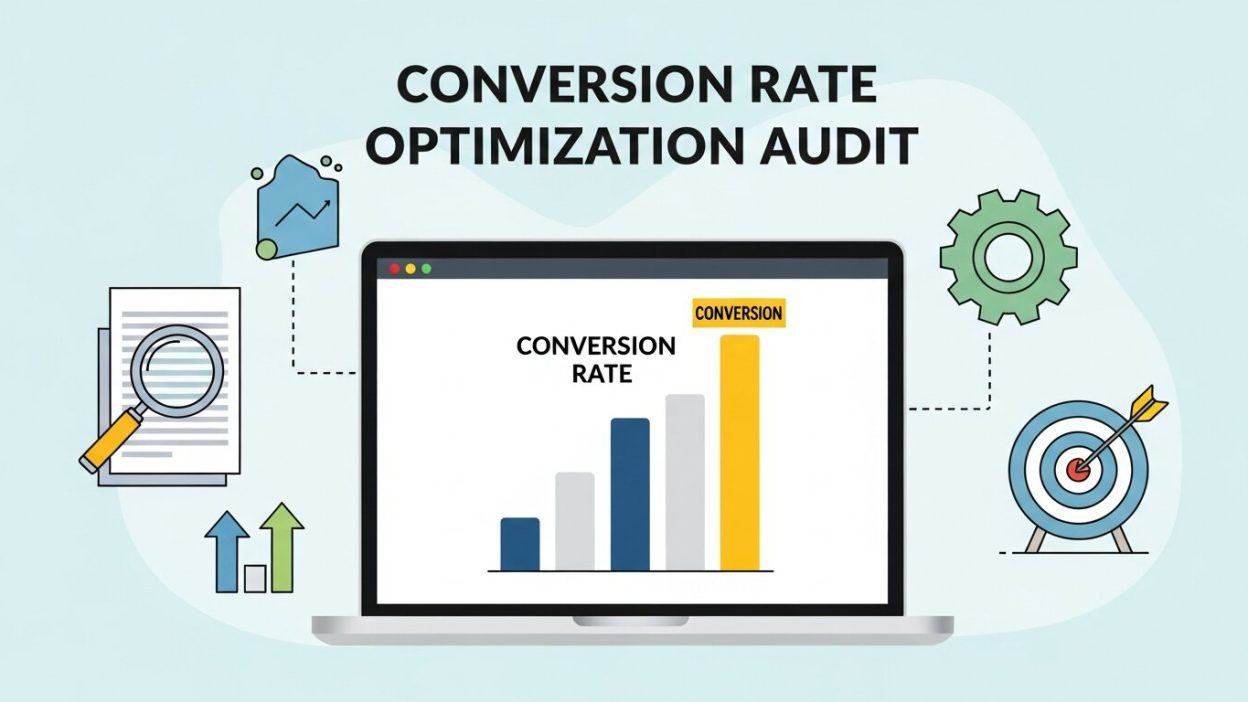
A conversion rate optimization audit is a detailed and systematic analysis of a website designed to identify barriers that prevent users from converting. It evaluates every stage of the user journey, from the moment a visitor lands on a page to the final action they take. The audit focuses on understanding what works, what fails, and what can be improved to increase conversion efficiency.
Unlike basic website reviews, this process is data-driven and behavior-focused. It does not rely on assumptions but instead uses real user data, analytics, and interaction tracking to understand how visitors engage with a website. The insights gathered are then used to create actionable improvements that directly impact conversion performance.
What Makes CRO Audit Important for Businesses
A CRO audit is important because it uncovers issues that are often invisible to business owners. A website may look visually appealing, but still perform poorly in terms of conversions. Small issues such as unclear messaging, confusing navigation, or weak call-to-actions can significantly reduce user engagement.
Businesses often invest heavily in marketing campaigns without realizing that their website is not optimized to convert the traffic they are already receiving. A proper audit helps bridge this gap by identifying exactly where users are dropping off and why those drop-offs are happening. This allows businesses to fix problems that directly affect revenue generation.
How User Behavior Impacts Conversions
User behavior plays a crucial role in determining whether a visitor will convert or leave the website. Every interaction, including clicks, scroll depth, and time spent on pages, provides valuable insight into user intent. If users struggle to find information or do not trust the content presented, they are more likely to exit without taking action.
Understanding these behavior patterns allows businesses to design websites that align with user expectations. When a website feels intuitive and trustworthy, users are more likely to complete desired actions. This is why analyzing behavior is a key part of any optimization process.
Why Businesses Need CRO Audit Services
 Many businesses assume that increasing traffic will automatically increase revenue. However, without proper optimization, even high traffic volumes can result in poor conversion rates. CRO audit services help businesses understand why visitors are not converting and what can be done to improve performance.
Instead of guessing, businesses can rely on data-backed insights to make informed decisions. This leads to more efficient marketing strategies and better return on investment.
Improving Revenue Without Increasing Traffic
One of the biggest advantages of optimization is that it allows businesses to increase revenue without spending more on traffic acquisition. Instead of focusing only on attracting new visitors, businesses can improve the performance of existing traffic.
Even a small improvement in conversion rate can lead to significant revenue growth over time. For example, if a website receives thousands of visitors daily, increasing the conversion rate by just a small percentage can result in a major increase in sales or leads.
Understanding Customer Journey Gaps
The customer journey refers to the path a user takes from landing on a website to completing a conversion. However, this journey is often interrupted by friction points that cause users to drop off. These gaps may occur due to unclear messaging, complicated processes, or lack of trust.
Identifying these gaps is essential for improving conversion performance. Once these issues are fixed, the user journey becomes smoother, leading to higher engagement and better results.
How CRO Audit Services Work
CRO audit services follow a structured process that combines data analysis, user research, and technical evaluation. The goal is to understand how users interact with a website and identify areas that need improvement.
Data Collection and User Analysis
The process begins with collecting data from analytics tools, heatmaps, and session recordings. This helps in understanding how users behave on different pages, which elements they interact with, and where they lose interest.
This data provides a clear picture of user behavior and helps identify patterns that are not visible through basic website observation.
Website Structure Evaluation
After collecting data, the website structure is analyzed to ensure that it is easy to navigate and logically organized. A well-structured website helps users find information quickly, reducing frustration and improving engagement.
If users cannot easily navigate a website, they are more likely to leave before converting. Therefore, structure plays a key role in optimization.
Conversion Funnel Optimization
The conversion funnel represents the steps users take before completing an action. This could include visiting a landing page, viewing a product, adding items to a cart, and completing checkout.
Analyzing this funnel helps identify where users drop off. Once these points are identified, improvements can be made to reduce friction and increase conversions.
Common Website Issues That Affect Conversions
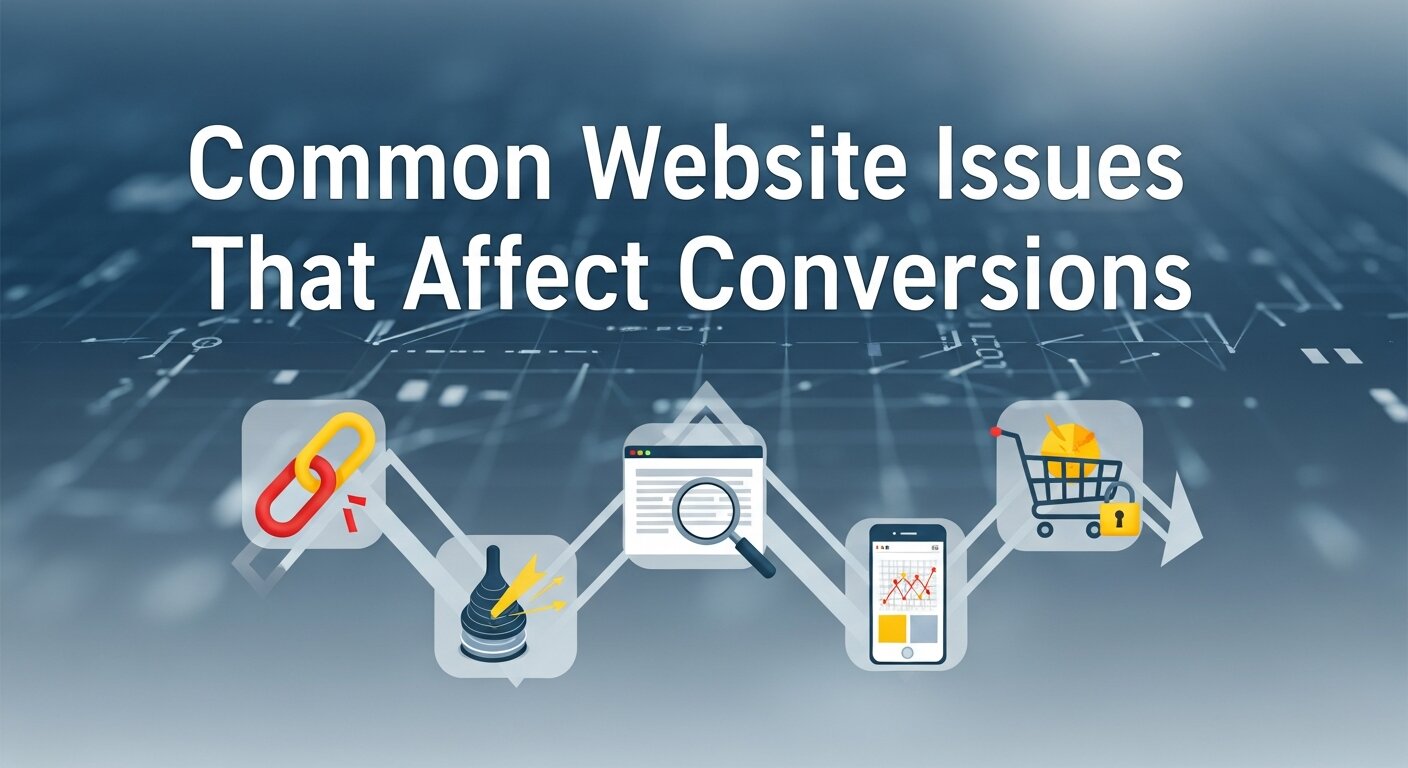 Many websites suffer from similar issues that negatively impact performance. These problems often go unnoticed but have a significant effect on conversion rates.
Poor User Experience and Navigation Problems
If a website is difficult to navigate, users will quickly lose interest. A confusing layout or unclear structure can prevent users from finding the information they need, leading to higher bounce rates.
A smooth and intuitive user experience is essential for keeping visitors engaged and guiding them toward conversion.
Weak Messaging and Low Trust Signals
Clear messaging is essential for communicating value to users. If visitors do not immediately understand what a business offers, they are less likely to stay on the website.
Trust signals such as reviews, testimonials, and security indicators also play an important role in building credibility. Without trust, users are unlikely to complete transactions.
Slow Loading Speed and Technical Issues
Website performance is another critical factor in conversion optimization. Slow-loading pages can frustrate users and cause them to leave before interacting with the content.
Technical issues such as broken links or errors also negatively impact user experience and reduce conversion rates.
Benefits of Conversion Optimization
Conversion optimization offers several long-term benefits that contribute to business growth and sustainability.
Higher Conversion Rates and Revenue Growth
By improving user experience and eliminating friction points, businesses can significantly increase conversion rates. This directly leads to higher revenue without increasing marketing costs.
Better User Experience and Engagement
A well-optimized website provides a smoother and more enjoyable experience for users. This increases engagement and encourages users to spend more time interacting with content.
Stronger Customer Retention
When users have a positive experience, they are more likely to return in the future. This helps build long-term relationships and increases customer loyalty.
Role of Data in Optimization
Data is the foundation of any successful optimization strategy. Without data, decisions become guesswork, which can lead to ineffective changes.
Quantitative and Qualitative Insights
Quantitative data provides measurable insights such as conversion rates, bounce rates, and traffic sources. Qualitative data provides a deeper understanding of user motivations and frustrations.
Together, these insights create a complete picture of user behavior and help guide optimization efforts.
Behavioral Tracking and Heatmaps
Behavioral tools such as heatmaps and session recordings show exactly how users interact with a website. This helps identify which areas attract attention and which areas are ignored.
Conversion Strategies for Better Performance
Improving conversions requires a combination of design, content, and technical improvements. Landing pages must clearly communicate value and guide users toward action without confusion.
Mobile optimization and fast loading speeds are also essential, as most users now browse websites on mobile devices. Strong call-to-actions further help guide users toward completing desired actions.
E-Commerce and Shopify Optimization
E-commerce websites face unique challenges when it comes to conversions. Poor product presentation or complicated checkout processes can lead to lost sales.
Improving product pages, simplifying checkout flows, and enhancing trust signals are essential for increasing conversions. Shopify-based stores especially benefit from structured optimization strategies that focus on reducing friction throughout the buying process.
CRO in Digital Marketing Strategy
CRO has become an essential part of modern digital marketing strategies. Instead of focusing only on attracting traffic, businesses now focus on converting that traffic into customers.
By combining SEO, paid advertising, and optimization strategies, businesses can maximize return on investment and improve overall marketing efficiency.
Challenges in Conversion Optimization
Despite its benefits, optimization also comes with challenges. Limited data, testing requirements, and resistance to change can slow down progress.
However, with consistent testing and data-driven decision-making, these challenges can be overcome effectively over time.
Digital CRO and Data-Driven Growth Strategy
 Digital CRO focuses on improving how users interact with online platforms by using data-driven insights to increase conversions. Instead of relying on assumptions, businesses analyze real user behavior to understand what drives action and what causes drop-offs. This includes studying navigation patterns, engagement metrics, and funnel performance. Digital CRO combines analytics, testing, and optimization techniques to continuously improve website effectiveness. The goal is to create a seamless user experience that encourages visitors to take desired actions such as making purchases or signing up. By applying structured optimization strategies, businesses can achieve higher efficiency in their digital marketing efforts without increasing traffic costs or advertising budgets.
Shopify Conversion Optimization for E-Commerce Success
Shopify stores face unique challenges when it comes to turning visitors into customers, making Shopify Conversion Optimization essential for long-term success. Many e-commerce businesses struggle with abandoned carts, low product engagement, and unclear purchasing flows. By optimizing product pages, improving checkout processes, and enhancing trust signals, store owners can significantly increase sales performance. High-quality images, clear product descriptions, and simplified navigation all contribute to better user experience. Additionally, reducing checkout friction and offering multiple payment options helps minimize drop-offs. A well-optimized Shopify store not only increases conversion rates but also builds stronger customer trust, leading to repeat purchases and improved brand loyalty over time.
CRO Digital Marketing for Higher ROI Campaigns
CRO Digital Marketing integrates conversion optimization strategies directly into marketing campaigns to maximize return on investment. Instead of focusing solely on driving traffic through ads or SEO, this approach ensures that landing pages and user journeys are fully optimized for conversions. It combines audience targeting, persuasive messaging, and behavioral analysis to improve campaign effectiveness. Businesses can identify which marketing channels generate high-quality traffic and which ones need improvement. By continuously testing and refining campaign elements such as headlines, calls-to-action, and page layouts, marketers can significantly boost performance. This results in lower customer acquisition costs and higher revenue from the same marketing budget.
Frequently Asked Questions (FAQ)
What is a conversion rate optimization audit?
A conversion rate optimization (CRO) audit is a detailed analysis of a website that identifies barriers preventing visitors from converting into customers. It examines user behavior, website structure, and conversion funnels to find areas that need improvement.
Why is a CRO audit important for businesses?
A CRO audit is important because it helps businesses understand why visitors are not converting. It reveals hidden issues like poor navigation, unclear messaging, or weak calls-to-action, allowing businesses to improve performance and increase revenue.
How does user behavior affect conversion rates?
User behavior directly impacts conversions because every click, scroll, and interaction reflects user intent. If users find a website confusing or untrustworthy, they are more likely to leave without completing any action.
Can a CRO audit increase revenue without more traffic?
Yes, a CRO audit focuses on improving the performance of existing traffic. Even small improvements in conversion rates can significantly increase revenue without requiring additional advertising or traffic costs.
What are common issues that reduce conversions?
Common issues include poor user experience, slow website loading speed, weak messaging, lack of trust signals, and complicated navigation. These problems often cause users to leave before converting.
How does a CRO audit improve the customer journey?
A CRO audit identifies gaps in the customer journey where users drop off. By fixing these friction points, businesses can create a smoother experience that guides users more effectively toward conversion.
Future of Conversion Optimization
The future of CRO is becoming more advanced with artificial intelligence and machine learning. These technologies allow for deeper analysis of user behavior and more accurate predictions of conversion patterns.
Personalization is also becoming increasingly important, as websites adapt content based on individual user preferences. Businesses that adopt these technologies will have a competitive advantage in the future.