

To Boost website engagement, businesses need more than attractive web pages. A successful website should capture visitors’ attention, provide useful information, load quickly, work smoothly across devices, and guide users toward meaningful actions. Website engagement reflects how visitors interact with content, pages, features, forms, products, and calls to action.
When visitors spend more time exploring a website, reading content, viewing products, or interacting with important elements, businesses have more opportunities to build trust and generate leads. Strong engagement can also support better customer relationships and improve the overall performance of digital marketing campaigns.
Content quality, user experience, technical performance, and SEO all play an important role in creating an engaging website. By combining these elements strategically, businesses can turn casual visitors into interested prospects and potential customers.
Why Website Engagement Matters for Business Growth
Website traffic alone does not guarantee business success. A website may receive thousands of visitors but generate limited results if users leave quickly without interacting with the content.
Engagement helps businesses understand whether visitors find a website useful and relevant. When users explore multiple pages, read articles, watch videos, complete forms, or interact with product information, they demonstrate stronger interest.
Engagement Builds Customer Interest
Engaging content can answer customer questions and help visitors understand products or services. When people find valuable information easily, they are more likely to continue exploring a website.
This creates opportunities to introduce related products, services, resources, and offers without making the experience feel overly promotional.
Engagement Supports Conversions
A well-engaged visitor is more likely to take a desired action. Depending on the business, this could include submitting a contact form, requesting a quote, signing up for a newsletter, booking a service, or completing a purchase.
Therefore, improving engagement can contribute to stronger lead conversion by creating a smoother path from visitor interest to customer action.
Create Valuable and Relevant Content
 Content is one of the most powerful tools for increasing website engagement. Visitors usually come to a website because they want information, solutions, products, or answers to specific questions. If content immediately addresses their needs, visitors have a stronger reason to stay.
Understand Your Audience
Before creating content, businesses should understand their target audience. Identify common questions, problems, preferences, purchasing concerns, and search behavior.
Audience-focused content is more likely to feel relevant. Instead of simply promoting a product, businesses can explain how it solves a specific problem or improves the customer’s situation.
Use Clear and Scannable Content
Online visitors often scan pages before deciding whether to read them fully. Large blocks of text can make information difficult to consume. Use clear headings, short paragraphs, descriptive subheadings, relevant images, and easy-to-understand language. Important information should be easy to identify without requiring visitors to read every sentence.
Add Different Content Formats
Text is not the only way to engage website visitors. Businesses can use videos, infographics, images, interactive tools, FAQs, case studies, calculators, and downloadable resources. Different formats can appeal to different types of users and encourage visitors to spend more time interacting with a page.
Improve User Experience Across the Website
User experience has a direct impact on engagement. Even excellent content can perform poorly when visitors struggle to navigate a website. A website should feel simple, intuitive, and predictable.
Make Navigation Simple
Visitors should be able to find important pages without unnecessary effort. Navigation menus should clearly identify major categories, services, products, and resources. Avoid overwhelming users with too many navigation options. A structured menu helps visitors understand the website and move between pages naturally.
Use Strong Calls to Action
Calls to action guide visitors toward the next step. Effective CTAs should clearly communicate what users can do. Instead of generic wording, use action-oriented messages that match the visitor’s intent. For example, a service page could encourage users to request a consultation, while an eCommerce page could encourage them to view a product or begin checkout. Strategically placed CTAs can help turn engagement into measurable business results.
Prioritize Mobile Optimization
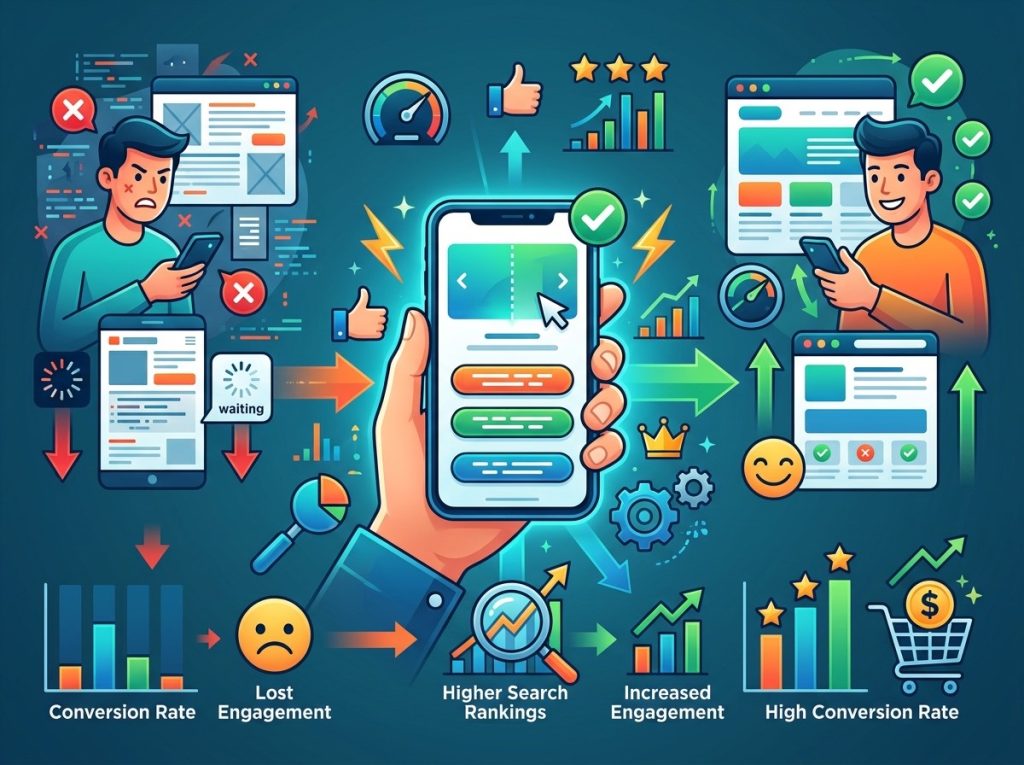 Mobile users represent a significant portion of website traffic. A website that looks good on a desktop but performs poorly on smartphones can lose valuable engagement opportunities. Mobile optimization ensures that pages, navigation, buttons, forms, images, and content work properly on smaller screens.
Make Pages Responsive
Responsive design allows website layouts to adapt to different screen sizes. Text should remain readable, buttons should be easy to tap, and important information should not require excessive scrolling or zooming. A mobile-friendly layout creates a more comfortable browsing experience.
Simplify Mobile Forms
Long or complicated forms can discourage mobile users from completing an inquiry. Keep forms focused on essential information and make fields easy to select and complete. Reducing unnecessary steps can make it easier for visitors to submit inquiries and support better lead generation.
Improve Page Loading Performance
Website speed has a strong relationship with user experience. Visitors generally expect websites to respond quickly. Slow pages can create frustration and encourage users to leave before interacting with the content. Page speed optimization focuses on improving website loading performance and reducing unnecessary delays.
Optimize Images
Large image files can consume significant resources and slow down page loading. Businesses should use appropriately sized images and modern compression techniques where suitable. Optimized images can help maintain visual quality while reducing unnecessary page weight.
Reduce Unnecessary Website Elements
Excessive scripts, plugins, animations, third-party resources, and unnecessary website components can affect performance. Review website elements regularly and remove anything that does not contribute meaningful value to visitors or business objectives.
Improve Technical Performance
Caching, efficient code, optimized hosting, content delivery techniques, and proper resource loading can all contribute to better website performance. A technically efficient website provides visitors with a smoother browsing experience.
Strengthen SEO to Attract the Right Visitors
Search engine optimization can help bring relevant users to a website. However, attracting traffic is only the beginning. The content must satisfy search intent and encourage visitors to continue exploring.
Match Content With Search Intent
Create pages that directly address what users are looking for. Someone searching for information may need an educational article, while someone searching for a specific service may expect a detailed service page. Matching content to intent increases the likelihood that visitors will find the page useful.
Improve Internal Linking
Internal links help visitors discover related content. For example, a blog article can link to a relevant service page, another educational resource, or a detailed guide. Strategic internal linking can increase page exploration while helping search engines understand the relationship between different pages.
Write Better Page Titles and Descriptions
Search snippets influence whether people choose to visit a website. Clear and relevant titles and descriptions can communicate what a page offers. When visitors arrive with accurate expectations, they may be more likely to engage with the content.
Add Interactive Elements
Interactive website features can encourage visitors to participate rather than passively read. Businesses can use quizzes, calculators, polls, product filters, comparison tools, interactive FAQs, and other relevant features.
Use Interactive Tools Strategically
Interactive tools should solve a genuine user problem. For example, an online calculator can help users estimate costs, while a product filter can help shoppers quickly find suitable products. The goal should be usefulness rather than adding interaction simply for visual appeal.
Encourage Comments and Feedback
For blogs and community-focused websites, comments, surveys, feedback forms, and questions can encourage visitors to participate. User feedback can also provide valuable insights into what customers need and what areas of the website require improvement.
Build Trust With Social Proof
Visitors may hesitate to take action when they are unfamiliar with a business. Trust signals can reduce uncertainty and make the website feel more credible. Businesses can display customer reviews, testimonials, case studies, certifications, awards, client experiences, and relevant trust indicators.
Showcase Real Customer Experiences
Authentic testimonials can demonstrate how products or services have helped real customers. Case studies can provide deeper information by showing the challenge, solution, and outcome. Social proof can help visitors feel more confident about contacting or purchasing from a business.
Optimize Landing Pages for Engagement
Landing pages often have a specific goal, such as generating leads, promoting a service, or encouraging a purchase. A focused landing page should avoid unnecessary distractions and communicate its value quickly.
Make the Value Proposition Clear
Visitors should understand what the business offers and why it matters within seconds. The headline, supporting copy, visuals, and CTA should work together to communicate a clear message. A strong value proposition can encourage users to continue reading and take action.
Reduce Distractions
Too many pop-ups, competing CTAs, unnecessary animations, or unrelated links can distract visitors. Landing pages should focus on the primary goal while still providing enough information to address customer concerns.
Use Analytics to Measure Engagement
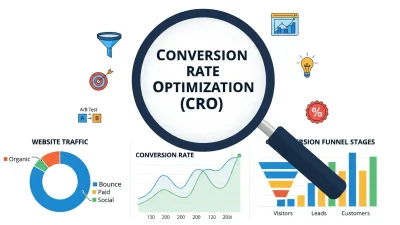
Improving engagement requires ongoing measurement. Businesses should monitor how users interact with their websites and identify areas where improvements are needed. Important metrics can include engagement rate, time spent on pages, pages per session, conversion activity, form submissions, and user journeys.
Identify High-Performing Pages
Analytics can reveal which pages receive strong engagement and which pages cause visitors to leave. High-performing pages can provide insights into effective content, while underperforming pages can be reviewed for usability, content quality, speed, or relevance issues.
Test Different Strategies
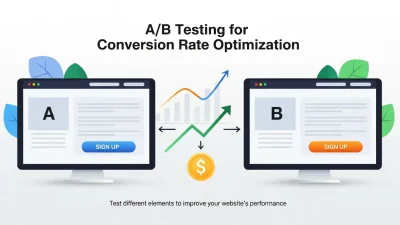
Businesses can test different headlines, CTA placements, page layouts, content formats, and forms. Continuous testing allows organizations to make decisions based on actual user behavior instead of assumptions.
Turn Engagement Into Lead Conversion
 Engagement becomes more valuable when it contributes to measurable business outcomes. Visitors should have clear opportunities to move from learning to taking action. Lead conversion can be improved by creating logical pathways throughout the website.
For example, an educational article can direct users to a related service page. The service page can provide a clear explanation of benefits and include a simple contact form or consultation CTA. The conversion process should feel natural rather than forced. Visitors need sufficient information and trust before they are ready to make a decision.
How to Create a Long-Term Engagement Strategy
Website engagement should not be treated as a one-time optimization project. User expectations, technology, search behavior, and business goals continue to change. Businesses should regularly review their website content, design, technical performance, analytics, and conversion paths.
A strong long-term strategy combines useful content, intuitive UX, mobile-friendly design, fast loading speeds, SEO, interactive features, trust signals, and clear calls to action. When these elements work together, a website can become more than an online brochure. It can become an active business asset that attracts visitors, builds relationships, generates leads, and supports sustainable growth.
Conclusion
To Boost website engagement, businesses need to focus on the complete user experience rather than relying on a single tactic. Valuable content attracts attention, effective UX keeps visitors moving through the website, SEO brings relevant traffic, and strong technical performance creates a smoother experience.
Mobile optimization ensures that users can interact comfortably across devices, while page speed optimization reduces unnecessary delays. At the same time, strategically designed conversion paths can turn website engagement into stronger lead conversion opportunities. By continuously analyzing visitor behavior and improving content, usability, performance, and conversion elements, businesses can create websites that deliver greater value to both users and the organization.
Frequently Asked Questions
1. What does it mean to boost website engagement?
To boost website engagement means encouraging visitors to interact more with a website by reading content, exploring pages, using features, watching videos, submitting forms, or taking other meaningful actions.
2. Why is website engagement important?
Website engagement shows whether visitors find a website useful and relevant. Strong engagement can increase trust, encourage users to explore more pages, and create more opportunities for conversions.
3. How can content improve website engagement?
Useful, relevant, and easy-to-read content gives visitors a reason to stay on a website. Articles, guides, videos, case studies, FAQs, and interactive resources can all encourage deeper engagement.
4. Does website speed affect engagement?
Yes. Slow-loading pages can frustrate visitors and cause them to leave before interacting with content. Page speed optimization can help create a faster and smoother browsing experience.
5. Why is mobile optimization important?
Mobile optimization ensures that websites work properly on smartphones and tablets. Responsive layouts, readable text, easy navigation, and mobile-friendly forms can improve engagement among mobile users.
6. Can SEO help improve website engagement?
SEO can attract relevant visitors by helping pages appear for appropriate searches. When SEO is combined with useful content and strong user experience, visitors are more likely to interact with the website.
7. How do calls to action improve engagement?
Calls to action provide visitors with clear next steps. Whether users are encouraged to contact a business, download a resource, request a quote, or purchase a product, relevant CTAs can guide engagement toward business goals.
8. What website metrics should businesses track?
Businesses can monitor engagement rate, time on page, pages viewed, conversion activity, form submissions, and user journeys. These metrics can help identify opportunities for improvement.
9. How can website engagement support lead conversion?
Engaged visitors are more likely to explore services, learn about products, and respond to relevant CTAs. Creating clear conversion paths can help move interested visitors toward becoming qualified leads.
10. What is the best way to improve website engagement?
The best approach is to combine high-quality content, intuitive navigation, mobile optimization, page speed optimization, SEO, interactive elements, trust signals, and clear conversion opportunities. Regular testing and analytics can further improve results.