
This comprehensive blog explores the role of Conversion Rate Optimization (CRO) specialists, detailing their strategies, tools, and impact on business growth. It highlights advanced CRO techniques, FAQs, and actionable insights to optimize websites for higher conversions.
Every business with an online presence shares a common goal: turning website visitors into loyal, paying customers. It seems simple enough, but achieving it is a complex puzzle. A beautiful website or compelling sales copy is just the beginning. To truly unlock your site’s potential, you need a specialist—a Conversion Rate Optimization (CRO) specialist. These professionals are the digital strategists who transform your website from a passive brochure into an active, high-performing sales and lead generation engine.
But what exactly does a Conversion Rate Optimization specialist do day-to-day? How do they apply their unique blend of skills to drive tangible business growth? This comprehensive guide will explore the multifaceted role of a CRO specialist, detailing their methods, tools, and the immense value they bring. Whether you’re a business owner looking to hire, an aspiring marketer, or simply curious about this dynamic field, you’ll find the answers you need right here.
Understanding Conversion Rate Optimization (CRO)
Before we can appreciate the role of the specialist, we must first define their field of play: Conversion Rate Optimization. At its heart, CRO is the systematic process of increasing the percentage of website visitors who take a desired action. This “conversion” can be any measurable action that moves a potential customer further down the business funnel.
Think of it this way: your website traffic is the top of your funnel. Conversion Rate Optimization is the science and art of making that funnel as efficient as possible, ensuring more of that initial traffic reaches the desired endpoint. This isn’t about guesswork; it’s a data-driven discipline focused on understanding user behavior and methodically improving the user journey.
For a practical example, imagine an e-commerce website that receives 10,000 visitors in a month. If 200 of those visitors complete a purchase, the site’s conversion rate is 2%. Through a successful Conversion Rate Optimization strategy, that number could be pushed to 3% or 4%. This translates to an additional 100 or 200 sales from the exact same amount of traffic, highlighting the power and cost-effectiveness of this practice. The core of Conversion Rate Optimization is about deeply analyzing how users interact with your digital properties, identifying friction points, and implementing targeted changes based on empirical evidence to make the website more intuitive, persuasive, and effective at achieving business goals.
What Constitutes a “Conversion”?
While a sale is the most obvious conversion for an e-commerce site, the definition is much broader and depends entirely on a company’s specific objectives. A CRO specialist works to improve various types of conversions, which can be categorized as macro or micro.
Macro-Conversions
These are the primary, high-value goals of a website. They represent the final step in the customer journey and are often tied directly to revenue.
- Making a purchase: The ultimate goal for any online retailer.
- Requesting a quote or demo: A key objective for B2B and service-based businesses.
- Subscribing to a paid service: The primary conversion for SaaS and subscription-based models.
- Filling out a lead generation form: Essential for businesses with a longer sales cycle.
Micro-Conversions
These are smaller actions that indicate a user is engaged and moving toward a macro-conversion. They are crucial for understanding user intent and optimizing the entire journey.
- Signing up for an email newsletter: Builds an audience for future marketing.
- Creating an account: A step toward a more personalized user experience and future purchases.
- Adding a product to the cart: Shows strong purchase intent.
- Downloading a resource (like an ebook or whitepaper) is a common goal in content marketing.
- Watching a product video: Indicates a high level of interest and engagement.
Effective Conversion Rate Optimization addresses both macro and micro-conversions, recognizing that improving the smaller steps often leads to significant gains in the primary business objectives.
The Core Responsibilities of a CRO Specialist
A Conversion Rate Optimization specialist wears many hats—part data scientist, part psychologist, part user-advocate, and part marketer. They are digital detectives who dive deep into analytics and user behavior to diagnose problems and prescribe effective solutions. Let’s break down their key duties in detail.
Conducting In-Depth Data Analysis
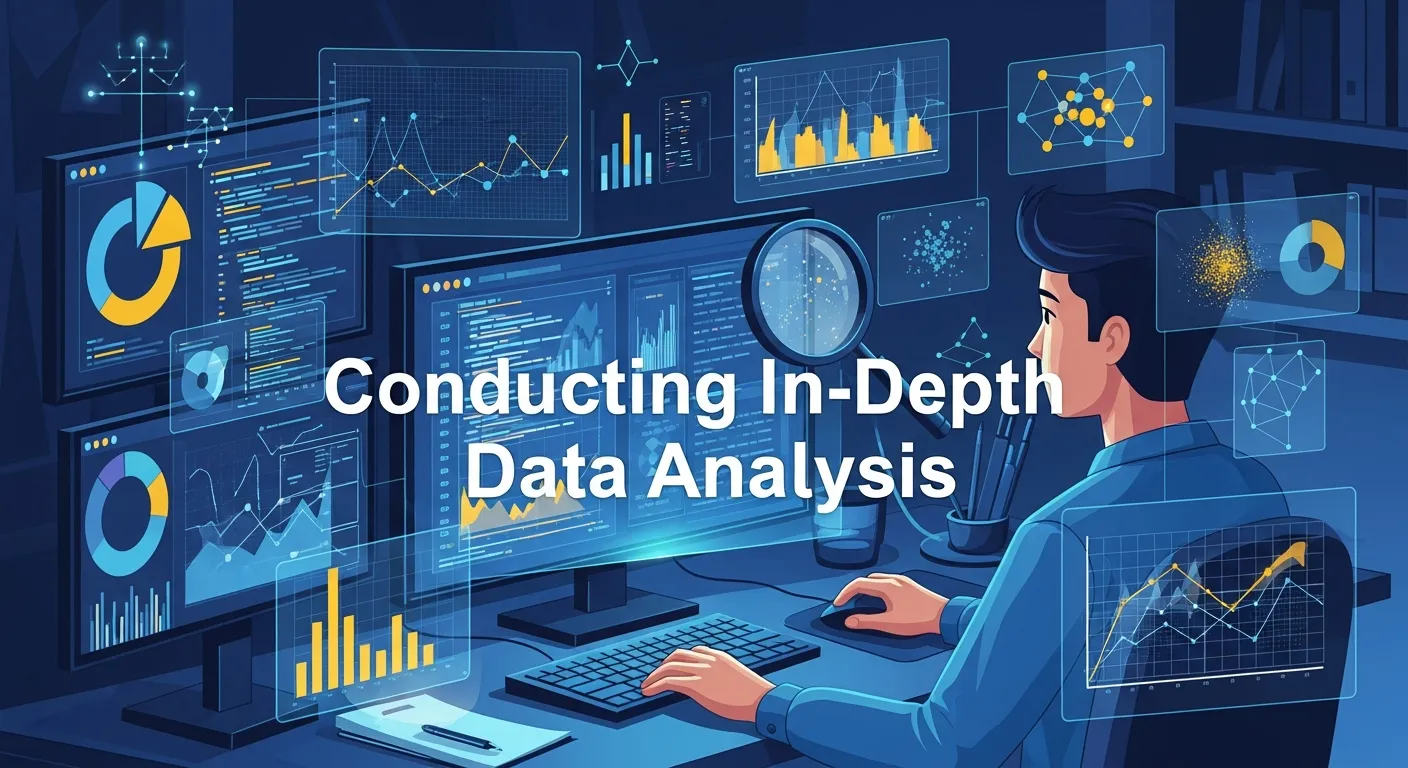
Data is the lifeblood of Conversion Rate Optimization. A specialist’s first task is always to understand the current state of the website by digging into quantitative data. This process involves more than just glancing at a dashboard; it requires a deep, forensic examination of website metrics to identify patterns, anomalies, and areas of opportunity. They use a suite of powerful analytics tools like Google Analytics 4, Adobe Analytics, and Mixpanel to meticulously track and interpret key performance indicators (KPIs).
Key Metrics Under Scrutiny:
- Traffic Sources: Where are visitors coming from? Organic search, paid ads, social media, or direct traffic? Understanding the source helps tailor the experience, as a user from a specific ad campaign may have different expectations than one from an organic search.
- Bounce Rates & Engagement Rates: A high bounce rate on a critical page (like a product or pricing page) is a major red flag. It suggests a disconnect between what the user expected and what they found. Specialists analyze this to determine if the issue is targeting, messaging, or page design.
- Conversion Funnels: Specialists map out the user journey step-by-step, from landing page to thank-you page. They analyze funnel visualization reports to pinpoint exactly where users are abandoning the process. A significant drop-off between the cart and checkout pages, for instance, immediately signals a problem that needs investigation.
- Time on Page & Scroll Depth: How long are users staying, and how far down the page are they scrolling? Low engagement on a long-form sales page might indicate that the opening hook is weak or the content isn’t compelling enough to hold attention.
- User Demographics & Technology: Analyzing data by device type (desktop vs. mobile vs. tablet), browser, or geographic location can reveal critical insights. If the conversion rate is drastically lower for mobile users, it points to a poor mobile experience that requires immediate attention.
This quantitative analysis forms the foundation of any Conversion Rate Optimization effort. It tells the specialist what is happening on the website. The next step is to figure out why.
Understanding Qualitative User Behavior
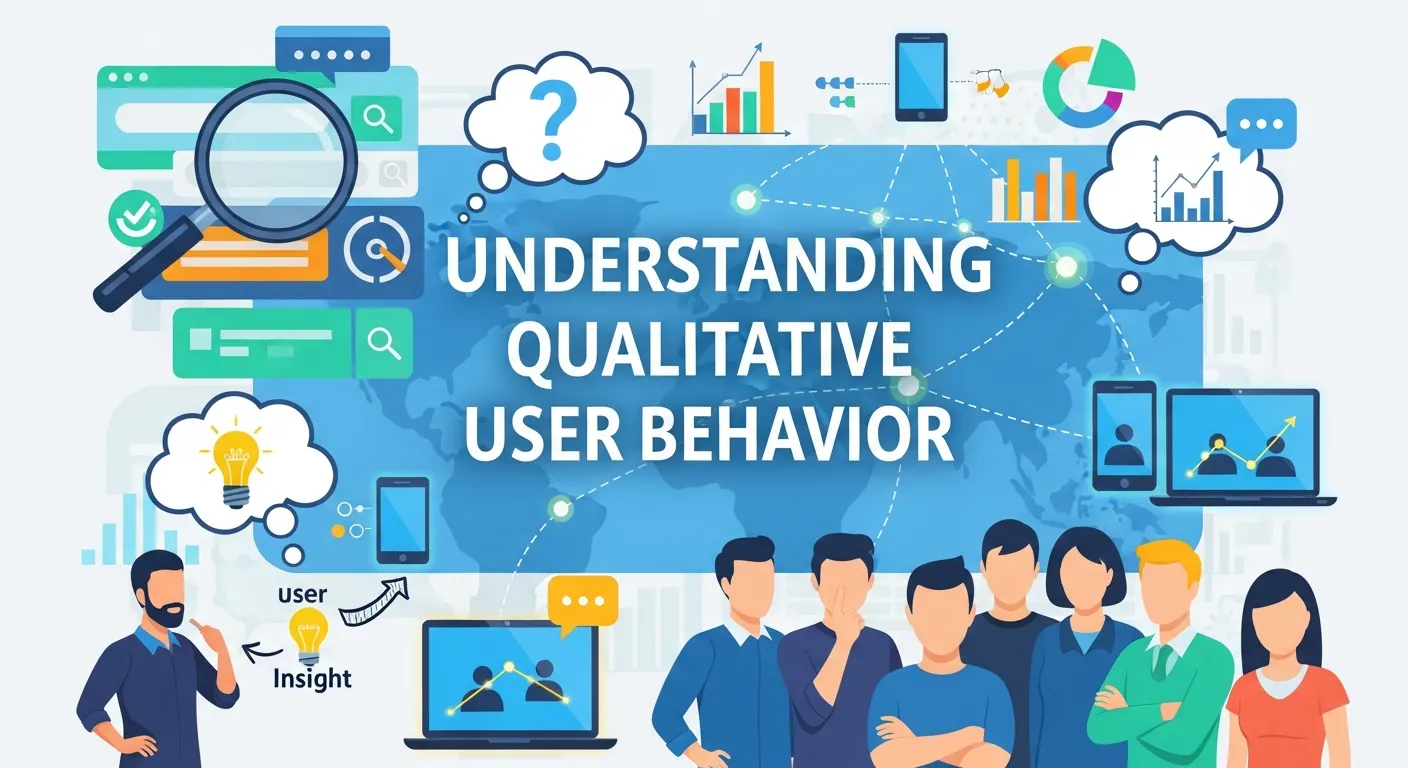
Numbers tell part of the story, but to truly understand the user experience, a CRO specialist must delve into qualitative data. This involves observing and listening to users to uncover the motivations, frustrations, and thought processes behind their actions. This human-centric approach bridges the gap between raw data and actionable insights.
Methods for Qualitative Research:
- Heatmaps and Scroll Maps: Tools like Hotjar or Crazy Egg generate visual representations of user behavior. Heatmaps show where users click, move their mouse, and hover, revealing which elements draw the most attention. Scroll maps show how far down a page users scroll, indicating whether they are seeing critical information located “below the fold.”
- Session Recordings: These are anonymized recordings of real user sessions on the website. A CRO specialist can watch as a user navigates the site, encountering friction, struggling with forms, or getting lost in navigation. This is one of the most powerful tools for building empathy and identifying usability issues that analytics alone cannot reveal.
- User Feedback Surveys and Polls: On-page polls (e.g., “Was this page helpful?”) or exit-intent surveys (“What stopped you from completing your purchase today?”) provide direct feedback from users at critical moments. This can uncover objections related to pricing, shipping, trust, or missing information.
- Usability Testing: In a more formal setting, a specialist might conduct moderated or unmoderated usability tests. Users are given specific tasks to complete on the website while their actions and thoughts are recorded. This method is invaluable for testing new designs or features before a full-scale launch.
By combining quantitative data with these qualitative insights, a Conversion Rate Optimization specialist develops a holistic view of the user experience. They can identify not just that users are dropping off at checkout, but that they are doing so because the “apply discount code” field is confusing or the shipping costs are unexpectedly high.
Formulating and Testing Hypotheses
Once the “what” and the “why” are understood, the Conversion Rate Optimization specialist moves into the scientific phase of their work: formulating and testing hypotheses. A hypothesis is a clear, testable statement that proposes a change to the website and predicts the expected outcome. It’s a proposed solution to a problem identified during the research phase.
A well-structured hypothesis typically follows this format: “If we [implement this change], then [this specific metric] will [increase/decrease] because [this psychological or usability reason].”
Hypothesis Example:
- Observation: Session recordings show users hesitate and abandon the checkout when asked to create an account. The conversion rate is 40% lower for new users compared to returning users.
- Hypothesis: If we add a “Guest Checkout” option to the checkout page, then the overall conversion rate will increase because it removes the friction of mandatory account creation for new users who want a quick purchase.
With a clear hypothesis, the specialist then designs an experiment to test it. The most common methods are A/B testing and multivariate testing.
- A/B Testing (or Split Testing): This is the workhorse of Conversion Rate Optimization. The specialist creates a new version of the webpage (the “variation” or “Challenger”) that includes the proposed change. Website traffic is then split randomly between the original page (the “Control”) and the variation. The performance of both versions is tracked until a statistically significant winner is determined.
- Multivariate Testing: This is a more complex form of testing used when a specialist wants to test multiple changes on a single page simultaneously. For example, they could test different combinations of a headline, an image, and a call-to-action button. This method helps identify which combination of elements performs best, but it requires significantly more traffic than A/B testing to produce reliable results.
The key to successful Conversion Rate Optimization is this rigorous, data-backed testing process. No change is made based on a whim or personal opinion. Every significant alteration to the user experience is validated through a controlled experiment, ensuring that changes genuinely lead to improved performance.
Advanced CRO Strategies and Collaborations
A CRO specialist’s role extends beyond the core loop of analyze-hypothesize-test. They are strategic partners who collaborate across departments and leverage advanced techniques to drive holistic business growth.
Improving Website Design and Copy
A website’s visual hierarchy, layout, and written content have a profound impact on conversions. A CRO specialist works closely with UX/UI designers and copywriters to ensure these elements are optimized for persuasion and clarity. They don’t just make things “look better”; they make strategic changes grounded in psychology and user data.
Key Areas of Focus:
- Call-to-Action (CTA) Buttons: Are the CTAs clear, compelling, and easy to find? A CRO specialist will test button color, size, placement, and microcopy (e.g., “Get Started for Free” vs. “Sign Up”). The goal is to create a CTA that stands out and clearly communicates the value of clicking.
- Landing Page Design: Is the page layout guiding the user toward the conversion goal? Specialists analyze visual flow, ensuring the most important information is prioritized and distractions are eliminated. They might experiment with single-column versus multi-column layouts or the placement of trust signals.
- Forms Optimization: Long, complicated forms are a major cause of conversion abandonment. A CRO specialist will ruthlessly cut unnecessary fields, implement multi-step forms to reduce cognitive load, and ensure clear error messaging. Every field must justify its existence.
- Persuasive Copywriting: Is the copy focused on the user and their needs? Specialists advocate for benefit-driven headlines, clear value propositions, and copy that addresses user anxieties and objections. They will test different tones, messaging angles, and the inclusion of social proof like testimonials or reviews.
For example, a specialist might hypothesize that adding customer photos next to testimonials on a product page will increase trust and lead to a higher “add to cart” rate. This change would then be A/B tested to validate its impact.
Leveraging Automation and AI in CRO
Modern Conversion Rate Optimization is increasingly intertwined with technology. Specialists are now using automation and artificial intelligence (AI) to enhance their efforts, gather richer data, and create more personalized experiences at scale. These technologies don’t replace the strategist but act as powerful force multipliers.
For instance, managing user data from multiple sources can be a significant challenge. By implementing a system for cross-platform data entry automation, a CRO specialist can ensure that behavioral data from the website, CRM, and mobile app are all seamlessly integrated. This unified view of the customer journey allows for much deeper analysis and more accurate personalization. Check out a resource on this topic for more insight cross platform data entry automation.
AI-powered tools are also changing the game in user engagement. We’ve seen a surge in conversational marketing AI chatbots for engagement, which can interact with users in real-time. A CRO specialist can configure these chatbots to answer common questions, guide users to relevant products, and even offer discounts to prevent cart abandonment. This proactive engagement can significantly lift conversion rates by resolving user issues instantly. For more on this, see conversational marketing AI chatbots for engagement.
Below is a table comparing traditional CRO methods with their AI-enhanced counterparts:
|
CRO Activity |
Traditional Method |
AI-Enhanced Method |
|---|---|---|
|
Personalization |
Segmenting users by broad categories (e.g., new vs. returning). |
Using machine learning to predict user intent and deliver 1:1 dynamic content in real-time. |
|
User Feedback |
Static on-page surveys and post-purchase emails. |
Proactive AI chatbots that initiate conversations based on user behavior (e.g., rage clicking). |
|
A/B Testing |
Manually creating and testing a single variation against a control. |
AI algorithms that automatically test hundreds of variations and dynamically shift traffic to the winning version. |
|
Data Analysis |
Manually sifting through analytics reports to find insights. |
Anomaly detection algorithms that automatically flag significant changes in user behavior or conversion rates. |
By embracing these technological advancements, CRO specialists can execute more sophisticated and effective optimization strategies.
Enhancing Customer Engagement with AI Chatbots
One of the most impactful applications of AI in Conversion Rate Optimization is the strategic use of chatbots. Previously seen as clunky and unhelpful, modern AI chatbots have become sophisticated tools for enhancing the user journey and directly influencing conversions.
A CRO specialist can leverage these tools far beyond simple customer service inquiries. The strategic deployment of AI chatbots, customer engagement and conversions are directly linked. For example, a chatbot can be programmed to appear on a pricing page if a user has been idle for more than 30 seconds, proactively asking if they have questions about the different tiers. This can capture a lead that might have otherwise been lost. Similarly, an e-commerce chatbot can offer styling tips or complementary product suggestions, effectively acting as a digital sales assistant. Discover more at AI chatbots, customer engagement, and conversions.
Here are some specific CRO applications for AI chatbots:
- Lead Qualification: Chatbots can ask a series of questions to qualify leads before passing them to a human sales representative, ensuring the sales team’s time is spent on high-intent prospects.
- Cart Abandonment Reduction: An exit-intent chatbot can trigger when a user is about to leave the checkout page, offering a small discount or free shipping to incentivize them to complete the purchase.
- Personalized Onboarding: For SaaS products, a chatbot can guide new users through the initial setup process, improving activation rates and long-term retention.
- 24/7 Support: Providing instant answers to common questions around the clock removes a significant point of friction, especially for businesses with a global customer base.
By integrating AI chatbots as a core component of the user experience, a CRO specialist can create a more interactive, supportive, and ultimately, higher-converting website.
Optimizing the Entire Conversion Funnel
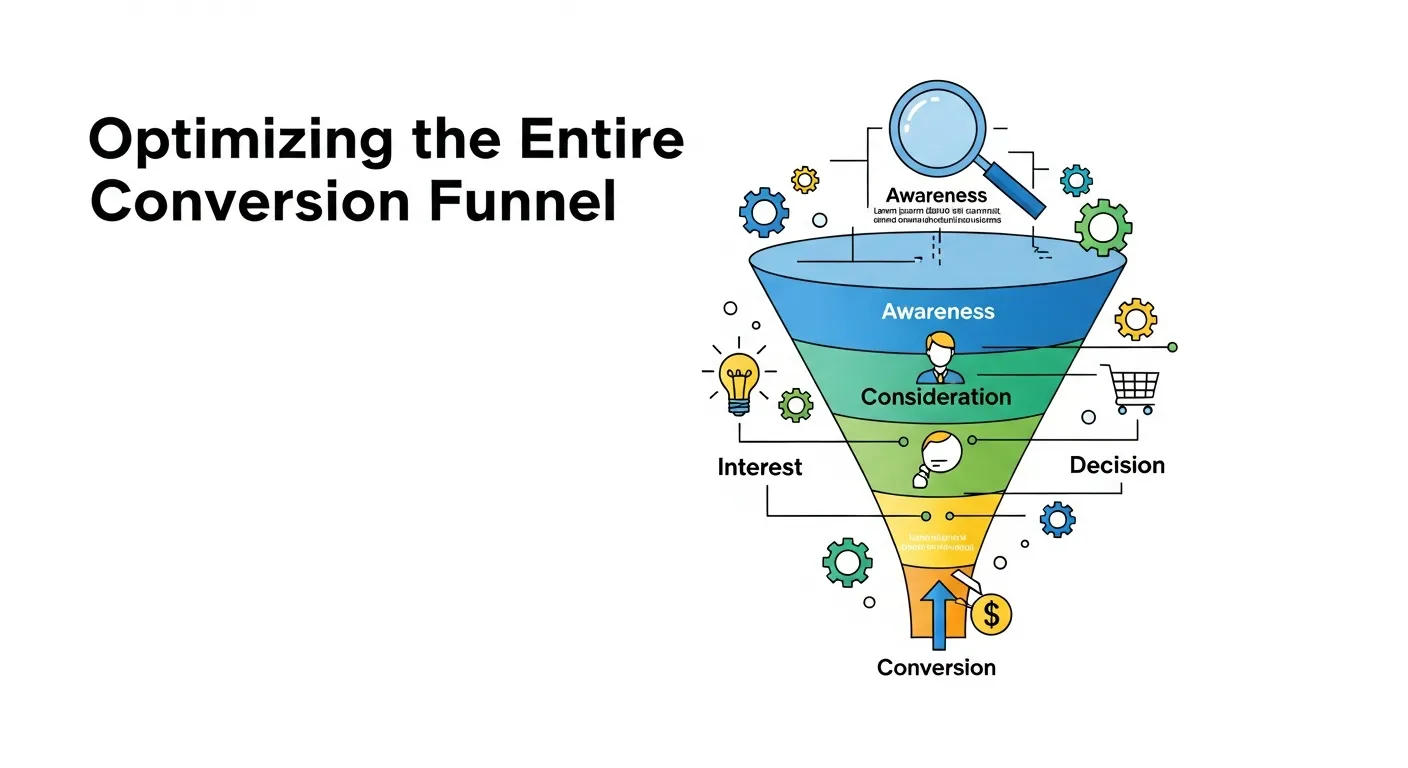
A common misconception is that Conversion Rate Optimization only focuses on a single page, like the homepage or a landing page. In reality, a skilled specialist takes a holistic view, examining the entire conversion funnel from the first touchpoint to the final thank-you page. A funnel is the series of steps a user takes to complete a conversion. Optimizing it means identifying and fixing “leaks” at every stage.
Stages of a Typical Funnel and CRO Actions:
- Awareness Stage (Top of Funnel): This is where a user first encounters your brand, often through a blog post, social media ad, or search result. A CRO specialist will analyze landing page messaging to ensure it aligns perfectly with the ad copy that brought the user there. A mismatch in promises can cause an immediate bounce.
- Interest/Consideration Stage (Middle of Funnel): The user is now exploring your products or services. At this stage, a specialist focuses on product page clarity, the quality of images and videos, and the prominence of social proof like reviews and testimonials. They might test adding a detailed feature comparison table to help users make an informed decision.
- Decision Stage (Bottom of Funnel): The user is close to converting. This is where optimization of the cart and checkout process is critical. The specialist will work to eliminate distractions, simplify forms, display trust badges (e.g., secure payment logos), and be transparent about all costs, especially shipping.
- Retention Stage (Post-Conversion): Conversion Rate Optimization doesn’t stop at the sale. The specialist will also look at the post-conversion experience. This includes optimizing the thank-you page to encourage a second action (like a social share or newsletter signup) and improving the onboarding email sequence to reduce buyer’s remorse and build loyalty.
By meticulously analyzing the user flow through each of these stages, a CRO specialist can systematically plug leaks and create a smooth, frictionless path to conversion and beyond.
Why a CRO Specialist is Essential for Your Business
Investing in a dedicated Conversion Rate Optimization specialist is not a luxury; it’s a strategic imperative for any business serious about growth. Their work goes far beyond cosmetic website changes, delivering measurable results that directly impact the bottom line. They bring a unique, data-driven discipline to marketing that complements and enhances all other acquisition efforts.
Here’s why their role is so critical:
1. Maximizing Return on Investment (ROI)
Many marketing strategies focus on driving more traffic to a website through SEO, PPC, or content marketing. While important, acquiring traffic is expensive. Conversion Rate Optimization is powerful because it focuses on getting more value from the traffic you already have. By doubling your conversion rate, you effectively double the ROI of your advertising spend without paying a penny more for clicks. This makes CRO one of the most cost-effective marketing activities a business can undertake.
2. Gaining a Sustainable Competitive Advantage
Your competitors are likely vying for the same customers with similar products and prices. A superior user experience can be the deciding factor that makes a customer choose you over them. A website that is easy to navigate, trustworthy, and persuasive will consistently outperform one that is not. A CRO specialist systematically builds this advantage, creating a “moat” around your business that is difficult for competitors to replicate because it’s based on a deep, evidence-based understanding of your specific audience.
3. Fostering Data-Informed Decision Making
Businesses often make critical decisions about their website based on gut feelings, industry trends, or the highest-paid person’s opinion. A CRO specialist replaces this subjective approach with a culture of experimentation and data. Every significant change is tested and validated, ensuring that decisions are based on what actually works for your users, not on what someone thinks will work. This rigor reduces risk and leads to more predictable, consistent growth.
4. Improving the Overall User Experience (UX)
At its core, most Conversion Rate Optimization work is about removing friction and making the website easier and more enjoyable for the user. A happy user is more likely to convert, return, and recommend your brand to others. While a UX designer focuses on the overall feel and usability, a CRO specialist provides the data to validate which UX improvements have the most significant impact on business goals. This symbiotic relationship leads to a website that is both user-friendly and commercially effective.
The Toolkit of a Modern CRO Specialist
To perform their complex duties, CRO specialists rely on a sophisticated stack of software and tools. These platforms enable them to gather data, understand behavior, run experiments, and report on their findings. While the specific tools can vary, they generally fall into a few key categories.
|
Tool Category |
Popular Examples |
Primary Function |
|---|---|---|
|
Web Analytics |
Google Analytics 4, Adobe Analytics |
Tracking quantitative data like traffic, conversion rates, user demographics, and behavior flow. The foundational tool for all analysis. |
|
Behavior Analytics |
Hotjar, Crazy Egg, Microsoft Clarity |
Providing qualitative insights through heatmaps, scroll maps, and session recordings to understand the “why” behind user actions. |
|
A/B Testing Platforms |
Google Optimize, VWO, Optimizely, AB Tasty |
Creating, running, and analyzing A/B tests, split tests, and multivariate tests. The engine of experimentation. |
|
User Feedback Tools |
SurveyMonkey, Typeform, Hotjar (Polls) |
Collecting direct feedback from users via on-page surveys, exit-intent polls, and email questionnaires. |
|
SEO & Competitor Analysis |
SEMrush, Ahrefs |
Analyzing competitor strategies, identifying keyword opportunities that signal conversion intent, and understanding organic traffic patterns. |
|
Project Management |
Asana, Trello, Jira |
Organizing the CRO roadmap, tracking experiment ideas, and collaborating with designers, developers, and other stakeholders. |
A proficient CRO specialist is not just familiar with these tools; they are experts at integrating their data streams to build a comprehensive picture of website performance and user behavior.
Frequently Asked Questions (FAQ)
1. What is the main goal of Conversion Rate Optimization?
The primary goal is to increase the percentage of website visitors who complete a desired action. This improves marketing ROI, generates more leads and sales from existing traffic, and provides valuable insights into customer behavior.
2. How long does it take to see results from CRO?
Results depend on website traffic and the complexity of the tests. For a high-traffic site, a simple A/B test might yield a statistically significant result in a week or two. For lower-traffic sites, it could take a month or more to gather enough data for a single test. CRO is a long-term, iterative process, not a quick fix.
3. Is Conversion Rate Optimization a one-time project?
No, it is an ongoing process. Customer behavior, market trends, and technology are constantly changing. A successful CRO program involves continuous testing and optimization to maintain and improve conversion rates over time, ensuring the website evolves with its audience.
4. What skills are most important for a CRO specialist?
A great CRO specialist has a hybrid skill set. They need strong analytical skills to interpret data, a deep curiosity to understand user psychology, a methodical approach to testing, and excellent communication skills to work with designers, developers, and stakeholders.
5. What is the difference between CRO and SEO?
SEO (Search Engine Optimization) focuses on increasing the quantity and quality of organic traffic to a website from search engines, while Conversion Rate Optimization (CRO) aims to maximize the value of that traffic once it arrives on your site. Both strategies work hand in hand and are most effective when aligned. For a deeper dive, check out this helpful resource: Is CRO part of SEO?.
6. Can small businesses benefit from CRO?
Absolutely. While they may have less traffic, the principles of CRO still apply. Even small improvements in conversion rates can have a significant impact on a small business’s bottom line. They can start with low-cost tools and focus on high-impact areas like landing pages and checkout flows.
7. How is a website’s conversion rate calculated?
The conversion rate is calculated using the formula: (Number of Conversions / Total Number of Visitors) × 100. This metric shows how effectively your site turns visitors into customers or leads. For a complete breakdown and practical examples, check out this helpful guide: What is website conversion rate optimization? Understanding this metric is key to any Conversion Rate Optimization effort.
8. Why is CRO so important for business growth?
CRO is vital because it directly boosts revenue and ROI without necessarily increasing marketing spend. It provides a competitive edge by creating a superior user experience and fosters a data-driven culture. For a deeper understanding of its critical impact, see this quick read on why conversion rate optimization is needed for growth.
9. What is A/B testing?
A/B testing is a controlled experiment where two versions of a webpage (A and B) are shown to users at random. By tracking which version leads to more conversions, a specialist can determine with statistical confidence which one is more effective.
10. How much does a CRO specialist cost?
The cost can vary widely, from hiring a freelancer for a specific project to employing a full-time specialist or agency. Rates depend on experience, scope of work, and geographic location. However, a successful CRO program should always generate a positive return on investment.