
Understanding and calculating the conversion rate is essential for business growth. By measuring how effectively visitors take desired actions, you can optimize marketing strategies, improve user experience, and implement data-driven conversion rate optimization techniques to boost sales and engagement.
For every business, growth is the ultimate goal. But true growth boils down to a single, crucial factor: how effectively you convert visitors into customers. This is where the concept of conversion rate comes into play—a core metric in Internet marketing that measures the success of your website, landing pages, email campaigns, or digital ads. Whether you’re running an e-commerce store, a SaaS platform, or a lead-generation campaign, knowing how to calculate conversion rate is essential for making informed decisions and driving tangible results.
But what exactly does “conversion rate” mean, and why is it so vital? Simply put, your conversion rate tells you the percentage of visitors who complete a desired action, such as making a purchase, signing up for a newsletter, or submitting a form. It’s more than just a number—it’s a reflection of how persuasive and effective your marketing efforts are.
In this guide, we’ll break down the concept of conversion rate in simple, easy-to-understand terms. You’ll learn not only how to calculate conversion rate, but also why it matters, how to use it to improve your marketing campaigns, and actionable strategies to boost your conversions. By the end, you’ll have the knowledge and tools to optimize your conversion rate and drive real business growth.
What is Conversion Rate?
Put simply, the conversion rate is the percentage of people who take a desired action on your website, in your email campaign, or on any other platform. These desired actions, known as “conversions,” can mean different things depending on your business goals. For example:
- For e-commerce websites, a “conversion” might mean completing a purchase.
- For SaaS companies, it could mean signing up for a free trial.
- For marketers, it might be someone filling out a lead capture form.
- For bloggers, it could mean subscribing to their newsletter.
The conversion rate tells you how persuasive or effective your efforts are. A high conversion rate means your audience finds value in your offering and is taking action. A low conversion rate? Well, that indicates room for improvement.
Why Does Conversion Rate Matter?
Understanding your conversion rate is more than just a number-crunching exercise; it impacts some of the most critical aspects of your business:
- Efficiency of Marketing Spend
Knowing your conversion rate helps you determine whether your marketing dollars are truly being spent wisely. For example, if a specific Facebook ad campaign has a 2% conversion rate and another achieves 8%, you know where to allocate your budget.
- Customer Behavior Insights
When you measure conversion rates, you gain insights into how your audience engages with your content or offers. This shows what resonates with them, so you can tailor future campaigns accordingly.
- Improved ROI
Conversion rate optimization (CRO) is a powerful way to improve your overall return on investment. A small change in your conversion rate can lead to significant revenue growth without increasing traffic.
- Competitive Advantage
Not all businesses take the time to fully optimize their conversion rates. Focusing on this metric could give you a crucial edge over competitors.
Now that you see why conversion rates are so crucial, let’s talk about how to calculate them.
How to Calculate Your Conversion Rate
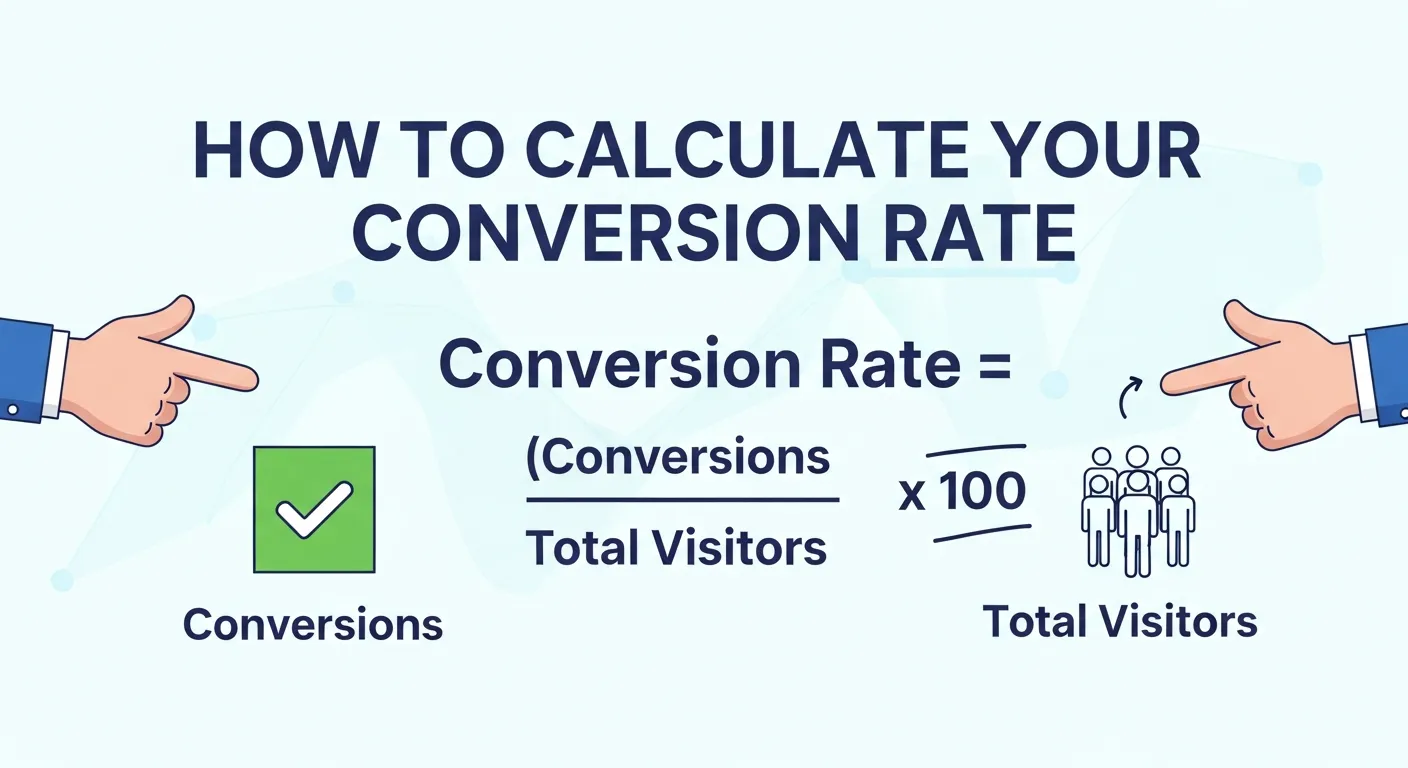
The good news? Calculating your conversion rate is simpler than it sounds, and it’s one of the most important metrics for measuring the success of your website, landing page, or marketing campaign. By knowing this number, you can understand how effectively your digital efforts are turning visitors into customers, leads, or subscribers—a critical part of conversion rate optimization (CRO).
The basic formula is straightforward:
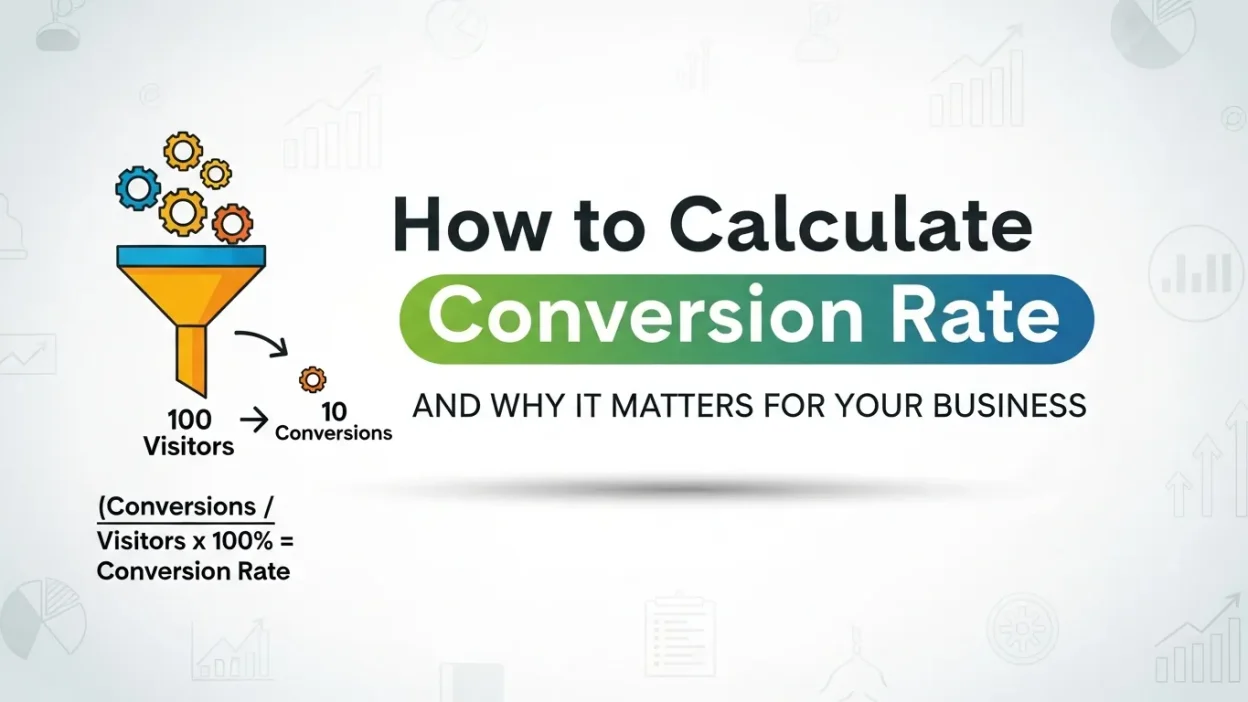
Conversion Rate (%)=Total Number of VisitorsNumber of Conversions×100
Step-by-Step Process to Calculate Conversion Rate
- Count the number of conversions
Start by identifying your desired action. This could be a completed purchase, a filled-out form, a sign-up, or any other measurable goal. Count how many times this action was completed during your tracking period. - Determine the total number of visitors
Next, identify the total number of people who visited your site, landing page, or campaign during the same period. Accurate traffic measurement ensures that your conversion calculation reflects real-world performance. - Apply the formula
Divide the total conversions by the total number of visitors, then multiply by 100 to get your conversion rate percentage.
Example Calculation
Let’s say you run an online store and want to measure how well your site converts visitors into buyers:
- Total website visitors last month: 1,000
- Total purchases completed: 50
This means 5% of your visitors completed the desired action—a clear benchmark to monitor and improve over time through conversion rate optimization strategies.
Scenario-Based Adjustments
Different platforms or channels require slight adjustments when you calculate conversion rate, because the definition of a “conversion” can vary depending on context:
- Email Campaigns: Divide the number of clicks, purchases, or sign-ups by the total number of emails delivered.
- App Performance: Divide the number of app downloads or in-app purchases by the total number of impressions or ad clicks.
- Paid Advertising Campaigns: Track conversions relative to ad clicks or impressions to understand ROI accurately.
By tailoring your conversion rate calculation to each platform, you gain precise insights into which marketing efforts are truly driving results. This makes your conversion rate optimization more data-driven and actionable.
Why Accurate Calculation Matters
Consistently tracking and calculating your conversion rate allows you to:
- Identify bottlenecks in your sales funnel
- Test new strategies and measure their impact
- Allocate marketing budget more effectively
- Continuously refine your CRO efforts for long-term growth
Remember, conversion rate is more than just a number—it’s a reflection of how effectively your website or campaign persuades visitors to take meaningful action. Regular measurement is key to making informed, data-driven decisions.
Tips to Boost Your Conversion Rate
So, you’ve calculated your conversion rate—congratulations! That’s the first step toward understanding how well your website or marketing efforts are turning visitors into customers. But the real magic happens when you take action to optimize your conversion rate. Here are proven, actionable strategies to maximize your results and improve the effectiveness of your campaigns:
1. Optimize Landing Pages
Your landing page is often the first impression a visitor has of your business, so it’s critical to make it compelling and conversion-focused. A clean design, clear value proposition, and visible, action-oriented CTAs guide users toward the action you want them to take. Fast page load times and mobile responsiveness are also essential to ensure visitors don’t drop off before converting. By continuously testing and refining your landing pages, you can improve the results of your conversion rate optimization efforts and increase the likelihood of turning traffic into leads or sales.
2. Use A/B Testing
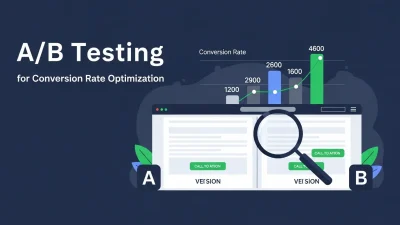
A/B testing, also known as split testing, allows you to experiment with different versions of your website, landing page, or ad to see which performs best. You can test headlines, visuals, button colors, CTAs, and even layout elements. The insights gained from these tests help you make data-driven decisions, ensuring that every change is aimed at improving conversions. Regular A/B testing is a cornerstone of any conversion rate optimization strategy, allowing you to maximize results over time.
3. Simplify the User Experience
Friction is one of the biggest barriers to conversions. Simplifying the user experience can make it easier for visitors to take action. For example:
- Streamline forms by asking for only the essential information.
- Ensure mobile optimization so users can complete purchases or sign-ups easily on any device.
- Remove unnecessary steps in the checkout or registration process.
A smooth, intuitive experience reduces drop-offs and makes it easier to calculate conversion rate accurately, since users are completing the intended actions without distraction or confusion.
4. Provide Social Proof
People are naturally influenced by the actions and opinions of others. Displaying customer reviews, testimonials, case studies, or trust badges builds credibility and encourages potential customers to take action. Social proof not only enhances trust but also increases the effectiveness of your conversion rate optimization efforts, making visitors more likely to engage and convert.
5. Personalize Your Messaging
Personalization is a powerful tool in modern CRO. Tailoring messages, offers, or product recommendations to individual users makes your communications more relevant and engaging. Examples include:
- Greet returning visitors by name.
- Suggesting products based on previous browsing or purchase behavior.
- Sending emails that address the user’s specific interests or pain points.
Personalized experiences show visitors that you understand their needs, which can significantly improve your conversion rate.
6. Create a Sense of Urgency
Humans are motivated by urgency. Limited-time offers, low-stock notifications, or exclusive deals encourage users to take action quickly rather than postpone it. Incorporating urgency into your campaigns is a subtle but effective conversion rate optimization tactic that drives immediate results without appearing pushy.
7. Retarget, Retarget, Retarget
Not every visitor converts on their first interaction, which is why retargeting is essential. Retargeting campaigns—through email, ads, or social media—bring back users who showed interest but didn’t complete a purchase or sign-up. Often, a timely reminder or a small incentive is all it takes to turn hesitant visitors into loyal customers, further improving your conversion rate.
Common Pitfalls to Avoid in Conversion Rate Optimization
Even the most well-designed websites and marketing campaigns can fall short if certain conversion rate optimization (CRO) mistakes are overlooked. Understanding these common pitfalls is essential if you want to calculate conversion rate accurately and take meaningful action to improve it. Avoiding these errors ensures that the strategies you implement actually lead to measurable growth.
1. Overloading Visitors with Too Many Options
Too many choices can overwhelm your visitors, leading to decision paralysis. Whether it’s multiple CTAs, endless menu items, or excessive product options, giving users too many paths can reduce the likelihood that they take any action at all. When optimizing your conversion rate, focus on clarity and simplicity, guiding your users toward the single most important action you want them to take.
2. Ignoring Website Load Time
Speed is a silent killer of conversions. Research shows that even a one-second delay in page load time can reduce conversions by 7%. Slow-loading pages frustrate users and increase bounce rates, directly impacting your ability to convert visitors. As part of your conversion rate optimization efforts, regularly test your site speed and make improvements such as compressing images, leveraging caching, and optimizing server performance.
3. Using Vague or Missing Calls-to-Action (CTAs)
CTAs are the guiding stars of conversion rate optimization. If your buttons or links are vague—like “Click Here” or “Submit”—users may hesitate, unsure of what action they’re taking. Every CTA should be specific, action-oriented, and benefit-focused, such as “Get Your Free Trial” or “Download Your Guide Now.” Clear CTAs not only improve conversions but also make it easier to calculate conversion rate accurately since the desired actions are well-defined.
4. Neglecting Mobile Optimization
With the majority of web traffic coming from mobile devices, a site that isn’t mobile-friendly can drastically reduce your conversion rate. Slow-loading pages, broken layouts, or complicated forms on mobile can frustrate users and prevent them from converting. Ensure your site is fully responsive, fast, and easy to navigate across all devices.
5. Failing to Track and Measure Properly
One of the most overlooked mistakes in conversion rate optimization is not measuring performance accurately. Without proper tracking tools, it’s impossible to know which pages, ads, or campaigns are actually driving conversions. By implementing robust analytics and regularly reviewing your data, you can calculate conversion rate correctly, identify areas for improvement, and refine your CRO strategy for maximum results.
Avoiding these pitfalls is a critical step in any conversion rate optimization journey. By focusing on simplicity, speed, clarity, mobile usability, and accurate measurement, you set the stage for more effective campaigns and higher conversions. Remember, even small improvements can compound over time, making a huge difference to your bottom line.
Leveraging Chatbots to Boost Conversions
In today’s fast-paced digital world, customers expect immediate responses to their questions and seamless guidance throughout their purchase journey. This is where chatbots shine. These AI-powered assistants can interact with visitors in real-time, answer queries instantly, suggest products, and even handle common support tasks. By reducing friction and providing personalized assistance, chatbots can dramatically improve the likelihood that a visitor will complete a purchase or engage with your brand further.
For e-commerce businesses, chatbots are not just a convenience—they are a conversion tool. Imagine a user browsing a product but hesitating due to uncertainty about size, features, or shipping options. A chatbot can step in with tailored recommendations, FAQs, or even exclusive discount codes, guiding them toward conversion without needing a human agent.
Key Benefits of Using Chatbots:
- 24/7 Support: Visitors can receive assistance anytime, even outside business hours.
- Personalized Recommendations: Chatbots analyze user behavior to suggest products they are likely to purchase.
- Reduced Cart Abandonment: Prompt reminders and helpful guidance can decrease abandoned carts.
- Lead Capture: Chatbots can collect emails, phone numbers, or other information for future campaigns.
- Data Insights: Track user behavior and preferences to refine marketing strategies.
Chatbot Impact on E-Commerce Conversion
| Metric | Before Chatbot | After Chatbot | % Improvement | Notes |
|---|---|---|---|---|
| Cart Abandonment Rate | 28% | 18% | +10% | Reduced due to proactive reminders |
| Average Order Value | $50 | $58 | +16% | Personalized suggestions increased purchases |
| Conversion Rate | 2.5% | 4% | +1.5% | More users completed checkout |
| Lead Capture | 100 leads/month | 350 leads/month | +250% | Chatbot collected more emails for retargeting |
Integrating chatbots strategically can transform your e-commerce experience, making it more interactive and conversion-friendly. If you’re exploring this avenue, consider E-Commerce Conversion Chatbots for Higher Sales to implement solutions that are proven to boost sales and engagement.
Personal Reputation and Conversion Optimization
Your personal or brand reputation is a hidden yet powerful factor influencing conversion rates. Whether it’s your website, social media, or customer interactions, trust is the currency of online conversions. Customers tend to buy from brands they perceive as credible, knowledgeable, and responsive. Positive reviews, consistent messaging, and professional presentation can persuade hesitant visitors to take action.
It’s not just about maintaining an image—it’s about actively shaping the perception of your brand to encourage trust and loyalty. For instance, addressing negative feedback quickly and transparently shows that your business cares about customers. Likewise, showcasing testimonials, certifications, and success stories reinforces your authority and encourages potential buyers to convert.
Strategies to Enhance Personal or Brand Reputation:
- Respond Promptly to Feedback: Whether positive or negative, timely responses demonstrate professionalism.
- Maintain Consistent Messaging: Ensure your brand voice and visuals are consistent across all platforms.
- Showcase Social Proof: Display customer reviews, testimonials, or case studies prominently.
- Highlight Expertise: Share blog posts, guides, or videos that demonstrate knowledge and authority.
- Engage Authentically on Social Media: Genuine interaction builds trust and credibility.
Reputation Management Impact on Conversions
| Reputation Factor | Conversion Impact | Notes |
|---|---|---|
| Positive Reviews | +5% | Builds trust and social proof |
| Social Media Presence | +3% | Reinforces credibility |
| Response Time | +2% | Shows commitment to customers |
| Case Studies | +4% | Demonstrates proven results |
| Expert Content | +3% | Builds authority and brand loyalty |
Investing in reputation management is not just a “nice-to-have”—it directly impacts your conversion rate by making visitors feel confident about taking action. To master these techniques, explore Mastering Personal Reputation Management: From First Impression to Impact for actionable guidance.
Optimizing Paid Advertising for Conversions
Running paid advertising campaigns, such as CPC (Cost Per Click) ads, is a common strategy to attract traffic. However, driving clicks is only part of the equation—the real goal is converting those clicks into paying customers or leads. Optimizing paid campaigns involves analyzing data, refining targeting, and continuously testing ad copy, visuals, and landing pages to maximize conversions.
For e-commerce businesses, even a small improvement in conversion rate from paid ads can significantly boost revenue, making optimization crucial. This involves monitoring metrics such as click-through rate (CTR), conversion rate, cost per conversion, and return on ad spend (ROAS). Using these insights, marketers can adjust bids, improve targeting, and enhance landing pages to ensure the highest possible ROI.
Tips for Effective CPC Conversion Optimization:
- Regularly Track and Analyze Keywords: Identify high-performing keywords and drop underperformers.
- A/B Test Ads and Landing Pages: Test headlines, visuals, CTAs, and page layouts to see which performs best.
- Align Landing Page Content with Ad Messaging: Ensure consistency to reduce bounce rates and confusion.
- Use Retargeting Campaigns: Bring back users who didn’t convert the first time with personalized offers.
- Optimize for Mobile: Ensure ads and landing pages load quickly and display properly on all devices.
- Leverage Analytics Tools: Monitor performance metrics to make data-driven decisions.
CPC Campaign Metrics and Conversion Impact
| Metric | Campaign A | Campaign B | Notes |
|---|---|---|---|
| CTR (Click-Through Rate) | 3.2% | 4.5% | B had more engaging ad copy |
| Conversion Rate | 1.8% | 3.2% | B’s landing page optimized for conversions |
| Cost Per Conversion | $25 | $18 | Lower cost with better targeting |
| ROI | 120% | 180% | Higher ROI with optimized campaign |
| Retargeted Conversions | 5% | 12% | Campaign B leveraged retargeting effectively |
Optimizing paid campaigns is an ongoing process that can turn every ad dollar into measurable results. For a deeper dive into strategies for e-commerce, check out CPC Advertising for E-Commerce: Boost Sales Fast to maximize your campaign performance and conversions.
What’s a Good Conversion Rate?
Determining what constitutes a “good” conversion rate can be tricky because it depends heavily on your industry, business model, and the type of conversion you’re tracking. When you calculate conversion rate, it’s important to understand that a single number doesn’t fit all—what’s considered excellent in one sector might be average in another.
For e-commerce websites, for instance, a typical conversion rate falls between 2% and 3%. This means that out of every 100 visitors, only 2 or 3 are likely to complete a purchase. While this may seem low at first glance, these percentages are often sufficient for profitable campaigns, especially when combined with high traffic volumes and effective marketing strategies.
Landing pages, which are designed to capture leads or encourage specific actions like newsletter sign-ups, tend to see average conversion rates of around 2.35%. However, the top-performing 25% of landing pages often achieve conversion rates of 5% or higher. These higher rates are usually the result of clear messaging, compelling calls-to-action (CTAs), and optimized user experience, all of which guide visitors toward completing the desired action.
For SaaS companies, the focus is often on free trial-to-paid conversions, where a good conversion rate generally ranges from 15% to 20%. In this case, understanding how to calculate conversion rate not only helps measure immediate success but also informs long-term strategies for customer retention, onboarding, and subscription growth.
Ultimately, the key takeaway is that your baseline conversion rate is unique to your business, and improvements are most meaningful when tracked over time. By consistently measuring performance, experimenting with user experience, and optimizing marketing tactics, you can steadily increase your conversion rate, even if you start with small incremental gains. Remember, the process of calculating conversion rate isn’t just about numbers—it’s about identifying opportunities to turn more visitors into loyal customers and ultimately drive sustainable growth.
Take Action Today to Improve Your Conversion Rate
Understanding and optimizing your conversion rate is no longer optional—it’s a critical factor for sustainable business growth. By consistently tracking this metric, you gain a clear picture of how effectively your website, landing pages, or marketing campaigns are turning visitors into customers. When you calculate conversion rate regularly, you can identify bottlenecks, test improvements, and implement strategies that deliver measurable results.
Taking action doesn’t have to be complicated. Start by analyzing your existing data: Which pages have the highest bounce rates? Where are users dropping off in your sales funnel? Use these insights to prioritize changes that will have the biggest impact on your conversions.
Proven Steps to Boost Your Conversion Rate:
- Refine Your Calls-to-Action (CTAs): Ensure they are clear, compelling, and aligned with the user’s intent.
- A/B Test Changes: Test different headlines, button colors, and page layouts to see what resonates best with your audience.
- Enhance User Experience: Optimize site speed, simplify navigation, and make forms quick and easy to complete.
- Leverage Personalization: Tailor content, product recommendations, and emails to individual user preferences.
- Use Data-Driven Tools: Analytics platforms, heatmaps, and conversion tracking can reveal opportunities you might otherwise miss.
By systematically applying these strategies, you can gradually improve your conversion rate and achieve sustainable growth without needing massive traffic increases. Remember, even small improvements compound over time, leading to significant revenue gains.
If you want extra support in optimizing conversions, explore data-driven tools and resources designed to make the process straightforward. With the right guidance, calculating conversion rate and implementing actionable improvements becomes simple and effective, giving your business a competitive edge and helping you turn more visitors into loyal customers.
Frequently Asked Questions About Conversion Rate
1. What is a conversion rate?
A conversion rate is the percentage of visitors who complete a desired action on your website, landing page, or campaign. Actions can include purchases, sign-ups, downloads, or form submissions. It’s a key metric for measuring marketing effectiveness.
2. How do I calculate my conversion rate?
To calculate the conversion rate, divide the number of conversions by the total number of visitors and multiply by 100. For example, 50 conversions from 1,000 visitors equals a 5% conversion rate. Accurate calculation is essential for conversion rate optimization.
3. Why is conversion rate important for my business?
Conversion rate indicates how effectively your website or campaign turns visitors into customers. High conversion rates show that your content, offers, and user experience are engaging, while low rates highlight areas for improvement.
4. What is a good conversion rate?
A good conversion rate varies by industry. E-commerce sites often average 2%-3%, top landing pages can exceed 5%, and SaaS platforms may target 15%-20% for trial-to-paid conversions. The key is tracking your baseline and improving steadily.
5. How can I improve my conversion rate?
Strategies to boost conversion rate include optimizing landing pages, A/B testing, simplifying user experience, using social proof, and retargeting visitors. You can also explore actionable micro-conversion tactics for engagement boost Engagement with Micro-Conversions.
6. What role do landing pages play in conversion rate optimization?
Landing pages are critical because they focus visitors on a single action. Well-designed pages with clear headlines, relevant content, and strong CTAs dramatically improve conversions. For a detailed guide: How to Create Landing Pages.
7. How does user experience affect conversion rate?
A smooth, intuitive user experience reduces friction and keeps visitors engaged. Mobile optimization, fast load times, clear navigation, and simple forms all contribute to higher conversions. Every element should guide users toward completing your desired action.
8. Can marketing campaigns influence conversion rate?
Yes. The right messaging, targeting, and personalization in email, PPC, and social media campaigns directly impact how many visitors convert. Using structured marketing strategies can significantly enhance results: Guide to CRO Marketing Strategies.
9. What are common mistakes that reduce conversion rates?
Typical pitfalls include too many options leading to decision paralysis, slow website speed, vague CTAs, lack of social proof, and ignoring mobile users. Avoiding these mistakes is essential for effective conversion rate optimization.
10. How often should I track and analyze conversion rate?
Conversion rate should be tracked continuously. Regular monitoring helps you identify trends, test improvements, and make data-driven decisions. Frequent analysis ensures your optimization strategies are working and highlights new opportunities for growth.