
Many businesses struggle to increase their conversion rate on their websites. This guide offers practical strategies to improve design, content, and calls-to-action, providing actionable steps that boost engagement, drive conversions, and help grow revenue effectively.
It’s not just you—many businesses struggle with how to increase conversion rate on their websites. The good news is, there are practical, proven measures you can take to turn things around.
This article will guide you step by step on how to increase conversion rate by improving your website’s design, enhancing content, and crafting more effective calls-to-action. You’ll learn actionable strategies that can be implemented immediately to drive measurable results.
By the end, you’ll have a clear blueprint to increase conversion rate, boost revenue, and grow your business more efficiently.
What Does Conversion Rate Mean?
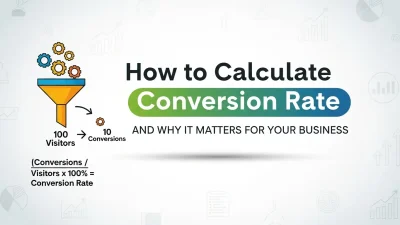
Before we jump into the nuts and bolts, let’s first take a look at what is considered conversion rate. Conversion rate is the percentage of visitors who complete a desired action on your website. This action could be anything from purchasing a product to signing up for a newsletter or filling out a contact form which helps you identify them form others who might not yet have converted into leads themselves.
For example, if 1,000 people visit your website in a month and 50 of them make a purchase, your conversion rate is 5%. Increasing traffic is not the only means to more value per visitor; in fact improving conversion rate can help get even more for all those who pass by without necessarily having increased volume.
Learn more about Conversion Rate in Optimizely
Why Conversion Rate Optimization Matters
A higher conversion rate means you’re maximizing the effectiveness of your marketing efforts and website design. Here are some key benefits:
- Cost Efficiency: Increasing conversions is often more cost-effective than driving more traffic through paid advertisements.
- Higher Revenue: When more visitors complete your intended action, your bottom line improves.
- Enhanced User Experience: Conversion rate optimization (CRO) focuses on making your site more user-friendly, benefiting customers and encouraging repeat visits.
With that in mind, let’s move into actionable strategies.
Strategies to Increase Conversion Rate on Your Website
1. Optimize Your Website’s User Experience (UX)
A smooth, intuitive browsing experience is one of the most important factors for conversions. Visitors expect modern, fast, and user-friendly websites.
Key tips to enhance UX
- Ensure your site loads in under three seconds. According to Google, 53% of users abandon a page if it takes longer than that.
- Use a clear navigation menu to help users find what they’re looking for quickly.
- Implement a mobile-friendly design. Over 60% of web traffic now comes from mobile devices, so your site must work seamlessly on all screen sizes.
2. Simplify Your Forms
If you’re losing leads at the form-filling stage, your forms may be too long or complicated. Simplified forms perform better because they demand less effort from users.
How to streamline forms:
- Ask only for essential information. For example, do you need a phone number, or can you get by with just an email address?
- Use autofill options to save users time.
- Split long forms into multiple steps to make them less overwhelming.
3. Build Trust with Social Proof
People trust other people. Showcasing reviews, testimonials, case studies, or any form of social proof on your website can significantly boost conversions.
Effective social proof elements:
- Customer reviews and ratings are displayed near your products or services
- Logos of well-known clients you’ve worked with
- A “recent purchases” notification to show activity on your site
- Case studies that demonstrate real-world results
4. Craft Killer Calls to Action (CTA)
Your CTA is where the magic happens. A weak or unclear CTA can confuse users and deter them from moving forward. A strong CTA, on the other hand, tells them exactly what to do and why to do it.
Tips for an effective CTA:
- Use action-oriented language like “Get,” “Try,” or “Start.”
- Keep your CTA short and to the point. For example, “Sign Up for Free!” works better than “Try to Enter Your Information into This Form.”
- Create urgency by adding language such as “Limited Time Offer” or “Claim Your Spot Now.”
Be sure to place your CTA in prominent areas, such as above the fold, after blog posts, or in sidebars.
5. Test and Optimize Landing Pages
Your landing pages are often the first impression new visitors have of your business. A poorly optimized landing page can hurt conversions, even if your product or service is great.
How to improve landing pages:
- Write compelling headlines that grab attention and highlight value.
- Use high-quality visuals, such as product images or demo videos, that complement your content.
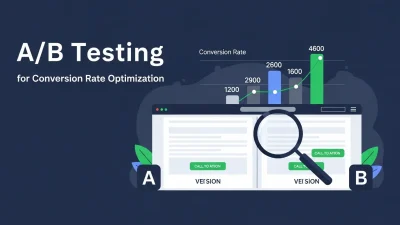
- A/B test elements like colors, headlines, visuals, and CTAs to see what works best.
Consider tools like Unbounce or Instapage to simplify the landing page optimization process.
6. Leverage Retargeting and E-mail Marketing
Sometimes, visitors need a little nudge to convert. Retargeting campaigns and email marketing can help bring them back to your website.
Retargeting:
- Use Facebook Pixel or Google Ads to create retargeting ads for people who visited your site but didn’t convert.
- Tailor your retargeting ads with offers, discounts, or reminders.
Email Marketing:
- Send follow-up emails to people who left items in their cart.
- Create personalized email campaigns that provide value, such as exclusive content or special offers.
7. Use Analytics to Make Data-Driven Decisions
Analytics tools like Google Analytics or Hotjar can help identify problem areas on your website. For example, you might discover that users are dropping off on a particular page or not spending enough time engaging with your content.
Important metrics to track:
- Bounce rate
- Exit rate
- Time on site
- Conversion funnels
Analyze this data regularly and make changes to your site based on what you learn.
8. Offer Incentives
Sometimes, all it takes to get someone to act is a little extra motivation.
Popular incentives include:
- Discounts or promo codes
- Free trials or samples
- Free shipping for e-commerce businesses
Clearly communicate these incentives on your homepage or product pages to catch attention immediately.
Implement AI Chatbots for Real-Time Engagement

AI chatbots are no longer just a novelty—they’ve become a powerful tool to increase conversion rate by engaging website visitors instantly. Many users leave a site simply because their questions aren’t answered quickly. With AI chatbots, businesses can provide real-time assistance, guide users through the sales funnel, and even upsell or cross-sell products, all without waiting for human intervention.
Why Chatbots Boost Conversions:
- Instant Support: Chatbots respond immediately, reducing frustration for visitors and increasing the chance they complete a purchase.
- Personalized Recommendations: By analyzing user behavior, chatbots suggest products or content that match user preferences.
- Cart Recovery: AI chatbots can remind users about abandoned carts or incomplete forms, nudging them to convert.
- Cost Efficiency: Automating customer interactions reduces the need for large support teams while improving responsiveness.
Practical Tips for Using Chatbots:
- Set up chatbots to greet visitors with personalized messages based on the page they visit.
- Offer assistance proactively on high-value pages like pricing or checkout.
- Collect visitor information in a friendly way to create leads without overwhelming them.
- Use chatbots for FAQs to free up human agents for more complex queries.
Chatbot Impact on Conversions
| Metric | Without Chatbot | With Chatbot | Improvement |
|---|---|---|---|
| Average Cart Completion | 60% | 78% | +18% |
| Customer Support Response Time | 12 hours | Instant | -100% |
| Upsell Conversion Rate | 5% | 12% | +7% |
| Lead Generation from Forms | 30 leads/month | 55 leads/month | +83% |
For more insights on AI chatbots for e-commerce, see e-commerce Conversion Chatbots.
Manage Your Online Reputation Strategically
Your online reputation is a hidden driver of conversions. Visitors often research your brand before taking action, and even small negative signals—like unaddressed reviews or inconsistent social media messaging—can reduce trust and conversions. Managing your online reputation proactively can increase confidence in your brand and encourage visitors to take action.
Key Elements of Reputation Management:
- Monitor Reviews: Track reviews across Google, social media, and third-party platforms. Positive reviews build credibility, and timely responses to negative reviews demonstrate reliability.
- Showcase Testimonials and Success Stories: Highlight real results from clients to give potential customers proof of value.
- Consistent Branding Across Channels: Ensure your website, social media, and listings share a consistent message and tone.
- Handle Negative Feedback Gracefully: Turn complaints into opportunities to show transparency and commitment to customer satisfaction.
Practical Actions to Boost Reputation:
- Add a “Featured Testimonials” section on your homepage.
- Respond to all reviews within 24-48 hours.
- Share client success stories with images or short videos.
- Keep your social media posts professional, relevant, and consistent with your brand voice.
Reputation vs. Conversion Rate
| Reputation Factor | Positive Impact on Conversions | Actionable Tip |
|---|---|---|
| Reviews & Ratings | High | Display prominently on the homepage |
| Social Media Presence | Medium | Engage regularly with followers |
| Media Mentions | High | Showcase logos and press links |
| Negative Feedback Handling | High | Respond quickly and transparently |
| Customer Success Stories | Very High | Use short videos or case studies |
Learn more about mastering personal reputation for higher business impact here personal Reputation Management.
Optimize Paid Advertising for Maximum ROI
Paid advertising is one of the fastest ways to drive highly qualified traffic, but simply running ads is not enough to increase the conversion rate. Optimization is key. By fine-tuning your CPC (cost-per-click) campaigns and ensuring that your ads align with relevant landing pages, you can turn clicks into actual conversions rather than just paying for traffic.
Advanced Paid Advertising Strategies:
- Target the Right Audience: Use retargeting to reach people who previously visited your site or abandoned carts. Refine audiences based on interests, demographics, and behavior.
- Ad Copy and Visual Optimization: Compelling headlines and visuals that clearly communicate value improve engagement and CTR (click-through rate).
- Landing Page Alignment: Ensure each ad directs users to a landing page that matches the ad’s offer or message to avoid confusion and bounce.
- A/B Testing Ads: Continuously test headlines, visuals, and CTA buttons to determine what works best. Data-driven testing is essential for maximizing ROI.
Metrics to Track in Paid Advertising:
- CTR (Click-Through Rate)
- Conversion Rate
- Cost Per Conversion
- Return on Ad Spend (ROAS)
CPC Campaign Performance
| Metric | Before Optimization | After Optimization | Change |
|---|---|---|---|
| Click-Through Rate (CTR) | 2.5% | 4.1% | +1.6% |
| Conversion Rate | 3% | 6.5% | +3.5% |
| Cost Per Conversion | $25 | $15 | -$10 |
| Return on Ad Spend (ROAS) | 3x | 6x | +3x |
| Cart Abandonment Recovery Rate | 10% | 22% | +12% |
For actionable guidance on boosting e-commerce sales with CPC campaigns, check out CPC Advertising for E-commerce.
Beyond the Basics
Conversion rate optimization is not a one-time task—it’s an ongoing, dynamic process. What works for your audience today may become outdated tomorrow, as customer behavior, market trends, and technology evolve. To stay ahead, you need to adopt a mindset of continuous improvement, testing, and adaptation.
Key Principles for Advanced CRO:
- Continuous Testing: Use A/B testing, multivariate testing, and heatmaps to understand how visitors interact with your website. Even small changes, like button colors or headline wording, can significantly affect conversions.
- Leverage Advanced Tools: Tools like AI personalization engines, chatbots, and predictive analytics can help anticipate visitor needs and deliver tailored experiences. For example, an AI chatbot can guide a visitor through product selection in real-time, increasing the likelihood of conversion.
- Segment Your Audience: Not all visitors are the same. Tailor your messages, offers, and calls-to-action based on demographics, behavior, or purchase history to boost engagement and conversions.
- Monitor Emerging Trends: Keep an eye on new CRO strategies, design trends, and consumer expectations. For instance, interactive content, short-form videos, or gamified experiences are becoming highly effective in engaging users.
Continuous CRO Actions
| Action | Why It Matters | Example Tool/Method |
|---|---|---|
| A/B Testing | Identify what works best | Google Optimize, Optimizely |
| Heatmaps & Session Recordings | Visualize user behavior | Hotjar, Crazy Egg |
| Personalization | Increase relevance & engagement | AI recommendation engines, dynamic content |
| Retargeting & Follow-up Emails | Recover lost conversions | Mailchimp, Facebook Pixel |
| Trend Monitoring & Analysis | Adapt to evolving consumer expectations | Google Trends, SEMrush |
By embracing these principles, you can move beyond basic CRO tactics and create a smarter, more adaptable conversion strategy that continues to deliver results over time.
Take Action Today to Improve Your Conversion Rates
While CRO may sound complex, every improvement starts with small, actionable steps. You don’t need to implement every strategy at once; even one or two changes can have a measurable impact on your conversion rate. The key is to start, measure, and iterate.
Step-by-Step Approach to Get Started:
- Select Your Focus Area: Identify the page, CTA, or process where conversions are lagging. For example, a checkout page with high abandonment could be a priority.
- Implement a Simple Change: Start with one actionable improvement, such as simplifying your form or adding social proof.
- Measure the Results: Use analytics tools to track changes in engagement, conversion rate, and revenue.
- Iterate and Expand: Once you see positive results, apply additional strategies gradually. Over time, small improvements compound into significant growth.
Why Expert Input Can Help:
Sometimes, the most effective strategies require specialist knowledge or advanced tools. CRO experts can provide insights into user psychology, design, and analytics that may not be obvious from your own data. Partnering with experienced professionals can accelerate your results while reducing trial-and-error risks.
Quick CRO Action Plan
| Step | Action Item | Expected Outcome |
|---|---|---|
| Focus Area Selection | Identify pages with low conversion | Pinpoint where to apply efforts |
| Small Change | Simplify a form, improve CTA, or add testimonials | Immediate improvement in user engagement |
| Measurement | Track conversion rate, bounce rate, and engagement | Understand impact of changes |
| Iteration & Expansion | Apply the next CRO strategy based on results | Continuous improvement and higher ROI |
| Expert Consultation | Engage CRO specialists if needed | Accelerated growth and minimized mistakes |
By taking action today—starting small, measuring results, and expanding gradually—you’ll be on the path to higher conversion rates, increased revenue, and stronger customer relationships. Remember, CRO is a marathon, not a sprint, and each step you take compounds into meaningful long-term growth.
FAQ: Conversion Rate Optimization (CRO)
1. What exactly is a conversion rate, and why should I care?
Conversion rate is the percentage of visitors who complete a desired action on your website, such as making a purchase, signing up for a newsletter, or submitting a contact form. Monitoring and improving it allows you to get more value from your current traffic rather than relying solely on attracting new visitors. A higher conversion rate also means your marketing efforts and website design are more effective, directly impacting your revenue and ROI.
2. How can I improve my website’s user experience to boost conversions?
A smooth and intuitive UX reduces friction and keeps visitors engaged. Key steps include ensuring your site loads under three seconds, providing a clear navigation menu, and using a mobile-friendly design. Consistent layouts, readable fonts, and logical page flows all contribute to better user satisfaction. Even minor UX improvements, such as simplifying checkout steps or reducing distractions, can lead to a measurable increase in conversions.
3. What role do landing pages play in CRO?
Landing pages are often the first point of contact for new visitors, so they set the tone for the user experience. Optimized landing pages with clear, benefit-focused headlines, persuasive content, and strong calls-to-action help turn visitors into leads or customers. High-quality visuals, videos, and testimonials can reinforce your message. See more Create Landing Pages
4. How do micro-conversions help overall CRO?
Micro-conversions are smaller actions, such as newsletter sign-ups, downloading a guide, or adding items to a wishlist, which indicate engagement and often lead to major conversions. Tracking these actions helps you understand user behavior, identify drop-off points, and refine your website experience. Optimizing micro-conversions can gradually boost overall conversion rates without drastic changes. learn more about boost with Micro-Conversions
5. Why is social proof important for increasing conversion rates?
Social proof builds trust by showing that other people value your product or service. Customer reviews, ratings, client logos, testimonials, or case studies reassure visitors and reduce perceived risk. For example, displaying recent purchases or success stories demonstrates real engagement, encouraging new users to take action. Integrating social proof in strategic areas like product pages or checkout can significantly improve conversions.
6. What are the best practices for creating effective calls-to-action (CTAs)?
CTAs are where visitors take the next step, so clarity and persuasiveness are critical. Use action-oriented words like “Get,” “Start,” or “Claim,” keep the text short, and create a sense of urgency with phrases like “Limited Time Offer.” Placement matters too—above the fold, after blog posts, in sidebars, and on landing pages. Testing different colors, wording, and formats helps find the version that converts best.
7. How can I use analytics to increase conversion rates?
Analytics provide insights into how users interact with your website. Track bounce rate, exit rate, time on site, and conversion funnels to identify problem areas. Tools like Google Analytics or Hotjar help visualize user behavior and highlight pages or elements where visitors drop off. By making data-driven adjustments—such as improving content, redesigning pages, or optimizing forms—you can significantly increase conversions.
8. What role do email marketing and retargeting play in CRO?
Not all visitors convert on the first visit. Retargeting ads can bring them back with personalized offers or reminders, while email campaigns help nurture leads by providing relevant content or exclusive discounts. For instance, sending follow-up emails to users who abandoned a cart or offering special promotions can recover lost opportunities. Consistent, personalized communication strengthens relationships and encourages action.
9. Are there advanced CRO marketing strategies I can use?
Advanced strategies include segmenting your audience based on behavior, demographics, or past purchases to deliver tailored messages and offers. A/B testing headlines, CTAs, and visuals helps identify what drives the most conversions. Leveraging AI personalization tools, predictive analytics, or chatbots can anticipate visitor needs and guide them efficiently through the funnel. Learn more about CRO Marketing Strategies
10. How does reputation management impact conversions?
A strong online reputation increases trust and encourages action. Monitor reviews across Google, social media, and third-party platforms, respond promptly to negative feedback, and highlight positive testimonials. Consistent branding across all channels reinforces credibility. Visitors who feel confident in your brand are more likely to engage, sign up, or make a purchase, directly boosting conversion rates.
11. How do AI chatbots contribute to higher conversion rates?
AI chatbots provide real-time assistance, guiding visitors through your website, answering questions instantly, and offering personalized recommendations. They can recover abandoned carts, suggest complementary products, and streamline lead collection. By reducing friction and improving user experience, chatbots increase the likelihood of conversions while also saving support costs.
12. Should I hire CRO experts, or can I do it myself?
Many basic CRO improvements can be implemented independently, such as optimizing CTAs, forms, and landing pages. However, experts provide deeper insights into user psychology, analytics, and advanced testing methods. Engaging professionals can save time, reduce trial-and-error, and accelerate measurable improvements in conversion rates and revenue.