
Discover how the Best CRO Tool can transform your website by analyzing user behavior, running experiments, and optimizing conversions. Learn to choose the right platform, maximize its value, implement strategies, and continuously improve ROI with data-driven insights.
In today’s competitive digital landscape, attracting visitors to your website is only half the battle. The real challenge lies in turning those visitors into loyal customers, subscribers, or leads. This is where a Best CRO Tool—a conversion rate optimization platform—can make all the difference.
A CRO tool allows you to analyze user behavior, run experiments, and optimize your website for maximum conversions. From testing headlines and call-to-action buttons to understanding how users navigate your pages, these tools provide actionable insights that turn guesswork into strategy.
Whether you’re a startup looking to boost sign-ups or an enterprise aiming to increase e-commerce revenue, selecting the right CRO tool is critical. With the right platform in place, you can enhance user experience, reduce friction, and unlock measurable growth—all while making the most of your existing traffic.
This guide will walk you through everything you need to know: how to choose the Best CRO Tool, key features to look for, top platforms to consider, strategies to maximize its value, and actionable tips to integrate CRO into your marketing strategy. By the end, you’ll have a clear roadmap to optimize your website, improve conversions, and boost ROI like never before.
Why CRO Tools Are Essential for Your Business
Before jumping into the selection process, it’s important to understand why CRO tools are a critical investment for your business.
What is a CRO Tool?
A conversion rate optimization tool helps you analyze user behavior, test changes to your website, and ultimately optimize your site to increase the percentage of visitors who take the desired action (e.g., making a purchase, signing up for a newsletter, or downloading a resource).
Key Benefits of CRO Tools
- Improved ROI: A well-optimized website means fewer resources spent on acquiring traffic and more focus on converting visitors into customers.
- Enhanced User Experience: By analyzing how users interact with your site, CRO tools can help you identify pain points and create a seamless, intuitive experience.
- Data-Driven Decisions: Instead of relying on guesswork, CRO tools provide actionable insights and real-time data to guide your strategy.
- Scalability: The ability to scale effectively comes from making the most out of every visit and lead, which is exactly what CRO helps you achieve.
Now that we’ve established their importance, let’s go over how to choose the right CRO tool for your business.
Guide to Choosing the Best CRO Tool
Choosing the Best CRO Tool for your business can feel overwhelming. With so many options—ranging from simple A/B testing platforms to advanced AI-driven solutions—it’s easy to get lost in features and pricing. But selecting the right tool isn’t about checking boxes; it’s about finding a solution that aligns with your goals, workflow, and growth strategy. Here’s how to approach it strategically.
1. Define Your Goals and Needs
Before you even look at tools, clarify what success looks like for your business. Are you aiming to reduce cart abandonment? Improve newsletter sign-ups? Or maybe you want deeper insights into how users navigate your product pages. Write down measurable goals like “increase checkout completion by 15%” or “boost click-through rate on forms by 20%.”
Once your goals are clear, you can evaluate tools based on features that directly support those objectives. Not sure what you need? Look for platforms with flexible options and free trials—they allow you to test functionality before committing.
2. Look for Key Features
Not all CRO tools are created equal. Depending on your objectives, here are the core capabilities to prioritize:
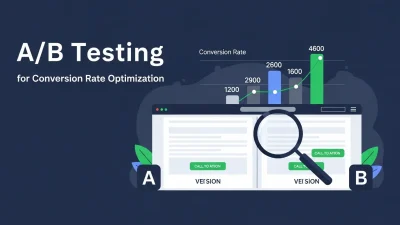
- A/B and Multivariate Testing: The backbone of any CRO strategy. Tools like Optimizely, VWO, and Google Optimize let you experiment with layouts, headlines, and CTAs to see what truly drives conversions.
- User Behavior Analytics: Heatmaps, session recordings, and click tracking reveal exactly how visitors interact with your site. Hotjar and Crazy Egg excel here.
- Personalization: If your goal is to tailor experiences based on visitor behavior, demographics, or location, platforms like Dynamic Yield and Adobe Target make personalization seamless.
- Integration Capabilities: Your Best CRO Tool should play nicely with your existing tech stack—analytics, CMS, and email platforms.
- Ease of Use: Even advanced tools fail if your team can’t use them effectively. Look for intuitive interfaces and strong support resources.
3. Compare Pricing and Scalability
Pricing can vary dramatically—from free tools like Google Optimize to enterprise-grade solutions with monthly costs in the thousands. Ask yourself:
- Does the base plan include the features you need?
- Are integrations or premium add-ons extra?
- Can the tool scale with your business growth?
Startups might prefer Crazy Egg or Google Optimize, while larger businesses will benefit from enterprise platforms like Optimizely or Adobe Target. Remember: the right tool balances cost, capability, and long-term scalability.
4. Evaluate Data Privacy and Compliance
Conversion rate optimization relies on data—but that data must be handled responsibly. Ensure your CRO tool complies with relevant regulations like GDPR, CCPA, or HIPAA, depending on your industry. Ask providers about data storage, encryption, and privacy protocols to safeguard customer information.
5. Review Customer Support and Resources
Even the most intuitive platforms require onboarding. Before committing, investigate the quality of customer support:
- Knowledge bases and tutorials
- Training videos and documentation
- Dedicated account managers
- 24/7 live support
Strong support ensures your team can extract maximum value from the tool without wasting time troubleshooting.
6. Leverage Trials or Demos
Finally, always take advantage of free trials or product demos. Treat this as a hands-on experiment: involve your key team members and run a real-world test. Measure results, assess usability, and see whether the tool helps you achieve your conversion goals.
Pro Tip: Don’t just explore features—run one live experiment during the trial. Seeing your data in action will reveal whether the tool is truly the Best CRO Tool for your business.
Top CRO Tools to Consider
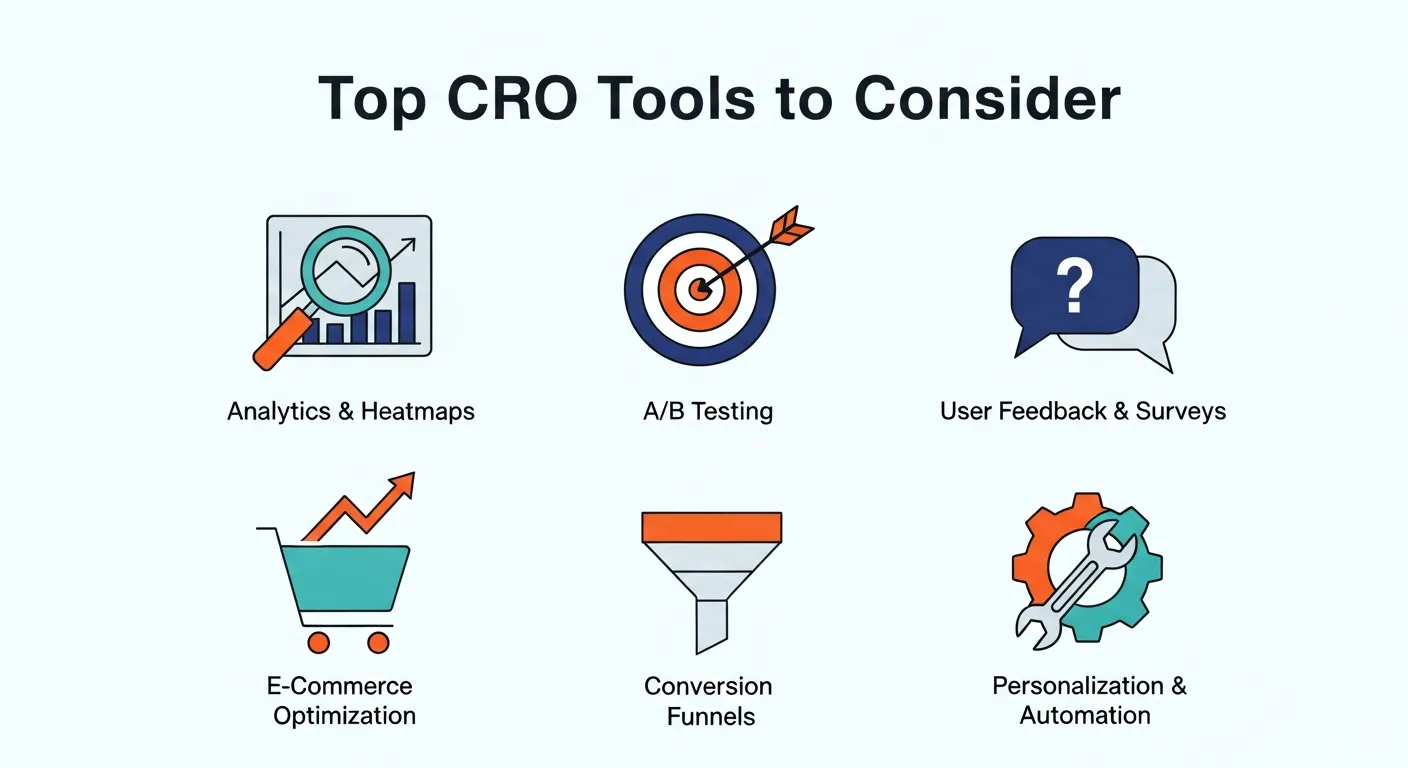
Selecting the Best CRO Tool for your business is a crucial step toward improving website performance, increasing conversions, and maximizing ROI. While there are many platforms available, a few stand out due to their features, usability, and results. Here’s a detailed look at some of the most popular CRO tools and what makes them effective:
1. Optimizely
Optimizely is widely recognized as a leading platform for enterprise-level A/B testing and multivariate testing. It allows businesses to experiment with different website elements—such as layouts, copy, and call-to-action buttons—to determine what drives the highest conversions. Its advanced targeting and analytics capabilities make it ideal for companies with high traffic volumes or complex user journeys. By leveraging Optimizely, teams can make data-driven decisions and optimize their websites continuously.
2. Hotjar
Hotjar specializes in user behavior analytics, providing heatmaps, session recordings, and feedback polls to help you understand how visitors interact with your site. It’s perfect for uncovering pain points in your conversion funnel, identifying confusing design elements, and testing UX improvements. Hotjar complements any Best CRO Tool by offering qualitative insights that show not just what users do, but why they do it.
3. Crazy Egg
Crazy Egg is an affordable, beginner-friendly CRO tool designed for small to medium businesses. With visual reporting features such as heatmaps, scroll maps, and A/B testing, it helps website owners quickly identify areas for improvement. Crazy Egg is particularly useful for teams new to conversion rate optimization because it simplifies complex data into easy-to-understand visual insights, enabling faster decision-making and testing.
4. Dynamic Yield
Dynamic Yield focuses on personalization and tailored experiences. This tool allows businesses to customize website content, product recommendations, and promotions based on visitor demographics, behavior, or geolocation. For e-commerce websites and subscription-based services, Dynamic Yield helps deliver relevant experiences to each user, which significantly improves engagement and conversion rates. Integrating Dynamic Yield with your Best CRO Tool ensures that personalization strategies are measurable and continuously optimized.
5. Google Optimize
Google Optimize is a free CRO tool that is particularly suitable for startups and businesses just beginning their optimization journey. It allows you to run A/B tests, multivariate tests, and redirect tests with tight integration with Google Analytics. While it may lack some advanced features of enterprise tools, Google Optimize provides a solid foundation to experiment and learn about user behavior without significant upfront costs.
Choosing the Right Tool
While all these tools have unique strengths, the Best CRO Tool for your business depends on your goals, budget, team expertise, and website complexity. Enterprise businesses with high traffic and advanced testing needs may benefit most from Optimizely or Dynamic Yield, whereas smaller businesses may find Hotjar, Crazy Egg, or Google Optimize sufficient to kickstart their conversion rate optimization strategy.
Ultimately, the key to success lies not just in picking a tool, but in actively using it to run experiments, analyze data, and implement insights to continually improve your website’s performance and boost conversions.
Leveraging AI and Chatbots to Boost Conversions
In the modern e-commerce landscape, users expect instant support and personalized guidance. Waiting even a few seconds for a response can lead to abandoned carts or lost leads. That’s where AI-driven chatbots come in—they act as 24/7 virtual assistants, guiding visitors, answering questions, and nudging them toward conversion. When combined with a Best CRO Tool, chatbots can significantly increase engagement and conversion rates by providing actionable insights into user behavior.
Key Advantages of Using Chatbots in Your CRO Strategy:
- Immediate Customer Support: Reduce bounce rates by addressing questions or concerns instantly.
- Guided Purchase Decisions: Chatbots can recommend products based on user preferences, previous behavior, or browsing history.
- Reduction in Cart Abandonment: Automated follow-ups remind users of incomplete purchases or offer assistance in checkout.
- Data Collection for Optimization: Collect feedback, identify pain points, and feed this data into your CRO tool for testing improvements.
- Personalized Marketing Messages: Deliver timely messages, discounts, or suggestions to visitors based on real-time behavior.
Pro Tip: When using chatbots, run experiments on conversation flows, timing, and tone to see what yields the best conversion results. Integrate it with your Best CRO Tool to track the impact of these interactions on overall site conversions. For deeper insights, check out: E-commerce Conversion Chatbots for Higher Sales.
| Feature | Benefit | Example Tool |
|---|---|---|
| Instant Customer Support | Reduce waiting time and bounce rate | Intercom, Drift |
| Product Recommendations | Personalized shopping experience | ManyChat, Tidio |
| Behavioral Insights | Identify friction points in the user journey | ChatBot.com, Zendesk |
| Automated Follow-Ups | Recover abandoned carts | HubSpot, Freshchat |
Building Personal Brand Trust for Better Conversions
Your website and marketing efforts aren’t just about selling—they also communicate your brand’s credibility and trustworthiness. Conversion rate optimization works best when users feel confident in your brand. For e-commerce and service-based businesses alike, personal reputation management is crucial to converting first-time visitors into loyal customers.
Strategies to Boost Personal Reputation Through CRO:
- Display Social Proof: Include testimonials, case studies, and real customer reviews. Visitors trust what others have experienced.
- Highlight Expertise: Use blogs, whitepapers, or guides to demonstrate authority in your niche.
- Transparency and Clarity: Clearly display shipping, return, and privacy policies to reduce uncertainty.
- Engage on Social Platforms: Active, helpful engagement builds credibility beyond your website.
- Consistency Across Touchpoints: Ensure branding, messaging, and user experience are uniform across all channels.
Pro Tip: Combine a Best CRO Tool with reputation management strategies. For example, track which testimonials, case studies, or social proof elements perform best in terms of clicks, dwell time, and conversions. This will help you make data-driven decisions about which trust-building content to prioritize. Learn more here: Mastering Personal Reputation Management from First Impression to Impact.
| Reputation Element | CRO Benefit | Implementation Tip |
|---|---|---|
| Customer Reviews & Testimonials | Builds trust, increases conversions | Place prominently on landing pages |
| Expert Content | Encourages engagement & loyalty | Regularly publish informative blogs or guides |
| Transparent Policies | Reduces hesitation during checkout | Include clear shipping, return, and privacy info |
| Consistent Branding | Strengthens recognition & credibility | Maintain design, tone, and messaging across channels |
Optimizing Paid Ads for Maximum ROI
Paid advertising, especially CPC (Cost Per Click) campaigns, can drive significant traffic—but without proper optimization, most ad spend is wasted. Integrating a Best CRO Tool into your paid advertising strategy allows you to track conversions, analyze user behavior post-click, and refine your campaigns for maximum ROI. Understanding the connection between ads and website performance is critical for e-commerce businesses seeking scalable growth.
Best Practices for CPC Advertising and CRO:
- Monitor the Entire User Journey: Track clicks from ad to landing page to final conversion to identify drop-offs.
- Test Ad Creatives: Headlines, images, and CTAs can all affect click-through and conversion rates—run A/B tests to optimize.
- Landing Page Optimization: Ensure that ad traffic lands on pages designed for conversion, with fast load times and clear CTAs.
- Segment Your Audience: Target users by behavior, location, or purchase intent for higher relevance and better ROI.
- Analyze & Adjust Budget: Allocate more spend to high-performing campaigns and pause underperforming ones.
- Integrate Insights with CRO Tools: Use data from your CRO platform to see which ad-driven visitors convert best and why.
Pro Tip: The synergy between a Best CRO Tool and CPC campaigns allows you to continuously refine ads based on real user behavior, not just clicks or impressions. This is especially important for e-commerce businesses where each conversion has a tangible revenue impact. For guidance on maximizing your ad-driven conversions, see: CPC Advertising for E-commerce – Boost Sales Fast.
| Ad Element | CRO Impact | Optimization Tip |
|---|---|---|
| Headlines | Higher CTR & engagement | Test multiple variations and keep top performers |
| Visuals & Media | Captures attention | Use clear product images or video demos |
| Landing Pages | Higher conversion rates | Align messaging with ad & simplify forms |
| Audience Targeting | Better ROI | Segment by behavior, location, and interests |
| Budget Allocation | Reduce wasted spend | Reallocate to top-performing campaigns |
Maximizing the Value of Your CRO Tool
Simply selecting a CRO tool is only the first step in the journey toward higher conversions. Owning the Best CRO Tool does not automatically guarantee results; its true power lies in how effectively it is used. To truly maximize its value, businesses must integrate it seamlessly into their workflows, encourage data-driven decision-making, and foster a culture that embraces experimentation.
1. Train Your Team Thoroughly
Even the most intuitive CRO platforms require proper onboarding. Your team should understand not only how to use the tool’s features, but also why each feature matters for conversion rate optimization. For example, heatmaps and session recordings reveal real user behavior, while A/B testing allows you to experiment with design, messaging, or call-to-action placement. When your team is proficient, you can leverage the Best CRO Tool to its full potential, turning insights into measurable growth.
2. Integrate the Tool into Existing Workflows
A CRO tool works best when it complements your existing marketing, design, and analytics processes. Integrate it with your website analytics, email marketing, and sales dashboards so that every decision is backed by real data. This ensures that tests, experiments, and optimizations are consistent, measurable, and aligned with your overall business objectives. A seamless integration transforms the tool from a standalone platform into a central hub for conversion rate optimization strategies.
3. Regularly Analyze and Act on Data
Data without action is wasted potential. Use your CRO tool to track user interactions, engagement trends, and conversion funnels continuously. Look for patterns—pages with high drop-off rates, elements that confuse users, or CTAs that underperform. Every insight should inform strategic changes, whether adjusting content, refining forms, or redesigning landing pages. With consistent monitoring, the Best CRO Tool becomes a driving force behind continuous improvement and measurable results.
4. Foster a Culture of Experimentation
CRO is not a one-time task; it is an ongoing process. Encourage your team to experiment regularly, test hypotheses, and learn from outcomes. Whether it’s tweaking button colors, reordering content sections, or experimenting with personalized offers, each trial provides valuable data that can incrementally improve conversion rates. The more your company embraces testing and iteration, the more opportunities you’ll discover to optimize every stage of the customer journey.
5. Measure Success and Iterate
Maximizing the value of your CRO tool also means defining clear metrics for success. Set measurable goals such as increasing form submissions, reducing cart abandonment, or boosting newsletter sign-ups. After implementing changes, track results carefully, analyze what worked and what didn’t, and iterate accordingly. Over time, the combination of the Best CRO Tool and a structured approach to conversion rate optimization will significantly increase ROI and improve overall business performance.
In summary, the real power of a CRO tool is unlocked when it is used strategically, consistently, and intelligently. Selecting the Best CRO Tool is only the starting point; integrating it into daily operations, training your team, analyzing insights, and fostering a culture of experimentation ensures that your website is constantly improving. Conversion rate optimization becomes a dynamic, ongoing process, and your investment in the right tool translates into measurable business growth.
A Better Website Starts with the Right Tool
With the help of an Integrated Re-examination Instrument, you can propel performance improvements profound into your website. All this will then ultimately be beneficial for your enterprise.
Define your objectives. Synthesize critical features. Try multiple providers. You will know which product is best for your business idea.
CRO is not an one time process but an ongoing one. Correct tools can help you test, improve, and keep track of an increasingly data-driven world.
Do you want to take your website’s performance up another notch? Start looking into CRO tools right now, and release their full potential to optimize the user experience on your site and increase conversions.
Frequently Asked Questions About the Best CRO Tool
1. What is a CRO tool, and why is it important?
A CRO (Conversion Rate Optimization) tool helps you analyze user behavior, run tests, and optimize your website to increase the percentage of visitors completing desired actions, like purchases or sign-ups. Without a CRO tool, making data-driven decisions to improve conversions can be extremely difficult.
2. How do I know which CRO tool is the best for my business?
The best CRO tool depends on your goals, team expertise, and budget. Start by defining your objectives—whether it’s improving checkout completion, reducing bounce rates, or personalizing user experiences. Then, evaluate platforms based on features, ease of use, integrations, and scalability.
3. Can CRO tools improve mobile conversions?
Yes. Modern CRO tools allow you to test layouts, forms, and CTAs specifically for mobile users. Optimizing the mobile experience ensures faster load times, smoother navigation, and higher conversion rates for mobile traffic.
4. How do CRO tools integrate with my existing marketing stack?
Most CRO tools integrate with analytics platforms, CMS systems, email marketing software, and even ad platforms. This allows you to combine insights across channels, track performance more accurately, and make better decisions.
5. Are CRO tools only for A/B testing?
Not at all. While A/B testing is a core function, most CRO tools offer user behavior analytics, heatmaps, personalization, and segmentation. You can use these insights to make informed changes that improve conversion rates across your website and campaigns.
6. How can micro-conversions improve overall ROI?
Focusing on micro-conversions—small actions like clicking a link, viewing a product, or signing up for a newsletter—can provide valuable insights into user behavior and gradually increase overall conversions. For practical strategies, see Boost Engagement with Micro-Conversions.
7. How do I optimize my landing pages for better conversions?
A CRO tool can help you test different landing page designs, messaging, and CTAs to maximize engagement. Focus on clarity, fast loading times, and strong calls-to-action. For step-by-step guidance, check How to Create Landing Pages.
8. Can CRO tools help with personalized marketing campaigns?
Absolutely. Many tools allow you to segment audiences and deliver personalized content, product recommendations, or offers based on behavior, demographics, or location. Personalization has been proven to increase engagement, conversions, and customer satisfaction.
9. How does CRO tie into my broader marketing strategy?
CRO is a key component of any data-driven marketing approach. By continuously testing, analyzing, and improving your website, you ensure that marketing campaigns convert more effectively. Learn how CRO integrates with overall marketing in this guide: Guide to CRO Marketing Strategies.
10. Is CRO a one-time project or ongoing?
CRO is an ongoing process. User behavior changes, market trends evolve, and competitors update their websites. A Best CRO Tool allows you to run continuous experiments, analyze results, and implement improvements, ensuring your website stays optimized over time.