
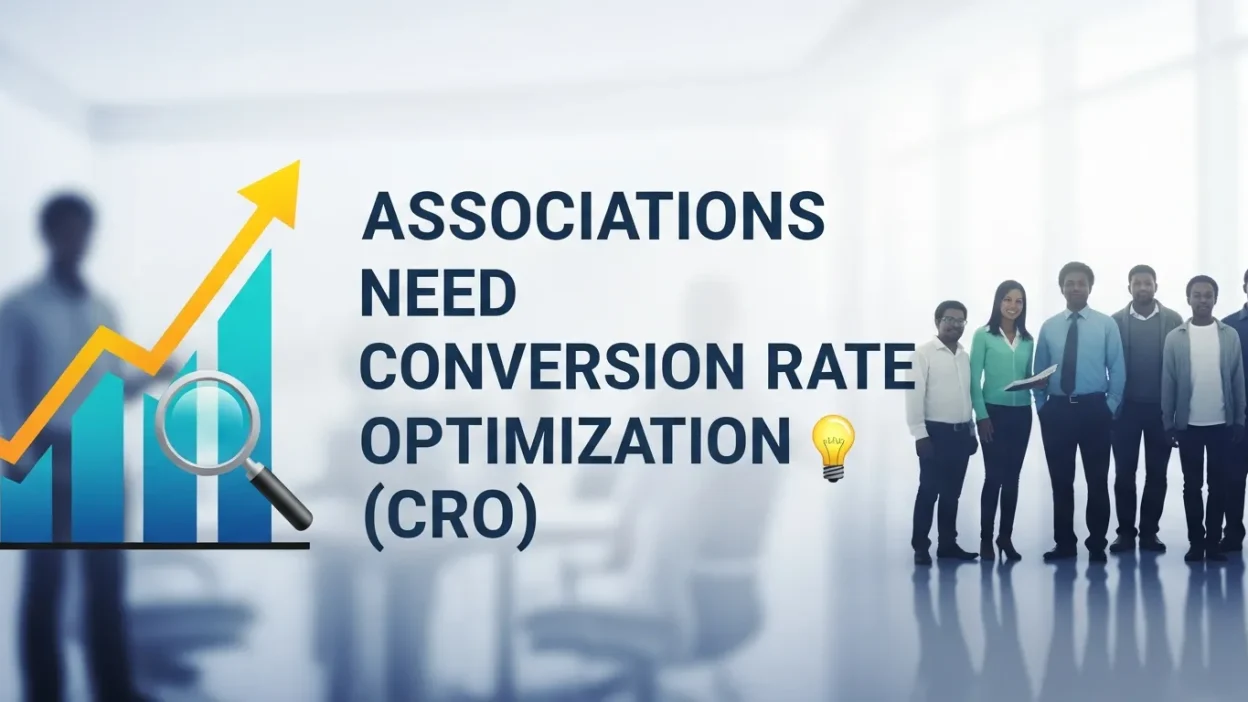
Running an association in today’s digital landscape is no easy task. You may attract visitors to your website, social media channels, or event pages, but converting that interest into meaningful engagement—like memberships, event registrations, or donations—can be a challenge. This is where Conversion Rate Optimization (CRO) becomes a game-changer.
CRO is the process of refining your digital touchpoints to maximize the percentage of visitors who take action. For associations, this means transforming casual visitors into active members, loyal donors, and passionate advocates for your cause. Rather than relying solely on increasing traffic, CRO focuses on getting the most value from the visitors you already have, making every click count.
In this blog, we’ll break down why Conversion Rate Optimization is essential for associations, show how it can amplify your engagement and fundraising efforts, and provide practical, step-by-step strategies to help you achieve measurable results.
What is Conversion Rate Optimization (CRO)?
Before diving deeper, it’s important to clearly understand what Conversion Rate Optimization (CRO) means and why it matters—especially for associations. At its core, CRO is the systematic process of improving your website, landing pages, and other digital touchpoints to increase the percentage of users who complete a desired action.
For associations, these “desired actions” go beyond simple transactions. They can include:
- Membership sign-ups – turning casual visitors into active members.
- Event registrations – encouraging participation in workshops, webinars, or conferences.
- Resource downloads – engaging visitors with valuable guides, toolkits, or research.
- Donations or sponsorship commitments – increasing financial support for your mission.
Conversion Rate Optimization is about understanding your audience’s behavior and designing experiences that guide them toward these actions. It’s not just about aesthetics or flashy CTAs—it’s about making smart, data-driven adjustments that remove friction, clarify value, and encourage engagement.
For example:
- Simplifying a multi-step membership form can significantly boost sign-ups.
- Testing different CTA button colors, sizes, or wording can reveal what motivates visitors to act.
- Personalizing content based on visitor segments (e.g., new vs. returning members) can increase conversion rates.
Why does this matter for associations specifically? Unlike e-commerce businesses that sell products, associations sell connection, value, expertise, and shared purpose. Every interaction is an opportunity to build trust, demonstrate relevance, and convert interest into meaningful engagement. Conversion Rate Optimization ensures these opportunities are not lost, transforming casual visitors into committed members, donors, or advocates.
By implementing CRO strategies thoughtfully, associations can maximize the impact of every digital interaction, turning website traffic into long-term engagement that supports their mission and drives sustainable growth.
Why Conversion Rate Optimization (CRO) Is Crucial for Associations
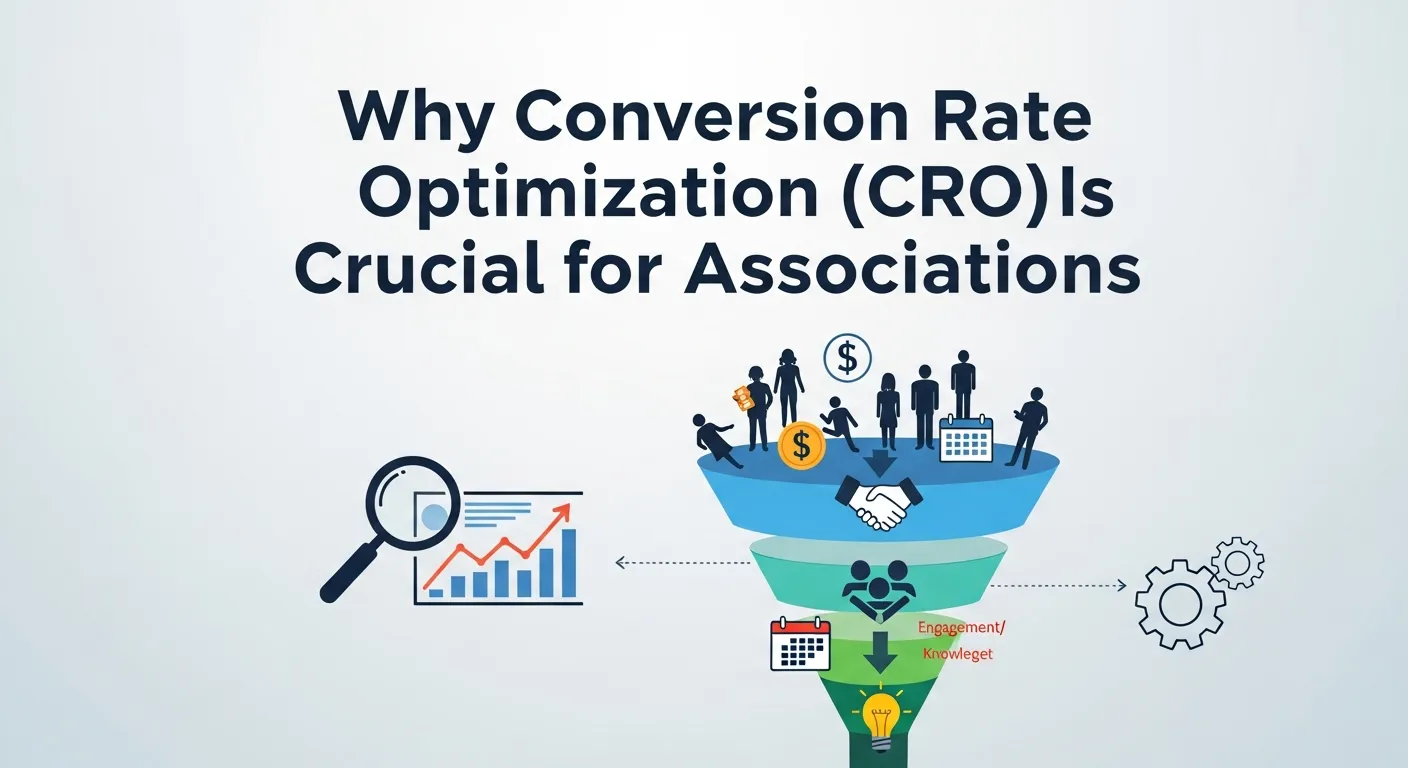
Associations often operate in competitive, resource-constrained environments where every digital interaction matters. No matter how noble your mission, if your website or digital platforms aren’t converting visitors into members, donors, or engaged participants, opportunities—and potential revenue—are being left on the table. That’s why Conversion Rate Optimization (CRO) should be a top priority for your organization. Here’s how CRO can transform your association’s digital performance:
1. Leverage Every Visitor Opportunity
Not every visitor to your site will stay, engage, or convert. With average industry conversion rates hovering around 2–4%, failing to optimize means leaving significant potential untapped. Conversion Rate Optimization ensures every visitor counts by creating clear, intuitive pathways toward desired actions—whether that’s signing up for membership, registering for events, or making a donation.
Actionable tip: Use CRO to analyze the most common drop-off points on your site and implement solutions like simplified forms, sticky CTAs, or engaging content blocks to capture attention before users leave.
2. Deliver More Value With Less Budget
Unlike costly campaigns aimed at acquiring new traffic, Conversion Rate Optimization focuses on maximizing the impact of the traffic you already have. For associations operating on tight budgets, this is a game-changer. Incremental improvements to your website, landing pages, and sign-up flows can dramatically increase conversions without additional ad spend.
Example: A small tweak to a membership CTA—such as emphasizing exclusive benefits—can increase sign-ups without running new paid campaigns. CRO allows associations to get more results from the same resources, stretching budgets further.
3. Enhance Member Experiences
Your website is often the first touchpoint a potential member or donor has with your association. A confusing layout, slow pages, or unclear messaging can prevent users from engaging. Conversion Rate Optimization identifies these friction points and provides actionable insights to improve usability.
Strategies include:
- Simplifying navigation menus for intuitive browsing
- Improving page load speed to reduce bounce rates
- Using concise, benefit-driven messaging to guide users toward conversion
Positive online experiences foster long-term relationships, turning first-time visitors into loyal members and supporters.
4. Increase Memberships (and Retain Them)
The ultimate goal of any association is not just acquiring members but retaining them. CRO directly contributes to both: interactive websites, clear value propositions, and streamlined registration forms encourage new sign-ups, while personalized user experiences and simplified renewal processes keep existing members engaged.
Example: Personalized dashboards that highlight upcoming events, membership perks, and renewal reminders improve engagement, increasing the likelihood that members stay active year over year.
5. Grow Advocacy and Donations
Beyond memberships, associations rely on donations and sponsor support to fuel their mission. Conversion Rate Optimization helps refine donation journeys, ensuring that every click, form, and page interaction is optimized for conversion. A seamless, trustworthy, and user-friendly donation process can significantly increase contributions and strengthen supporter advocacy.
Actionable tip: Optimize donation pages with clear CTAs, suggested amounts, and mobile-friendly layouts. Track abandonment points to continually refine the process, ensuring that supporters are more likely to complete transactions.
How Associations Can Implement Conversion Rate Optimization (CRO)
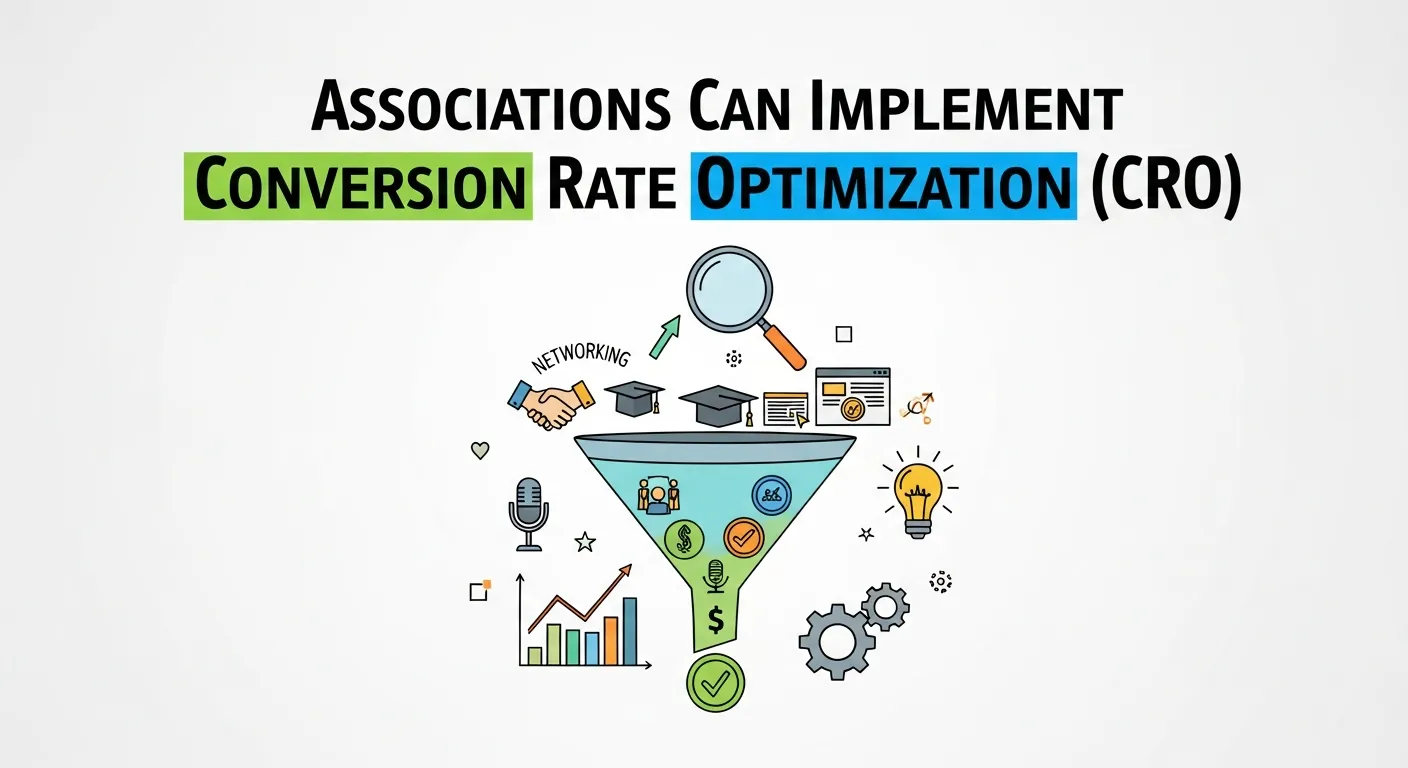
You’re convinced that Conversion Rate Optimization (CRO) is critical—but where should your association start? Implementing CRO effectively requires a structured, data-driven approach that prioritizes user experience, measurable goals, and continuous improvement. Here’s a step-by-step guide to help your association adopt a robust CRO strategy:
Step 1: Define Your Goals
Every association has unique objectives. Whether your focus is on increasing membership, encouraging more donations, or boosting event attendance, Conversion Rate Optimization begins with setting specific, measurable goals. Clearly defined goals provide a roadmap for testing, optimizing, and tracking success.
Examples of measurable goals:
- Raise donations by 20% within six months through optimized donation pages.
- Increase email list sign-ups by 15% using targeted lead magnets.
- Boost membership renewals by 10% this year through streamlined renewal flows.
By connecting each goal to a key action, your CRO efforts remain focused and results-driven.
Step 2: Analyze Your Current Performance
Before making improvements, you must understand how visitors currently interact with your website or digital platform. Analytics tools are central to Conversion Rate Optimization, as they provide insights into visitor behavior, bottlenecks, and conversion opportunities.
Key metrics to track include:
- Bounce rate: How quickly visitors leave your site.
- Time on page: How long visitors engage with specific content.
- Form abandonment: How many users start but don’t complete membership sign-ups or donation forms.
Advanced tools like Hotjar and Crazy Egg offer visual insights—such as heatmaps and click-tracking—to see exactly where users engage, pause, or drop off. These insights form the foundation for improving user journeys and maximizing conversions.
Step 3: Refine Key Pages
Not all pages are created equal. For associations, certain pages typically hold the highest conversion potential. Optimizing these pages is a core component of Conversion Rate Optimization:
- Membership sign-up pages
- Event registration pages
- Donation pages
- Resource download pages
Optimization best practices:
-
Craft sharp, benefit-focused headlines.
-
Use concise, persuasive copy highlighting value and outcomes.
-
Design bold, visible CTAs that guide users toward the desired action.
-
Ensure forms are intuitive and mobile-friendly, as mobile traffic now dominates web usage.
Effective CRO ensures that every key page provides a frictionless path to conversion.
Step 4: Conduct A/B Testing
Conversion Rate Optimization thrives on experimentation. A/B testing allows your association to compare two versions of a webpage, email, or landing page to determine which performs better.
A/B testing ideas for associations:
- Test different color schemes, button placements, or CTA wording.
- Experiment with personalized content, such as “Join today to access free webinars.”
- Compare full-page layouts versus simplified forms for higher completion rates.
Start small, iterate regularly, and let data guide your decision-making. Over time, A/B testing is one of the most reliable ways to improve conversions.
Step 5: Leverage Member Feedback
Sometimes the most valuable insights come directly from those who matter most. Collecting feedback from members or website visitors is a vital part of Conversion Rate Optimization.
Ways to gather feedback:
- Surveys embedded on key pages
- Focus groups with current members
- One-on-one interviews with prospects or donors
Feedback helps you identify pain points and optimize the user journey, ensuring that your CRO strategy is grounded in real user experience.
Step 6: Streamline Processes
Friction is the enemy of conversion. To maximize the effectiveness of your Conversion Rate Optimization efforts, remove unnecessary barriers wherever possible.
Practical steps to reduce friction:
- Keep sign-up forms as short and simple as possible.
- Ensure payment or donation systems are fast, easy, and secure.
- Organize navigation menus to guide users intuitively.
A seamless process increases the likelihood that visitors complete your desired actions, from joining your association to making a donation.
Step 7: Communicate Value Clearly
Even the best-designed website or form will fail if visitors don’t understand the value of taking action. Clear, compelling messaging is a cornerstone of Conversion Rate Optimization.
Tips for communicating value:
- Emphasize unique benefits such as professional networking, exclusive resources, or advocacy opportunities.
- Be direct, inspiring, and results-oriented.
Example:
“Your membership fuels [Association Name]’s mission to support global education. Join today to access exclusive toolkits while making a real impact.”
When visitors immediately see the benefit of engagement, your CRO efforts are more likely to convert interest into action.
Using Analytics and Media Insights to Boost CRO
Data is at the heart of any effective Conversion Rate Optimization strategy. For associations, understanding visitor behavior is crucial because your audience is diverse: potential members, existing members, event attendees, and donors all have different goals. By analyzing data carefully, you can identify exactly where users drop off, which pathways lead to conversions, and which pages or campaigns need improvement.
Analytics tools like Google Analytics, Hotjar, or Crazy Egg allow you to measure:
- Visitor engagement: How long users stay on pages, which links they click, and which content they scroll through.
- Conversion funnels: Track the journey from landing page to sign-up, registration, or donation.
- Drop-off points: Identify where potential members abandon forms or leave the site.
Additionally, integrating media insights from your ad campaigns can help your association understand which campaigns drive the highest quality traffic. For instance, media buying services optimize ad placements and audience targeting, ensuring that your website visitors are more likely to take action. Learn more about this in From Clicks to Conversions: How Media Buying Services Drive Growth.
Actionable Tips:
- Segment visitors based on traffic source, geographic location, or behavior for tailored messaging.
- Use heatmaps to identify which sections of your page attract attention and which are ignored.
- Track campaign ROI to see which marketing efforts deliver the most conversions per dollar spent.
Optimizing Communication Channels for Higher Engagement

CRO doesn’t only apply to your website. Associations must optimize communication across every channel where potential members interact with your organization. A holistic approach ensures your audience has a seamless experience, whether they’re checking their email, browsing social media, or using voice search to find information.
Email Marketing:
Email remains one of the most powerful channels for driving engagement. Conversion rates can improve dramatically when associations optimize subject lines, timing, and personalization. Small changes—like addressing the recipient by name or tailoring messaging based on previous interactions—can lead to higher open and click-through rates. Research from B2B Email Marketing Open Rates and Conversions highlights that even minor adjustments can significantly impact member engagement.
Social Media:
Social platforms are ideal for attracting attention and building trust with potential members. Clear and compelling CTAs—like “Join Now” or “Register for Free Webinar”—help turn followers into active participants. Monitor engagement metrics such as likes, shares, comments, and click-throughs to continuously refine content.
Voice Search Optimization:
With the rise of smart speakers and voice assistants, more users search for associations using voice commands. Optimizing your content for queries like “best professional associations in my city” can increase visibility and conversions. For practical guidance, see Voice Search Optimization: Preparing Your Brand.
Multi-Channel CRO Strategy
| Channel | CRO Focus Area | Key Action Item | Expected Impact |
|---|---|---|---|
| Open rates & clicks | Personalize subject lines and optimize send times | Higher engagement & memberships | |
| Website | Form completion | Simplify forms and reduce friction | Increased donations & sign-ups |
| Social Media | CTA effectiveness | Track clicks and optimize content | More event registrations |
| Voice Search | Discovery | Optimize content for natural voice queries | Higher organic conversions |
Continuous Improvement and Feedback Loops
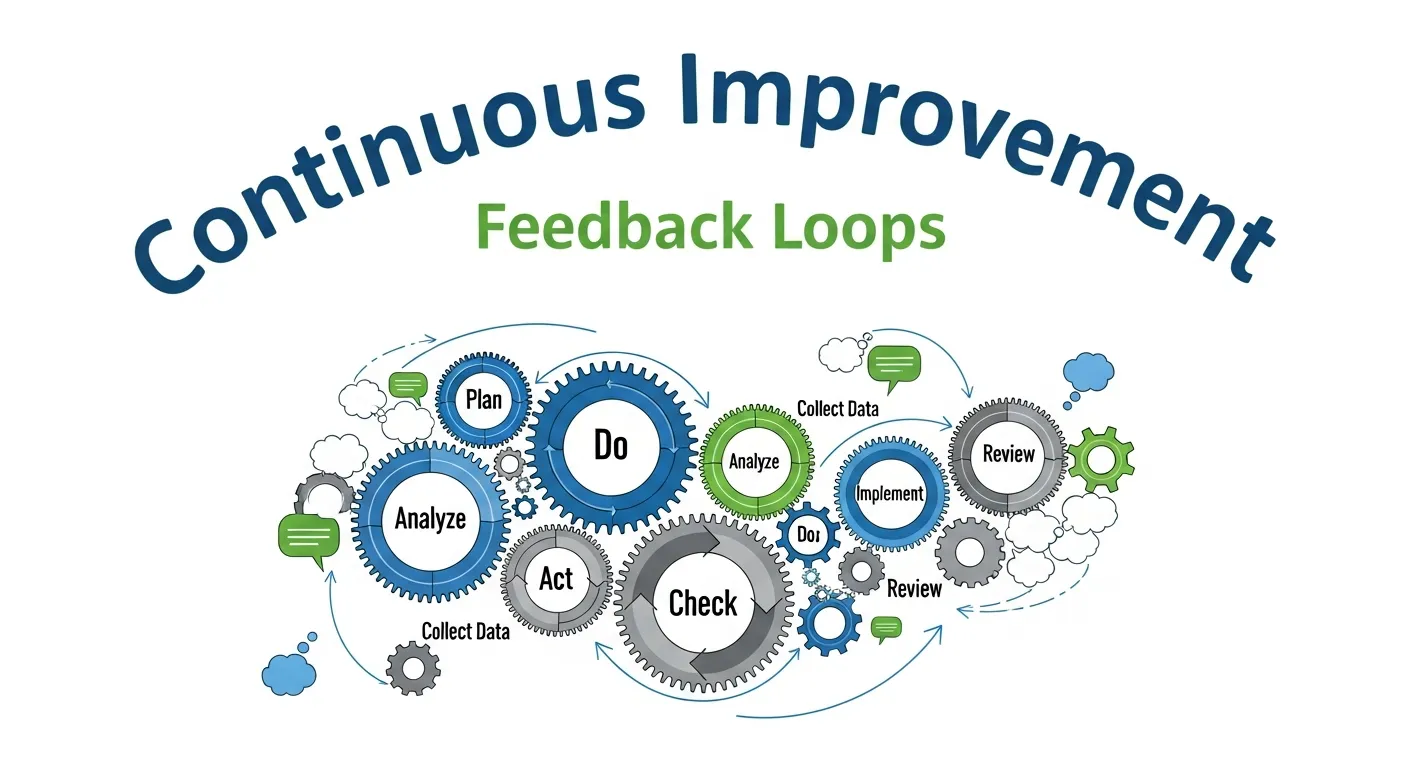
Conversion Rate Optimization is not a one-time project—it is an ongoing process of testing, measuring, and refining strategies. Associations that adopt continuous improvement frameworks can respond quickly to user behavior changes, ensuring consistent growth in memberships, event participation, and donations.
Feedback Collection:
Engage with members and visitors to understand their pain points. Conduct surveys, focus groups, and interviews to learn why users may abandon forms or hesitate to donate. Gathering insights directly from your audience ensures that CRO strategies address real challenges.
Behavioral Analysis:
Monitor key metrics like time on page, bounce rates, and form completion rates to detect patterns. For example, if many visitors leave the donation page at the payment step, it might indicate a usability issue or unclear instructions.
Iterate and Test:
A/B testing is essential. Compare different variations of your website, forms, or CTAs to see which elements drive higher conversions. This data-driven approach allows associations to make incremental improvements with measurable impact.
Benchmarking:
Setting benchmarks helps track progress. Compare current performance against past results and industry standards to understand whether your strategies are effective.
Tracking CRO Iterations
| Metric | Previous Value | Current Value | Improvement | Action Taken |
|---|---|---|---|---|
| Membership Sign-ups | 150/month | 180/month | +20% | Simplified sign-up form |
| Event Registrations | 80 | 110 | +37% | Added personalized CTAs |
| Donation Completion Rate | 25% | 32% | +28% | Streamlined checkout process |
| Email Open Rates | 18% | 25% | +39% | Tested subject lines |
Actionable Tips:
- Keep testing small changes regularly rather than overhauling your site entirely.
- Use analytics to guide decisions instead of assumptions.
- Combine feedback, metrics, and experimentation to create a continuous improvement loop.
These expanded sections now include:
- More detailed paragraphs and explanations
- Actionable insights for associations
- Relevant bullet points and tables for clarity
- Links are naturally embedded without breaking the flow
- Suggested image placements and SEO-friendly alt texts
Results You Can Expect from Conversion Rate Optimization (CRO)
When implemented effectively, Conversion Rate Optimization (CRO) delivers measurable and transformative outcomes for associations. By refining your website, digital touchpoints, and communication channels, you can maximize the impact of every visitor and foster stronger engagement with your organization. Key results include:
- Higher Membership Numbers: Optimized sign-up flows, clear value propositions, and persuasive CTAs convert more visitors into active members.
- Increased Event Participation: CRO strategies for event pages and registration forms streamline the process, encouraging attendees to take action.
- More Donations and Fundraising Success: A seamless donation journey, clear messaging, and reduced friction directly increase contributions.
- Higher Engagement Across Campaigns: Personalized content, optimized emails, and targeted messaging keep members interacting with your organization consistently.
Beyond numbers, Conversion Rate Optimization signals to your audience that your association values their experience. When users feel understood and supported, trust and loyalty grow, fostering long-term relationships and advocacy for your mission.
Take the First Step Toward Smarter Conversion Rate Optimization
For modern associations, Conversion Rate Optimization isn’t optional—it’s essential. By focusing on data-driven improvements, you can nurture deeper connections with your members, drive higher engagement, and generate sustainable growth year after year.
Here’s how to get started:
- Start Small, Focus Big: Choose a single key action—such as membership sign-ups, event registrations, or donation completions—and apply targeted CRO strategies.
- Implement Data-Driven Changes: Use analytics to understand user behavior, then experiment with A/B tests, form improvements, or refined CTAs.
- Measure and Iterate: Continuously monitor results, collect member feedback, and make incremental adjustments for sustained improvement.
Not sure where to begin? Our team provides tailored Conversion Rate Optimization consulting for associations, helping you identify opportunities, implement strategies, and turn clicks into long-term engagement. Together, we can transform your digital interactions into meaningful, measurable outcomes.
Frequently Asked Questions (FAQ) About Conversion Rate Optimization (CRO) for Associations
1. What exactly is Conversion Rate Optimization (CRO)?
Conversion Rate Optimization (CRO) is the process of improving your website and digital touchpoints to increase the percentage of visitors who take a desired action—such as becoming members, donating, or registering for events. For associations, CRO focuses on understanding visitor behavior, removing barriers, and creating a seamless path to engagement.
2. Why is CRO so important for associations?
Associations depend on member participation and support. Without CRO, even well-designed websites can lose potential members or donors due to poor user experience. By implementing Conversion Rate Optimization, associations ensure that every visitor has a clear, intuitive, and persuasive journey that leads to measurable outcomes like sign-ups and contributions.
3. How does CRO differ for associations compared to regular businesses?
While businesses use CRO to increase sales or leads, associations use it to boost engagement, membership retention, and advocacy. The focus shifts from selling products to selling value, community, and purpose—making CRO strategies for associations more mission-driven and experience-focused.
4. What are some common Conversion Rate Optimization techniques for associations?
Effective CRO techniques include:
- Simplifying membership forms and donation processes.
- Running A/B tests on CTAs, colors, and page layouts.
- Using clear, compelling copy that emphasizes value.
- Improving website loading speed and mobile usability.
For a deeper understanding, explore practical methods in CRO Strategies to Take Your Business Forward.
5. How can associations use data to improve their CRO results?
Data is at the core of Conversion Rate Optimization. Associations can use tools like Google Analytics, Hotjar, and Crazy Egg to track user behavior—identifying where visitors click, how long they stay, and when they drop off. These insights help shape more effective optimization strategies and personalized user experiences.
6. Does CRO require technical expertise to implement?
Not necessarily. Many CRO improvements—like updating CTAs, rearranging layouts, or simplifying navigation—can be handled without advanced coding skills. However, complex testing, analytics setup, and UX design may benefit from professional expertise. You can learn how professionals build careers and skills in CRO through Build a Career in CRO Strategies.
7. How can CRO help increase association memberships?
By optimizing membership pages, streamlining forms, and emphasizing benefits, CRO helps turn website visitors into members. Personalization plays a big role—using dynamic content to show tailored benefits or testimonials makes joining more appealing and credible.
8. Can CRO improve donations and fundraising efforts?
Absolutely. Conversion Rate Optimization simplifies and enhances the donation process—reducing friction, adding trust signals, and guiding donors through a seamless checkout. Small adjustments, like showing suggested donation amounts or highlighting real-world impact, can significantly boost conversion rates and donor retention.
9. How often should associations review and update their CRO strategies?
CRO is not a one-time task—it’s a continuous process. Associations should review data monthly or quarterly, experiment with new layouts or content, and track performance against goals. Regular A/B testing and user feedback ensure consistent growth and sustained engagement. For advanced insights, check out Advanced CRO Strategies for Business Growth.
10. What are the long-term benefits of investing in CRO?
Long-term investment in Conversion Rate Optimization leads to stronger member engagement, higher retention rates, improved fundraising, and more efficient marketing spend. Over time, CRO helps associations build a loyal digital community that supports ongoing growth and amplifies their mission impact.