
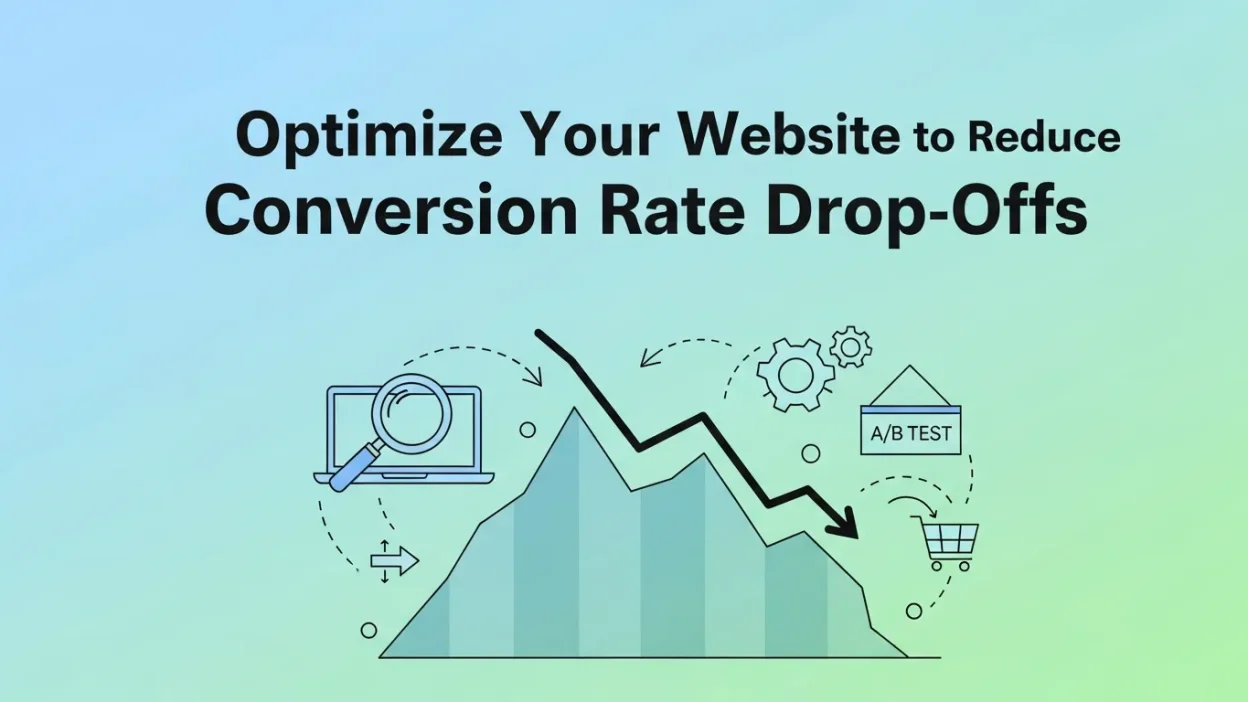
This guide explains how to reduce conversion rate drop-offs by optimizing website design, user experience, content, and CTAs. It covers data-driven strategies, personalization, trust-building, and analytics to turn visitors into engaged leads, customers, and sustainable business growth.
Attracting visitors to your website is only half the battle—turning those visitors into paying customers, leads, or subscribers is what truly drives growth. One of the biggest challenges businesses face today is losing potential conversions due to friction, distractions, or unclear messaging. Fortunately, with the right strategies, you can reduce conversion rate drop-offs and make the most of every click.
In this guide, we’ll explore practical, data-driven techniques to improve user experience, strengthen trust, and optimize your website for conversions. From design adjustments and persuasive calls-to-action to advanced personalization and analytics, these strategies are proven to help businesses reduce conversion rate issues and maximize the value of their existing traffic. By applying these methods, you can create a website that not only attracts visitors but keeps them engaged and moving smoothly toward your desired actions.
Why Does Your Conversion Rate Matter?
Your conversion rate is one of the most important metrics for any website—it represents the percentage of visitors who take a desired action, whether that’s purchasing a product, signing up for a newsletter, or requesting a service. A higher conversion rate means you’re getting more value from your existing traffic, directly translating into increased revenue and stronger business performance.
On the other hand, a declining conversion rate is a warning sign that something on your website isn’t working as it should. It could indicate poor user experience, confusing navigation, irrelevant content, or failure to meet customer expectations. By identifying the causes and implementing effective strategies, you can reduce conversion rate drop-offs and ensure that more of your visitors turn into loyal customers or engaged leads.
Before diving into solutions, it’s helpful to understand the most common reasons behind low conversion rates so you can address them strategically.
Common Reasons for Conversion Rate Drop-Offs
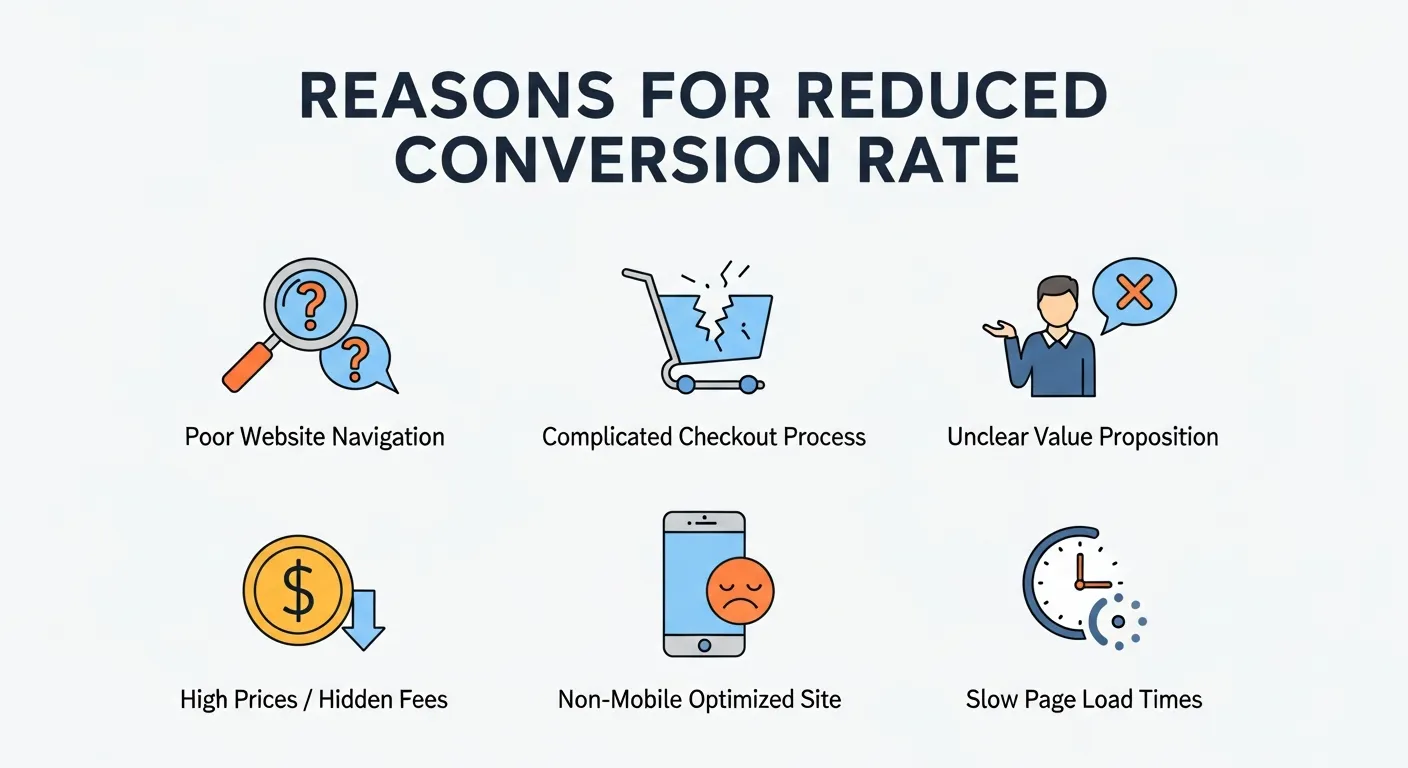
Before you can effectively reduce conversion rate drop-offs, it’s crucial to understand why visitors leave your website without completing a desired action. Low conversion rates often point to specific friction points in your site’s design, content, or user experience. Addressing these issues can significantly help you reduce conversion rate problems and turn more visitors into customers.
1. Poor Website Design & Navigation
A confusing layout or cluttered design can immediately drive users away. Slow-loading pages, unclear menus, or a site that isn’t optimized for mobile devices frustrate visitors, making it harder to reduce conversion rate drop-offs. A clean, intuitive design ensures users can easily find what they need and take the desired action.
2. Lack of Trust Signals
Users need assurance before sharing personal information or completing a purchase. If your website lacks visible trust-building elements—such as customer reviews, security badges, certifications, or a clear privacy policy—it can hurt credibility. Addressing these gaps can help reduce conversion rate issues and increase user confidence in your brand.
3. Irritating Pop-Ups or Distractions
Aggressive pop-ups, autoplay videos, or intrusive ads create friction and frustration. These distractions are a major reason for high bounce rates and lower conversions. Minimizing interruptions and focusing on a seamless experience can help reduce conversion rate drop-offs and keep users engaged.
4. Complicated Checkout Processes
Lengthy or complex checkout procedures are a top reason for abandoned carts. Every additional step, form field, or confusing option increases the likelihood of visitors leaving before completing a purchase. Streamlining the process is key to reducing conversion rate drop-offs and improving sales.
5. Irrelevant or Poor-Quality Content
Content that doesn’t meet user expectations can quickly drive visitors away. Overpromising in headlines or providing unhelpful information undermines trust. Ensuring your content is relevant, high-quality, and aligned with user intent helps reduce conversion rate issues and keeps visitors on your site longer.
Strategies to Boost Conversion Rates
1. Simplify Navigation and Improve Usability
The simpler and faster your site is to use, the longer people will stay engaged. Simplify navigation by organizing menus, ensuring all links work, and minimizing the number of steps users need to reach vital information like product pages or forms.
Quick Wins:
- Use clearly labeled menus and calls-to-action (CTAs) such as “Buy Now” or “Learn More.”
- Optimize for mobile users, given that more than 50% of web traffic now comes from smartphones and tablets.
- Apply breadcrumbs and an easy-to-follow structure for better user orientation.
2. A/B Test and Optimize Your Content
Experimenting with variations can provide valuable insights into visitor preferences. A/B testing allows you to compare CTA placement, headlines, button colors, or even entire landing pages to find what resonates best with users.
Try This:
- Test CTA wording, such as “Get Started” vs. “Start My Free Trial.”
- Compare layout styles to determine the most engaging structure.
3. Build Trust with Social Proof
Transparency builds trust, and trust drives conversions. Put user reviews, testimonials, and case studies in easy-to-find spots on your website. Highlight recognizable clients or guarantees like satisfaction refunds, certifications, or secure payment logos.
4. Simplify the Conversion Path
Is your booking process simple? Can someone subscribe with just a few clicks? Reducing friction is critical. Remove unnecessary form fields or steps from your sign-ups or checkout process.
Actionable Steps:
- Add autofill capabilities for addresses and credit card info.
- Offer guest checkout options, eliminating the need for account creation.
- Use progress indicators during form submissions to show users how far they are from completion.
5. Craft Benefit-Focused CTAs
Weak calls-to-action fail to inspire action. Go beyond generic phrases like “Submit” or “Click Here.” Instead, make your CTAs specific, benefit-driven, and engaging.
Examples of Strong CTAs:
- “Get My Personalized Quote Now”
- “Claim Your Free Trial Today”
- “Start Saving on Your Purchases”
6. Leverage Analytics to Spot Opportunities
Using tools like Google Analytics or Hotjar can help identify what’s working and what’s not. Pay attention to data related to bounce rates, session duration, and form abandonment rates.
Analytics Strategies:
- Check heatmaps to see where users spend their time on a page.
- Deep-dive into pages with high exits to identify what drives visitors away.
- Monitor conversion funnels to narrow down areas of drop-off.
Monitor, Analyze, and Continuously Improve
To consistently reduce conversion rate drop-offs, monitoring and analysis are essential. Conversion optimization is not a one-time task—it’s an ongoing process that relies on understanding user behavior. By leveraging analytics tools such as Google Analytics, Hotjar, or Mixpanel, you can track which pages are losing visitors, which CTAs are underperforming, and where users abandon forms or carts.
Once you have this data, take actionable steps to reduce conversion rate issues. For example, if a product page shows a high exit rate, consider revising your copy, improving product images, or simplifying the purchase process. Regular audits of your website’s performance ensure that friction points are identified and addressed promptly. By making incremental changes based on real user behavior, you can steadily reduce conversion rate drop-offs and achieve higher engagement, sales, and customer satisfaction.
Leverage Multi-Channel Strategies to Boost Conversions
Reducing conversion rate drop-offs is not limited to website optimization alone—your entire marketing ecosystem plays a role. Multi-channel strategies help capture and convert visitors across different touchpoints, which reduces the risk of losing potential customers. This includes email marketing, paid media, social campaigns, retargeting ads, and even emerging channels like voice search or chat-based commerce.
By aligning messaging and user experience across channels, you can reduce conversion rate drop-offs at every stage of the customer journey. For instance, retargeting visitors who abandoned carts via email or paid ads reinforces your brand and encourages completion. Similarly, personalized offers delivered through social media or push notifications can nudge hesitant visitors to convert. A cohesive, multi-channel approach ensures that users consistently encounter relevant content and clear calls-to-action, helping you reduce conversion rate issues while increasing overall revenue and engagement
Enhance Your Email Marketing for Higher Conversions
Email marketing continues to be one of the most cost-effective strategies for driving conversions, yet many businesses underestimate its potential. Poor targeting, generic messaging, or unoptimized email design can result in low engagement, ultimately affecting your overall conversion rate. By adopting a more strategic approach, you can nurture leads, build trust, and guide visitors toward taking meaningful actions on your website.
Key Strategies for Effective Email Marketing:
- Segment Your Audience: Group subscribers by behavior, demographics, or previous interactions to deliver relevant messages.
- Personalized Subject Lines: Personalized and curiosity-driven subject lines can significantly improve open rates.
- Clear, Benefit-Oriented CTAs: Every email should include a clear action that explains what users gain by clicking.
- Optimize Send Time and Frequency: Test different sending times and frequencies to maximize engagement.
- Mobile-Friendly Design: Ensure emails display correctly across all devices, as most users check email on their phones.
Impact of Optimized Email Campaigns
| Metric | Before Optimization | After Optimization | Improvement |
|---|---|---|---|
| Open Rate | 18% | 28% | +10% |
| Click-Through Rate (CTR) | 4% | 9% | +5% |
| Conversion Rate | 1.5% | 3% | +1.5% |
“Boost email performance with tips from email marketing open rates guide”
Optimize Media Buying and Paid Campaigns
Driving traffic through paid campaigns can be a game-changer—but if your ads aren’t targeting the right audience or landing pages aren’t optimized, conversion rate drop-offs can occur. Smart media buying involves not just spending on ads, but spending strategically to capture leads who are more likely to convert. When executed correctly, this approach ensures higher ROI and better use of marketing budgets.
Proven Media Buying Tactics to Reduce Drop-Offs:
- Target the Right Audience: Focus on platforms and demographics where your ideal customers are most active.
- Retarget Abandoned Visitors: Use retargeting campaigns to bring back users who left without converting.
- Test Ad Creatives: Continuously A/B test ad copy, images, and formats to see what drives the best engagement.
- Monitor Cost per Conversion: Allocate your budget efficiently to the highest-performing campaigns.
- Align Ads with Landing Pages: Ensure the messaging in ads matches what users see when they click.
Conversion by Media Channel
| Channel | Clicks | Conversions | Conversion Rate | CPA (Cost per Acquisition) |
|---|---|---|---|---|
| Google Ads | 5,000 | 250 | 5% | $20 |
| Facebook Ads | 3,000 | 150 | 5% | $18 |
| LinkedIn Ads | 1,200 | 60 | 5% | $25 |
Learn how media buying drives growth: clicks to conversions guide”
Prepare for Voice Search to Capture More Conversions

Voice search is no longer a futuristic trend—it’s becoming a standard way users find products, services, and information. Optimizing for voice search can reduce conversion rate drop-offs by capturing traffic that traditional search optimization might miss. Users interacting via voice often seek immediate, precise answers, making it essential that your content and site structure are ready for conversational queries.
Voice Search Optimization Techniques:
- Use Conversational Keywords: Target phrases that users naturally speak instead of typed queries.
- Optimize for Local Search: Voice searches are often location-based, so ensure your business information is accurate and accessible.
- Fast Loading Pages: Users interacting via voice want quick answers; slow pages can lead to drop-offs.
- Structured Data Markup: Helps search engines understand your content and display it in voice-friendly snippets.
- FAQ Sections: Create question-and-answer style content to match natural voice queries.
Voice vs. Traditional Search Impact
| Search Type | Avg. Session Duration | Conversion Rate | Bounce Rate |
|---|---|---|---|
| Text Search | 2:15 | 3.5% | 45% |
| Voice Search | 3:05 | 5% | 38% |
Prepare your brand for voice search: voice search optimization guide.”
Take Action to Optimize Your Conversion Rates
Reducing conversion rate drop-offs requires a proactive approach and consistent optimization. By taking deliberate actions based on data and user behavior, you can reduce conversion rate issues and turn more visitors into paying customers or engaged leads. Start by analyzing visitor behavior using tools like heatmaps, session recordings, and conversion funnels to understand where users are dropping off. Once you identify friction points, make targeted changes—whether it’s simplifying navigation, improving page load speed, or clarifying calls-to-action.
It’s important to remember that small adjustments often lead to significant results. Focus on one element at a time, such as optimizing form fields or improving landing page messaging, and measure the impact. Over time, these incremental improvements compound, helping you reduce conversion rate drop-offs and build a smoother, more effective website experience. Using insights from surveys, analytics, and A/B testing ensures that your decisions are data-driven, not guesswork, which directly contributes to higher engagement and better overall performance.
Bonus Techniques to Keep Conversion Rates High
Once you’ve optimized the basics, implementing advanced strategies can help you further reduce conversion rate drop-offs and maximize revenue from existing traffic. Personalizing the user experience is one of the most powerful methods—tailoring content, product recommendations, and promotions based on visitor behavior or demographics creates a sense of relevance that encourages conversions.
In addition, tools like live chat support provide immediate assistance, reducing hesitation and helping users complete desired actions. Exit-intent pop-ups are another effective tactic to capture visitors who might otherwise leave, offering timely discounts, free trials, or other incentives to keep them engaged.
Finally, leveraging analytics and testing is crucial for ongoing optimization. Tracking key metrics such as bounce rates, session duration, and form abandonment helps pinpoint where drop-offs occur. Regularly testing CTAs, layouts, and content allows you to implement improvements that meaningfully reduce conversion rate issues. By combining personalization, engagement tools, and data-driven insights, you create a website designed to convert more visitors and maintain consistently high conversion rates over time.
Frequently Asked Questions (FAQ)
1. What is a conversion rate, and why does it matter?
A conversion rate measures the percentage of website visitors who complete a desired action, such as making a purchase, signing up, or submitting a form. Monitoring this metric helps businesses identify friction points and take steps to reduce conversion rate drop-offs for better ROI.
2. How can I identify why my website has a low conversion rate?
Analyzing user behavior with tools like Google Analytics, heatmaps, and session recordings can reveal where visitors leave your site. Understanding these drop-off points allows you to implement changes to reduce conversion rate issues effectively.
3. What role does website design play in conversion rates?
A clean, intuitive, and mobile-friendly design keeps users engaged. Poor navigation, slow loading times, or cluttered layouts can cause visitors to leave. Optimizing design elements is essential to reduce conversion rate drop-offs.
4. How important is content quality for conversions?
High-quality, relevant content builds trust and guides users toward your goals. Headlines should accurately reflect the content, and information should meet user intent. Well-crafted content can significantly reduce conversion rate issues.
5. Can A/B testing help improve my conversion rate?
Yes! A/B testing allows you to compare variations of CTAs, landing pages, forms, and layouts to determine what resonates most with users. This is a key strategy to reduce conversion rate drop-offs over time.
6. How does personalization affect conversions?
Personalized experiences—like product recommendations, targeted offers, and dynamic content—make users feel understood and increase engagement. Personalization is a proven way to reduce conversion rate issues.
7. Are there career opportunities in Conversion Rate Optimization (CRO)?
Absolutely! CRO is a rapidly growing field with opportunities in analytics, UX design, and marketing strategy. Professionals skilled in CRO can help businesses reduce conversion rate drop-offs while driving measurable results.
Learn more about building a career in CRO.
8. What CRO strategies can small businesses implement to grow?
Small businesses can improve landing pages, simplify checkout processes, add trust signals, and leverage analytics. These actions are essential to reduce conversion rate issues and convert more visitors into leads or customers.
Learn more about Practical CRO strategies for business growth.
9. How can advanced CRO strategies maximize revenue?
Advanced strategies include personalization, behavioral targeting, exit-intent offers, and multi-channel optimization. Implementing these tactics helps reduce conversion rate drop-offs while scaling revenue and improving overall engagement.
Learn more about Advanced CRO techniques for business growth.
10. How often should I optimize my website for conversions?
CRO is an ongoing process. Regularly monitor analytics, test new designs, update content, and iterate strategies to continuously reduce conversion rate drop-offs and improve overall website performance.