
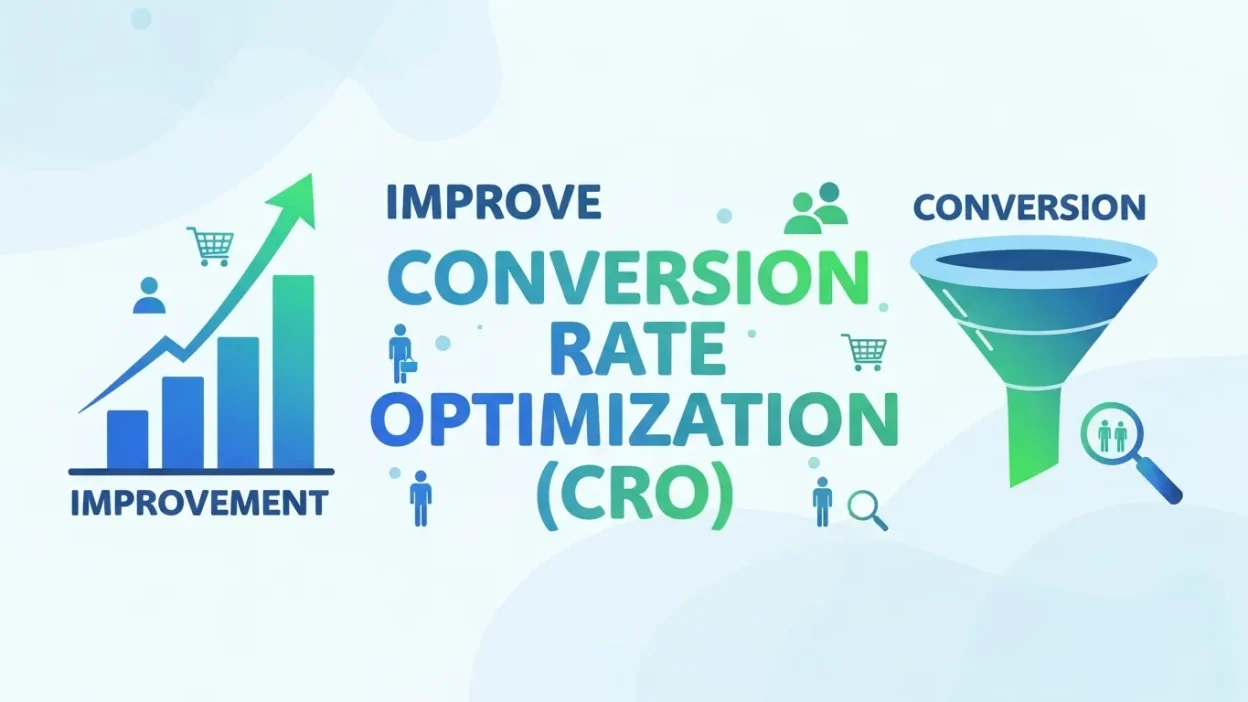
Are you wondering why visitors land on your website but don’t take the next step? Whether it’s signing up for your newsletter, filling out a form, or completing a purchase, a low conversion rate can be frustrating for any business. The solution lies in Conversion Rate Optimization (CRO) — the process that helps turn your website traffic into real, measurable results.
Conversion Rate Optimization is more than just a marketing tactic—it’s a data-driven approach to understanding user behavior, improving website performance, and encouraging visitors to take meaningful actions. By analyzing how people interact with your site and making strategic adjustments to design, content, and user experience, you can significantly increase conversions and revenue.
In this blog, we’ll dive deep into what Conversion Rate Optimization (CRO) is, why it’s essential for your business growth, and the most effective, actionable strategies to help you improve it and achieve long-term digital success.
What Is Conversion Rate Optimization (CRO)?
Conversion Rate Optimization (CRO) is the strategic process of increasing the percentage of website visitors who complete a specific, desired action—known as a conversion. These actions can vary depending on your business goals. For an e-commerce store, it might mean making a purchase; for a SaaS company, it could be signing up for a free trial; and for a blog, it may mean subscribing to a newsletter or downloading a resource.
In simple terms, CRO focuses on turning passive visitors into active customers by enhancing user experience, reducing friction, and guiding users toward the next step in your funnel.
For example, imagine your website receives 1,000 visitors each month, and 50 of them make a purchase. Your conversion rate is 5%. Through Conversion Rate Optimization, you could refine your website design, improve call-to-actions (CTAs), test different page layouts, or strengthen your messaging to increase that rate to 7% or even 10%. That’s a significant boost in revenue—without spending a cent more on driving traffic.
CRO is both an art and a science. It combines data analysis, psychology, and design principles to understand how users behave and what motivates them to act. From testing button colors and headlines to optimizing checkout flow and mobile experiences, every small improvement contributes to higher conversions and better business performance.
Why Does CRO Matter?
In today’s competitive digital landscape, simply attracting visitors isn’t enough. Every click and every impression has value, so it’s crucial to make the most of them. That’s where Conversion Rate Optimization becomes essential.
Here’s why CRO should be at the heart of your digital marketing strategy:
- Better ROI on Marketing Spend
Whether you’re investing in paid ads, SEO, or social media campaigns, CRO ensures that your marketing dollars work harder. Instead of spending more to bring in new visitors, you extract greater value from the ones you already have—maximizing return on investment. - Cost Efficiency and Sustainable Growth
It’s significantly more cost-effective to convert existing traffic than to acquire new visitors. A small percentage improvement in conversion rate can translate into large gains in sales and revenue, creating sustainable growth without inflated marketing costs. - Improved User Experience (UX)
CRO often identifies and removes barriers that frustrate users. From simplifying navigation to improving page load times, optimizing for conversions naturally enhances usability—leading to happier visitors who are more likely to return and recommend your brand. - Data-Driven Decision Making
Every optimization decision in CRO is backed by data, not guesswork. Tools like Google Analytics, heatmaps, and user recordings help uncover how real visitors interact with your website, enabling informed improvements based on actual behavior. - Competitive Advantage in a Crowded Market
In industries where competition is fierce, higher conversion rates can set you apart. While competitors chase more clicks, a CRO-focused business turns every click into an opportunity—gaining more customers, sales, and brand loyalty from the same audience.
| CRO Benefit | Description | Business Impact |
|---|---|---|
| Better ROI | Maximize value from current traffic | Higher revenue with the same ad spend |
| Cost Efficiency | Focus on optimizing the visitors you already have | Reduced acquisition costs |
| Improved UX | Enhance design and usability | Increased satisfaction and retention |
| Data-Driven Insights | Use analytics to guide decisions | Smarter, faster growth |
| Competitive Edge | Outperform competitors with higher conversions | Greater market share |
In short, Conversion Rate Optimization (CRO) isn’t just about tweaking buttons or changing colors—it’s about deeply understanding your users and crafting experiences that guide them toward meaningful actions. When done right, CRO transforms your website from a simple digital presence into a powerful growth engine.
Actionable Steps to Boost CRO
1. Understand Your Audience Through Analytics
Before making any changes, you need to identify what’s working (and what’s not). Start by analyzing your data comprehensively.
Helpful tools:
- Google Analytics: Track visitor behavior, top-performing pages, and bounce rates.
- Heatmaps (e.g., Hotjar, Crazy Egg): Know where users are clicking, scrolling, or dropping off.
- Customer Feedback (e.g., surveys, polls): Get direct input on user frustrations or what led them to convert.
Look for patterns. Are users spending time on your product listing page but abandoning the cart? Pinpointing these issues gives you clear opportunities for optimization.
2. Optimize Your Call-to-Action (CTA)
Your call-to-action is the linchpin between engagement and conversion. Having a weak CTA might be eliminating valuable leads.
How to improve your CTA:
- Make it specific. Instead of “Click here,” try “Start your free trial now.”
- Use action verbs. Verbs like “Get,” “Start,” or “Discover” offer clarity and urgency.
- Design for visibility. Bold fonts, contrasting button colors, and enough white space ensure your CTA can’t be missed.
Example: HubSpot increased sign-up conversions by 13% by simply changing their CTA button from green to red. Why? Red offered higher contrast against the page’s colors.
3. Optimize Page Load Speed
Slow websites are conversion killers. According to Google, if your page takes longer than three seconds to load, 53% of users will leave.
How to speed up your pages:
- Compress image files. Use tools like TinyPNG or JPEGmini to reduce image size without sacrificing quality.
- Use caching. Tools like WP Rocket store pages locally for quicker load speeds.
- Minimize JavaScript and CSS files. Unnecessary coding can slow things down.
Use PageSpeed Insights to audit your website’s performance and identify areas for improvement.
4. Simplify Website Navigation
If users can’t find what they’re looking for, they’re more likely to leave without converting. Intuitive navigation ensures a better user experience.
Pro tips:
- Avoid overwhelming menus. Stick to 5–7 core options.
- Include a search bar with predictive suggestions.
- Organize categories logically with clear labels.
5. Test and Experiment Consistently (A/B Testing)
Optimization involves continuous experimentation. A/B testing lets you compare two variations of the same element (e.g., headlines, CTAs, or layouts) to see which performs better.
Key areas to A/B test:
- Headlines on landing pages.
- Form lengths (shorter ones tend to perform better).
- Imagery (does a product image or lifestyle photo convert better?).
Remember, test one change at a time so you know exactly what’s improving your results.
6. Create Mobile-First Experiences
With mobile devices accounting for over 58% of all web traffic globally, optimizing for mobile is no longer optional. A site that looks great on desktop but is clunky on mobile will cost conversions.
Mobile-focused tips:
- Use responsive design. Ensure your site adjusts visually across screen sizes.
- Keep forms simple. For mobile, fewer fields mean fewer users dropping off.
- Optimize images and tap areas to be mobile-friendly (large enough to click).
Integrate CRO with Media Buying for Maximum Impact
Conversion Rate Optimization (CRO) works best when it’s not treated as an isolated tactic but as part of a broader marketing strategy. One of the most powerful combinations is pairing CRO with media buying — the process of strategically purchasing ad space to reach target audiences. While media buying drives traffic, CRO ensures that traffic turns into measurable results such as sales, sign-ups, or inquiries.
When both strategies operate together, every paid click becomes more valuable. CRO helps fine-tune the landing pages where your paid traffic lands, ensuring the experience is smooth, relevant, and persuasive. For example, if your ad copy promises “Free Shipping on All Orders,” your landing page should immediately reinforce that message. This consistency between ad and page builds trust and reduces bounce rates.
According to insights from this comprehensive media buying guide, brands that integrate CRO into their paid ad strategies often see up to 3x higher ROI compared to those that treat them separately. That’s because CRO focuses on micro-optimizations that multiply results over time — even a 1% increase in conversion rate can translate to thousands in additional revenue.
Best Practices to Align Media Buying and CRO:
- Match Ad and Landing Page Messaging: Ensure headlines, visuals, and offers stay consistent from ad to post-click page.
- Target with Precision: Use audience insights from analytics to serve ads that match the intent of high-converting segments.
- Use Dynamic Content: Adapt landing page text and visuals based on ad campaign or audience behavior.
- Measure Holistically: Track conversions not just from clicks but across the full user journey.
- Retarget Wisely: Re-engage non-converting visitors with customized offers or reminders.
| Metric | Without CRO Alignment | With CRO + Media Buying |
|---|---|---|
| Ad Clicks | High but unfocused | Consistent and targeted |
| Landing Page Bounce Rate | 65–80% | 30–50% |
| Conversion Rate | 1–2% | 4–6% |
| Cost per Acquisition (CPA) | Higher | Lower |
| Return on Ad Spend (ROAS) | 1.5x | 3–4x |
When CRO and media buying align, you don’t just buy traffic—you buy qualified, ready-to-convert visitors. This powerful duo maximizes both marketing efficiency and profitability.
Enhance CRO Through B2B Email Marketing Strategies
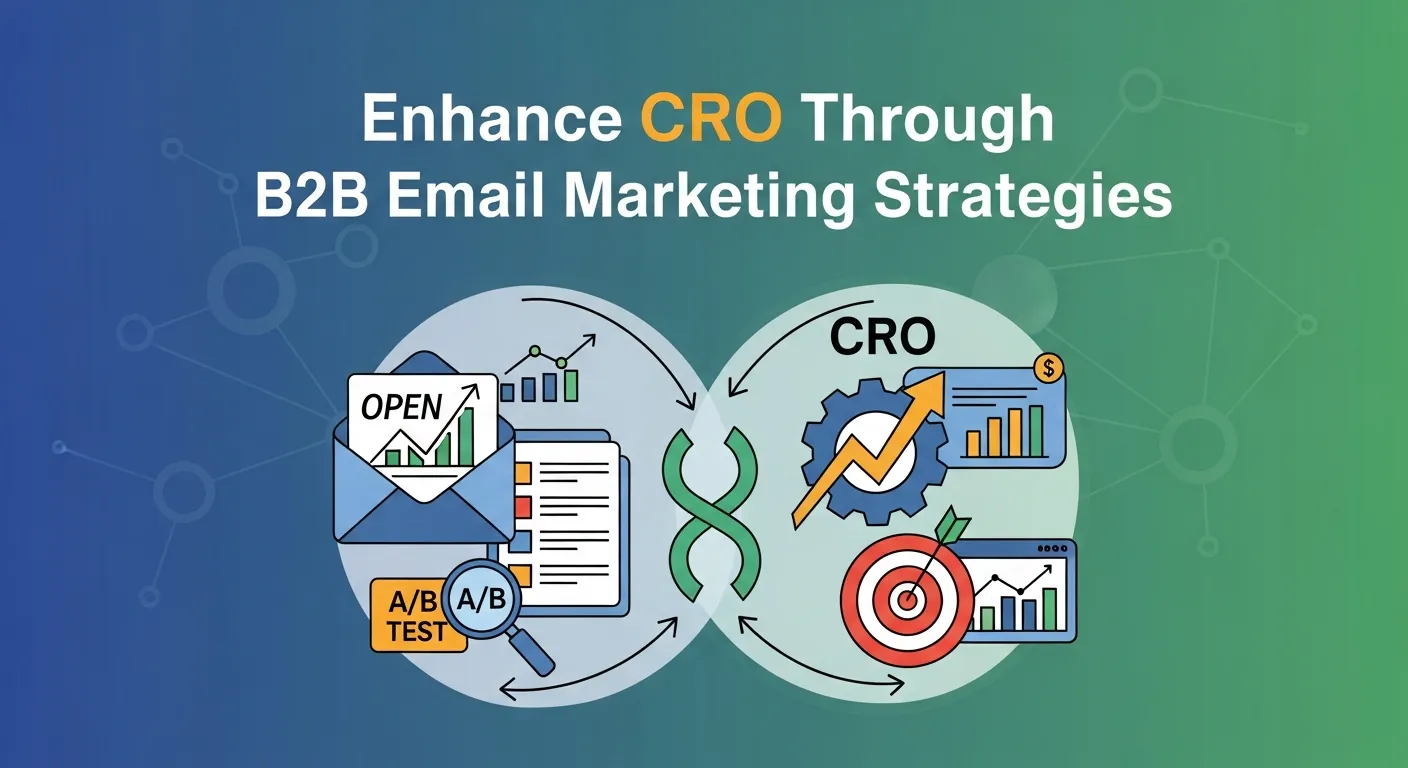
Email remains one of the most powerful tools for nurturing leads and driving conversions, especially in the B2B landscape. But not all emails perform equally. To truly optimize performance, you need to apply CRO principles directly to your email marketing strategy.
In B2B contexts, conversions often depend on building trust over time — moving leads from awareness to consideration and finally to decision. CRO helps refine every stage of this journey by improving how users interact with your emails, landing pages, and offers.
For example, tweaking your subject lines or CTA buttons can have a dramatic impact. According to SharpInbox’s research on B2B email marketing conversion trends, businesses that continuously A/B test subject lines, CTAs, and email layouts achieve up to 40% higher engagement and conversion rates compared to those that don’t.
CRO-Focused Email Optimization Techniques:
- Personalized Messaging: Address recipients by name and reference specific business needs.
- Simplified CTAs: Include one clear and action-oriented CTA per email (e.g., “Book a Free Demo” instead of “Click Here”).
- A/B Test Everything: From subject lines to button color, test small variations for big insights.
- Mobile Optimization: Over 60% of emails are opened on mobile—make sure your design adjusts perfectly.
- Timing & Frequency: Send emails when engagement is highest for your audience (often mid-week mornings).
| Email Element | CRO Optimization Tip | Conversion Impact |
|---|---|---|
| Subject Line | Personalize & keep under 50 characters | +20% open rate |
| CTA Button | Use contrasting colors & clear action words | +15% click-through |
| Email Layout | Keep design clean and skimmable | +12% engagement |
| Personalization Level | Use dynamic fields (e.g., name, company) | +25% higher response rate |
| Follow-Up Timing | Send within 24 hours of engagement | +18% conversion lift |
A strategic CRO-infused email marketing system doesn’t just send messages—it builds a relationship with your audience. Every test, tweak, and insight helps move recipients closer to the final conversion goal.
Voice Search Optimization and Its Role in CRO
Voice search is rapidly reshaping how users interact with brands online. From asking Google Assistant to find nearby services to using Alexa to check product prices, voice interactions represent a growing share of online queries. For businesses focusing on Conversion Rate Optimization, ignoring voice search is a missed opportunity.
Voice search users often express high intent—they’re looking for quick answers and immediate solutions. When your website content and structure are optimized for voice search, you’re effectively positioning your brand at the top of these high-conversion moments.
According to BrandsDad’s insights on voice search readiness, brands that adopt conversational keyword strategies and use structured data (schema markup) see higher visibility and stronger conversion metrics, particularly in mobile and local searches.
Voice Search Optimization Techniques to Improve CRO:
- Use Conversational Keywords: Write in a natural, question-based format that mirrors real speech patterns.
- Implement Schema Markup: Help search engines understand your content for better voice result rankings.
- Focus on Local SEO: Voice searches like “near me” often have immediate intent—ensure your Google Business profile is accurate.
- Improve Page Load Speed: Voice search results favor fast-loading mobile-friendly pages.
- Provide Clear, Direct Answers: Create FAQ-style sections that quickly address common voice queries.
| Voice Search Element | CRO Benefit | Example Query or Result |
|---|---|---|
| Conversational Keywords | Aligns with user intent | “Where can I buy affordable running shoes?” |
| Featured Snippets | Improves visibility and trust | Quick, direct answers rank higher in results |
| Local Optimization | Drives high-intent, local conversions | “Best hair salon near me” → Google Maps results |
| Mobile Optimization | Enhances usability and conversion rates | Fast, responsive mobile layouts |
| Structured Data Markup | Boosts content discoverability | Helps assistants display your content correctly |
Integrating voice search into your CRO approach isn’t just about SEO—it’s about optimizing for user experience, intent, and accessibility. When your site can be easily found and interacted with through voice, you unlock a growing segment of ready-to-convert users.
Quick Wins to Improve CRO Today
When it comes to Conversion Rate Optimization (CRO), not every improvement requires a complete website redesign or months of testing. Some quick, strategic actions can make an immediate difference in your conversion rates. These are known as “quick wins” — simple yet high-impact optimizations that help convert more visitors into customers without major investments.
Here’s how you can start improving your CRO today:
Add Testimonials or Reviews for Social Proof
Social proof is one of the strongest motivators in online decision-making. Displaying customer testimonials, reviews, or even user-generated content builds trust and credibility. When potential customers see real people validating your product or service, they’re far more likely to take action.
- Highlight 3–5 authentic reviews on key pages like product listings or pricing pages.
- Use video testimonials for higher engagement.
- Showcase ratings from platforms like Trustpilot or Google Reviews.
Display Trust Signals (Certifications, Badges, and Security Seals)
Online shoppers are cautious. By adding trust badges such as SSL certificates, payment security icons, or “Verified by” seals, you reduce hesitation and increase buyer confidence.
- Place badges near CTA buttons or checkout forms.
- Include “Money-Back Guarantee” or “No Hidden Fees” assurances for transparency.
- Feature brand partnerships or client logos to strengthen credibility.
Offer Live Chat or Chatbot Support for Real-Time Assistance
Users often abandon sites when they can’t find answers quickly. Live chat or AI-powered chatbots help bridge that gap by providing instant assistance.
- Set up proactive chat triggers on product and checkout pages.
- Use chatbots to handle FAQs, while human agents tackle complex inquiries.
- Include a “Talk to Us” option for personalized engagement.
Studies show that websites implementing live chat can see up to 40% higher conversion rates, making it one of the most powerful CRO quick wins.
Run Exit-Intent Pop-Ups with Personalized Offers
Before a visitor leaves, a well-timed pop-up can make all the difference. Exit-intent pop-ups detect when a user is about to close the tab and present a compelling reason to stay or convert.
- Offer a limited-time discount, free trial, or bonus content.
- Keep messaging short, friendly, and benefit-driven.
- A/B test different offers to find the most effective one.
This strategy can recover up to 10–15% of lost visitors—a simple but powerful way to enhance your Conversion Rate Optimization results.
Enable Guest Checkout Options
For e-commerce sites, forcing account creation is one of the biggest conversion barriers. Guest checkout provides a faster, frictionless experience, encouraging customers to complete their purchase.
- Offer account creation after checkout as an optional step.
- Simplify forms — fewer fields mean higher completion rates.
- Display progress indicators to reassure users of how close they are to finishing.
| CRO Quick Win | Expected Impact | Implementation Difficulty |
|---|---|---|
| Add Testimonials & Reviews | +10–25% increase in trust-based conversions | Easy |
| Display Trust Badges | +8–15% uplift in checkout completions | Easy |
| Enable Live Chat | +30–40% higher engagement & leads | Moderate |
| Exit-Intent Pop-Ups | Recover 10–15% of abandoned visitors | Easy |
| Guest Checkout | Reduces cart abandonment by 20–30% | Moderate |
These small yet strategic optimizations compound over time. Start with one or two and measure the results — you’ll be surprised at how much your Conversion Rate Optimization performance improves without drastic changes.
Leverage CRO to Unlock Business Growth
Conversion Rate Optimization (CRO) isn’t just about improving metrics—it’s about driving meaningful business growth. By refining every interaction across your website, CRO ensures that your marketing investments generate maximum returns. Instead of constantly spending on new traffic, effective CRO helps you do more with what you already have.
1. Maximize ROI Across All Marketing Channels
When you combine CRO with channels like SEO, email marketing, and paid ads, every dollar spent works harder. A well-optimized landing page can double the results from existing campaigns.
- Align landing page messages with ad copy to maintain consistency.
- Focus on data-driven A/B testing to eliminate guesswork.
- Track user behavior across multiple touchpoints for holistic insight.
2. Build Long-Term Customer Relationships
CRO isn’t just about getting the first conversion—it’s about nurturing repeat conversions. Enhancing post-purchase experiences, simplifying support access, and personalizing content help build loyalty.
- Use follow-up emails to re-engage customers.
- Offer personalized product recommendations based on previous behavior.
- Improve user onboarding processes for subscription-based models.
3. Gain a Competitive Advantage in Your Market
Businesses that invest in CRO consistently outperform competitors. While others chase new traffic, CRO-optimized brands focus on improving what already works, creating a sustainable edge.
- Continuously test design, copy, and offers.
- Focus on usability—reduce friction and increase clarity.
- Use analytics tools to identify gaps before competitors do.
| Business Area | CRO Benefit | Growth Potential |
|---|---|---|
| Marketing ROI | Higher conversions from existing traffic | 2–3x ROI improvement |
| Customer Retention | Better post-purchase experience | +20–30% repeat customers |
| Competitive Positioning | Stronger brand credibility | Increased market share |
| UX & Design | Improved satisfaction & trust | Lower bounce rates |
4. Treat CRO as an Ongoing Process
True growth through CRO doesn’t happen overnight—it’s a continuous journey of testing, learning, and improving. The most successful businesses make CRO part of their long-term digital strategy.
- Set up monthly review cycles for performance insights.
- Celebrate small conversion wins—they compound over time.
- Keep experimenting with design, messaging, and CTAs.
Conversion Rate Optimization transforms your website into a conversion engine—one that continuously evolves with your audience. Every improvement, whether big or small, strengthens your brand’s ability to attract, engage, and convert.
Frequently Asked Questions (FAQ) About Conversion Rate Optimization (CRO)
1. What is Conversion Rate Optimization (CRO)?
Conversion Rate Optimization (CRO) is the process of increasing the percentage of website visitors who take a desired action, such as making a purchase, subscribing to a newsletter, or filling out a contact form. CRO focuses on improving website elements, design, content, and user experience to guide users toward conversions more effectively.
2. Why is CRO important for my business?
CRO is critical because it allows you to maximize the value of your existing traffic. Higher conversion rates lead to better ROI, lower customer acquisition costs, and improved user satisfaction. Businesses that invest in CRO can grow revenue without increasing traffic or ad spend.
3. How do I start optimizing my website for conversions?
Start by analyzing user behavior with tools like Google Analytics and heatmaps. Identify friction points, optimize CTAs, improve page speed, and simplify navigation. Small, data-driven changes can significantly impact conversion rates over time. For a structured approach, see CRO strategies to take your business to the next level.
4. Which pages should I focus on first for CRO?
Prioritize high-traffic and high-value pages such as your homepage, product pages, pricing pages, and checkout pages. Optimizing these pages usually provides the fastest ROI and reveals insights you can apply across the site.
5. How does A/B testing help improve CRO?
A/B testing lets you compare two variations of a web element (like headlines, buttons, or images) to see which converts better. This allows you to make decisions based on real data, reducing guesswork and improving the effectiveness of your CRO efforts.
6. Can CRO be applied to email marketing campaigns?
Yes! CRO principles can optimize email campaigns by improving subject lines, CTAs, layout, and personalization. Testing different formats and messaging increases open rates, click-throughs, and ultimately conversions from your email audience.
7. How long does it take to see results from CRO?
Results vary depending on traffic volume and the number of changes implemented. Some quick wins, like optimizing CTAs or adding social proof, can show improvements in weeks, while larger structural changes may take months. Continuous testing ensures long-term growth.
8. Can I build a career in CRO?
Absolutely! CRO is a growing field with opportunities in digital marketing, UX, analytics, and conversion strategy. If you want to learn more, explore how to build a career in CRO strategies.
9. Are there advanced strategies for boosting conversions?
Yes, advanced CRO strategies include personalization, predictive analytics, multi-channel testing, and integrating AI tools for optimization. These techniques can significantly enhance user experience and maximize revenue. For more insights, check advanced CRO strategies for business growth.
10. How does mobile optimization affect CRO?
With most web traffic coming from mobile devices, a mobile-friendly website is essential. Responsive design, fast load speeds, and simplified mobile forms directly impact conversion rates and prevent users from abandoning your site.
11. Can small businesses benefit from CRO?
Yes! CRO is not just for large enterprises. Small businesses can see huge gains by optimizing landing pages, checkout processes, and CTAs. Even small improvements can lead to a significant increase in sales and leads.