
Conversion Rate Optimization (CRO) improves the percentage of website visitors who take desired actions. By enhancing user experience, design, and functionality, CRO boosts conversions, revenue, and ROI, turning existing traffic into loyal customers without increasing ad spend.
Every online business, big or small, shares the same ultimate goal: turning visitors into customers. You can drive endless traffic to your website, spend on ads, or boost your SEO—but if your visitors leave without taking action, all that effort is wasted.
That’s where Conversion Rate Optimization (CRO) comes in. CRO is the science and strategy of turning more of your existing visitors into loyal customers by improving their experience, streamlining your website, and removing obstacles that prevent conversions.
By focusing on CRO, you’re not just increasing numbers—you’re maximizing the value of every click, every visit, and every interaction. Whether it’s completing a purchase, signing up for a newsletter, or filling out a contact form, CRO ensures your website works harder for you.
In this blog, we’ll explore why CRO is essential for growth, the advantages it brings to your business, and practical ways to start optimizing your website today.
What Is Conversion Rate Optimization (CRO)?
Conversion Rate Optimization (CRO) is the process of increasing the percentage of website or digital platform visitors who complete a desired action. In other words, it’s about turning casual visitors into paying customers, leads, or engaged users.
Examples of Desired Actions
These actions can vary depending on your business goals, but commonly include:
- Making an online purchase
- Signing up for newsletters or email lists
- Filling out contact or inquiry forms
- Downloading free resources, guides, or tools
- Registering for a webinar or demo
For example, imagine your website receives 1,000 visitors in a month, and 50 of them make a purchase. That results in a conversion rate of 5%. The goal of CRO is to increase that percentage by removing friction points, improving the user experience, and optimizing your website’s design and functionality.
How CRO Works
Conversion Rate Optimization focuses on understanding user behavior and implementing strategies to guide visitors toward completing your goals. This includes:
- Enhancing page load speed and mobile responsiveness
- Improving navigation and site layout
- Creating clear, compelling calls-to-action (CTAs)
- Testing headlines, images, and copy for maximum engagement
By systematically testing and optimizing these elements, CRO ensures that your website works harder for your existing traffic, increasing revenue and engagement without necessarily driving more visitors.
CRO Insight: Even small improvements—like simplifying a checkout process or making a CTA button more visible—can lead to significant increases in conversions. Over time, these changes compound, delivering measurable business growth.
Why Is Conversion Rate Optimization Important?
CRO is more than just a buzzword. It’s a core business strategy with far-reaching impacts. Here’s why focusing on CRO will benefit your business significantly:
1. Maximizes ROI on Your Traffic
A paid ad here, SEO there, and social media to drive visitors to your website all have cost. CRO makes sure that you and every other businessman in this fix don’t end up wasting what should be an investment–your own time!
Turning more website visitors into leads or customers makes your marketing work better.
For example, if you do an advertising campaign costing $1,000 and it generates 10,000 visitors to your site. Without CRO, you might only achieve a small number of conversions, which give an extremely low return on investment. With good optimization, those numbers could double or even triple, quickly boosting the ROI.
2. Strengthens User Experience
CRO focuses on analyzing and understanding user behavior. What do they like? What frustrates them? Where are they abandoning your website? By fixing these issues, you make the experience smooth and enjoyable for your visitors.
For example, if your site takes too long to load or your checkout process is complicated, customers are likely to leave. CRO spots these obstacles. This helps you improve the user experience and keep your visitors engaged and happy.
3. Boosts Revenue Without Extra Traffic
A higher conversion rate means more revenue, often without the need to spend additional money on increasing traffic. CRO doesn’t just aim to get more visitors. It focuses on making the most of the ones you already have.
A small eCommerce business making $5,000 a month and having a 2% conversion rate could double its revenue to $10,000. This could happen by boosting the conversion rate to 4%. All of this can happen without increasing traffic, simply by optimizing their website and sales funnel.
4. Provides Insightful Customer Behavior Data
CRO means experimenting, testing, and analyzing data. This helps find what works best for your audience. This process can uncover valuable insights about customer preferences, habits, and needs.
These insights help you not just in CRO efforts but also in broader marketing strategies, product development, and customer retention initiatives.
5. Gives You a Competitive Edge
Businesses in your industry are competing for the same audience’s attention. A website optimized for conversions helps you stand out by meeting user needs more effectively.
If your competitors use a 5-step checkout, but yours has only 2 steps, you’re winning in convenience and user satisfaction.
The Role of User Experience in Conversion Rate Optimization
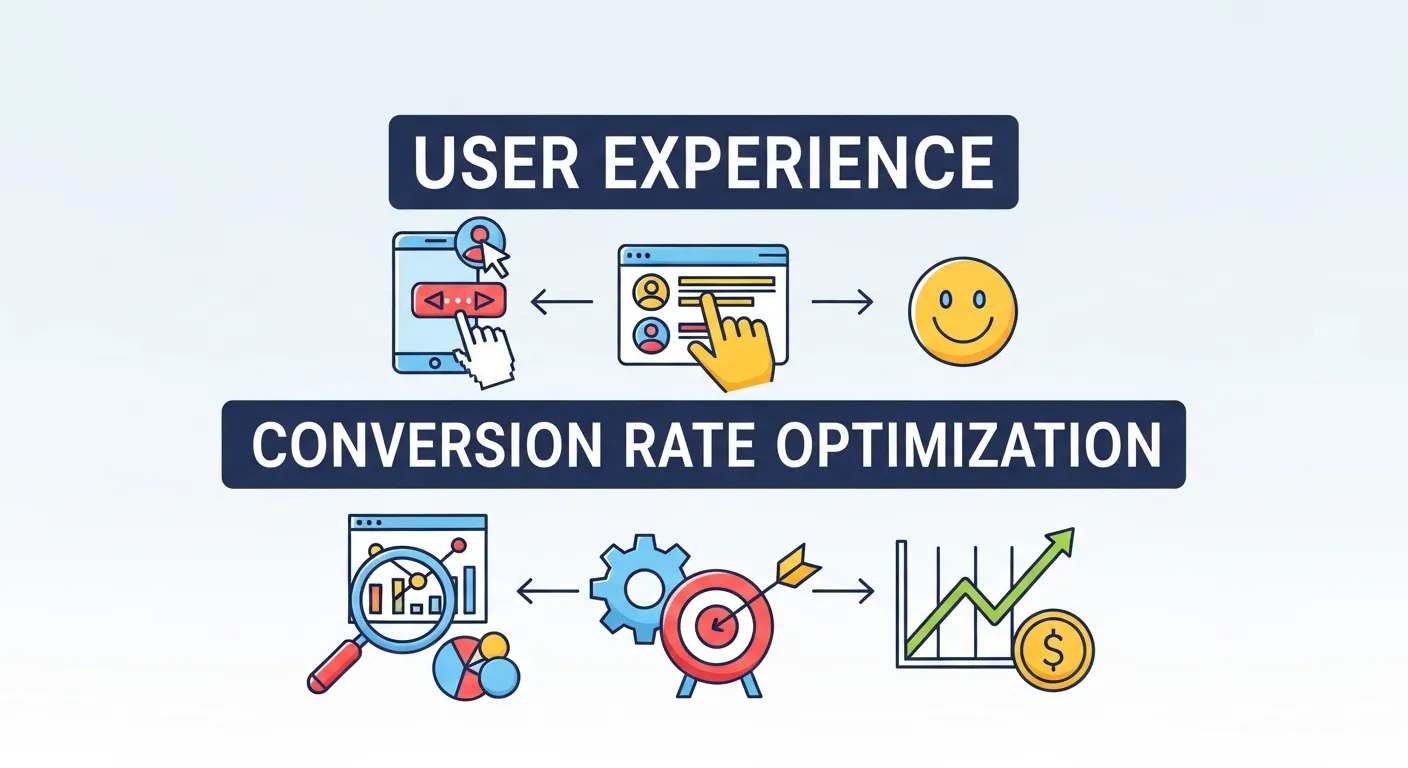
User experience (UX) is at the heart of Conversion Rate Optimization (CRO). A website that is difficult to navigate, slow to load, or confusing will turn potential customers away, no matter how much traffic you generate. CRO strategies focus on analyzing user behavior and removing friction points so that visitors can easily complete desired actions. This could include simplifying checkout processes, improving page load times, or restructuring navigation menus to make information more accessible. By combining UX improvements with data-driven testing, businesses can see measurable increases in conversions.
CRO also emphasizes the importance of personalization. Tailoring content and offers based on user segments, behaviors, or previous interactions creates a more relevant experience for each visitor. For example, an eCommerce site can use CRO insights to display product recommendations based on browsing history, increasing the likelihood of a purchase. In essence, Conversion Rate Optimization ensures that every aspect of your website is designed to guide visitors toward completing the actions that drive business growth.
Leveraging Analytics and Testing for Conversion Rate Optimization
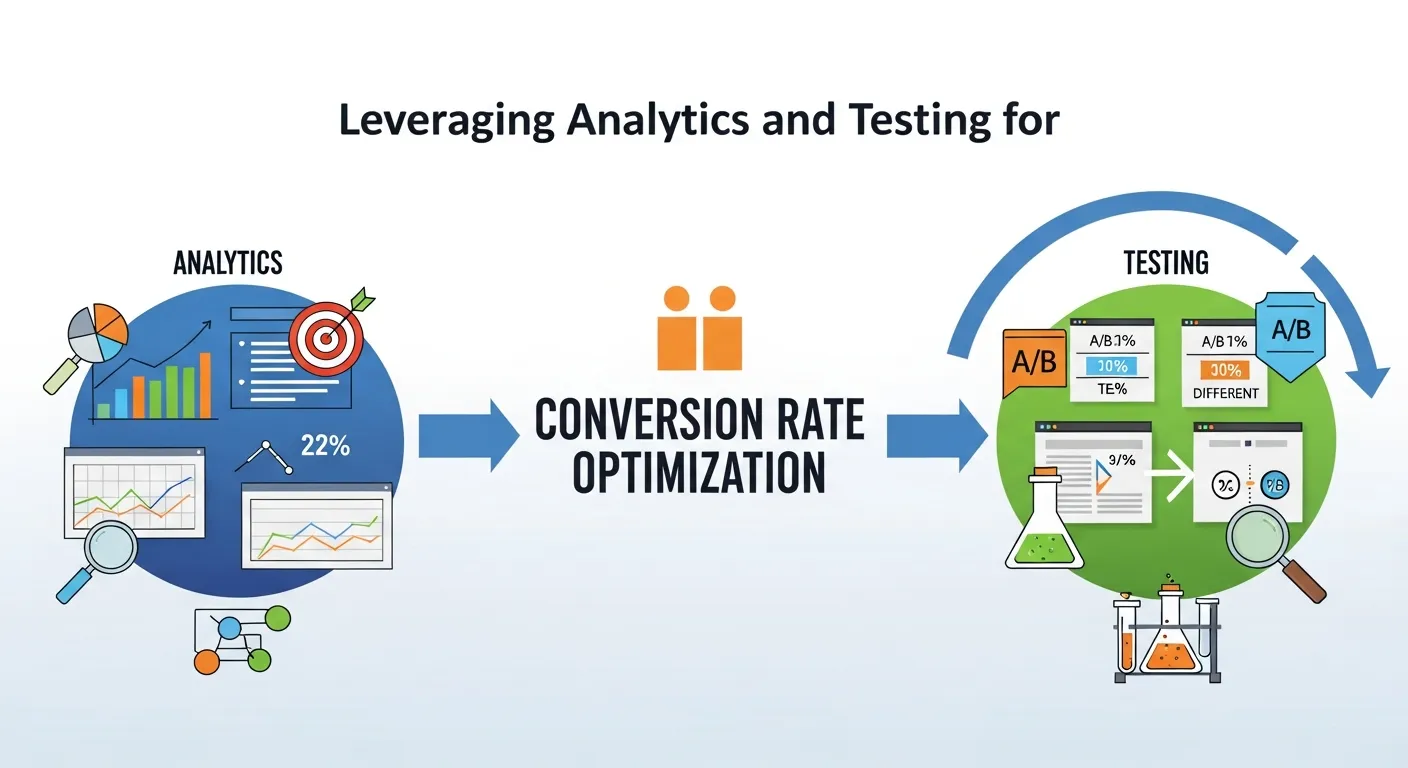
Effective Conversion Rate Optimization (CRO) relies heavily on analytics and continuous testing. By monitoring metrics such as bounce rates, page engagement, and conversion funnels, businesses gain actionable insights into what works and what doesn’t. Heatmaps, session recordings, and A/B testing allow marketers to experiment with changes in headlines, images, CTA placement, and overall layout. Each test informs the next step, creating a cycle of continuous improvement.
CRO is not just about making random changes—it’s about strategically testing and optimizing elements that directly impact conversions. For instance, a slight modification in a call-to-action button’s color or text can lead to significant improvements in click-through rates. Data-driven CRO ensures that every optimization is backed by evidence, reducing guesswork and maximizing ROI. In today’s competitive online landscape, leveraging analytics through Conversion Rate Optimization is essential for businesses looking to increase revenue from existing traffic.
How to Start Optimizing Your Conversion Rates with CRO
Now that we’ve explored the benefits of Conversion Rate Optimization (CRO), it’s time to implement it effectively. CRO is a continuous, data-driven process that turns website visitors into loyal customers. Here’s a step-by-step roadmap to start optimizing your conversions today:
Step 1: Define Your Goals
Before diving into Conversion Rate Optimization, clarify what success looks like for your business. Are you aiming to:
- Increase sales or revenue
- Boost newsletter sign-ups
- Generate demo requests or leads
- Encourage free trial sign-ups
Clearly defined goals give you measurable benchmarks for success. For example, instead of vaguely aiming to “increase sales,” set a target like: “Increase monthly eCommerce transactions by 10% in three months.” Goals guide your CRO strategy and help prioritize optimization efforts.
Step 2: Analyze Current Performance
Use analytics and behavioral tools to understand how users interact with your website. CRO relies on data, so tracking performance is essential.
- Google Analytics: Monitor traffic patterns, bounce rates, and conversion funnels.
- Heatmaps & Session Recordings: Tools like Hotjar or Crazy Egg show exactly where users click, scroll, or abandon pages.
- User Feedback: Surveys and feedback forms provide qualitative insights about user frustrations or preferences.
By analyzing current performance, you can identify friction points and areas where CRO strategies will have the most impact.
Step 3: Create Hypotheses
Once you understand your user behavior, develop testable hypotheses to improve conversions. Examples include:
- “If we make the CTA button more visible, more users will click it.”
- “Reducing the number of fields on the sign-up form will decrease abandonment.”
- “Adding social proof (like reviews) on product pages will increase purchase likelihood.”
Hypotheses give your CRO process direction and ensure changes are purposeful rather than guesswork.
Step 4: Conduct A/B Testing
A/B testing is a core CRO technique. It allows you to compare two versions of a webpage or element to see which drives more conversions.
- Test different headlines, CTA text, or button colors.
- Experiment with placement of key elements like forms or testimonials.
- Simplify navigation to reduce friction in the user journey.
A/B testing gives data-driven insights, helping you make decisions that maximize conversions rather than relying on intuition.
Step 5: Track Results and Refine
After implementing tests, track results carefully:
- Did the changes improve your conversion rate?
- Which version of the page or element performed best?
- Were there any unexpected user behaviors or drop-offs?
Use these insights to refine your strategy and replicate successful changes across other pages. Continuous tracking is a cornerstone of effective Conversion Rate Optimization.
Step 6: Pursue Ongoing Optimization
CRO is not a one-time project. User habits, industry trends, and technology constantly evolve, so your website should too.
-
Regularly update landing pages, forms, and CTAs.
-
Review analytics periodically to spot new bottlenecks.
-
Keep testing new ideas and iterating on successful changes.
A mindset of continuous optimization ensures your conversion rates improve steadily over time and your website remains aligned with your business goals.
Leveraging Data-Driven Strategies for CRO
Data is the backbone of any successful Conversion Rate Optimization strategy. Without a clear understanding of how visitors behave, any optimization effort is mostly guesswork. By analyzing metrics and user behavior, businesses can make informed decisions to enhance user experience, remove friction points, and maximize conversions.
Why Data Matters in CRO
- Identify User Pain Points: Analytics reveal where users struggle, abandon their sessions, or drop out of funnels.
- Personalize Experiences: Segmented insights allow you to tailor content, offers, and CTAs to specific audience groups.
- Predict Outcomes: Historical data helps forecast the impact of potential changes and prioritize high-impact CRO initiatives.
Key Strategies to Use Data Effectively
- Behavioral Analysis – Track how users navigate your site, what features they engage with, and where they exit. Heatmaps, session recordings, and click-tracking tools give a detailed picture.
- Segmented Targeting – Different audience segments behave differently. By personalizing your website content, you can increase engagement and conversions for each segment.
- Conversion Funnels – Map the steps users take toward desired actions, from landing page visits to checkout completion. Identifying where drop-offs happen allows targeted fixes.
- A/B Testing with Data Insights – Hypothesize changes based on analytics, test them, and iterate based on results. This reduces risk and ensures optimizations are evidence-based.
Conversion Funnel Metrics
| Funnel Stage | Visitors | Drop-off Rate | Optimized Action | Expected Impact |
|---|---|---|---|---|
| Landing Page | 10,000 | 40% | Improve headline & CTA clarity | +15% conversions |
| Product/Service Page | 6,000 | 30% | Simplify navigation, add trust signals | +10% conversions |
| Checkout/Signup Page | 4,200 | 20% | Reduce fields, highlight benefits | +8% conversions |
By leveraging media buying services, businesses can ensure that these clicks translate into meaningful conversions rather than wasted traffic. For detailed insights, see From Clicks to Conversions: How Media Buying Services Drive Growth.
Image Suggestion:
- Concept: “Data-Driven CRO Strategy Flow”
- Alt Text: “Conversion Rate Optimization data-driven strategy workflow highlighting funnel stages and user behavior”
Enhancing Conversions Through Email and Engagement
Email marketing is one of the most cost-effective methods to nurture leads and increase conversions. However, without optimization, open rates, click-throughs, and overall conversion rates remain low. Proper CRO strategies applied to emails can dramatically improve the ROI of email campaigns.
Why Email Matters in CRO
- High ROI Channel: Email has one of the highest returns per dollar spent among digital marketing channels.
- Direct Communication: Emails allow targeted messaging to users who have already expressed interest.
- Behavioral Feedback: Email engagement data provides insights into what messaging resonates and what doesn’t.
Tips to Boost Email Conversions
- Craft Compelling Subject Lines – A/B test different approaches to increase open rates.
- Segment Your List – Send tailored content based on user behavior, location, or past purchases.
- Clear and Focused CTAs – Make it easy for readers to understand the next step. Avoid multiple conflicting actions in one email.
- Responsive Design – Ensure emails display correctly on mobile, as most users open emails on smartphones.
- Automated Campaigns – Use drip campaigns to guide users through a sequence that increases the likelihood of conversions over time.
Email Campaign Metrics & CRO Actions
| Metric | Average Rate | Goal for CRO | Action Plan | Expected Impact |
|---|---|---|---|---|
| Open Rate | 18% | 25% | A/B test subject lines | +7% engagement |
| Click-through Rate | 3.5% | 6% | Optimize email content & CTA | +2.5% CTR |
| Conversion Rate | 1.2% | 3% | Direct to personalized landing page | +1.8% conversions |
By focusing on open rates and conversions, especially in the B2B segment, businesses can unlock significant growth. For more in-depth strategies, see B2B Email Marketing: Open Rates and Conversions.
Image Suggestion:
- Concept: “Email Marketing Optimization and Conversion Growth”
- Alt Text: “Email marketing CRO showing improved open rates and conversion metrics”
Preparing Your Brand for Emerging Search Trends
With voice search and AI-powered assistants becoming increasingly prevalent, businesses must adapt their Conversion Rate Optimization strategies to stay relevant. Voice search behavior differs from traditional text search, requiring a fresh approach to content, SEO, and CRO.
Why Voice Search Matters for CRO
- Conversational Queries: Voice searches are longer, natural, and question-based, which affects how content should be structured.
- Local Intent: Most voice searches are local (“near me” queries), making local SEO crucial.
- Enhanced User Experience: Providing fast, accurate answers to voice queries can significantly improve engagement and conversions.
Strategies to Optimize for Voice Search
- Use Conversational Keywords – Optimize for natural phrases users speak rather than typed keywords.
- FAQ and Structured Data – Anticipate common questions and answer them clearly. Structured data helps search engines understand your content.
- Local Optimization – Ensure business listings are accurate and optimized for local searches.
- Speed and Accessibility – Voice users expect fast responses; optimize page speed and mobile usability.
- Content Adaptation – Create content that’s concise, informative, and aligns with user intent for voice queries.
Voice Search Impact on CRO
| Search Type | Conversion Likelihood | Optimization Tip | Example Action |
|---|---|---|---|
| Local Service Queries | High | Include location-specific keywords | Optimize Google Business Profile |
| Product Queries | Medium | Use long-tail conversational keywords | Add natural Q&A sections on product pages |
| Informational Queries | Low | Add FAQs and structured data | Include how-to guides or video snippets |
Optimizing for voice search not only improves brand visibility but also ensures your website converts users effectively in emerging digital channels. Learn more about preparing your brand for voice search at Voice Search Optimization: Preparing Your Brand.
Real-Life Conversion Rate Optimization (CRO) Success Stories
Implementing effective Conversion Rate Optimization (CRO) strategies can transform a business by turning existing traffic into measurable results. Here are some real-life examples showing how targeted CRO efforts lead to substantial growth:
Case Study 1: Fashion Retailer
A fashion retailer discovered that slow website loading times were driving visitors away, leading to high bounce rates. By applying Conversion Rate Optimization techniques—specifically optimizing site speed and streamlining navigation—they reduced bounce rates and improved the user experience. Within just 2 weeks, sales increased by 15%, demonstrating the power of CRO to directly impact revenue.
CRO Takeaway: Small technical improvements, like page speed optimization, can significantly boost conversion rates.
Case Study 2: SaaS Platform
A SaaS platform noticed that lengthy sign-up forms were discouraging potential users. By employing Conversion Rate Optimization strategies, they reduced the number of form fields from six to three. This simple adjustment streamlined the signup process, resulting in a 30% increase in account creations.
CRO Takeaway: Simplifying user interactions and removing friction points is a core principle of CRO that often leads to dramatic improvements in conversions.
Case Study 3: eCommerce Company
An e-commerce company wanted to enhance product page effectiveness. Using Conversion Rate Optimization, they tested different layouts and decided to place customer reviews higher on the page. This strategic change increased consumer trust and engagement, leading to a 20% rise in conversions.
CRO Takeaway: Strategic layout changes informed by CRO testing can make products more appealing and drive higher sales without increasing traffic.
What happens if you ignore CRO?
If businesses ignore CRO, they risk wasting resources and missing chances. Even if you manage to drive significant traffic, low conversions mean minimal ROI. CRO focuses on achieving results through efficient strategies rather than through increased effort.
Frequently Asked Questions About Conversion Rate Optimization (CRO)
1. What is Conversion Rate Optimization (CRO)?
Answer: Conversion Rate Optimization (CRO) is the process of increasing the percentage of visitors who complete desired actions on your website, such as purchases, sign-ups, or downloads. CRO focuses on improving user experience, website design, and call-to-action to boost conversions.
2. Why is CRO important for my business?
Answer: CRO helps maximize the value of existing traffic. By optimizing pages and removing obstacles, you can increase revenue, improve ROI on marketing spend, and deliver a better experience to users without needing more visitors.
3. How do I start a career in CRO?
Answer: A career in CRO requires understanding analytics, user behavior, and A/B testing. For practical guidance and career-building strategies, see Build a Career in CRO Strategies.
4. What tools are essential for effective CRO?
Answer: Popular tools include Google Analytics, Hotjar, Crazy Egg, Optimizely, and VWO. These help track visitor behavior, run A/B tests, and identify areas for optimization.
5. How can I increase my website’s conversion rate?
Answer: Focus on improving page speed, simplifying navigation, optimizing CTAs, using social proof, and testing different page layouts. Small changes, guided by data, can significantly boost conversion rates.
6. What are the most common CRO strategies?
Answer: Common strategies include A/B testing, heatmaps analysis, funnel optimization, personalization, and improving user experience. For a detailed guide on business-focused tactics, see CRO Strategies to Take Your Business to the Next Level.
7. How do I measure CRO success?
Answer: Track KPIs such as conversion rate, bounce rate, click-through rate, and average order value. Data-driven testing allows you to understand what changes improve results.
8. How often should I optimize my website for CRO?
Answer: CRO is an ongoing process. Regularly test new ideas, monitor analytics, and update elements to keep pace with user behavior and industry trends.
9. What advanced CRO techniques can I use for growth?
Answer: Advanced strategies include multivariate testing, predictive personalization, exit-intent offers, and behavioral segmentation. For in-depth insights, see Advanced CRO Strategies for Business Growth.
10. Can CRO improve mobile conversions?
Answer: Yes! Optimizing mobile layouts, speeding up page load times, simplifying forms, and designing for touch interactions can dramatically increase mobile conversions, which are increasingly critical in today’s digital environment.