
This blog explains Conversion Rate Optimization (CRO), covering essential tools, key metrics, effective strategies, common mistakes, and advanced techniques. It guides businesses to analyze, optimize, and improve website performance, boosting conversions, ROI, and sustainable digital growth.
Mastering the art of converting website visitors into customers is the key to digital success. For any online company, conversion rate optimization (CRO) is practically the bottom line, but being able to measure CRO poses problems when you’re not sure where to begin and which tools are best to use.
This blog post provides an introduction to concepts, tools, and methods for analyzing conversion rate optimization that may help you get better website performance or achieve your business objectives.
What is Conversion Rate Optimization?
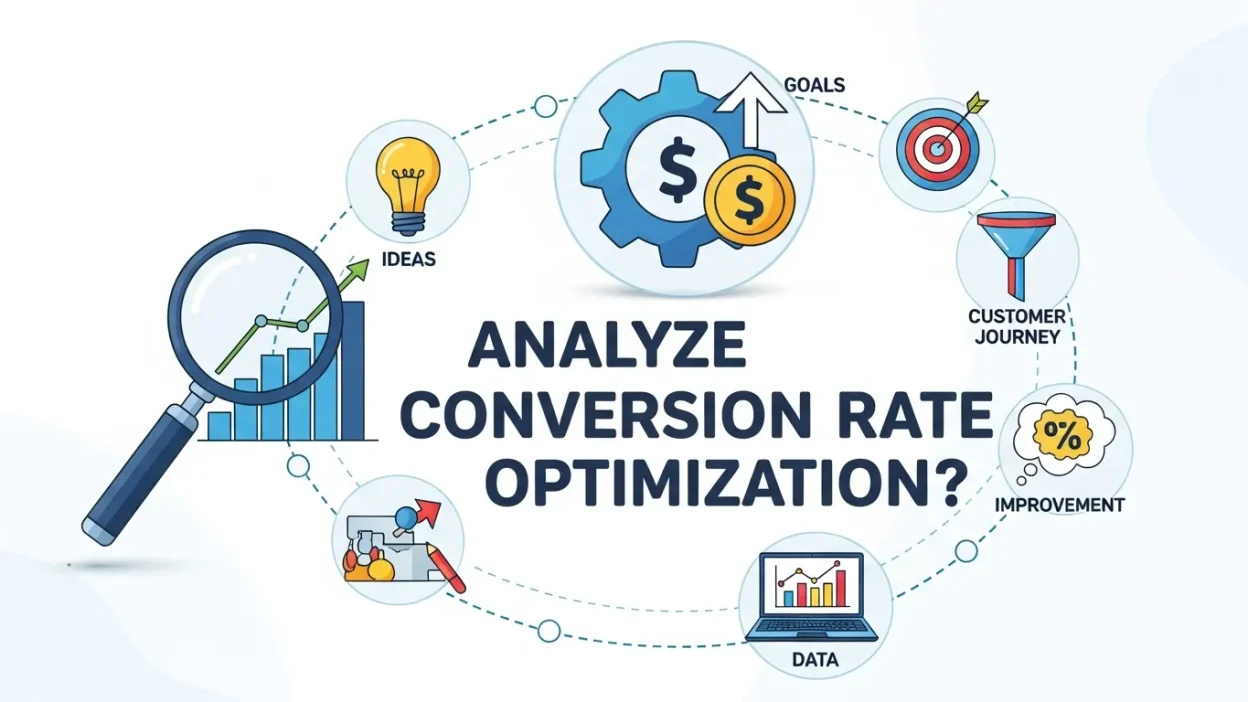
Conversion rate optimization means improving your website so that it prompts visitors into completing an action you want them to take, such as signing up, buying a product, or e-mailing you. CRO focuses on the important parts of your website that bring better results.
Conversion rate itself is simple–divide the number of conversions by the total number of visitors, then multiply this by 100 to give a percentage. For example, if your online store gets 1000 visitors in one month and 50 of them make a purchase, then your conversion rate is 5%.
Efficient CRO aren’t superstitious but rely on testing, analyzing, and making decisions based on data. Here are some examples of the tools and strategies now being used to analyze CRO.
Why is Analyzing CRO Important?
Analyzing CRO goes beyond improving your conversion rate. Here’s why it’s valuable:
- Improves user experience: CRO gives insights into what works and what doesn’t on your website, helping you enhance usability and visitor satisfaction.
- Maximizes ROI: When more visitors convert, your marketing dollars become more effective.
- Identifies bottlenecks: Analyzing CRO pinpoints barriers that stop people from taking action on your site.
- Provides actionable insights: Data from CRO analysis informs smarter, evidence-based decisions to optimize your site.
Without proper analysis, you risk missing opportunities to scale your business efficiently. But what exactly can help you analyze CRO effectively? Let’s dig deeper.
Leveraging Paid Media and CRO for Growth
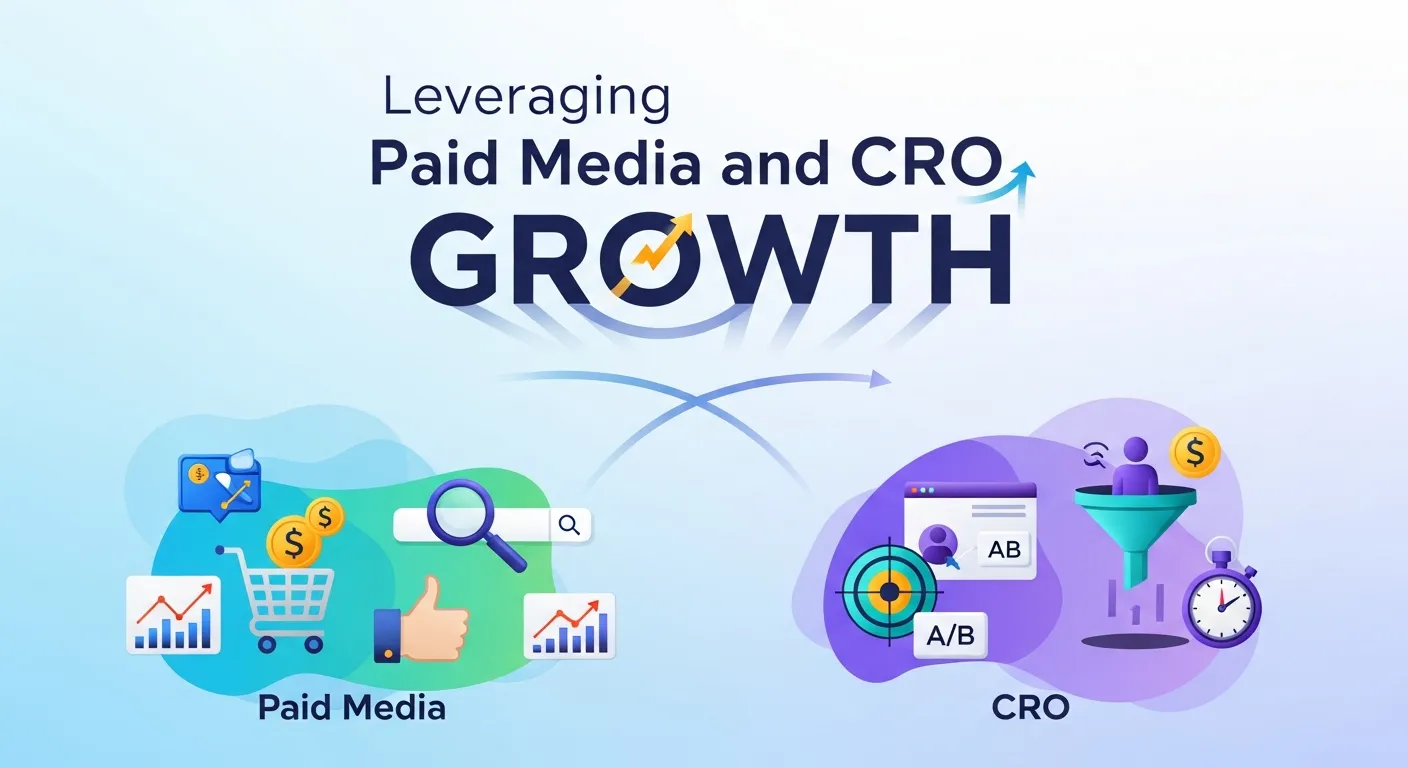
Paid media campaigns can drive massive traffic to your website, but traffic alone doesn’t guarantee conversions. To maximize ROI, combining paid media with data-driven conversion rate optimization (CRO) strategies is essential. By analyzing user behavior after they click your ads, businesses can identify which campaigns truly generate value.
A thoughtful CRO approach ensures that every visitor brought in by paid media has the highest chance of completing desired actions, whether signing up for a newsletter, downloading resources, or making a purchase. Optimizing both your ads and landing pages helps bridge the gap between clicks and meaningful conversions.
Key Takeaways:
- Track Conversion Paths: Identify which ads are delivering the most engaged users and resulting in conversions.
- Landing Page Optimization: Test multiple landing page designs to ensure that paid traffic is captured effectively.
- Message Alignment: Ensure the ad copy aligns with the landing page content to avoid bounce rates.
- Segmentation: Tailor campaigns to specific audience groups for higher relevance and better results.
- Iterative Testing: Continuously refine ad creatives and offers based on CRO insights.
Paid Media CRO Metrics
| Metric | What it Measures | Why it Matters | Optimization Tip |
|---|---|---|---|
| Click-Through Rate (CTR) | % of ad viewers who clicked | Shows ad relevance | Refine messaging & visuals |
| Conversion Rate | % of visitors completing desired action | Measures ad effectiveness | Optimize landing page & CTAs |
| Cost Per Acquisition (CPA) | Average cost per conversion | Helps budget allocation | Test multiple offers |
| Bounce Rate | % of visitors leaving immediately | Indicates landing page mismatch | Improve content and UX |
| Return on Ad Spend (ROAS) | Revenue generated per dollar spent | Measures campaign efficiency | Combine CRO with analytics |
Pro Tip: Understanding CRO alongside paid media transforms ad clicks into measurable growth. For more insights, check out From Clicks to Conversions: How Media Buying Services Drive Growth.
By continuously optimizing paid campaigns and landing pages using CRO principles, businesses can lower costs, reduce wasted ad spend, and achieve sustainable online growth.
Email Marketing and Conversion Rate Optimization
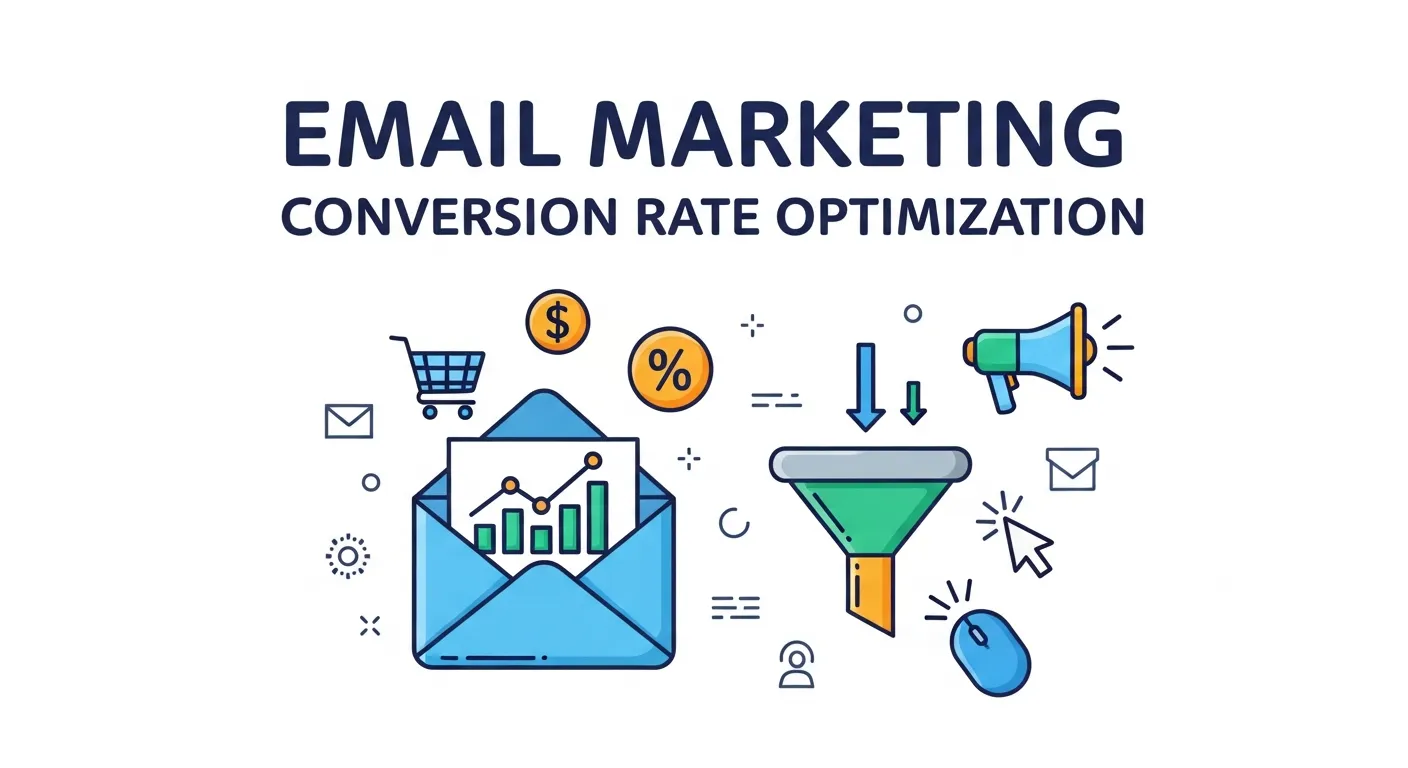
Email marketing is a cornerstone of digital strategy because it directly connects with potential and existing customers. However, sending emails without a CRO-focused strategy can result in poor open rates, low engagement, and wasted efforts. By applying conversion rate optimization principles, businesses can turn email campaigns into powerful revenue-generating tools.
CRO ensures that every aspect of your email campaigns—from subject lines to content structure—is designed to maximize clicks, interactions, and ultimately conversions.
CRO Tips for Email Marketing:
- Personalize Subject Lines: Personalization can increase open rates significantly. Include the recipient’s name or relevant interests.
- Optimize Content Layout: Use clear headings, concise paragraphs, and visually engaging content to make emails easy to scan.
- Use Clear CTAs: Place prominent calls-to-action that are unambiguous and compelling.
- Behavioral Triggers: Send triggered emails such as cart abandonment reminders or post-purchase follow-ups to guide users toward conversion.
- A/B Testing: Test subject lines, content, visuals, and CTAs to understand what resonates most with your audience.
Email Marketing CRO Metrics
| Metric | Ideal Benchmark | Why it Matters | Actionable Tip |
|---|---|---|---|
| Open Rate | 20–30% (B2B avg) | Indicates subject line effectiveness | Test personalization & urgency |
| Click Rate | 2–5% | Measures email engagement | Optimize CTA placement & clarity |
| Conversion Rate | 1–3% | Direct measurement of campaign ROI | Align email offer with landing page |
| Bounce Rate | <2% | Indicates email deliverability | Maintain a clean mailing list |
| Unsubscribe Rate | <1% | Shows content relevance | Segment audience & improve targeting |
By combining CRO insights with email campaigns, marketers can refine each step in the user journey, turning passive subscribers into active customers.
For further guidance, explore B2B Email Marketing Open Rates and Conversions to see how CRO strategies directly impact email success.
Voice Search Optimization and CRO
Voice search is rapidly transforming how users interact with digital platforms. With smart devices like Google Home, Alexa, and Siri becoming commonplace, optimizing your website for voice queries is now critical for maintaining strong conversion performance. Users often speak queries differently than they type them, meaning traditional SEO strategies alone are no longer enough to drive conversions.
Incorporating voice search optimization into your CRO strategy ensures that your website is discoverable, user-friendly, and optimized for both search engines and human behavior.
Strategies for Voice Search CRO:
-
Optimize for Natural Language Queries: Use conversational, long-tail keywords that match how users speak.
-
Mobile-Friendly Design: Ensure pages load quickly and display correctly on mobile devices.
-
Highlight Concise Answers: Structure content to provide clear answers for voice search snippets.
-
Leverage Structured Data: Schema markup improves visibility in search results and can directly influence click-throughs.
-
Local SEO Integration: Optimize your Google Business Profile and local citations to capture nearby users searching via voice.
Voice Search Impact on CRO
| Factor | Optimization Tip | Conversion Impact | Example |
|---|---|---|---|
| Query Intent | Use question-based keywords | Higher relevance | “Best SEO tools for small business” |
| Mobile UX | Fast, responsive design | Reduces bounce rates | Ensure clickable buttons & forms |
| Structured Data | Implement schema markup | Increases visibility | FAQ, reviews, product info |
| Local Listings | Update NAP (Name, Address, Phone) | Boosts local conversions | Local service searches |
| Content Clarity | Short, direct answers | Improves voice snippet performance | “How to improve conversion rate on the landing page?” |
Optimizing for voice search is not just about rankings—it directly affects how easily customers can find and convert on your site. Voice queries often indicate higher purchase intent, making CRO strategies especially valuable for capturing these users.
For more insights, see Voice Search Optimization: Preparing Your Brand.
Tools to Help You Analyze Conversion Rate Optimization
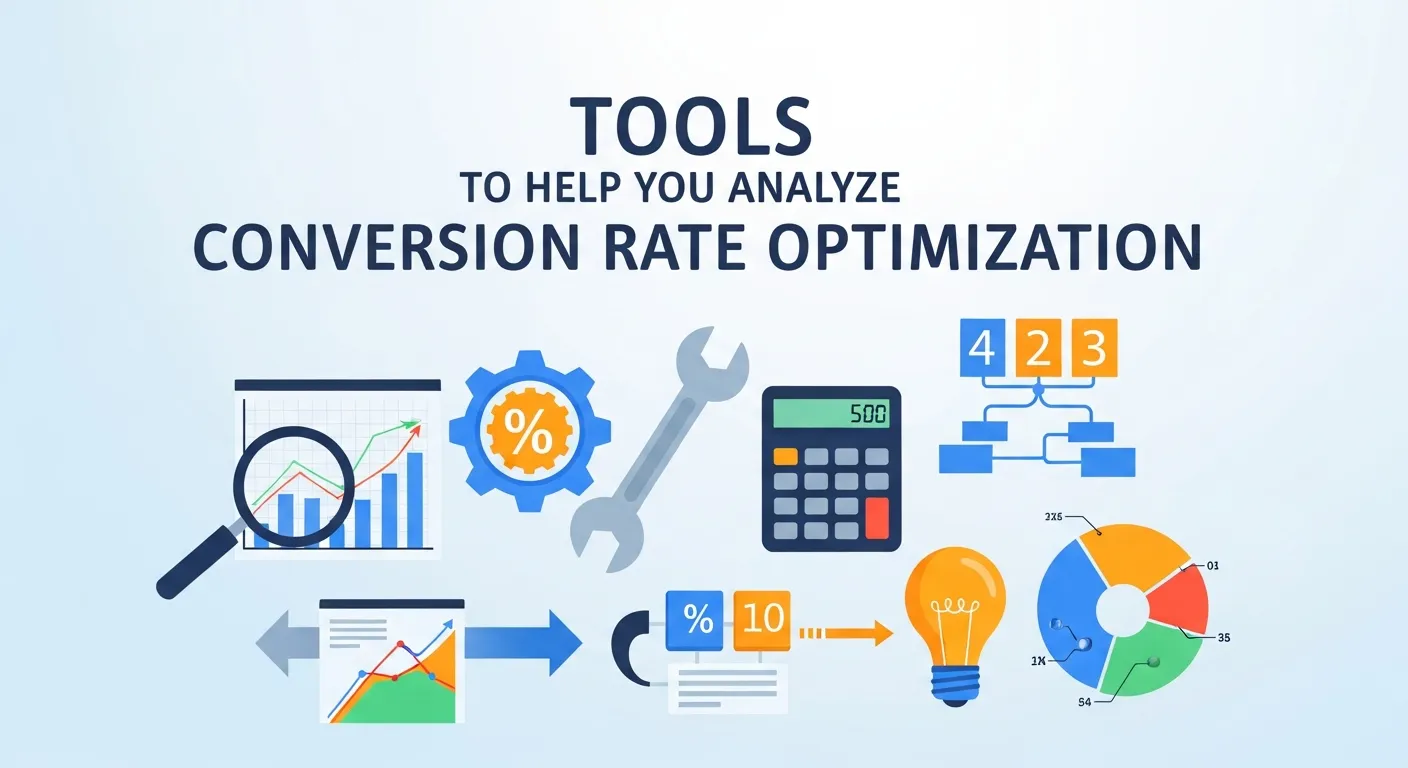
The right tools can completely transform how you approach Conversion Rate Optimization (CRO) by turning raw data into actionable insights. With the proper CRO tools, you can identify what works on your website, what needs improvement, and how to enhance the overall user experience to increase conversions.
Below are some essential tools to help you analyze and optimize conversion rate optimization effectively:
1. Google Analytics
Google Analytics is one of the most powerful tools for understanding visitor behavior. It provides detailed data on traffic sources, bounce rates, session durations, and user interactions. By tracking goals such as form submissions, purchases, or downloads, you can measure conversion rate optimization success at every step of the user journey.
How it helps Conversion Rate Optimization analysis:
- Identifies high-performing pages and content that drive conversions.
- Highlights drop-off points in the conversion funnel, showing where visitors leave.
- Reveals audience demographics and behavior patterns, allowing targeted offers.
- Provides insights to make evidence-based improvements to landing pages and CTAs.
2. Heatmaps (e.g., Crazy Egg or Hotjar)
Heatmap tools visually display how visitors interact with your website—where they click, scroll, and spend the most time. Using heatmaps for conversion rate optimization allows you to understand what attracts attention and what is ignored.
How it helps Conversion Rate Optimization analysis:
- Reveals hotspots and areas of high engagement versus ignored sections.
- Helps assess if your CTAs are optimally placed to increase conversions.
- Highlights design or layout issues that may confuse users.
- Supports data-driven decisions to improve page layout and user flow.
3. A/B Testing Platforms (e.g., Optimizely or VWO)
A/B testing platforms allow you to experiment with different designs, content, or layouts to see which versions perform best. For conversion rate optimization, A/B testing provides measurable results that can guide your strategy and reduce guesswork.
How it helps Conversion Rate Optimization analysis:
- Tests hypotheses with real user data to see which variation drives higher conversions.
- Refines your website and landing pages over time based on results.
- Reduces risk by relying on data rather than intuition.
- Supports continuous improvement for higher ROI and conversion performance.
4. Session Recordings (e.g., FullStory or SessionCam)
Session recording tools capture real-time user interactions on your site. Watching sessions helps uncover usability issues that analytics or heatmaps might not reveal, making them an essential component of conversion rate optimization analysis.
How it helps Conversion Rate Optimization analysis:
- Shows behavioral patterns, such as rage clicks, hesitations, or abandoned carts.
- Identifies friction points in navigation or forms that reduce conversions.
- Provides empathy-driven insights to improve user experience.
- Helps teams prioritize website improvements that directly impact CRO.
5. Surveys and Feedback (e.g., Qualaroo or Typeform)
Collecting direct feedback from users complements quantitative CRO data. Surveys and polls provide a qualitative perspective, helping you understand why visitors behave the way they do and how to optimize conversion rate optimization.
How it helps Conversion Rate Optimization analysis:
- Reveals obstacles users face when navigating your website.
- Identifies reasons why visitors abandon your funnel without converting.
- Provides insights into customer preferences, expectations, and pain points.
- Supports informed decisions to improve landing pages, forms, and offers.
Key Metrics to Monitor for Conversion Rate Optimization Analysis
Effective Conversion Rate Optimization (CRO) analysis requires monitoring the right performance metrics. Tracking these key indicators helps you understand user behavior, identify friction points, and make data-driven improvements that boost conversions. By focusing on the metrics that matter most, you can optimize your website to achieve better results.
Here are the most important metrics to monitor for successful CRO:
1. Conversion Rate
The conversion rate is the most critical metric in Conversion Rate Optimization. It measures the percentage of visitors who complete a desired action on your website, such as making a purchase, submitting a form, or signing up for a newsletter.
Why it matters:
-
Provides a direct measurement of how well your website converts visitors.
-
Helps assess the effectiveness of landing pages, CTAs, and campaigns.
-
Acts as a benchmark for testing CRO strategies over time.
Example: If your site receives 2,000 visitors and 100 complete a purchase, your conversion rate is 5%.
2. Bounce Rate
The bounce rate indicates the percentage of visitors who leave your website after viewing only one page. A high bounce rate often signals a disconnect between user expectations and the content or offer on your page.
Why it matters:
-
Identifies pages that may need design or content improvements.
-
Helps uncover user experience issues affecting conversion.
-
Can guide adjustments to messaging, layout, or calls-to-action.
Pair bounce rate analysis with heatmaps or session recordings to see why visitors leave.
3. Click-Through Rate (CTR)
Click-through rate (CTR) measures how many visitors click on a specific element, such as a CTA button, link, or banner. Monitoring CTR is crucial for CRO, as it shows whether your calls-to-action are compelling and noticeable.
Why it matters:
-
Determines which CTAs drive engagement and conversions.
-
Helps optimize button placement, color, text, and design.
-
Supports A/B testing of content elements for higher click performance.
4. Average Session Duration
Average session duration measures the amount of time visitors spend on your website. Longer sessions often indicate stronger engagement, which can correlate with higher conversion potential.
Why it matters:
- Signals how effectively your content engages visitors.
- Helps identify pages that may need better content or navigation.
- Supports analysis of visitor flow through your conversion funnel.
Combine session duration with pages per session metrics to understand user behavior in depth.
5. Cart Abandonment Rate (for E-Commerce)
For e-commerce sites, the cart abandonment rate is a key metric in conversion rate optimization. It tracks the percentage of users who add products to their cart but leave without completing the purchase.
Why it matters:
- Identifies bottlenecks in the checkout process.
- Provides insights into pricing, shipping costs, or form issues that prevent conversions.
- Supports strategies like retargeting emails or exit-intent offers to recover lost sales.
Analyze abandonment trends by device type to optimize mobile and desktop experiences.
Pro Tips for CRO Metric Tracking:
- Align metrics with specific business goals to ensure meaningful insights.
- Use multiple tools (Google Analytics, heatmaps, session recordings) to cross-verify data.
- Track trends over time rather than focusing solely on single snapshots.
- Segment data by traffic source, device type, and audience demographics for actionable insights.
Key Metrics for Conversion Rate Optimization
| Metric | What It Measures | Why It Matters | CRO Action |
|---|---|---|---|
| Conversion Rate | % of visitors completing a desired action | Direct measure of success | Optimize landing pages & CTAs |
| Bounce Rate | % leaving after one page | Identifies UX/content issues | Improve page design & content relevance |
| CTR | % clicking on specific elements | Engagement with CTAs | Test placement, color, copy |
| Avg. Session Duration | Time spent on site | Measures engagement | Enhance content & navigation |
| Cart Abandonment Rate | % leaving checkout | Shows friction in the purchase process | Simplify checkout & offer retargeting |
By tracking these key metrics consistently, businesses can make informed conversion rate optimization decisions that increase conversions, revenue, and user satisfaction.
Strategies to Analyze and Improve Conversion Rate Optimization
Beyond using the right tools and tracking key metrics, implementing effective strategies is essential to elevate your conversion rate optimization (CRO) analysis. Strategic improvements ensure your website not only attracts visitors but also converts them into paying customers or leads.
Here are actionable strategies to analyze and improve CRO:
1. Map the Customer Journey
Understanding your customer’s path from awareness to conversion is critical for effective conversion rate optimization. Mapping each stage of the funnel allows you to identify weak spots where users may drop off, providing clear opportunities to improve engagement and conversions.
How to apply:
- Document each stage: awareness → consideration → decision → action.
- Analyze where visitors spend the most and least time.
- Identify friction points such as confusing navigation, slow-loading pages, or unclear CTAs.
- Align content and offers with user intent at each stage.
Impact on CRO: Better-targeted improvements along the customer journey can significantly boost overall conversion rates.
2. Focus on Mobile Optimization
With nearly 60% of web traffic coming from mobile devices, optimizing for mobile is crucial for conversion rate optimization. A seamless mobile experience ensures users can browse, interact, and convert without frustration.
Best Practices:
- Use responsive design that adapts to all screen sizes.
- Simplify forms to reduce friction on small screens.
- Ensure fast-loading pages with optimized images and minimal scripts.
- Prioritize touch-friendly buttons and intuitive navigation.
CRO Tip: Test mobile performance separately from desktop, as user behavior can differ significantly across devices.
3. Conduct Competitor Benchmarking
Analyzing competitors’ websites and conversion strategies can uncover gaps and opportunities for your CRO efforts. By understanding what works in your industry, you can optimize your website to meet or exceed user expectations.
How to apply:
- Review competitors’ CTAs, landing page designs, and offers.
- Analyze their user experience and navigation flow.
- Identify features or content that increase engagement and conversions.
- Use insights to inspire A/B tests and content improvements on your own site.
Impact on CRO: Competitor benchmarking can accelerate your conversion rate optimization improvements while reducing trial-and-error efforts.
4. Segment Audiences for Better Insights
Visitors behave differently based on demographics, location, device type, or referral source. Segmenting your audience provides more granular insights for CRO analysis, enabling tailored optimization strategies.
Segmentation strategies:
- Device-based segmentation: mobile vs desktop users.
- Demographics: age, gender, or location-specific preferences.
- Behavior-based: new vs returning visitors, abandoned carts, or high-engagement users.
- Traffic source: paid ads, social media, organic search, or email campaigns.
CRO Impact: Personalized experiences for different segments can significantly improve conversion rates and reduce bounce rates.
5. Adopt Behavioral Psychology Techniques
Small psychological tweaks can dramatically enhance your conversion rate optimization results. Understanding how users think and make decisions allows you to design websites that guide visitors toward conversion.
Effective techniques:
- Urgency and Scarcity: Use countdown timers or limited stock indicators to create FOMO (fear of missing out).
- Social Proof: Showcase reviews, testimonials, or trust badges to increase credibility.
- Clear Hierarchies: Make CTAs prominent using contrasting colors, whitespace, and clear messaging.
- Reciprocity: Offer free resources or discounts to encourage engagement.
- Commitment & Consistency: Use multi-step forms or progressive engagement to guide users gradually toward conversion.
CRO Tip: Test psychological tactics with A/B testing to measure impact before rolling out broadly.
CRO Strategies and Their Impact
| Strategy | Description | How It Helps Conversion Rate Optimization | Example |
|---|---|---|---|
| Customer Journey Mapping | Document funnel stages & pain points | Identify drop-off points & improve flow | Highlight friction points in checkout |
| Mobile Optimization | Ensure responsive, fast-loading design | Improves engagement & conversions | Simplified mobile checkout form |
| Competitor Benchmarking | Analyze competitors’ CTAs & UX | Discover gaps & opportunities | Implement successful CTA placements |
| Audience Segmentation | Group users by behavior, device, or demographics | Personalize experience & increase relevance | Target abandoned cart emails to mobile users |
| Behavioral Psychology | Use urgency, social proof, and hierarchy | Influence decisions & boost conversions | Add FOMO countdown on limited offers |
By implementing these strategies systematically, businesses can enhance CRO, reduce friction in the user journey, and maximize conversions across all devices and audience segments.
Avoiding Common Mistakes in Conversion Rate Optimization Analysis
Even with the best tools and strategies, certain mistakes can undermine your conversion rate optimization (CRO) efforts. Being aware of these pitfalls and addressing them proactively ensures your CRO initiatives remain effective and deliver measurable results.
Common CRO Mistakes to Avoid:
- Ignoring Qualitative Data
Focusing solely on quantitative metrics like CTR or bounce rate can leave gaps in understanding why visitors behave a certain way. User feedback, surveys, and session recordings are critical for gaining actionable insights into user motivations and obstacles. - Changing Multiple Elements at Once
Making several changes in a single A/B test can make results inconclusive. For conversion rate optimization, it’s essential to isolate variables to accurately measure which specific change drives improvement. - Failing to Track Conversion Funnel Metrics Consistently
Neglecting metrics like cart abandonment, page drop-offs, or click-through rates can prevent you from identifying bottlenecks in the conversion funnel. Consistent tracking is essential to pinpoint areas for optimization. - Overlooking Site Speed and User Experience
Slow-loading websites frustrate users, leading to higher bounce rates and lower conversions. Optimizing page speed and ensuring smooth navigation is a fundamental part of CRO analysis.
Pro Tip: Avoiding these common mistakes ensures your conversion rate optimization strategy remains data-driven, reliable, and results-oriented.
Building a Conversion-Optimized Future
The overall conversion rate is a direct indicator of a website’s revenue potential. Optimizing for conversions isn’t just about increasing clicks—it’s about creating a seamless user experience, reducing friction, and maximizing ROI.
By combining the right conversion rate optimization tools, tracking essential metrics, and implementing proven strategies, you can unlock the full potential of your website. This approach allows businesses to:
- Maximize Revenue: Higher conversion rates mean more customers and greater ROI from marketing efforts.
- Enhance User Experience: Optimized layouts, CTAs, and navigation increase visitor satisfaction and engagement.
- Continuously Improve: CRO is an ongoing process; consistent testing and analysis enable iterative improvements.
- Make Data-Driven Decisions: Tools, metrics, and behavioral insights guide smart, evidence-based changes.
Final Thought: With the right approach to conversion rate optimization, businesses can ensure that every visitor interaction counts, ultimately turning traffic into measurable growth. Investing in CRO today builds a strong foundation for a future of scalable, sustainable online success.
FAQ: Conversion Rate Optimization (CRO)
1. What is Conversion Rate Optimization (CRO)?
Conversion Rate Optimization (CRO) is the process of improving your website or landing pages to increase the percentage of visitors who take a desired action, such as making a purchase, signing up for a newsletter, or filling out a form. CRO focuses on analyzing user behavior, optimizing design and content, and testing strategies to maximize conversions.
2. Why is CRO important for my business?
CRO ensures that your existing website traffic is used effectively. Even if you have high traffic, poor CRO means potential customers may leave without converting. Effective CRO improves user experience, increases ROI, reduces marketing costs, and helps scale business growth sustainably.
3. Which tools are essential for CRO analysis?
Key tools for CRO include Google Analytics for tracking behavior, heatmaps like Hotjar or Crazy Egg for visual insights, A/B testing platforms like Optimizely, session recording tools like FullStory, and feedback surveys like Typeform. These tools provide quantitative and qualitative data to make informed optimization decisions.
4. How can I measure the success of CRO efforts?
Success in CRO is measured by metrics like conversion rate, bounce rate, click-through rate (CTR), average session duration, and cart abandonment rate (for e-commerce). Tracking these metrics consistently helps identify areas for improvement and quantify the impact of your optimization strategies.
5. Can CRO strategies help in career growth?
Yes! Learning Conversion Rate Optimization skills can open doors to high-demand roles in digital marketing and analytics. For insights on starting a career in this field, check out Build a Career in CRO Strategies.
6. How often should I test changes on my website for CRO?
Testing frequency depends on your traffic and conversion volume. High-traffic sites can run continuous A/B tests, while smaller sites may run tests for longer periods to collect sufficient data. Regular testing helps refine your CRO strategy and ensures ongoing improvement.
7. What are some advanced CRO techniques for business growth?
Advanced strategies include personalization, behavioral targeting, exit-intent popups, and predictive analytics to influence user behavior. These methods take CRO beyond basic optimization. Learn more at Advanced CRO Strategies for Business Growth.
8. How can CRO improve ROI from marketing campaigns?
CRO helps ensure that every visitor driven by your marketing campaigns has a higher chance of converting. By optimizing landing pages, CTAs, and the overall user experience, your marketing spend becomes more efficient, delivering greater return on investment.
9. Can CRO strategies be applied to small businesses or startups?
Absolutely! Even small businesses can benefit from CRO by optimizing landing pages, forms, and checkout processes. By implementing data-driven improvements, startups can increase conversions, improve customer experience, and compete effectively with larger brands. For actionable tips, see CRO Strategies to Take Your Business.
10. What common mistakes should I avoid in CRO?
Common pitfalls include ignoring qualitative data, changing multiple variables at once during A/B testing, neglecting conversion funnel metrics, and overlooking site speed or mobile optimization. Avoiding these mistakes ensures that your CRO strategy remains effective, measurable, and sustainable.