
Your website receives thousands of visitors each month, but only a fraction complete the actions you want them to take. The gap between traffic and conversions represents untapped potential that could transform your business performance.
Conversion rate optimization (CRO) bridges this gap by systematically improving the percentage of website visitors who take desired actions—whether that’s making a purchase, signing up for a newsletter, or downloading a resource. Rather than focusing solely on driving more traffic, CRO maximizes the value of your existing visitors.
This comprehensive guide will walk you through proven strategies to increase your website’s conversion rates, from understanding the fundamentals to implementing advanced optimization techniques that deliver measurable results.
What Is Conversion Rate Optimization?
Conversion rate optimization is the systematic process of increasing the percentage of website visitors who complete desired actions on your site. These actions, called conversions, vary depending on your business goals and can include purchases, form submissions, email signups, or content downloads.
The conversion rate is calculated by dividing the number of conversions by the total number of visitors, then multiplying by 100. For example, if 100 people visit your landing page and 5 make a purchase, your conversion rate is 5%.
CRO combines data analysis, user research, and systematic testing to identify barriers preventing visitors from converting. By removing these obstacles and enhancing elements that encourage action, you can significantly improve your website’s performance without increasing your marketing spend.
Why Conversion Rate Optimization Matters
Improving conversion rates delivers immediate and long-term benefits that compound over time. A small increase in conversions can dramatically impact your bottom line—doubling your conversion rate from 2% to 4% effectively doubles your revenue from the same traffic volume.
CRO also provides better return on investment compared to simply increasing traffic. While driving more visitors requires ongoing advertising spend, conversion improvements continue delivering results from both existing and future traffic.
Understanding your audience through CRO research creates additional advantages. The insights gained from testing and user feedback improve not only your website but also your product development, marketing messages, and customer service approaches.
Essential CRO Metrics to Track
Successful conversion rate optimization requires monitoring the right metrics to understand performance and identify opportunities for improvement.
Primary Conversion Rate measures the percentage of visitors completing your main goal, such as purchases or lead generation forms. This fundamental metric directly correlates with business growth and revenue.
Micro-conversion Rates track smaller actions that lead to primary conversions, including email signups, product page views, or cart additions. These metrics help identify where visitors drop off in your conversion funnel.
Average Order Value (AOV) reveals how much customers spend per transaction. Optimizing for higher AOV can increase revenue even if conversion rates remain constant.
Customer Lifetime Value (CLV) measures the total revenue from each customer relationship. This metric helps you understand which optimization efforts deliver the most long-term value.
Bounce Rate indicates the percentage of visitors who leave after viewing only one page. High bounce rates often signal misaligned expectations or poor user experience.
Key Elements to Optimize for Higher Conversions
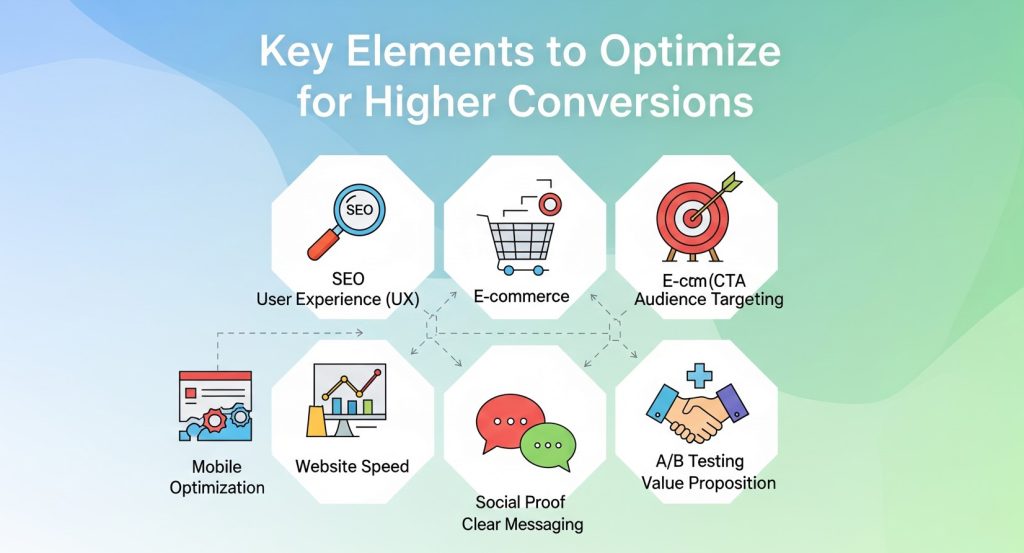
Several website elements significantly impact conversion rates and deserve focused optimization efforts.
Headlines and Value Propositions
Your headline is often the first element visitors see, making it crucial for capturing attention and communicating value. Effective headlines clearly state what you offer and why visitors should care, using specific benefits rather than generic claims.
Test different headline approaches, including benefit-focused statements, question-based hooks, and urgency-driven messages. The most effective headlines align with visitor expectations set by your marketing channels.
Call-to-Action Buttons
Call-to-action (CTA) buttons guide visitors toward conversions, making their design and placement critical optimization opportunities. Effective CTAs use action-oriented language that creates urgency while clearly describing what happens next.
Button color, size, and positioning significantly affect click-through rates. Test contrasting colors that stand out from your design, ensure buttons are large enough for mobile users, and place primary CTAs above the fold where possible.
Forms and Checkout Processes
Complex forms create friction that prevents conversions. Simplify forms by requesting only essential information and using progressive disclosure to collect additional details over time.
For e-commerce sites, streamline checkout processes by reducing steps, offering guest checkout options, and displaying security badges to build trust. Clear progress indicators help users understand how much effort remains.
Social Proof and Trust Signals
Visitors need confidence in your business before converting. Social proof elements like customer reviews, testimonials, and case studies provide third-party validation that reduces purchase anxiety.
Trust signals including security badges, money-back guarantees, and professional certifications further increase confidence. Display these elements prominently near conversion points for maximum impact.
Advanced CRO Strategies That Drive Results

Beyond basic optimizations, advanced strategies can unlock significant conversion improvements.
Personalization and Segmentation
Delivering personalized experiences based on visitor behavior, traffic source, or demographic data creates more relevant interactions that improve conversion rates. Segment your audience and create targeted content that addresses specific needs and pain points.
Dynamic content that changes based on visitor attributes or previous actions can significantly increase relevance. This might include showing different products to returning customers or displaying location-specific offers.
Targeted content improves conversion rates. Dynamic content can increase relevance, such as showing different products to returning customers. Explore hyper-personalization and AI in CRO.
Exit-Intent Technology
Exit-intent popups detect when visitors are about to leave your site and present last-chance offers or value propositions. While potentially intrusive if overused, strategic implementation can recover abandoning visitors and increase conversions.
Effective exit-intent campaigns offer genuine value, such as exclusive discounts, free resources, or newsletter subscriptions with compelling incentives.
Mobile Optimization
Mobile traffic represents a significant portion of website visits, making mobile optimization essential for conversion rate success. Ensure your site loads quickly on mobile devices, uses responsive design, and provides easy navigation with touch-friendly buttons.
Mobile-specific optimizations might include simplified forms, one-click purchasing options, and streamlined checkout processes designed for smaller screens.
Testing and Implementation Best Practices
Successful conversion rate optimization relies on systematic testing rather than assumptions about what works.
A/B Testing Fundamentals
A/B testing compares two versions of a webpage to determine which performs better. Focus on testing one element at a time to isolate the impact of specific changes. Ensure tests run long enough to achieve statistical significance and account for weekly traffic patterns.
Document all tests with clear hypotheses, detailed setups, and comprehensive results analysis. This creates valuable insights for future optimization efforts and helps avoid repeating unsuccessful experiments.
Compare two versions of a page to find the most effective. Learn about A/B testing for conversion rate optimization.
Data-Driven Decision Making
Base optimization decisions on quantitative data rather than personal preferences or industry assumptions. Use analytics tools to identify pages with high traffic but low conversion rates, indicating optimization opportunities.
Combine quantitative data with qualitative insights from user surveys, heatmaps, and session recordings to understand not just what happens but why visitors behave in certain ways.
Behavioral Analytics: Understanding Why Visitors Convert
While tracking conversion metrics tells you what is happening, understanding why visitors behave a certain way requires deeper behavioral analysis. Tools such as heatmaps, session recordings, and click-tracking software reveal which elements attract attention and which are ignored.
Behavioral analytics can uncover friction points, such as confusing buttons, poorly placed forms, or unexpected navigation flows. For example, if a key CTA is overlooked because it’s buried below the fold, heatmaps make this evident. By addressing these behavioral insights, you can make informed changes that directly improve conversion outcomes rather than relying on guesswork.
CRO for E-Commerce vs. Lead Generation Sites
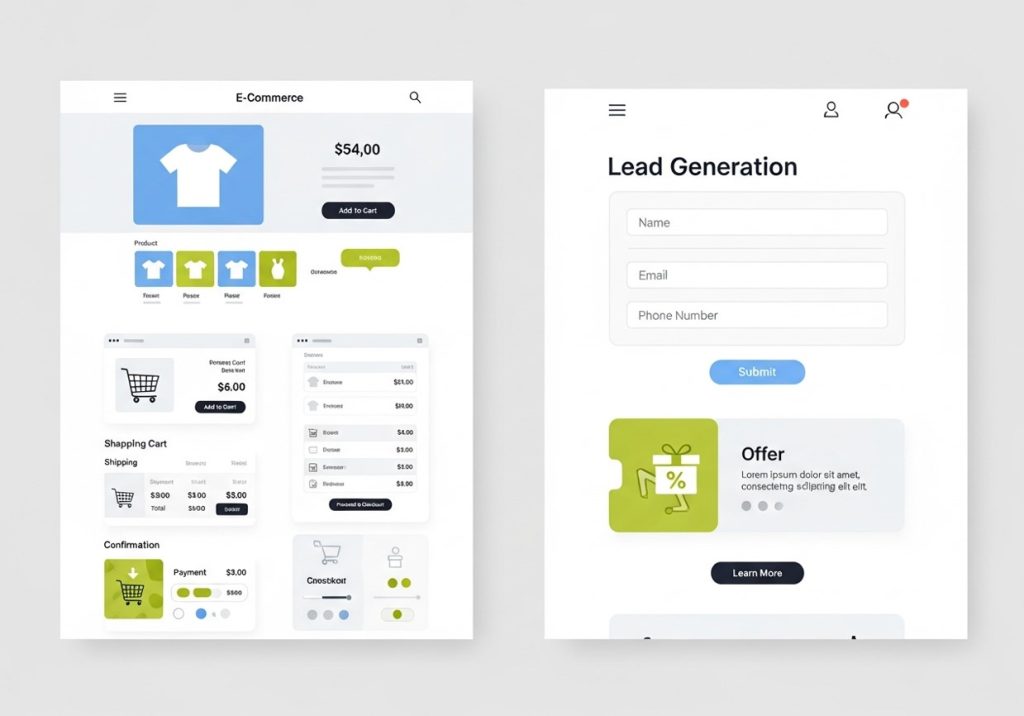
While the fundamentals of CRO apply broadly, strategies may vary depending on the type of site.
For e-commerce websites, optimizing product pages, checkout flows, and cross-selling opportunities is critical. Small adjustments, such as adding product videos, improving image quality, or simplifying shipping information, can have a significant impact on sales.
For lead generation sites, CRO often focuses on form optimization, trust-building content, and compelling offers such as whitepapers, consultations, or free trials. Testing lead capture forms, personalized follow-ups, and incentive placements are crucial to improving conversion rates in these contexts. Understanding the nuances of your website type ensures CRO efforts are applied effectively.
E-commerce sites optimize product pages, checkout flows, and cross-selling opportunities. Lead generation sites focus on forms, trust-building content, and compelling offers. For deeper insights, see our next-gen lead generation strategies.
The Importance of Load Speed and Technical Performance
Website speed is a critical factor in CRO that is often overlooked. Even small delays in page load times can dramatically increase bounce rates and decrease conversions. Studies show that a delay of just one second can reduce conversions by up to 7%.
Optimizing images, leveraging browser caching, minimizing HTTP requests, and using content delivery networks (CDNs) are practical steps to enhance load speed. Mobile performance is especially important, as more than half of web traffic comes from smartphones and tablets. A fast, responsive, and technically sound website ensures a smooth experience that keeps visitors engaged and encourages them to complete desired actions.
Using Analytics to Identify High-Impact Opportunities
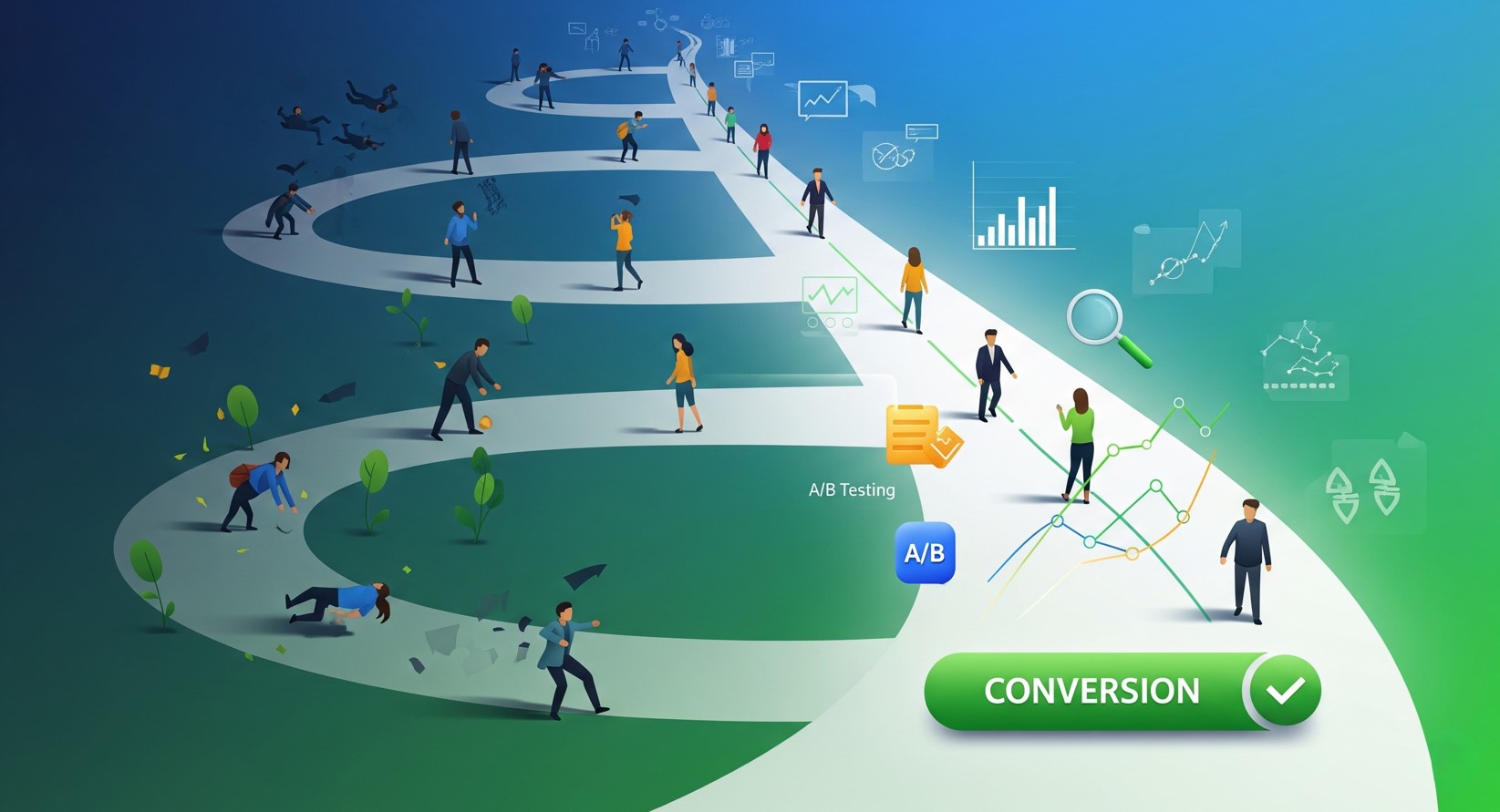
Data is at the heart of conversion rate optimization. Analytics help you understand visitor behavior, identify bottlenecks in the conversion funnel, and prioritize the most impactful improvements. Tools like Google Analytics, heatmaps, and user journey mapping allow you to see where visitors drop off and which elements drive engagement.
For example, if a high-traffic landing page has a low conversion rate, analyzing visitor behavior can reveal whether the CTA is unclear, the form is too long, or the messaging does not match user intent. Using this data-driven approach ensures your CRO efforts are targeted, reducing wasted effort and increasing the likelihood of measurable results.
Continuous Optimization: The Long-Term Approach
Conversion rate optimization is not a one-time task but an ongoing process. Visitor behavior evolves over time, influenced by trends, technology, and competitive landscape. What converts today may underperform tomorrow.
A culture of continuous optimization involves regularly reviewing analytics, testing new variations, and iterating on designs, messaging, and offers. Businesses that embed CRO into their marketing strategy gain a long-term advantage, continuously improving website performance and maximizing revenue potential.
Getting Started with Your CRO Journey
Begin your conversion rate optimization efforts by establishing baseline metrics and identifying your highest-impact opportunities. Focus on pages that receive significant traffic and have clear conversion goals.
Start with fundamental improvements like headline clarity, CTA visibility, and form simplification before moving to advanced strategies. Small, incremental improvements often deliver better long-term results than dramatic redesigns.
Remember that conversion rate optimization is an ongoing process rather than a one-time project. Markets evolve, customer preferences change, and new opportunities emerge, requiring continuous testing and refinement.
By implementing systematic conversion rate optimization, you transform your website from a passive online presence into an active revenue-generating asset that consistently improves business performance.
Start with baseline metrics, focus on high-traffic pages with low conversion rates, and implement both basic and advanced strategies. See our conversion rate optimization guide
Frequently Asked Questions (FAQs)
How long does it take to see results from CRO?
CRO is an ongoing process, and results vary depending on website traffic, test size, and the complexity of changes. Minor optimizations like improving CTA clarity may yield results within weeks, while larger UX changes or personalized campaigns can take months to measure impact accurately.
Is CRO only for large websites or e-commerce businesses?
No. CRO benefits websites of all sizes, including small businesses, blogs, SaaS platforms, and lead generation sites. Even small improvements in conversion rates can significantly affect revenue for websites with moderate traffic.
Can I do CRO without technical expertise?
Yes. While technical knowledge can help, many CRO tools are user-friendly and don’t require coding. Platforms like A/B testing software, heatmaps, and session recording tools simplify the process for marketers. Collaborating with developers may be necessary for complex changes.
How do I prioritize which pages to optimize first?
Start with pages that receive high traffic but have low conversion rates, as improvements here have the largest potential impact. Landing pages, checkout pages, and key lead generation forms are typically high-priority areas.
Can CRO help reduce marketing costs?
Absolutely. By increasing the percentage of visitors who convert, CRO maximizes the value of existing traffic. This often reduces the need for additional advertising spend, improving overall ROI.
How does CRO differ from general web optimization?
While general web optimization focuses on website speed, SEO, and design aesthetics, CRO specifically aims to increase the rate of desired actions on your site. CRO combines design, UX, psychology, and data-driven testing to drive conversions rather than just traffic.
What tools are commonly used in CRO?
Popular tools include Google Optimize, Optimizely, Hotjar, Crazy Egg, VWO, and analytics platforms like Google Analytics. Each tool helps with A/B testing, behavioral analysis, session recordings, and personalization efforts.