


Your website receives thousands of visitors each month, but only a fraction takes meaningful action. This disconnect between traffic and conversions represents one of the biggest missed opportunities in digital marketing. A well-executed conversion optimization strategy can bridge this gap, transforming passive browsers into engaged customers.
Conversion optimization strategy involves systematically improving your website’s ability to turn visitors into customers. Rather than focusing solely on driving more traffic, this approach maximizes the value of your existing audience by removing barriers to conversion and enhancing user experience.
The benefits extend far beyond improved conversion rates. Companies that implement comprehensive optimization strategies often see reduced customer acquisition costs, higher customer lifetime value, and a better understanding of their target audience. Most importantly, these improvements compound over time, creating sustainable competitive advantages.
This guide will walk you through proven methods for developing and implementing a conversion optimization strategy that delivers measurable results. You’ll learn how to identify optimization opportunities, design effective tests, and build a culture of continuous improvement within your organization.
Understanding Conversion Optimization Fundamentals
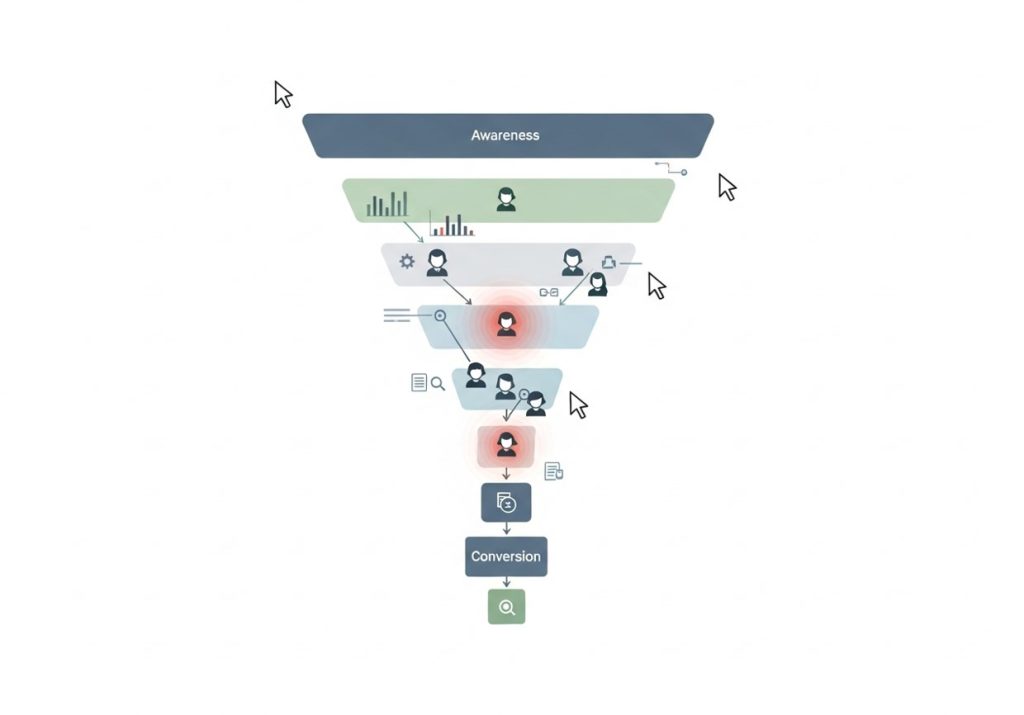
Conversion optimization strategy begins with understanding what drives user behavior on your website. Every visitor arrives with specific goals, expectations, and concerns that influence their decision to convert or leave.
The foundation of any successful strategy lies in comprehensive data collection. Analytics platforms reveal user behavior patterns, heat mapping tools show where visitors focus their attention, and user feedback provides qualitative insights into pain points and motivations.
Successful optimization requires balancing quantitative data with qualitative understanding. Numbers tell you what’s happening, but user research explains why. Exit surveys, customer interviews, and usability testing provide context that transforms raw data into actionable insights.
Your conversion funnel represents the journey visitors take from initial awareness to final conversion. Each stage presents unique optimization opportunities. Landing pages must capture attention and communicate value propositions clearly. Product pages need to address objections and highlight benefits. Checkout processes should minimize friction and build trust.
Building Your Conversion Research Foundation
Effective conversion optimization strategy starts with thorough research into your current performance and user behavior. This research phase determines the success of all subsequent optimization efforts.
Begin by establishing baseline metrics for your key conversion points. Track not just overall conversion rates, but segment performance by traffic source, device type, geographic location, and user demographics. These segments often reveal significant performance variations that inform targeted optimization efforts.
User behavior analysis reveals the story behind your conversion numbers. Behavioral data becomes even more powerful when combined with proven psychological triggers, such as those explained in behavioral CRO techniques that boost conversions.
Customer feedback provides invaluable qualitative context for your quantitative findings. Post-purchase surveys reveal what convinced customers to buy. Exit intent surveys capture reasons for abandonment. Customer service interactions highlight common questions and concerns that your website should address proactively.
Competitive analysis rounds out your research foundation. Study how industry leaders structure their conversion funnels, present their value propositions, and handle common objections. While you shouldn’t copy competitors directly, understanding industry best practices provides useful benchmarks and inspiration.
Identifying High-Impact Optimization Opportunities
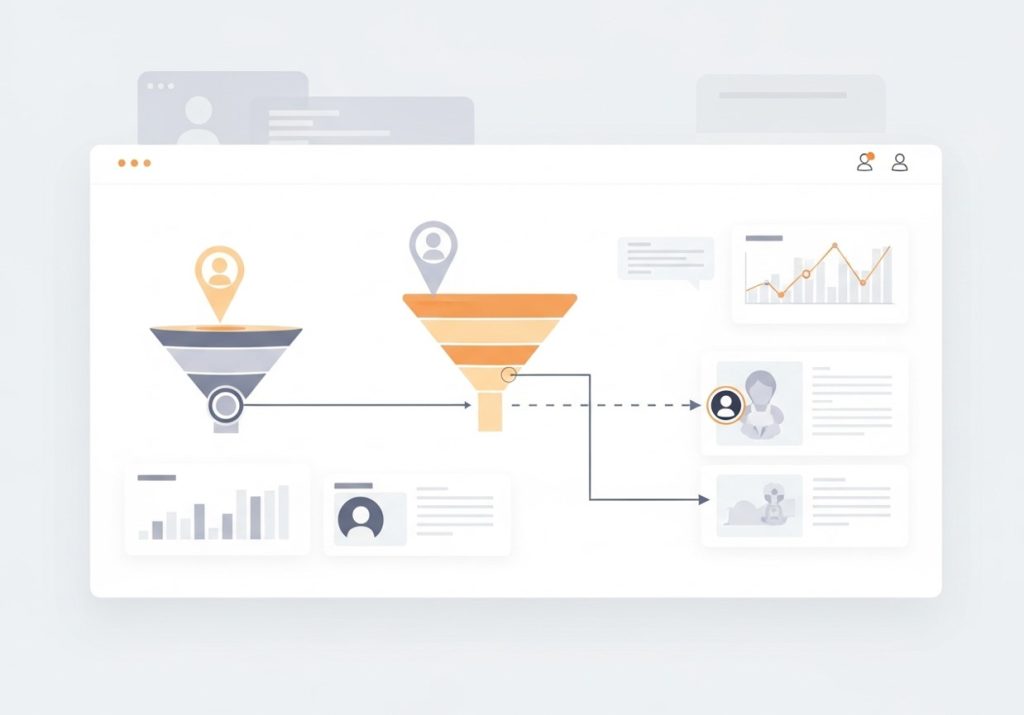
Not all optimization opportunities deliver equal returns. Successful conversion optimization strategy focuses resources on changes that provide maximum impact with reasonable implementation effort.
Start by analyzing your conversion funnel for significant drop-off points. Pages with high traffic but low conversion rates represent prime optimization targets. Similarly, steps in your checkout process where many users abandon their carts deserve immediate attention.
Traffic volume amplifies optimization impact. A small improvement to a high-traffic page generates more additional conversions than a large improvement to a rarely-visited page. Prioritize optimization efforts based on both potential percentage improvement and absolute visitor volume.
User experience friction points often provide quick wins. Long page load times, confusing navigation, missing information, and technical errors create unnecessary barriers to conversion. Addressing these fundamental issues typically improves performance across multiple metrics simultaneously.
Revenue impact analysis helps prioritize optimization efforts from a business perspective. Focus on pages and processes that directly influence high-value conversions or customer lifetime value. Optimizing your pricing page might deliver more business value than improving a blog post, even if the blog post receives more traffic. Integrating insights from cross-channel communication can also enhance the overall user experience across touchpoints.
Designing Effective Conversion Experiments
Systematic testing transforms optimization hypotheses into proven improvements. Well-designed experiments provide reliable data for making informed decisions about website changes.
A/B testing remains the gold standard for conversion optimization. Create variations of key page elements based on your research insights, then split traffic between original and modified versions. Statistical significance ensures that observed differences reflect genuine performance changes rather than random variation.
Effective test design requires clear hypotheses based on user research and behavioral insights. Instead of testing random changes, develop specific theories about why modifications will improve conversions. Strong hypotheses lead to more meaningful results and better understanding of user behavior.
Test duration and sample size significantly impact result reliability. Running tests too briefly or with insufficient traffic leads to inconclusive or misleading results. Statistical power calculators help determine appropriate test parameters based on your traffic levels and expected effect sizes.
Documentation and result analysis complete the testing process. Record not just whether tests won or lost, but why certain variations performed better. These insights inform future optimization efforts and help build institutional knowledge about what resonates with your audience.
Advanced Optimization Techniques and Strategies

Sophisticated conversion optimization strategy goes beyond basic A/B testing to address complex user behavior patterns. As CRO matures, many teams adopt advanced frameworks like those outlined in advanced CRO strategies for business growth.
Multivariate testing allows simultaneous optimization of multiple page elements. While more complex than simple A/B tests, this approach can uncover interaction effects between different page components. Use multivariate testing when you have sufficient traffic and want to optimize several elements simultaneously.
Personalization represents the cutting edge of conversion optimization. Dynamic content that adapts based on user characteristics, behavior history, or traffic source can significantly improve relevance and conversion rates. Start with simple personalization like geographic targeting before advancing to complex behavioral segmentation.
Progressive optimization builds improvements incrementally rather than seeking dramatic single changes. Small, consistent improvements compound over time and reduce the risk of negative impacts. This approach works particularly well for mature websites with established conversion rates.
Cross-device optimization addresses the reality of multi-device user journeys. Visitors might research on mobile devices but convert on desktop computers. Ensure consistent messaging and smooth transitions between devices to capture these cross-device conversions.
Behavioral Analytics for Deeper Insights
Understanding the “why” behind user actions is as important as the “what.” Behavioral analytics tracks how visitors interact with your website, revealing friction points, attention hotspots, and user intentions.
Tools like session recordings, click tracking, and scroll depth analysis help identify where visitors hesitate or abandon processes. For example, if users consistently drop off at a pricing table or form, it signals an area that needs simplification or clearer communication. By integrating behavioral analytics with conversion data, marketers gain a 360-degree view of visitor intent, enabling them to implement evidence-based improvements.
Post-Conversion Optimization
Conversion doesn’t stop at the point of purchase. Post-conversion optimization focuses on nurturing customer satisfaction, repeat business, and referrals. The goal is to maximize customer lifetime value (CLV) by creating a seamless post-purchase experience.
Automated follow-ups, personalized product recommendations, and loyalty programs encourage repeat engagement. Gathering feedback through surveys or user reviews helps identify areas for improvement and provides social proof for future customers. Post-conversion optimization ensures that every conversion becomes a long-term business asset rather than a one-time transaction.
Optimizing Checkout and Payment Processes
The checkout process is often the final hurdle before a visitor becomes a customer. Even minor friction points—like complicated forms, unexpected shipping costs, or limited payment options—can lead to abandoned carts.
Optimizing the checkout flow involves simplifying forms, offering multiple payment methods, and providing clear progress indicators. Transparent pricing, visible security badges, and exit-intent offers can further reduce abandonment rates. Streamlined checkout experiences increase both conversion rates and customer trust, directly impacting revenue.
Harnessing Social Proof and Trust Signals
Visitors are more likely to convert when they perceive a brand as trustworthy and credible. Social proof—such as testimonials, reviews, case studies, and user-generated content—reinforces confidence and reduces perceived risk.
Trust signals like security certificates, verified reviews, and prominent brand affiliations also enhance credibility. Strategically placing these elements throughout your website, especially near calls-to-action, encourages hesitant visitors to take the next step. Effective use of social proof and trust signals creates a psychologically persuasive environment that boosts conversions.
Cross-Channel Optimization
Conversion optimization is not limited to your website—it spans multiple touchpoints, including email, social media, paid advertising, and landing pages. Cross-channel optimization ensures that messaging, branding, and user experience remain consistent, reinforcing the customer journey.
By analyzing performance across channels, you can identify gaps and opportunities for improvement. For example, traffic from a paid ad campaign might convert poorly due to a mismatch between ad messaging and landing page content. Aligning these elements improves conversion rates and ensures that every marketing investment delivers maximum impact.
Continuous Testing and Iteration
The most successful conversion optimization strategies embrace a culture of continuous testing. User behavior, market trends, and competitive landscapes are always evolving, so what works today may not work tomorrow.
Continuous A/B testing, multivariate testing, and usability testing provide ongoing insights that inform iterative improvements. Over time, this approach compounds small wins into significant gains, keeping your conversion strategy agile and adaptive. Documenting tests, results, and lessons learned also builds organizational knowledge, allowing future optimization efforts to be more effective and efficient.
Measuring and Scaling Optimization Success

Long-term conversion optimization strategy success depends on robust measurement frameworks and systematic scaling of winning approaches. If you’re building a repeatable CRO process, this complete CRO guide with proven strategies offers a strong foundation.
Establish clear success metrics that align with business objectives. While conversion rate improvements are important, focus on metrics that directly impact revenue and profitability. Customer lifetime value, average order value, and customer acquisition costs often provide better optimization guidance than conversion rates alone.
Statistical confidence and business significance don’t always align. A statistically significant test result might not justify implementation costs or opportunity costs of not testing other variations. Develop frameworks for evaluating both statistical and practical significance of optimization results.
Scaling successful optimizations requires systematic documentation and process development. Create playbooks for implementing proven strategies across similar pages or product categories. Build testing roadmaps that prioritize high-impact opportunities while maintaining consistent experimentation velocity.
Organizational alignment ensures that optimization insights influence broader marketing and product decisions. Share learnings with content creators, designers, and product managers. Conversion optimization research often reveals valuable insights about customer preferences that extend beyond website improvements.
Building a Sustainable Optimization Program
Sustainable conversion optimization strategy requires organizational commitment and systematic processes that extend beyond individual tests or campaigns.
Develop optimization calendars that balance quick wins with long-term strategic initiatives. Schedule regular optimization reviews to assess progress against goals and adjust strategies based on new insights. Consistent testing velocity builds momentum and organizational confidence in optimization approaches.
Team training and knowledge sharing prevent optimization insights from remaining siloed. Regular training sessions help team members understand optimization principles and contribute meaningful test ideas. Create shared documentation that captures learnings and prevents repeated testing of failed approaches.
Technology stack optimization supports scaling optimization efforts. Invest in tools that streamline test creation, result analysis, and implementation processes. Integration between optimization platforms and analytics tools provides comprehensive performance tracking and reduces manual reporting overhead.
Budget allocation for optimization should reflect its impact on business results. Organizations that treat optimization as an ongoing investment rather than occasional project typically see better long-term results. Allocate resources for both testing tools and personnel dedicated to optimization strategy and execution.
Transforming Visitors Into Customers
Conversion optimization strategy represents one of the most cost-effective approaches to business growth. While acquiring new traffic becomes increasingly expensive, optimizing existing traffic performance provides sustainable competitive advantages.
The most successful optimization programs combine rigorous testing methodologies with deep understanding of customer behavior and business objectives. Start with comprehensive research, focus on high-impact opportunities, and build systematic processes for scaling successful approaches.
Remember that conversion optimization is not a one-time project but an ongoing discipline. User behavior, market conditions, and competitive landscapes constantly evolve. Organizations that embrace continuous optimization thinking consistently outperform those that treat website performance as static.
Begin your optimization journey by conducting comprehensive audits of your current conversion funnel. Identify the biggest opportunities for improvement, design systematic tests to validate optimization hypotheses, and build processes for scaling successful approaches across your digital properties.
Frequently Asked Questions (FAQ)
How long does it take to see results from a conversion optimization strategy?
Results vary depending on traffic volume, complexity of changes, and testing frequency. Some optimizations, like fixing technical errors or improving page load speed, can show immediate improvements. Larger experiments, personalization initiatives, or multivariate tests may take several weeks to yield statistically significant results. Continuous testing ensures that improvements compound over time.
Can conversion optimization work for small websites with limited traffic?
Yes, but strategies may need to be adjusted. Low-traffic websites can focus on qualitative research, customer surveys, and targeted changes that enhance user experience. Even small improvements, such as simplifying forms or clarifying value propositions, can yield meaningful gains.
How do I prioritize optimization efforts?
Prioritize based on potential impact, traffic volume, and business value. Focus first on high-traffic pages or high-value conversion points. Address friction points like slow load times, confusing navigation, or incomplete information to achieve quick wins, then invest in more sophisticated strategies like personalization or multivariate testing.
What tools can help with conversion optimization?
Popular tools include Google Analytics, Hotjar, Crazy Egg, Optimizely, VWO, and HubSpot. AI-powered tools can enhance personalization, predictive analytics, and behavioral segmentation, while automation platforms help scale successful CRO strategies.
How does CRO affect overall ROI?
Effective conversion optimization increases the value of existing traffic, reducing customer acquisition costs and maximizing revenue per visitor. Over time, sustained optimization improves customer lifetime value, lowers churn, and strengthens the effectiveness of other marketing channels, delivering measurable ROI improvements.