

Know Your Audience: The Key to Marketing and Conversion Success
Creating Detailed Customer Personas
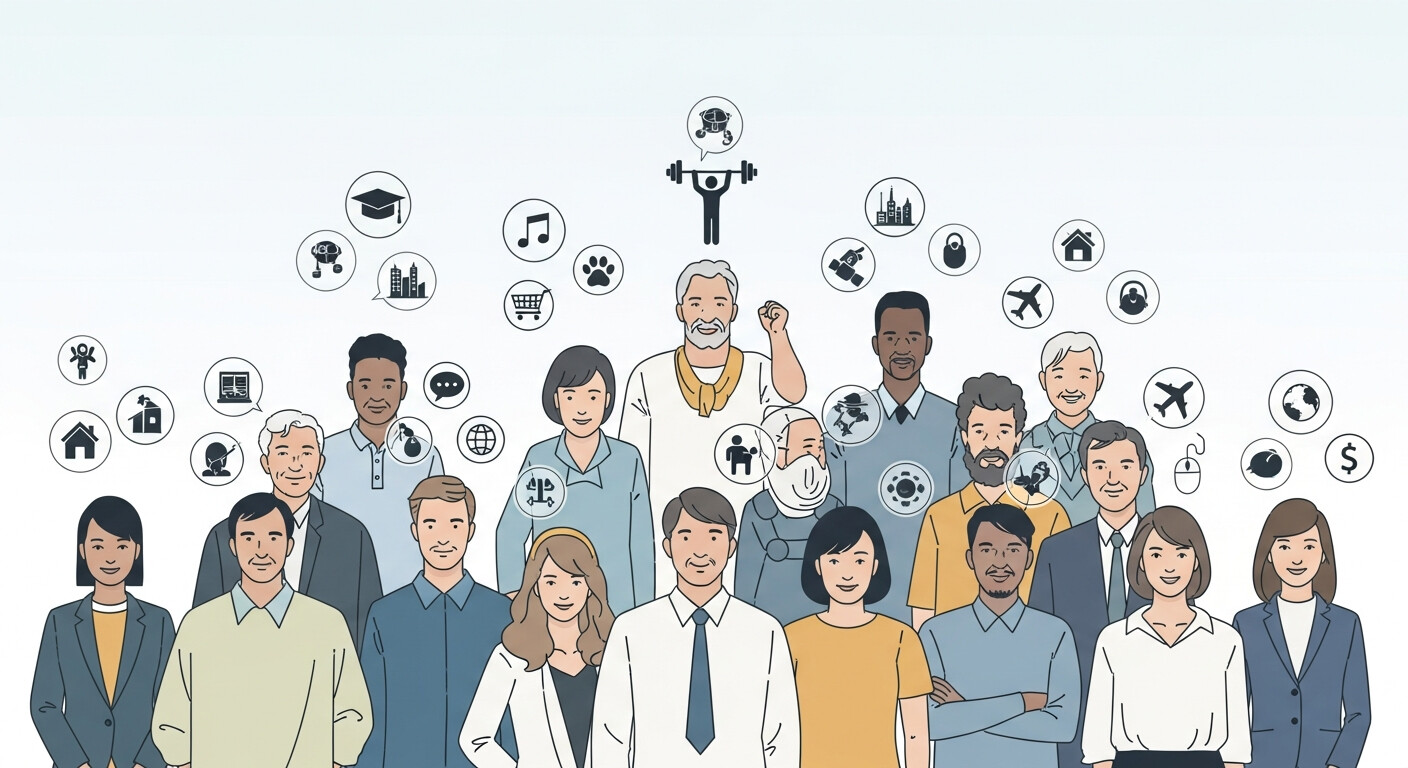
Begin with robust customer personas grounded in the actual behaviors of your customers, rather than hunches. Poll your current customers to find out what their pain points are, what they’re striving for, and how best to communicate with them. Speak to the most recent buyers to understand what made them buy your product instead of a competitor’s?
Don’t just consider basic demographics such as age and location. Take a deep dive into psychographics: What drives your customers? What are the fears that prevent them from making a purchase? How do they talk about their problems?
Mapping the Customer Journey
Before they convert, your audience passes through the lifecycle. They don’t know about a problem at first, then they discover options, they compare, and eventually they decide. Each level demands new marketing methods and conversion tactics.
Use educational materials and information at the top of the funnel (awareness stage) to help prospects understand what’s challenging them. In the consideration phase, send comparison sheets and case studies. To break the ice, provide potential customers with free trials, demos, or consultations which lower the risk of purchase.
Identifying Conversion Barriers
Knowing your audience is understanding what is preventing them from converting. Common reasons are that the value proposition is unclear, the checkout process is too cumbersome, there are not enough trust signals or the potential buyer isn’t yet ready to buy.
Leverage heat mapping tools, abandoned cart data, and exit-intent surveys to detect where visitors are getting stuck. These insights complement methods in our how to increase conversion rates and grow your business guide.
Improve Your Website: Turn Visitors into Customers
Crafting Compelling Value Propositions
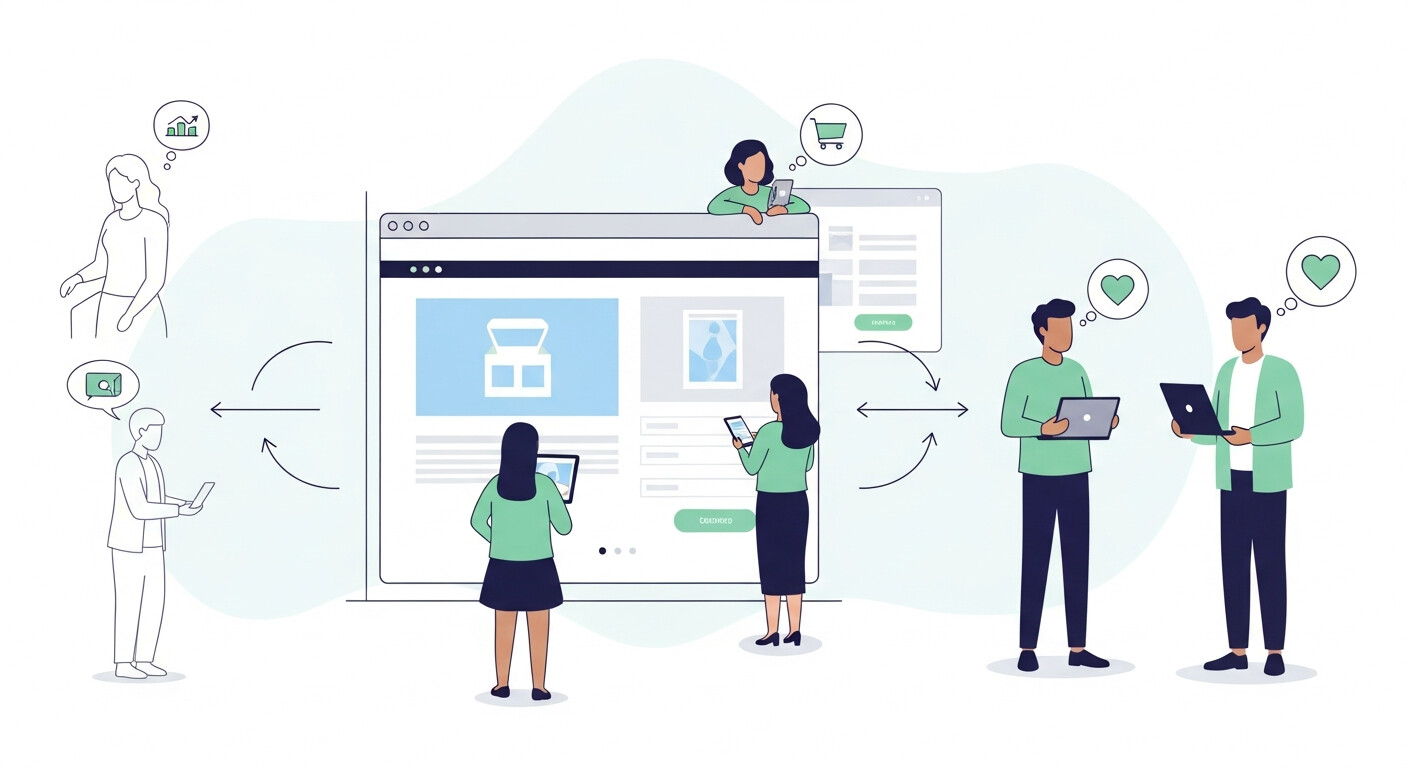
Your value proposition answers the basic question: “What reason do I have to choose you?” It must be conspicuous, definite, and immediately recognizable. Stay away from generic statements, such as “best quality” or “excellent service.” Instead, concentrate on tangible benefits your customers will enjoy.
Experiment with value propositions through A/B testing. Test other headline, supporting text and position on your homepage. Minimal tweaks to your copywriting, and big changes in sales.
Streamlining User Experience
Friction kills conversions. Each additional click, cryptic navigation element or barely loading page drives away potential customers. Run frequent usability tests to find and smooth areas of friction.
Keep your navigation menu simple and relevant to the most crucial pages. Make sure your website loads fast across ALL devices — even a one-second delay can cause conversions to plummet 7%. Have your contact info and primary calls-to-action above the fold without having to scroll.
Implementing Social Proof
People trust other people more than marketing. Testimonials, reviews, case studies, and user-generated content foster credibility. Video testimonials often outperform text due to their authenticity. Social proof integration is a cornerstone of digital CRO strategies.
Feature customer testimonials prominently on important pages, preferably close to calls-to-action. I also flipped the order but I would include details and results over generic praise. Video testimonials tend to outperform text because they come across as more authentic or personal.
Optimizing Forms and Checkout Processes
Long, complex forms kill conversions. Let people fill in as little as you need and design your forms smartly to feel easy to finish. Multi-step forms work well with more involved processes ) They can convert better than single-page ones.
On an e-commerce website, guest checkout capabilities can help increase conversion rates. Some customers opt to leave their cart, instead of registering. Offer the account registration as an then an optional subsequent step after purchase is complete.
Using Social Media: Converting & Engaging Followers

Choosing the Right Platforms
There’s a social media platform for every business, but not all social media platforms are good for every business. Find out where your ideal client hangs out, and concentrate your efforts there. The most effective B2B companies shine on LinkedIn, and visual brands do well on Instagram and Pinterest.
A potential workaround is to account for platform differences when segmenting content. LinkedIn is about professional insight, Instagram is about visual content, and Twitter is about the short-but-sweet updates. Customize to be in line with platform standards.
Creating Content That Converts
The best social media content is a mix of entertainment, education and promotion. Use the 80/20 rule: 80% helpful, non-promotional content, and 20% direct promotion. This method is trust based and maintains follower engagement instead of bombarding the user with sales content.
Humanize your brand by sharing behind-the-scenes posts. Share customer success stories and user-generated content to make social proof. You want to make educational posts that showcase your expertise While providing solutions to help your customers.
Using Social Media Advertising
Social media organic reach still trends downward, forcing most businesses trying to succeed with paid advertising. Ads on social media provide robust targeting capabilities that allow you to connect with particular audience groups using targeted messaging.
Organic reach is declining, making paid campaigns essential. Start with retargeting to convert warm leads, using pixel tracking to target actions like page visits or video engagement. These methods align with strategies in Conversion Rate Optimization Tools Guide.
Begin with retargeting campaigns in order to target those who have previously visited your website. And these warm prospects usually convert better than cold audiences. Leverage pixel tracking to create audiences targeting to actions such as page visits, or video views.
Building Community and Engagement
More interaction means more visibility and more connections that result in more conversions. Respond to comments and messages within 24 hours. Ask questions that encourage discussion. Share user and partner generated content to create community.
Set up social media groups or communities based on your brand or business. These are the spaces where deeper engagement can happen, pushing your company out as a helpful information resource instead of just another company looking to sell something.
Measurement and Meaning: Tools to Optimize Your Results

Essential Conversion Metrics
While conversion rate is the most commonly cited metric, it represents only the tip of the iceberg when evaluating your marketing and conversion performance. To truly understand the effectiveness of your campaigns, you need to monitor multiple metrics across the customer journey.
Click-through rate (CTR) measures how compelling your content or ads are, revealing how well your messaging engages potential customers. Cost per acquisition (CPA) provides insight into marketing efficiency, helping you understand how much you’re spending to gain a single conversion. Meanwhile, long-term business impact is captured by customer lifetime value (CLV), which reflects the revenue potential of your customers over time.
Beyond these primary metrics, consider secondary KPIs to evaluate every stage of your funnel. Track awareness metrics like reach, impressions, and social shares to understand audience exposure. Measure consideration metrics, such as engagement rates, newsletter signups, or demo requests, to see which content resonates. Finally, conversion metrics like purchases, completed sign-ups, or consultation bookings reveal how effectively your marketing and conversion efforts are driving tangible business results.
By analyzing this combination of metrics, you gain a holistic understanding of what’s working, what needs improvement, and how to optimize every stage of your marketing funnel.
Setting Up Proper Analytics
Accurate tracking is the foundation of effective marketing and conversion optimization. Tools like Google Analytics offer a wealth of information, but their value comes from proper setup and strategic monitoring. Start by defining clear goals for your most important actions, whether it’s form submissions, downloads, newsletter sign-ups, or online purchases.
Use UTM parameters to track traffic sources and determine which campaigns are driving meaningful results. Custom dashboards allow you to focus on the metrics that matter most, making it easier to analyze performance at a glance.
Event tracking is particularly valuable for understanding user behavior beyond simple page visits. Measure scroll depth to see if visitors are reading your content, track video completions to evaluate engagement, and monitor form interactions to identify potential friction points. This level of insight helps refine your marketing and conversion strategy, ensuring every touchpoint contributes to your business objectives.
A/B Testing for Continuous Improvement
A/B testing is one of the most powerful tools for improving marketing and conversion outcomes. By testing a single variable at a time, you can identify which elements of your campaigns, landing pages, emails, or calls-to-action drive better results.
Common A/B test candidates include headlines, button colors, call-to-action text, email subject lines, and form layouts. Even small adjustments can have significant impacts on conversion rates. However, it’s critical that tests run long enough to gather statistically significant data. Rushing decisions based on incomplete results can lead to misleading conclusions.
Keep detailed records of all test results and insights learned. Over time, this creates a knowledge base that informs future campaigns, enabling continuous improvement and a more efficient approach to marketing and conversion.
Attribution and Multi-Touch Analysis
Modern customer journeys are rarely linear. Prospects interact with multiple channels—social media, email, search engines, and your website—before making a decision. Single-touch attribution models, such as last-click tracking, fail to capture this complexity and can misrepresent the true impact of your marketing and conversion efforts.
Multi-touch attribution allows you to understand how each marketing channel contributes to conversions. This includes analyzing first-touch interactions that introduce customers to your brand, mid-funnel activities that educate or nurture leads, and last-touch actions that seal the conversion.
For smaller businesses, focusing on first-touch and last-touch attribution is a practical starting point. Additionally, reviewing assisted conversions from other channels helps you understand the cumulative impact of your marketing activities. By combining these insights, you can allocate resources more effectively, optimize campaigns, and ensure that your marketing and conversion strategy is both efficient and measurable.
Creating Your Plan for Marketing and Conversion Success
Marketing, and conversion optimization is not a one-off project — it’s a cycle of continuous testing, learning and evolving. Businesses that succeed approach optimization as a scientific discipline — not some shot in the dark.
Begin with your foundation – deep audience insights and compelling value propositions. Create frictionless, trust-instilling interfaces. Develop valuable content and campaigns that lead prospects toward conversion.
Measure everything, but concentrate on the metrics that are influencing business objectives. Test, test, and test, but be patient in letting your data mean something. Finally, keep in mind that behind all the conversions, there’s a human being making a decision according to their specific needs, fears, and reality.
Personalization, automation and the optimization to the customer experience are the future to marketing and conversion. The companies that master these basics while evolving with new technologies and consumer habits will succeed in an increasingly competitive market.
Cold calling remains controversial—some say it’s outdated, others still swear by it. Find clarity in this article examining the modern role of cold calling in outbound sales.
Frequently Asked Questions (FAQ)
What is marketing and conversion?
Marketing and conversion refer to the strategies and actions businesses take to attract prospects and guide them to complete desired actions, such as signing up, making a purchase, or requesting more information. Effective conversion strategies turn marketing efforts into measurable business results.
How do I know if my conversion strategies are working?
You can measure success by tracking key metrics such as conversion rate, click-through rates, abandoned cart rates, and sales generated from specific campaigns. Using tools like Google Analytics or social media insights helps monitor effectiveness.
Can social media really improve conversion rates?
Yes. While social media is often seen as a brand awareness tool, it also drives conversions when combined with engaging content, retargeting, and clear calls-to-action. Platforms like Instagram, LinkedIn, and Facebook can be leveraged to convert followers into customers.
Do I need a big budget for marketing and conversion optimization?
Not necessarily. Small businesses can implement cost-effective strategies like email marketing, content creation, and retargeting campaigns. Continuous testing, analyzing results, and focusing on high-impact tactics often yield significant improvements even on limited budgets.
How long does it take to see results from conversion optimization?
It varies. Some tactics, like A/B testing of landing pages or retargeting campaigns, can show improvements quickly. Other strategies, like SEO-driven content marketing, may take several months to produce measurable results. Consistency and continuous optimization are key.