

Lead Generation Optimization helps businesses attract the right audience, collect qualified leads, and guide potential customers toward making a purchase. Many companies invest in advertising, SEO, social media, and content marketing to bring visitors to their websites. However, traffic alone does not guarantee sales. Businesses must also create a clear and convenient process that encourages visitors to share their information and continue through the sales journey.
Lead generation optimization focuses on improving landing pages, forms, offers, calls to action, content, and follow-up communication. By using Behavioral analytics, Data-driven optimization, and user behavior analysis, businesses can identify customer needs, reduce conversion barriers, and improve sales opportunities.
What Is Lead Generation Optimization?
Lead Generation Optimization is the process of improving marketing activities and digital experiences to generate more qualified leads. It focuses on attracting people who are likely to need a product or service and encouraging them to take a valuable action.
Understanding Qualified Leads
A qualified lead is a potential customer who matches a business’s target audience and shows interest in its products or services. Qualification may depend on factors such as customer needs, budget, industry, location, purchase intent, or engagement level.
Generating a large number of leads is not always useful if most of them are unlikely to become customers. Lead generation optimization focuses on improving both lead quantity and lead quality.
Why Lead Generation Matters for Sales
Lead generation creates the connection between marketing activity and sales opportunities. Without a consistent flow of relevant leads, sales teams may struggle to reach potential customers.
An optimized lead generation process helps businesses attract prospects, collect useful information, nurture relationships, and improve the chances of turning interest into revenue.
How Lead Generation Optimization Increases Sales
 Optimizing lead generation can improve the entire customer journey, from the first website visit to the final sales conversation. It helps businesses identify opportunities to attract more relevant visitors and guide them toward meaningful actions.
Attracting the Right Audience
Businesses should focus on reaching audiences who are likely to need their products or services. Targeted SEO, content marketing, paid advertising, social media, and email campaigns can help attract relevant prospects.
When the audience is more closely aligned with the business offer, visitors may be more interested in completing forms, requesting information, booking consultations, or making purchases.
Improving Lead Quality
Lead quality can improve when businesses use clear messaging and relevant offers. A landing page that explains exactly who a product is designed for can discourage unsuitable visitors while attracting more appropriate prospects.
Clear qualification questions can also help sales teams understand whether a lead is ready for a sales conversation or requires additional nurturing.
Creating High-Converting Landing Pages
Landing pages are important parts of the lead generation process because they guide visitors toward a specific action. A well-designed landing page should be clear, relevant, and focused on customer needs.
Writing Clear Headlines
The headline should communicate the main benefit of the offer quickly. Visitors should understand what the page provides and why it may be useful to them.
A strong headline should match the message used in the advertisement, search result, email, or social media post that brought the visitor to the page. Consistency can reduce confusion and improve trust.
Using Persuasive Supporting Content
Supporting content should explain the problem, present the solution, and communicate the value of taking action. Businesses can use short sections, customer examples, service details, and benefit-focused statements.
The content should answer common questions without overwhelming visitors. A focused message can help users understand the offer and decide whether to submit their information.
Adding a Clear Call to Action
A call to action should tell visitors exactly what to do next. Examples include “Request a Consultation,” “Download the Guide,” “Get a Free Quote,” or “Book a Demo.”
The call to action should be visible and relevant to the visitor’s intent. Businesses should avoid using multiple competing actions that may distract users from the primary goal.
Improving Lead Capture Forms
Lead capture forms collect information from interested visitors. The design and length of a form can influence whether users complete it or leave the page.
Keeping Forms Simple
Businesses should request only the information needed for the specific marketing goal. A basic content download may require only a name and email address, while a consultation form may need additional business details.
Long forms can create unnecessary friction, especially when visitors are still in the early research stage. Shorter forms can make the initial action easier.
Using Relevant Form Questions
Form questions should support lead qualification without making the process unnecessarily difficult. Businesses may ask about company size, service needs, project timelines, or budget when such information is important.
The questions should be explained clearly so visitors understand why the information is being requested. Transparency can improve trust and reduce hesitation.
Using Behavioral Analytics to Understand Prospects
Behavioral analytics helps businesses examine how users interact with websites, landing pages, forms, and digital content. It can reveal patterns that may not be visible through basic traffic reports.
Identifying Visitor Engagement
Businesses can review actions such as page views, scrolling, button clicks, time on page, form interactions, and navigation paths. These insights help identify which parts of a page attract attention and which sections may be ignored. For example, if visitors frequently view an offer but rarely click the call to action, the page may need clearer messaging or stronger visual guidance.
Finding Conversion Barriers
Behavioral analytics can help identify where visitors experience difficulty. Users may abandon a form because it is too long, leave a page because the offer is unclear, or stop browsing because the website is difficult to navigate. Understanding these patterns allows businesses to investigate potential problems and make focused improvements.
Applying User Behavior Analysis
User behavior analysis involves studying how people interact with a website, campaign, product, or digital experience. It helps businesses understand customer intent and improve the lead generation journey.
Understanding Customer Intent
Different visitors may have different goals. Some users may be gathering information, while others may be comparing providers or preparing to make a purchase.
Analyzing search queries, page visits, content engagement, and form activity can help businesses identify these differences. Marketing messages and offers can then be adjusted to match the visitor’s stage.
Improving Content Relevance
User behavior analysis can show which topics and resources attract the most attention. Businesses can use this information to create content that answers common questions and supports purchasing decisions.
For example, visitors who read pricing information may benefit from comparison guides, service explanations, or consultation offers. Relevant content can help move prospects closer to conversion.
Using Data-Driven Optimization
 Data-driven optimization uses measurable information to improve marketing performance and customer experiences. Instead of relying only on assumptions, businesses evaluate actual user actions and conversion results.
Measuring Important Lead Generation Metrics
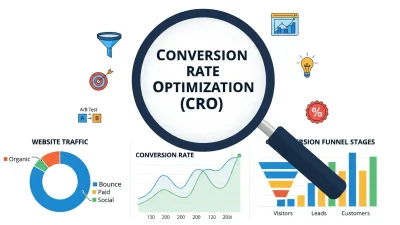
Useful metrics may include landing page conversion rate, form completion rate, cost per lead, lead quality, traffic source, email engagement, and sales-qualified leads.
These metrics help businesses understand whether their lead generation activities are attracting relevant visitors and producing valuable opportunities.
Comparing Marketing Channels
Different marketing channels may produce different types of leads. SEO may attract users who are actively searching for solutions, while social media may introduce the brand to people who are still exploring their needs.
By comparing channel performance, businesses can identify which sources generate qualified leads and which activities require improvement.
Testing Different Strategies
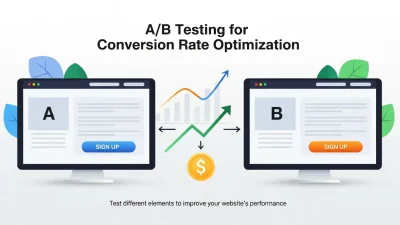
Businesses can use A/B testing to compare different headlines, form designs, offers, images, calls to action, and page layouts. Testing helps determine which version produces stronger results.
A clear testing process should focus on specific goals and allow enough time to collect meaningful information. Results should be reviewed carefully before making major decisions.
Improving Lead Nurturing
Not every lead is ready to purchase immediately. Lead nurturing helps businesses maintain communication and provide useful information until prospects become more prepared to make a decision.
Using Educational Content
Educational content can answer questions and reduce uncertainty. Businesses may send guides, articles, case studies, product explanations, webinars, or comparison resources based on the prospect’s interests. Useful content helps establish expertise and keeps the brand connected to potential customers during the research process.
Personalizing Follow-Up Communication
Follow-up messages can be more effective when they reflect the prospect’s actions or interests. For example, someone who downloads a service guide may receive additional information about pricing, benefits, or implementation.
Personalization should be relevant and responsible. Businesses should avoid sending excessive messages or using customer information in ways that may reduce trust.
Improving Lead Scoring and Qualification
Lead scoring helps businesses prioritize prospects based on their characteristics and engagement. It can make the sales process more organized and help teams focus on leads that may need immediate attention.
Assigning Relevant Lead Scores
Businesses can assign scores based on actions such as visiting important pages, downloading resources, attending webinars, requesting a quote, or opening emails.
Demographic and business information may also be considered when relevant. The scoring system should be reviewed regularly to ensure that it reflects actual sales outcomes.
Aligning Marketing and Sales Teams
Marketing and sales teams should agree on what qualifies as a sales-ready lead. Clear definitions can reduce confusion and improve the handoff process.
Sales teams can provide feedback about lead quality, while marketing teams can use that feedback to improve targeting, content, forms, and campaigns.
Improving Website Trust and Credibility
Visitors may hesitate to submit their information if they do not trust the business. Trust-building elements can help reduce uncertainty and make the lead generation process more comfortable.
Displaying Reviews and Testimonials
Genuine reviews and testimonials can show potential customers that others have used the product or service. Relevant examples may help visitors understand the business’s strengths and customer experience. Testimonials should be accurate and specific. Businesses should avoid using exaggerated claims that may create unrealistic expectations.
Providing Clear Business Information
A professional website should include clear contact details, service information, privacy information, and accessible customer support options. Transparent information can make a business appear more reliable and help visitors feel more comfortable sharing their details.
Optimizing Mobile Lead Generation
 Many visitors access websites through smartphones. If forms, landing pages, or calls to action do not work well on mobile devices, businesses may lose valuable leads.
Improving Mobile Page Design
Mobile landing pages should use readable text, responsive layouts, visible buttons, and simple navigation. Important information should be easy to access without excessive scrolling. Forms should also be tested on different screen sizes to ensure that fields are easy to complete and submit.
Reducing Loading Delays
Slow-loading pages can interrupt the user journey and reduce engagement. Businesses should optimize images, reduce unnecessary scripts, improve hosting performance, and review mobile loading speed. A faster experience can help visitors reach forms and offers more easily.
Common Lead Generation Optimization Mistakes
Businesses can weaken their lead generation performance by focusing on short-term results while ignoring customer experience and lead quality.
Focusing Only on Lead Quantity
A high number of leads does not always mean strong performance. If the leads are not relevant or do not have genuine purchase interest, sales teams may waste time.
Businesses should evaluate lead quality, conversion rates, and revenue contribution alongside total lead volume.
Using Unclear Offers
Visitors may leave when they do not understand what they will receive after submitting a form. Businesses should explain the offer, benefits, process, and next steps clearly.
Ignoring Follow-Up
A lead may lose interest if the business does not respond quickly or provide useful information. Follow-up communication should be timely, relevant, and connected to the prospect’s needs.
How to Build an Effective Lead Generation Strategy
A successful strategy requires clear goals, reliable data, relevant content, and continuous improvement. Businesses should focus on the complete journey rather than optimizing only one landing page or campaign.
Define Clear Objectives
Objectives may include increasing qualified leads, reducing cost per lead, improving consultation bookings, or increasing sales-ready opportunities. Clear goals help businesses select the right channels, metrics, and optimization methods.
Understand the Target Audience
Businesses should research customer needs, challenges, interests, search behavior, and purchasing concerns. This information helps create more relevant offers and messages.
Monitor and Improve Results
Performance should be reviewed regularly through analytics, customer feedback, sales reports, and campaign data. Businesses can then prioritize improvements that have the strongest connection to lead quality and revenue.
Frequently Asked Questions
1. What is Lead Generation Optimization?
Lead Generation Optimization is the process of improving marketing campaigns, landing pages, forms, offers, and follow-up activities to attract and convert more qualified leads.
2. Why is Lead Generation Optimization important for sales?
It helps businesses attract relevant prospects, improve lead quality, reduce conversion barriers, and create more opportunities for sales teams to close deals.
3. What is Behavioral analytics?
Behavioral analytics examines how users interact with websites, content, forms, and digital platforms. It helps businesses identify engagement patterns and possible conversion barriers.
4. How does user behavior analysis improve lead generation?
User behavior analysis helps businesses understand customer intent, content preferences, navigation patterns, and actions. These insights can be used to improve page design, offers, messaging, and calls to action.
5. What is Data-driven optimization?
Data-driven optimization uses measurable performance information to improve marketing and customer experiences. It may involve testing landing pages, reviewing conversion rates, and comparing marketing channels.
6. How can landing pages generate more leads?
Landing pages can generate more leads through clear headlines, relevant offers, persuasive content, simple forms, strong calls to action, trust signals, and mobile-friendly design.
7. Should lead generation forms be short?
Forms should request only the information needed for the specific goal. Short forms can reduce friction, while additional questions may be useful when lead qualification requires more details.
8. How can businesses improve lead quality?
Businesses can improve lead quality by targeting the right audience, using clear messaging, creating relevant offers, adding qualification questions, and aligning marketing with sales requirements.
9. What metrics should businesses track?
Important metrics include conversion rate, cost per lead, form completion rate, lead quality, traffic source, sales-qualified leads, customer acquisition cost, and revenue generated from leads.
10. How often should lead generation strategies be optimized?
Businesses should monitor performance regularly and make improvements when data shows conversion problems, changes in customer behavior, or new business goals. Continuous testing supports long-term performance.
Conclusion
Lead Generation Optimization helps businesses improve the way they attract, engage, qualify, and convert potential customers. By creating focused landing pages, simplifying forms, improving website experiences, and providing relevant offers, businesses can increase the number of meaningful sales opportunities. Behavioral analytics and user behavior analysis help identify how prospects interact with digital experiences, while Data-driven optimization supports more informed marketing decisions. Lead generation success also depends on effective nurturing, clear communication, trustworthy content, and strong cooperation between marketing and sales teams. When these elements work together, businesses can improve lead quality, reduce wasted resources, and create a more consistent path toward increased sales.