
One of the most effective ways to grow your business is by increasing your conversion rate. Whether you’re selling products, generating leads, or encouraging downloads, your success depends on how effectively you can motivate visitors to take action.
But what exactly does “increasing your conversion rate” mean—and how can you achieve it? This guide explores proven strategies that help you optimize every stage of your sales process, especially online, to drive measurable results.
By the end, you’ll have a clear roadmap for transforming more visitors into loyal customers and significantly boosting your business performance.
What Is a Conversion Rate?
The conversion rate measures the percentage of visitors to your website or landing page who complete a desired action, whether that be making a purchase, subscribing to company notifications, or signing up at a hotel.
That means, if 100 people visit your page and 10 of them purchase your product, then your conversion rate is 10%.
Why does that matter? Because your conversion rate is one of the most important factors influencing profitability, by increasing conversions without having to generate additional visitors, your campaigns are becoming more efficient and cost-effective than ever before.
How Do You Calculate Conversion Rate?
The formula is simple:
Conversion Rate = (Number of Conversions / Total Visitors) x 100
For instance, if you had 500 visitors and 25 conversions, your rate would be:
(25/500) x 100 = 5%
Once you’ve calculated this number, you’ll have a benchmark to improve upon!
7 Strategies to Increase Your Conversion Rate
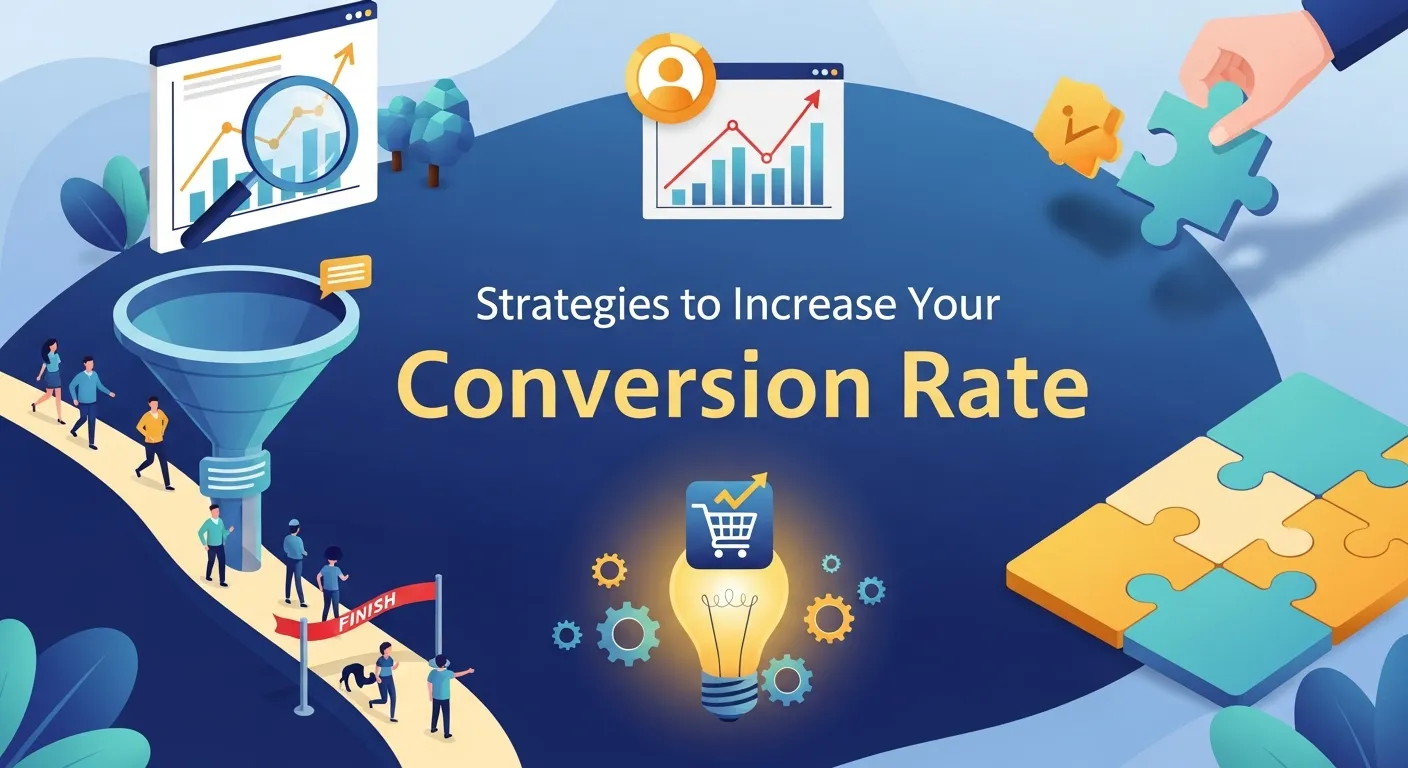
Here’s how to help your website’s visitors take action.
1. Optimize Your Landing Pages
Your landing page is often the first thing visitors see, making it a major factor in their decision to convert. A well-optimized landing page is clear, engaging, and action-oriented.
- Use a clean layout that avoids unnecessary clutter. Your main goal should shine through visually.
- Create a compelling headline that grabs attention immediately. Speak directly to the pain points or goals of your audience.
- Add clear CTAs (Calls to Action) that guide users. Use action verbs like “Get Started Now” or “Claim Your Offer Today.”
2. Improve Page Load Speed
Did you know that 1 in 4 visitors will leave your site if it takes longer than 4 seconds to load? Your conversion rate can take a serious hit if your website is slow.
Use tools like Google PageSpeed Insights to uncover areas for improvement, and ensure your pages are optimized for both desktop and mobile users. A faster site creates a seamless user experience, keeping potential customers engaged.
3. Leverage Social Proof
People trust other people. That’s why showcasing social proof is such an effective way to boost conversions.
Here’s what this can look like:
- Customer reviews and testimonials are displayed prominently on key pages.
- Case studies that highlight successful outcomes with your product or service.
- Trust badges like security seals or payment guarantees for e-commerce.
- User-generated content, such as photos of customers using your products.
4. Create a Strong Value Proposition
Visitors need to know why they should choose you. A value proposition communicates what sets your product or service apart.
Your value proposition should answer three questions:
- What problem does your product solve?
- What are the key benefits?
- Why should someone choose you over a competitor?
5. Reduce Friction in Your Forms
If your goal involves users filling out a form, such as signing up or subscribing, make sure the process is as easy as possible. Long or complicated forms can drive people away.
- Only ask for essential information. For instance, do you need their phone number at this stage?
- Use autofill to save visitors’ time when entering their details.
- Clearly label each field so users know what’s required.
6. Use Targeted Personalization
Personalization has come a long way in marketing. By tailoring your site and offers to individual preferences, you can dramatically increase engagement and conversions.
Ways to personalize:
- Dynamic content: Show personalized greetings, product recommendations, or local offers based on user data.
- Email campaigns: Send targeted follow-ups based on previous user actions.
- Retargeting Ads: Remind visitors about the product they browsed but didn’t purchase.
7. Implement Exit-Intent Popups
Don’t lose visitors without giving one last pitch! Exit-intent popups appear when users are about to leave your site and can help re-engage them.
These popups can include:
- A discount code or free shipping offer.
- A limited-time deal.
- Encouragement to subscribe to your newsletter in exchange for a free resource.
Optimize Your Ad and Media Buying Strategy
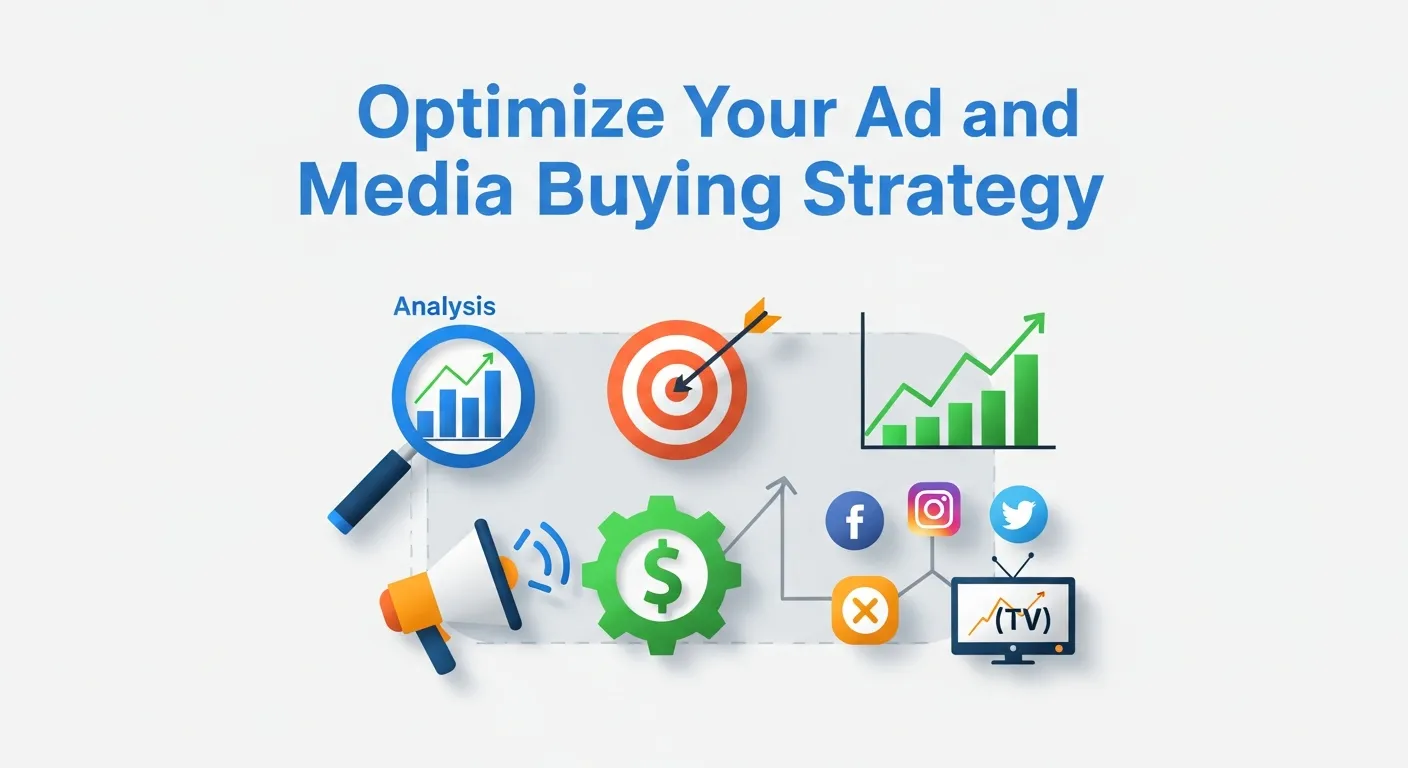
Even the most beautifully designed and conversion-optimized website won’t deliver results if the right audience never sees it. This is where media buying becomes essential. Media buying is the process of purchasing advertising space across digital platforms—like Google Ads, Meta, LinkedIn, or programmatic networks—to ensure your message reaches people who are genuinely interested in your product or service.
A strategic approach to media buying doesn’t just drive clicks; it drives qualified clicks—visitors who are ready to take action. Instead of wasting money on broad, unfocused campaigns, data-driven ad placements ensure every dollar contributes to measurable business growth.
For example, smart retargeting campaigns can bring back users who have shown interest but haven’t yet converted, while well-crafted ad creatives can significantly improve engagement. To learn how professional campaign management turns clicks into conversions, check out this guide on how media buying services drive growth.
Key Steps to Improve Media Buying ROI:
- Define your audience precisely using analytics, CRM data, and behavior insights.
- A/B test ad creatives and headlines to find out which version drives better engagement.
- Monitor and optimize bids to maintain an efficient cost per acquisition (CPA).
- Use conversion tracking tools to measure real performance—not just vanity metrics.
- Leverage retargeting campaigns to re-engage users who have interacted with your site.
| Media Buying Element | Description | Conversion Impact |
|---|---|---|
| Audience Targeting | Identify and focus on high-intent audiences | Improves quality traffic |
| Creative Optimization | Test visuals, copy, and CTAs regularly | Boosts engagement and CTR |
| Landing Page Alignment | Ensure ad promise matches page content | Reduces bounce and confusion |
| Retargeting | Show relevant ads to past visitors | Increases return conversions |
| Budget Allocation | Focus spending on high-performing channels | Maximizes ROI |
A well-optimized media buying strategy ensures you attract traffic that converts, instead of paying for unqualified clicks. When every impression and interaction is backed by strategy, your ad budget becomes a revenue engine rather than an expense.
Master Email Marketing for Higher Conversions
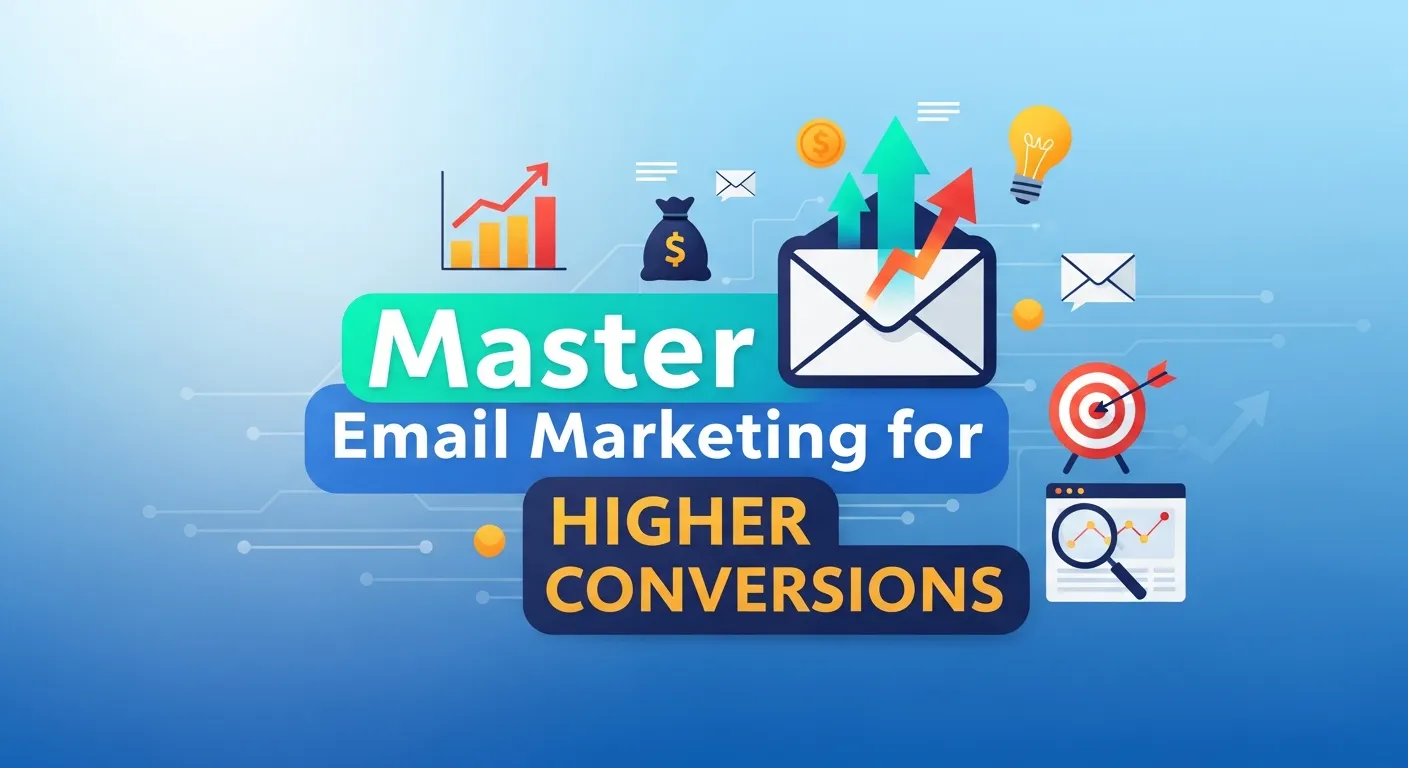
In a world overflowing with digital noise, email marketing remains one of the most powerful, personal, and cost-effective tools for driving conversions. But successful email campaigns aren’t about sending bulk messages—they’re about delivering the right message to the right person at the right time.
By creating relevant, value-driven content and pairing it with automation, you can nurture prospects seamlessly from awareness to purchase. Segmenting your audience ensures every email feels personal and timely—helping you build stronger relationships and brand trust.
For a deeper understanding of engagement and performance tactics, see this in-depth article on B2B email marketing open rates and conversions.
Proven Email Conversion Techniques:
- Segment your audience by behavior, lifecycle stage, or purchase intent.
- Write attention-grabbing subject lines that create curiosity and urgency.
- Include a single clear CTA in each email to reduce distractions.
- Optimize design and copy for mobile users, as more than half of emails are opened on phones.
- Automate follow-ups using drip campaigns to consistently nurture leads.
| Email Optimization Focus | Description | Benefit |
|---|---|---|
| Personalization | Use recipient name, preferences, or behavior data | Improves engagement & loyalty |
| Drip Sequences | Automated nurturing over time | Keeps leads warm until ready to buy |
| A/B Testing | Compare subject lines and CTAs | Optimizes open and click-through rates |
| Content Relevance | Provide value through education or offers | Builds trust and reduces unsubscribes |
| Timing Optimization | Send at peak engagement hours | Increases open rate and response |
Email marketing is more than a communication channel—it’s a conversion powerhouse. By refining your segmentation, timing, and personalization, you can dramatically improve your ROI and customer retention rate.
Embrace Voice Search Optimization
The rapid growth of voice assistants like Siri, Alexa, and Google Assistant has fundamentally changed how users search for information. Today, voice search optimization is no longer optional—it’s a competitive necessity for modern businesses. Voice search queries are conversational and intent-driven, meaning users are closer to taking action when they ask questions verbally.
If your content isn’t optimized for natural language or quick answers, your brand might be missing out on a growing segment of ready-to-convert consumers. Voice search focuses heavily on local and mobile results, so aligning your SEO strategy with these behaviors ensures stronger visibility and conversion opportunities.
To better understand how voice-driven interactions are reshaping brand discovery, explore this article on voice search optimization and brand readiness.
Voice Optimization Best Practices:
- Use conversational language throughout your content to mirror real speech patterns.
- Answer specific, question-based queries that start with “what,” “how,” or “where.”
- Prioritize mobile and local SEO, since most voice searches are made on smartphones.
- Optimize page speed and readability, as voice results favor fast, concise content.
- Implement structured data (schema markup) to help search engines understand context.
| Optimization Area | Implementation Tip | Conversion Benefit |
|---|---|---|
| Conversational Keywords | Use natural, long-tail questions | Matches how users speak |
| Local SEO | Update business listings and NAP info | Improves “near me” searches |
| Featured Snippets | Provide clear, concise answers | Increases voice assistant visibility |
| Mobile Experience | Ensure responsive, fast-loading design | Enhances UX and engagement |
| Schema Markup | Add structured data for context | Boosts search ranking accuracy |
Voice optimization bridges the gap between convenience and conversion. As consumers increasingly rely on verbal commands, your brand’s readiness in this space can determine whether you’re heard—or ignored—by potential customers.
Build Trust Through Transparency
One of the most overlooked factors affecting your conversion rate is trust. Visitors are far more likely to take action when they feel confident in your brand’s integrity and reliability. Transparency helps remove hesitation and establishes emotional credibility — the foundation for long-term customer relationships.
Be open about your pricing, return policies, data usage, and security measures. People want to know who they’re buying from and what to expect. A transparent approach also reduces friction and uncertainty, two major barriers to conversion.
How to Build Trust and Boost Conversions:
- Showcase genuine testimonials and case studies with verified results.
- Highlight certifications or awards that prove your credibility.
- Include clear pricing with no hidden fees or fine print.
- Display secure payment badges to assure visitors that their data is safe.
- Be honest about product limitations—it actually increases authenticity.
When users believe your business is open and authentic, they’re far more likely to complete a purchase, sign up, or share personal information. Remember, a transparent brand builds a higher conversion rate because it builds confidence first.
Strengthen Your Call-to-Action (CTA) Strategy
A conversion rate lives or dies by the effectiveness of your call-to-action. Even a small tweak in how your CTA is designed, placed, or worded can create a significant jump in performance. Your CTA is the final step between interest and action—it’s where curiosity becomes commitment.
To maximize its impact, make your CTAs visually distinct and psychologically compelling. They should be easy to find, easy to understand, and motivating enough to encourage an immediate response.
Tips to Improve CTA Performance:
- Use action-oriented verbs like “Get Started,” “Join Free,” or “Download Now.”
- Create urgency or exclusivity by adding words like “Today” or “Limited Offer.”
- Keep the message short and clear, avoiding clutter or vague language.
- Test different colors and placements to find what resonates most with your audience.
- Match CTA intent with the user’s stage in the buying journey (for example, “Learn More” for new visitors vs. “Buy Now” for returning ones).
Your CTA is not just a button—it’s a psychological bridge between user interest and engagement. A strong, clear, and compelling call-to-action can lift your conversion rate dramatically with minimal design changes.
Use Data and Analytics to Guide Decisions
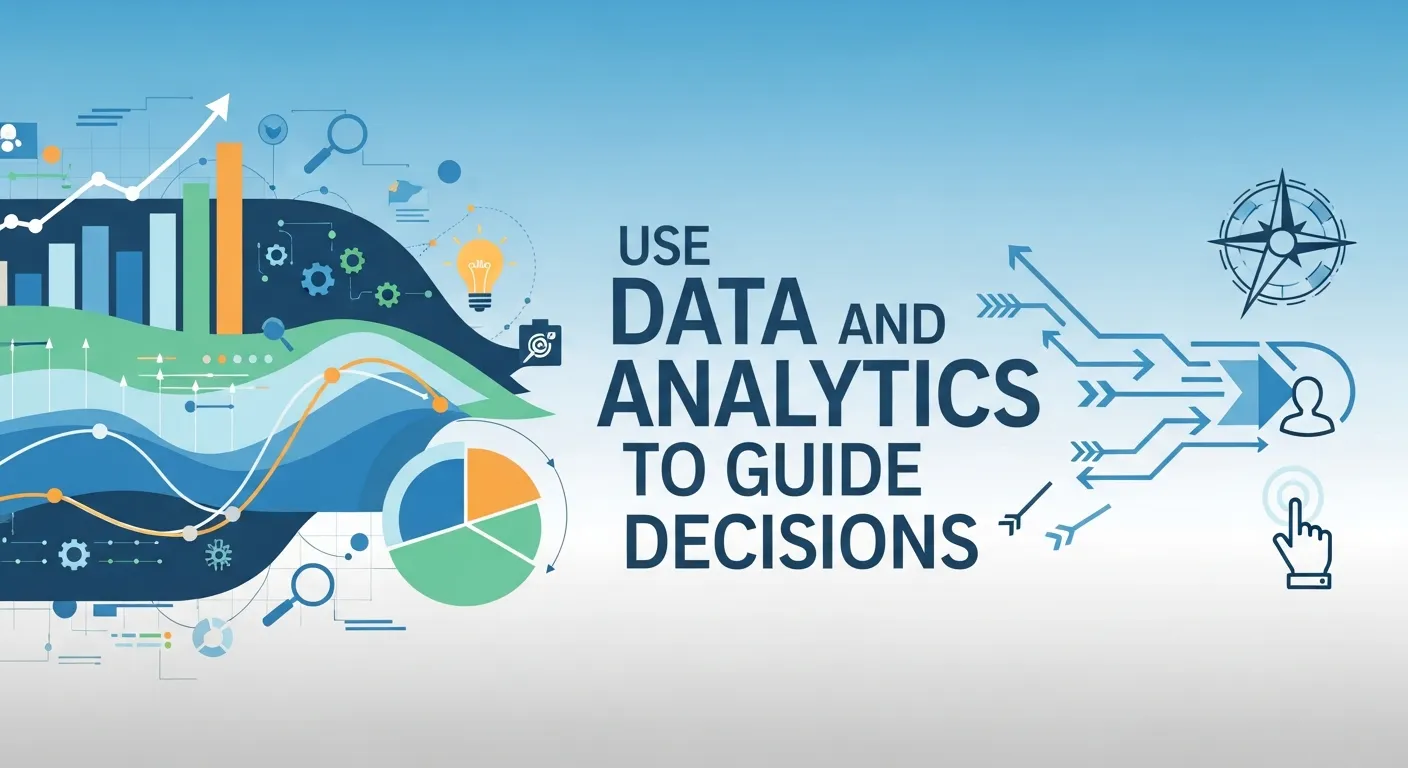
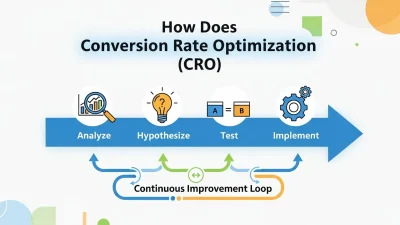
Improving your conversion rate isn’t a one-time task—it’s an ongoing process of testing, learning, and adapting. The best-performing websites and marketing funnels rely heavily on data-driven decisions. By tracking how users behave on your site, you can uncover insights that lead to measurable improvements.
Analytics tools like Google Analytics, Hotjar, or Microsoft Clarity help you understand what’s working and where users drop off. When you know which pages perform well and which ones don’t, you can optimize strategically instead of guessing.
How to Use Data Effectively:
- Track conversion funnels to see where users abandon their journey.
- Analyze traffic sources to understand which channels bring high-quality visitors.
- Run A/B tests to compare different layouts, headlines, or CTAs.
- Use heatmaps and session recordings to identify usability issues.
- Monitor performance trends over time rather than relying on single data points.
Making decisions based on real user data ensures that every change you implement contributes to a stronger, more predictable conversion rate. Data doesn’t just reveal problems—it highlights opportunities for faster growth.
How Do You Know If It’s Working?
Implementing strategies is only half the battle — the real power comes from knowing which ones actually improve your conversion rate. Tracking, measuring, and analyzing results allows you to identify what’s working, what isn’t, and where the biggest opportunities for growth lie.
Your conversion rate tells a story: it shows how effectively your website turns visitors into leads, subscribers, or customers. To make data-driven improvements, you need to monitor performance continuously using the right tools and metrics.
Start by setting clear goals for each page or campaign. Then, use analytics to evaluate how users interact with your site and where they drop off. Modern tools like Google Analytics, Hotjar, Microsoft Clarity, or Crazy Egg can help you visualize the customer journey and uncover friction points that limit conversions.
When analyzing your results, focus on both quantitative data (numbers and percentages) and qualitative insights (user behavior and feedback). Together, these give you a complete picture of your website’s performance.
Key Indicators That Your Conversion Strategies Are Working:
- Improved conversion rates on high-traffic pages, showing that your optimization efforts are paying off.
- Higher A/B testing performance, with one version consistently outperforming the other.
- Lower bounce rates and increased time on page suggest that visitors find your content relevant and engaging.
- More completed forms, sign-ups, or purchases indicate stronger user trust and interest.
- Enhanced user flow, where fewer people abandon the site mid-journey.
Regularly reviewing these metrics helps you refine and scale your strategies for maximum impact. Remember, conversion optimization is an ongoing process — each insight guides your next improvement. The better you understand how your users behave, the more effectively you can lift your conversion rate over time.
Turn Visitors into Customers
At the heart of every successful digital strategy lies one goal — turning visitors into loyal customers. No matter how much traffic your website receives, it only becomes valuable when those visitors take meaningful actions. That’s why focusing on your conversion rate is so critical to long-term success.
To achieve this, you need to align design, content, and user experience with the expectations of your audience. A well-optimized website doesn’t just attract attention — it builds trust, removes friction, and motivates users to take the next step.
Instead of relying on assumptions, use a customer-centered approach that focuses on clarity, simplicity, and relevance. Craft clear messaging that addresses your audience’s pain points and shows them how your solution fits their needs. Enhance page load speed to reduce frustration, and use authentic social proof—like testimonials and reviews—to reassure visitors that others trust your brand.
Testing is key. Run small experiments and monitor the results to find what truly resonates with your visitors. Even minor adjustments — such as refining headlines, repositioning buttons, or simplifying a form — can lead to major improvements in your conversion rate.
Actionable Tips to Turn Visitors into Customers:
- Simplify navigation so users can find what they need effortlessly.
- Use persuasive copywriting that focuses on benefits rather than features.
- Highlight customer success stories to showcase real results.
- Provide multiple contact or purchase options, giving visitors flexibility.
- Continue testing and refining based on performance data.
By personalizing experiences and continuously optimizing, you’ll stop playing the guessing game and start building predictable, repeatable growth. Each improvement, no matter how small, compounds over time—resulting in more leads, higher revenue, and stronger customer loyalty.
Now is the perfect time to optimize your site, refine your strategy, and take your conversion rate to new heights. Every visitor is a potential customer — the only question is whether your website helps them make that decision with confidence.
Frequently Asked Questions About Conversion Rate Optimization (CRO)
1. What is Conversion Rate Optimization (CRO)?
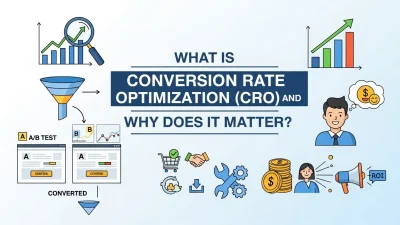
Conversion Rate Optimization (CRO) is the process of improving your website or landing page so that more visitors take the desired action—whether that’s making a purchase, signing up for a newsletter, or filling out a contact form. It involves analyzing user behavior, testing variations, and refining design, messaging, and user experience to increase the overall conversion rate without necessarily increasing traffic.
2. Why is Conversion Rate Optimization important for businesses?
CRO is one of the most cost-effective ways to grow your business. Instead of spending more on ads to attract new visitors, you maximize the value of the traffic you already have. A strong conversion rate means you’re turning more of your existing audience into paying customers, improving profitability, and strengthening long-term sustainability.
3. How can I start improving my website’s conversion rate?
Start by analyzing your website performance using tools like Google Analytics or Hotjar to understand where users drop off. Then, focus on optimizing key pages with clearer calls-to-action, faster load times, simplified forms, and compelling headlines. For practical, step-by-step strategies, explore this complete guide on CRO strategies for business growth.
4. What are the most common factors that affect conversion rate?
Several factors influence your conversion rate, including page design, message clarity, CTA placement, page load speed, mobile responsiveness, and the overall user experience. Social proof, trust signals, and the perceived value of your offer also play a major role in a visitor’s decision to convert.
5. How does A/B testing help in CRO?
A/B testing allows you to compare two versions of a webpage or element (like headlines or CTA buttons) to see which performs better. By systematically testing one variable at a time, you gain valuable data about user preferences and can make informed design decisions that directly improve your conversion rate over time.
6. What’s the ideal conversion rate for a website?
There’s no universal “ideal” conversion rate—it varies by industry, audience, and goal. For e-commerce sites, a good rate might range from 2% to 5%, while for SaaS or lead-generation sites, 5% to 10% is often considered strong. The best benchmark is your current performance—then aim for steady, measurable improvement.
7. How do user experience (UX) and conversion rate connect?
User experience (UX) and conversion rate are deeply connected. A smooth, intuitive website makes it easier for visitors to complete actions, while poor design or confusing navigation discourages engagement. Improving UX through clear layout, consistent branding, and accessible design can dramatically increase conversions.
8. What skills are needed to build a career in CRO?
A career in CRO requires a mix of analytical and creative skills. You need to understand user psychology, data interpretation, UX design, A/B testing, and marketing analytics. Strong communication and copywriting abilities also help you convey value effectively. If you’re interested in becoming a CRO professional, check out this guide on building a career in CRO strategies to get started.
9. What are advanced CRO strategies for fast business growth?
Advanced CRO techniques go beyond basic optimizations. They include behavioral targeting, AI-driven personalization, multivariate testing, dynamic content, and predictive analytics. These methods help businesses fine-tune user experiences at a granular level, achieving higher engagement and faster revenue growth. For a deeper dive into these methods, visit this article on advanced CRO strategies for business growth.
10. How often should I review and update my CRO strategy?
Conversion rate optimization is not a one-time project—it’s an ongoing process. Regularly review your analytics data, run new A/B tests, and update your design or copy to match user behavior trends. Continuous testing ensures you stay ahead of competitors and maintain steady growth, even as market dynamics and customer preferences evolve.