
The Purchase Decision Process describes how customers move from recognizing a need to evaluating available options and ultimately deciding whether to buy a product or service. Understanding this process is important for businesses because customers rarely make purchasing decisions based on a single interaction. Their choices can be influenced by information, price, product quality, brand reputation, customer reviews, user experience, and many other factors.
In the digital marketplace, customers can research products, compare alternatives, read reviews, watch demonstrations, and evaluate prices before completing a purchase. This creates multiple opportunities for businesses to influence the customer journey. However, it also means that businesses need to understand what customers are doing at each stage.
A well-understood Purchase Decision Process can help marketers identify customer needs, improve website experiences, create relevant content, and remove barriers that prevent conversions. By combining website analytics, user behavior analysis, and Data-driven optimization, businesses can make informed improvements that support customers throughout their buying journey.
What Is the Purchase Decision Process?
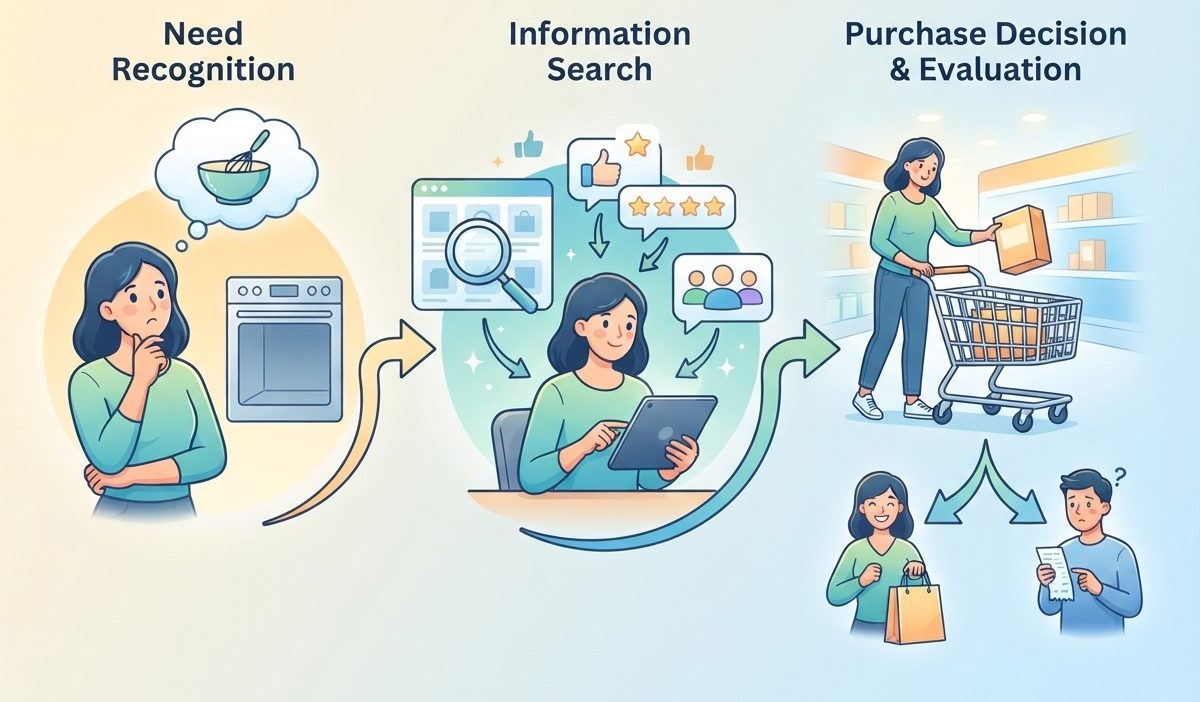
The Purchase Decision Process is the sequence of steps customers typically follow before, during, and after making a purchase. Although the exact journey can vary depending on the product, industry, price, and customer, the process commonly includes need recognition, information search, evaluation of alternatives, purchase decision, and post-purchase evaluation.
Need Recognition
The process usually begins when a customer recognizes a problem, need, or desire. This could happen because of a personal requirement, a change in circumstances, advertising, social influence, or exposure to new information.
For example, a customer may realize that their current software is no longer suitable for their business. This recognition creates motivation to explore possible solutions. Businesses can address this stage by creating educational content that helps customers understand problems and potential solutions.
Information Search
After recognizing a need, customers often begin searching for information. They may use search engines, social media, websites, videos, product reviews, comparison articles, or recommendations from other people.
At this stage, businesses should provide accurate and useful information that answers common customer questions. Educational blog posts, guides, FAQs, product comparisons, and detailed service pages can help customers understand their options.
Evaluation of Alternatives
Customers rarely consider only one option. They may compare multiple brands based on price, features, quality, benefits, reviews, customer support, reputation, and convenience. The evaluation stage can significantly affect conversion rates because customers are deciding which option best matches their needs.
Businesses can support this stage by clearly communicating their value proposition, providing transparent information, showcasing customer experiences, and making important product or service details easy to find.
Purchase Decision
After evaluating alternatives, the customer may decide to purchase a product or service. However, even customers with strong purchase intent can abandon the process if they encounter unexpected costs, complicated forms, unclear policies, technical problems, or a lack of trust.
A simple checkout process, clear pricing, multiple payment options, transparent policies, and strong trust signals can make the purchasing experience easier.
Post-Purchase Evaluation
The Purchase Decision Process does not necessarily end when the transaction is completed. Customers evaluate whether the product or service meets their expectations.
A positive experience can encourage repeat purchases, referrals, and stronger brand relationships. A negative experience can result in refunds, complaints, negative reviews, or customer churn.
Businesses should therefore continue engaging customers after purchase through support, onboarding, feedback collection, useful resources, and personalized communication.
How the Purchase Decision Process Affects Conversion Rates
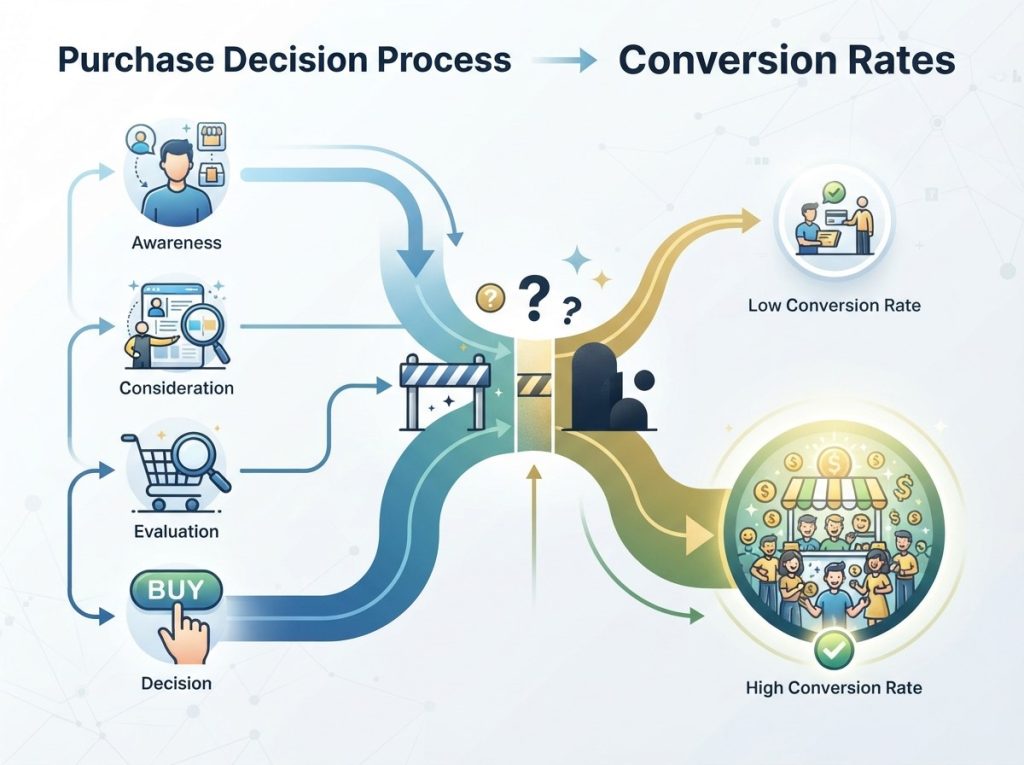 Conversion rates are influenced by how effectively a business supports customers throughout their decision-making journey. When customers cannot find relevant information or encounter unnecessary friction, they may leave without completing the desired action.
Matching Content With Customer Needs
Customers at different stages require different types of information. Someone who is discovering a problem may need educational content, while someone comparing products may want detailed specifications, pricing, reviews, or comparisons.
Matching content with customer needs can help businesses move visitors from one stage to another. Relevant content can also reduce uncertainty and help customers feel more confident about their decisions.
Building Trust Before the Purchase
Trust is an important factor in digital purchasing decisions. Customers may hesitate to buy when they are uncertain about product quality, business credibility, payment security, delivery, returns, or customer support.
Businesses can strengthen trust through authentic reviews, testimonials, case studies, clear policies, secure payment experiences, transparent pricing, and accessible customer support.
Using Website Analytics to Understand Purchase Decisions
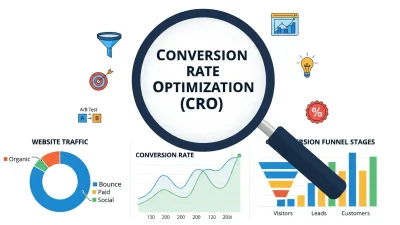
Website analytics provides valuable information about how visitors interact with a website. Businesses can use analytics data to identify which pages attract visitors, where users spend time, which pages lead to conversions, and where potential customers leave.
Identifying High-Value Pages
Some website pages may contribute more strongly to conversions than others. Product pages, pricing pages, comparison pages, service pages, and case studies may influence customers during their evaluation process.
By examining traffic and conversion patterns, businesses can identify important pages and determine whether those pages provide sufficient information for customers.
Finding Conversion Drop-Off Points
Website analytics can also reveal where visitors stop progressing toward conversion. For example, many visitors may reach a product page but leave before adding an item to their cart. Another group may begin checkout but abandon it before completing payment.
These patterns provide useful signals for further investigation. Businesses can examine page content, navigation, forms, technical performance, pricing, and other factors that may contribute to abandonment.
The Role of User Behavior Analysis
User behavior analysis focuses on how people interact with websites, applications, content, and other digital experiences. It provides a deeper understanding of what customers do rather than simply measuring overall traffic.
Understanding Navigation Patterns
Customers may follow different paths before converting. Some visitors may read several blog posts before visiting a product page, while others may arrive directly on a pricing page after searching for a specific solution. Analyzing these navigation patterns can help businesses understand common customer journeys and identify important touchpoints. This information can support better internal linking, navigation structures, content recommendations, and calls to action.
Analyzing Engagement Signals
Engagement signals such as page views, scrolling, clicks, searches, video interactions, downloads, and form interactions can provide useful behavioral information.
However, individual engagement signals should not automatically be interpreted as purchase intent. A visitor spending significant time on a page may be highly interested, or they may simply be struggling to find the information they need. Combining multiple signals provides a more reliable understanding of customer behavior.
Data-Driven Optimization for Better Conversions
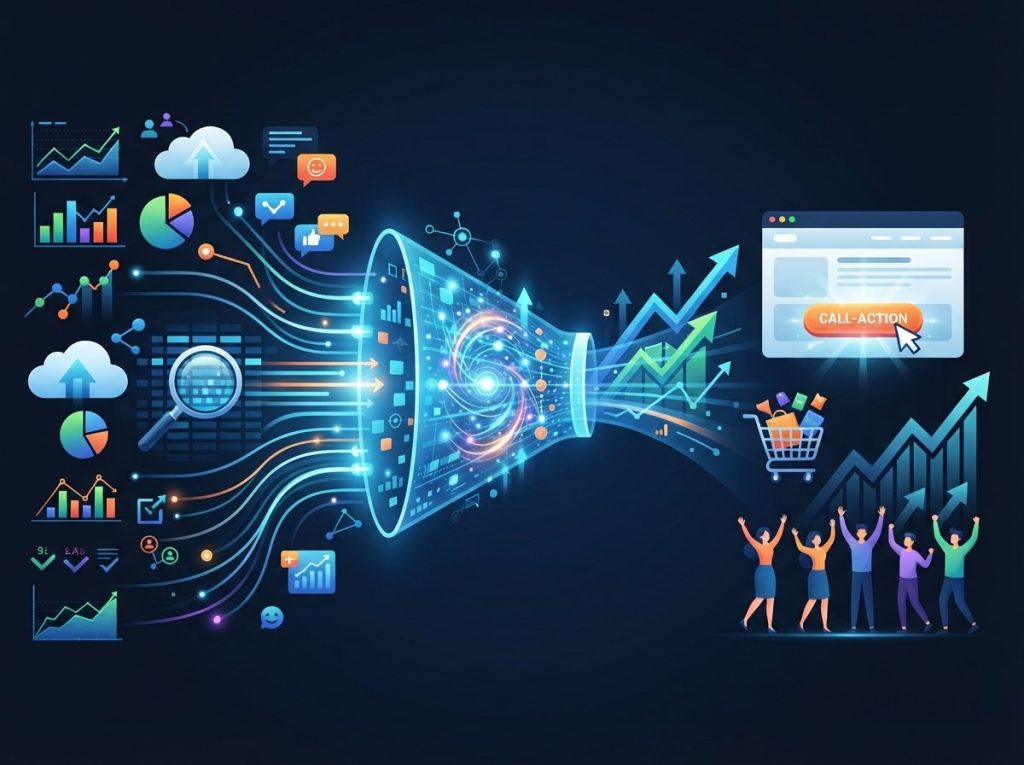 Data-driven optimization involves using measurable information to improve marketing campaigns, websites, content, and customer experiences. Instead of making changes based only on assumptions, businesses can use behavioral and conversion data to determine where improvements may be needed.
Testing Different Website Elements
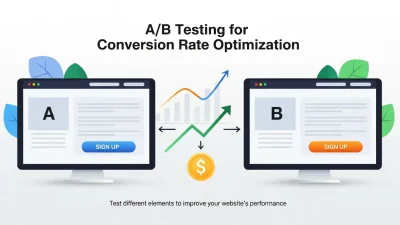
Businesses can test different versions of headlines, calls to action, product descriptions, page layouts, forms, images, and other elements. For example, an e-commerce business might test different product page layouts to determine which version generates more completed purchases. A service business could test different call-to-action messages on a landing page. Testing should focus on meaningful business objectives rather than isolated engagement metrics.
Improving the Checkout Experience
Checkout is one of the most important points in the Purchase Decision Process. Even customers who have decided to buy may abandon their purchase when the checkout experience becomes complicated.
Businesses can evaluate the number of checkout steps, form requirements, payment options, unexpected costs, account requirements, and error messages. Simplifying unnecessary steps and communicating important information clearly can reduce friction during the final stage of the customer journey.
Personalization and the Purchase Decision Process
Personalization can help businesses provide information that is more relevant to individual customers. Customers may have different needs depending on their industry, experience level, budget, previous interactions, and stage in the buying journey.
Delivering Relevant Recommendations
Businesses can use customer interactions to recommend relevant products, services, articles, or resources. For example, someone who has repeatedly viewed a specific product category may receive related recommendations or educational resources. When recommendations are relevant, customers may find it easier to continue researching and evaluating their options.
Supporting Returning Visitors
Returning visitors may already have knowledge about the brand or product. Showing the same introductory information repeatedly may not provide much value.
Businesses can use previous interactions to provide more advanced information, comparisons, product details, or offers that correspond to the customer’s current stage.
Common Barriers in the Purchase Decision Process
Customers can abandon their purchasing journey for many reasons. Understanding these barriers is important for improving conversion rates.
Unclear Product or Service Information
When customers cannot understand what they are buying, they may delay their decision. Detailed descriptions, specifications, benefits, FAQs, demonstrations, and comparison information can reduce uncertainty.
Complicated User Experience
Poor navigation, slow pages, confusing layouts, difficult forms, and technical errors can create friction. Even strong marketing campaigns may struggle to convert if the website experience does not meet customer expectations.
Lack of Trust Signals
Customers may hesitate when a website does not clearly communicate its credibility. Reviews, testimonials, security information, guarantees, transparent policies, and accessible contact options can help address common concerns.
Unexpected Costs
Unexpected shipping fees, taxes, service charges, or other costs can influence purchase decisions. Clear pricing information throughout the journey can help customers understand the total cost before reaching the final checkout stage.
How Businesses Can Improve the Purchase Decision Process
Improving the customer journey requires continuous observation, testing, and refinement. Businesses should focus on understanding what customers need rather than simply adding more promotional messages.
Map the Customer Journey
Businesses can map the typical journey from awareness to purchase and identify the content, pages, interactions, and decisions associated with each stage. This can reveal gaps in information and areas where customers may experience unnecessary friction.
Use Multiple Data Sources
Website analytics alone may not explain every customer decision. Businesses can combine analytics data with customer surveys, reviews, support conversations, search behavior, sales data, and usability research. Combining multiple sources creates a broader understanding of customer needs and behavior.
Continuously Measure Results
Conversion improvement should be treated as an ongoing process. Businesses can monitor conversion rates, abandonment rates, engagement metrics, average order value, lead quality, and other relevant indicators. The objective is to identify meaningful changes and determine whether optimization efforts are improving the overall customer experience.
The Future of Purchase Decision Analysis
 Technology is making it easier for businesses to collect and analyze customer behavior. Artificial intelligence, pdreictive analytics, personalization platforms, and advanced customer data systems can help marketers identify patterns across large datasets. AI-powered systems may help businesses identify potential purchase signals, recommend relevant content, personalize customer experiences, and predict possible conversion barriers.
However, automated insights should be interpreted carefully. Data quality, privacy, customer expectations, and business context remain important when analyzing purchasing behavior. Businesses that combine technology with thoughtful customer research can develop a clearer understanding of how people make purchasing decisions.
Conclusion
The Purchase Decision Process has a direct relationship with how customers interact with brands and whether they ultimately convert. From recognizing a need to researching solutions, comparing alternatives, completing a purchase, and evaluating the experience afterward, every stage presents opportunities for businesses to improve the customer journey.
Website analytics can help identify important pages and conversion drop-off points, while user behavior analysis provides deeper insights into how customers navigate and interact with digital experiences. Meanwhile, Data-driven optimization allows businesses to test improvements and make decisions based on measurable evidence. By understanding customer needs, reducing friction, improving website experiences, providing relevant information, and continuously analyzing results, businesses can create a smoother Purchase Decision Process that supports stronger conversion performance.
Frequently Asked Questions
1. What is the Purchase Decision Process?
The Purchase Decision Process is the series of steps customers typically follow before, during, and after purchasing a product or service. It commonly includes need recognition, information search, evaluation, purchase, and post-purchase evaluation.
2. How does the Purchase Decision Process affect conversion rates?
A clear and convenient purchasing journey can reduce customer uncertainty and friction. When customers can easily find relevant information and complete their desired actions, businesses can create better conditions for conversion.
3. What are the main stages of the Purchase Decision Process?
The common stages are need recognition, information search, evaluation of alternatives, purchase decision, and post-purchase evaluation. The exact journey can vary depending on the customer and product.
4. How does website analytics help understand purchase decisions?
Website analytics can show how visitors navigate a website, which pages they visit, where they engage, and where they leave. These insights can help businesses identify potential conversion barriers.
5. What is user behavior analysis?
User behavior analysis examines how people interact with websites, applications, content, and digital experiences. It can include navigation patterns, clicks, scrolling, searches, page views, and other interactions.
6. How does Data-driven optimization improve conversions?
Data-driven optimization uses measurable information to identify potential improvements and test different approaches. Businesses can use it to optimize pages, content, calls to action, forms, and checkout experiences.
7. Why do customers abandon the purchase process?
Customers may abandon purchases because of complicated checkout processes, unexpected costs, unclear information, technical problems, lack of trust, poor navigation, or uncertainty about the product or service.
8. Can personalization influence purchase decisions?
Yes. Relevant recommendations, content, offers, and experiences can help customers find information that matches their needs and stage in the buying journey.
9. How can businesses reduce friction in the Purchase Decision Process?
Businesses can simplify navigation and checkout, provide transparent pricing, improve product information, strengthen trust signals, optimize page performance, and make important information easier to access.
10. Why is continuous optimization important for conversion rates?
Customer expectations and behaviors can change over time. Continuous measurement, testing, and optimization help businesses identify new opportunities and maintain an effective purchasing experience.