
Customer Intent Analysis helps businesses understand what customers want, why they are taking specific actions, and what they are likely to do next. Instead of relying only on assumptions or general audience demographics, businesses can analyze customer behavior, searches, interactions, content engagement, and purchasing signals to make more informed marketing decisions.
Modern customers interact with brands across websites, search engines, social media, emails, product pages, and other digital channels. Each interaction can reveal valuable information about customer needs and expectations. When these signals are analyzed effectively, marketers can create more relevant campaigns, improve customer experiences, and allocate marketing resources more efficiently.
Data-driven marketing depends on accurate information and actionable insights. Customer intent analysis connects customer behavior with marketing decisions, helping businesses understand which audiences are ready to purchase, which users need additional information, and which experiences require improvement.
What Is Customer Intent Analysis?
Customer intent analysis is the process of examining customer behaviors, interactions, searches, and engagement patterns to understand the underlying purpose behind their actions. It helps marketers identify whether a customer is researching a topic, comparing solutions, evaluating products, or preparing to make a purchase.
Understanding Different Types of Customer Intent
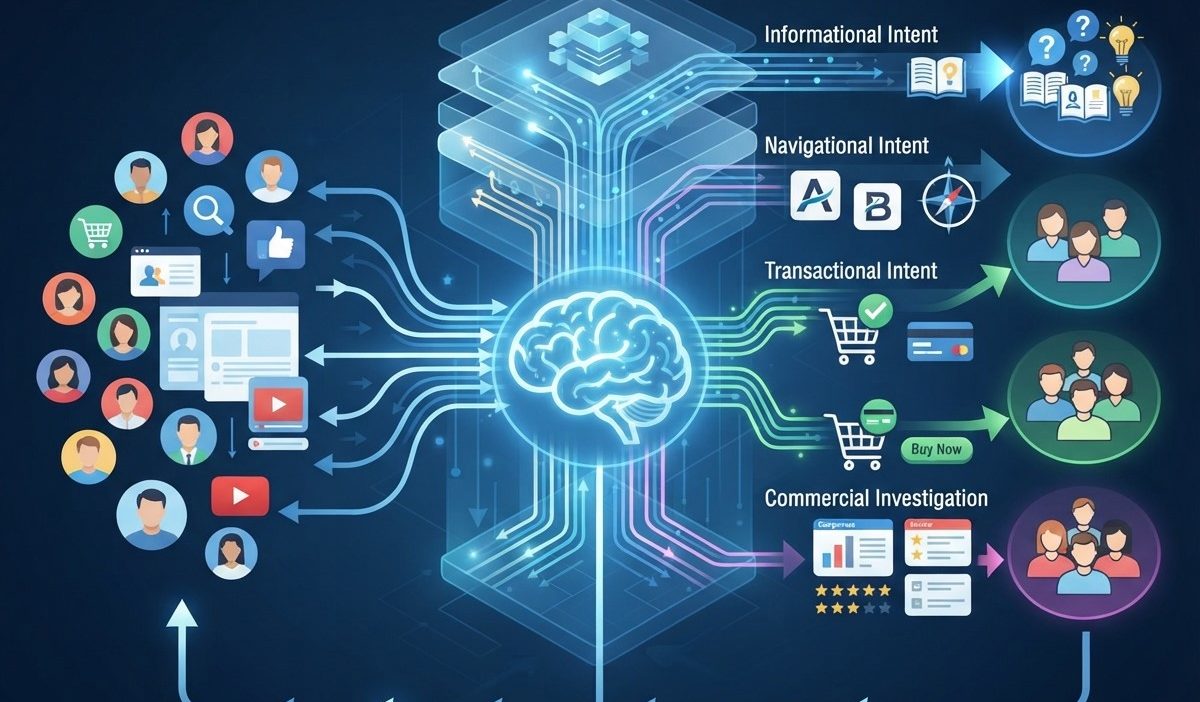
Customer intent can vary depending on where a person is in the buying journey. Informational intent usually indicates that a customer wants to learn more about a topic, product, or problem. Commercial intent suggests that the customer is comparing available solutions before making a decision.
Transactional intent is associated with stronger purchasing signals, such as visiting pricing pages, adding products to a cart, or beginning checkout. Navigational intent occurs when customers are looking for a specific brand, website, product, or resource.
Recognizing these differences allows marketers to deliver content and experiences that match the customer’s current needs rather than treating every visitor in the same way.
How Customer Intent Analysis Supports Data-Driven Marketing
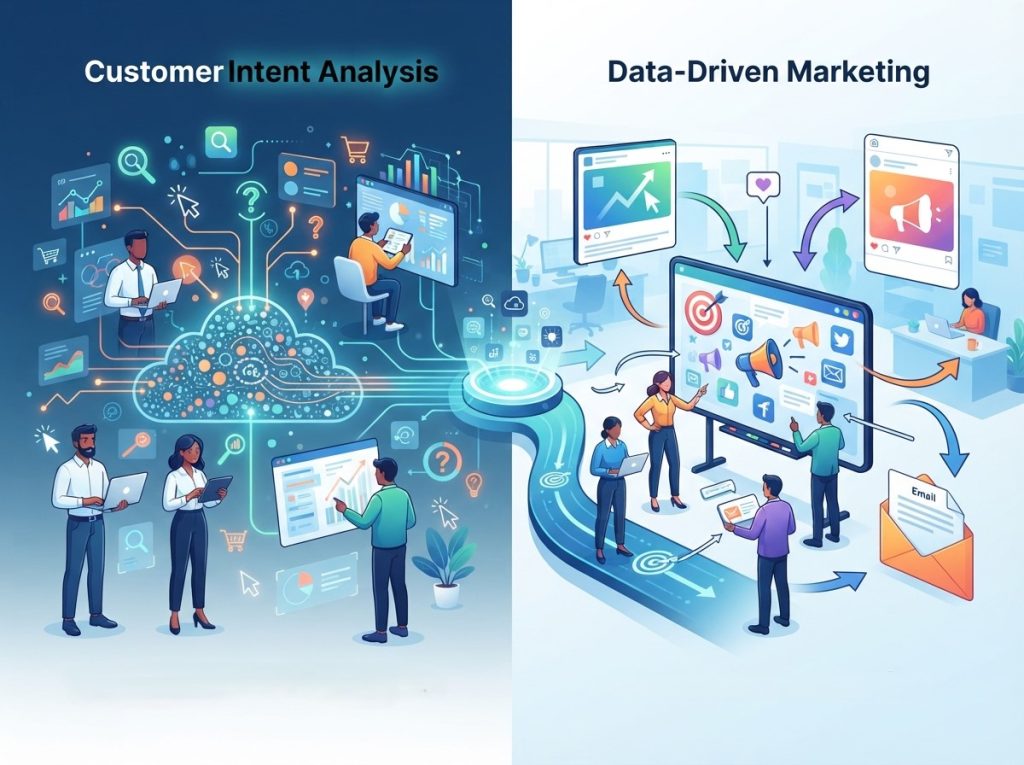 Customer intent analysis gives marketers behavioral information that can support more informed decisions. Instead of creating campaigns based primarily on assumptions, teams can use customer signals to identify patterns and adjust their strategies accordingly.
Improving Audience Segmentation
Audience segmentation becomes more useful when marketers understand what different customers are trying to accomplish. Customers with similar demographic characteristics may have completely different purchasing intentions.
For example, one visitor may be researching a product category for the first time, while another may already be comparing prices. Customer intent analysis allows marketers to separate these audiences based on behavioral signals and deliver more relevant messages to each group.
Intent-based segmentation can also support personalized email campaigns, advertising audiences, website experiences, and content recommendations.
Creating More Relevant Content
Content becomes more effective when it addresses the specific questions and concerns customers have at different stages of the buying journey. Customer intent analysis helps marketers identify topics, questions, and information gaps that matter to their audiences.
A business can use search behavior, website interactions, content engagement, and conversion data to understand which subjects attract potential customers. These insights can guide blog articles, product guides, comparison pages, case studies, videos, and other marketing assets. When content matches customer intent, visitors are more likely to find the information they need and continue exploring the brand.
Improving Marketing Campaigns
Customer intent analysis can also help marketers improve campaign targeting and messaging. Instead of using the same message for every audience segment, businesses can create campaigns based on different behavioral patterns.
For example, customers showing strong purchase intent may respond to pricing information, product demonstrations, free trials, or limited-time offers. Customers who are still researching may need educational resources before they are ready to consider a purchase. This approach can make campaigns more relevant while helping businesses use advertising and marketing budgets more efficiently.
Customer Intent Analysis and Website Optimization
A website should respond to customer needs rather than simply present information. Customer intent analysis provides insights into how visitors navigate websites, where they engage, and where they may lose interest.
Improving Landing Page User Experience
Landing Page User Experience plays an important role in converting visitors who arrive through search, advertising, email, or social media campaigns. If a landing page does not match the visitor’s intent, the user may leave before taking meaningful action.
Customer intent analysis can reveal whether visitors are looking for educational information, product details, pricing, demonstrations, or immediate purchasing opportunities. Marketers can then adjust headlines, page copy, calls to action, visuals, forms, and supporting information to better match those expectations. A landing page designed around user intent can create a clearer path between the customer’s initial interest and the desired action.
Supporting Product Page Optimization
Product Page Optimization becomes more effective when businesses understand what information customers need before purchasing. Different customers may prioritize different factors, including price, specifications, benefits, reviews, delivery information, warranties, or comparisons.
By analyzing customer behavior, businesses can determine which sections receive attention and which areas may require improvement. If users repeatedly visit product specifications before purchasing, those details should be easy to find. If customers frequently leave after viewing pricing information, the business can investigate whether the pricing presentation or value proposition needs clarification. Intent-based optimization makes product pages more aligned with real customer expectations.
Customer Intent Analysis and Sales Funnel Optimization
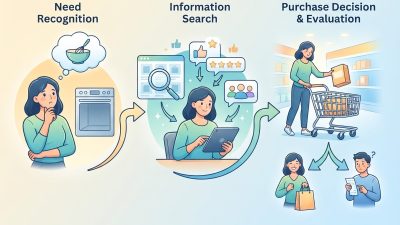
Sales Funnel Optimization requires an understanding of how customers move from awareness to consideration and eventually toward conversion. Customer intent analysis helps businesses identify the needs and behaviors associated with each stage.
Identifying Funnel Drop-Off Points
Customer behavior can reveal where potential buyers stop progressing through the funnel. For example, users may engage strongly with educational content but rarely visit product pages. Others may reach pricing pages but abandon the website before completing a purchase.
These patterns can provide clues about potential barriers. A customer may need additional information, stronger trust signals, clearer pricing, simpler navigation, or a more convenient checkout process. By connecting intent data with funnel behavior, marketers can investigate specific stages rather than making broad assumptions about poor performance.
Matching Messages to Funnel Stages
Different funnel stages require different marketing messages. Customers at the awareness stage may respond to educational content, while customers in the consideration stage may prefer comparisons, reviews, demonstrations, and detailed guides. Customers closer to purchase may need pricing information, testimonials, guarantees, product benefits, or a straightforward call to action. Customer intent analysis helps marketers identify these differences and deliver appropriate messages at the right stage.
Using Customer Data to Personalize Marketing
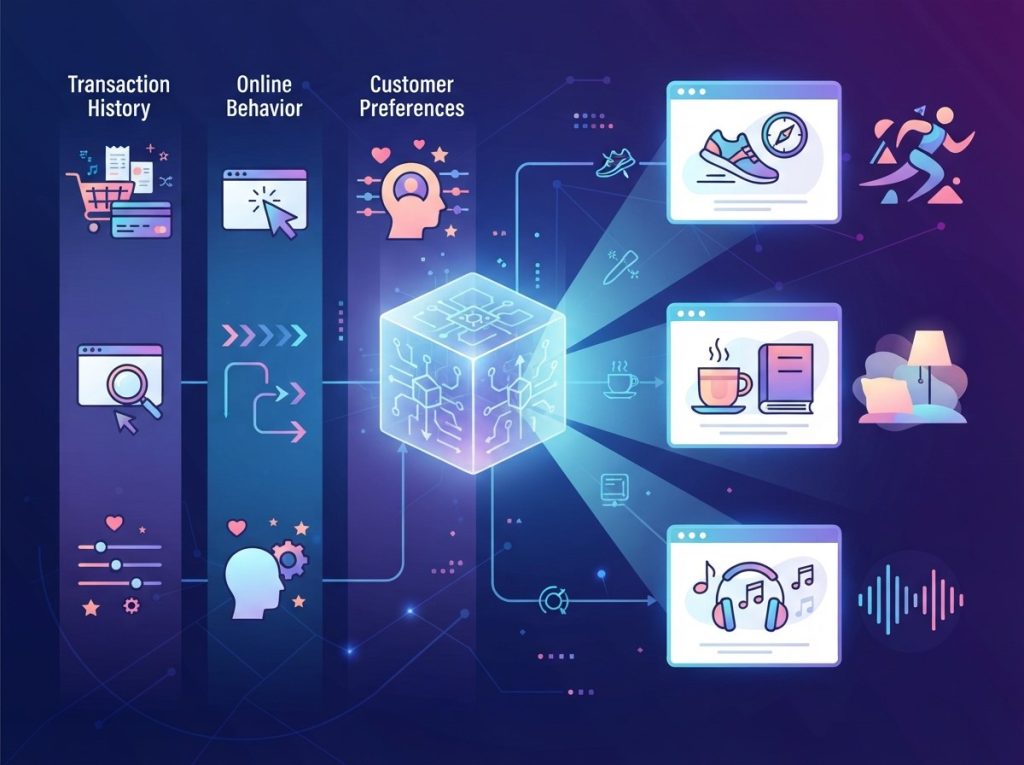 Personalization is one of the major applications of customer intent analysis. Customers increasingly expect brands to provide relevant experiences rather than generic messages.
Behavioral Personalization
Behavioral data can help businesses understand individual interactions with their websites and marketing channels. For example, a visitor who repeatedly views a particular service may have different needs from someone who only reads introductory blog content.
Businesses can use these signals to personalize recommendations, email content, advertising messages, website experiences, and follow-up communications. Effective personalization should remain relevant and useful. The goal is not simply to use more customer data, but to use meaningful behavioral information to improve the customer experience.
Customer Intent Analysis and Conversion Rate Improvement
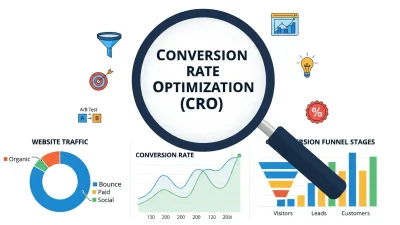
Understanding customer intent can help businesses identify why visitors do or do not convert. Conversion data alone tells marketers what happened, while intent analysis can provide additional context about the customer’s potential needs.
Finding Conversion Opportunities
Suppose many visitors reach a product page but do not purchase. Customer intent analysis can help businesses examine their previous interactions, content consumption, search behavior, and navigation patterns.
This information may reveal that visitors are still researching, comparing alternatives, or looking for information that is difficult to find. The business can then improve the relevant page elements instead of simply increasing promotional activity. Intent insights can therefore support more focused conversion improvement efforts.
How Businesses Can Implement Customer Intent Analysis
Implementing customer intent analysis does not require businesses to analyze every available data point at once. A structured approach can make the process easier and more actionable.
Collect Relevant Customer Signals
Businesses can collect information from website analytics, search queries, customer interactions, product views, content engagement, email activity, conversion events, and customer feedback.
The goal is to identify signals that provide meaningful information about customer needs and behavior. Data should be collected responsibly and handled according to applicable privacy requirements.
Connect Intent Data With Marketing Goals
Intent data becomes more useful when connected to measurable business objectives. These may include increasing qualified leads, improving conversion rates, reducing funnel abandonment, increasing customer engagement, or improving retention. Marketing teams should determine which customer behaviors are most relevant to these goals and monitor them consistently.
Test and Refine Marketing Experiences
Customer intent analysis should be an ongoing process. Customer expectations and behaviors can change as markets, products, competitors, and digital experiences evolve.
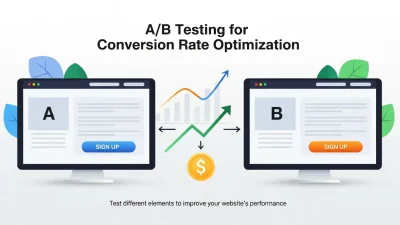
Businesses can use A/B testing, conversion analysis, customer feedback, and behavioral data to evaluate different approaches. The results can then be used to refine landing pages, product pages, campaigns, content, and funnel experiences.
The Role of AI in Customer Intent Analysis
 Artificial intelligence can help businesses process large volumes of customer data and identify patterns that may be difficult to detect manually. AI-powered systems can analyze behavioral signals, search queries, customer conversations, and engagement patterns to classify potential intent.
Machine learning models can also identify recurring patterns and support predictive marketing applications. For example, businesses may use intent signals to identify customers who are showing increasing interest in a product or service.
However, AI-generated insights should be reviewed carefully. Data quality, privacy, model accuracy, and business context all influence the usefulness of automated intent analysis.
Common Challenges in Customer Intent Analysis
Although customer intent analysis can provide valuable insights, businesses may face several challenges when implementing it.
Data Quality and Fragmentation
Customer data may exist across multiple platforms, making it difficult to create a complete view of customer behavior. Inconsistent tracking, missing events, duplicate records, or disconnected systems can reduce the reliability of intent insights.
Misinterpreting Customer Behavior
A single action does not always reveal a customer’s complete intention. For example, repeatedly visiting a product page may indicate purchase interest, but it could also mean that the visitor is researching options. Businesses should therefore combine multiple signals rather than relying on one isolated behavior.
Privacy and Responsible Data Use
Customer intent analysis involves collecting and interpreting behavioral information. Businesses should follow applicable privacy laws, communicate transparently about data practices, and avoid unnecessary data collection. Responsible data management helps protect customers while supporting sustainable data-driven marketing.
Conclusion
Customer Intent Analysis provides businesses with a structured way to understand customer needs, behaviors, and purchasing signals. By connecting intent data with marketing decisions, companies can improve audience segmentation, create more relevant content, personalize experiences, and identify opportunities for conversion improvement.
Its value extends across the entire digital customer journey. From improving Landing Page User Experience and Product Page Optimization to supporting Sales Funnel Optimization, intent insights can help marketers make decisions based on customer behavior rather than assumptions. As data, analytics, and artificial intelligence continue to influence digital marketing, understanding customer intent can become an important part of creating relevant and measurable customer experiences.
Frequently Asked Questions
1. What is Customer Intent Analysis?
Customer Intent Analysis is the process of examining customer behaviors, interactions, searches, and engagement patterns to understand what customers want and what action they may take next.
2. Why is Customer Intent Analysis important for marketing?
It helps marketers understand customer needs and create more relevant content, campaigns, website experiences, and offers based on behavioral signals.
3. How does Customer Intent Analysis support data-driven marketing?
It provides behavioral insights that marketers can use to segment audiences, personalize campaigns, optimize customer journeys, and make marketing decisions using measurable data.
4. Can Customer Intent Analysis improve conversion rates?
Yes. It can help businesses identify customer needs, potential barriers, and funnel drop-off points, allowing them to improve relevant pages and experiences.
5. How does intent analysis improve landing pages?
It helps marketers understand what visitors expect when they arrive on a page. This information can guide headlines, content, calls to action, forms, and page structure.
6. What is the relationship between intent analysis and Product Page Optimization?
Intent analysis shows what product information customers seek before making decisions. Businesses can use these insights to improve product descriptions, specifications, reviews, pricing information, and other important elements.
7. How does intent analysis support Sales Funnel Optimization?
It helps businesses understand customer behavior at different funnel stages and identify where users stop progressing, allowing marketers to improve messaging and experiences.
8. Can AI be used for Customer Intent Analysis?
Yes. AI and machine learning can process large datasets, identify behavioral patterns, classify customer intent, and support predictive marketing applications.
9. What data can businesses use for intent analysis?
Businesses can analyze search queries, website interactions, page views, content engagement, product activity, email interactions, conversion events, customer feedback, and other relevant behavioral signals.
10. Is Customer Intent Analysis useful for small businesses?
Yes. Small businesses can use available website analytics, customer feedback, search data, and conversion information to identify customer needs and improve their marketing strategies.