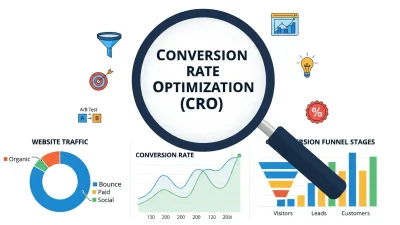


A website needs more than an attractive appearance to perform well in a competitive digital environment. It must guide visitors toward meaningful actions while making their experience simple, clear, and engaging. Conversion Centered Design focuses on creating website experiences that encourage visitors to take specific actions, such as making a purchase, submitting a form, requesting a quote, or signing up for a service.
Traditional web design often focuses heavily on visual appeal, branding, and functionality. While these elements remain important, a conversion-focused approach considers how every design decision affects visitor behavior. Page layouts, headlines, navigation, buttons, images, forms, and content placement can all influence whether users continue through the website or leave.
Conversion-centered websites are also designed around user intent. They reduce distractions, communicate value clearly, and make important actions easy to find. Combined with Mobile optimization, Product Page Optimization, and Sales Funnel Optimization, this approach can improve usability while supporting stronger business performance.
What Is Conversion Centered Design?
Conversion Centered Design is a web design approach that focuses on encouraging visitors to complete a desired action. Instead of treating conversion as something added after the design is finished, the conversion goal becomes part of the design process from the beginning.
The desired action can vary depending on the business. An e-commerce website may focus on purchases, while a service business may prioritize consultation requests or lead forms. A SaaS company may want visitors to start a free trial.
Understanding the Conversion Goal
Every conversion-focused page should have a clear objective. When designers understand the primary goal, they can structure the page around the actions and information that support it.
For example, a product page may focus on adding an item to the cart, while a landing page may encourage visitors to complete a lead form. A clear goal prevents unnecessary design elements from competing for attention.
Designing Around User Intent
Visitors arrive with different levels of awareness and intent. Some may be researching a problem, while others may already be ready to purchase.
Conversion-centered design considers these differences by presenting relevant information at appropriate stages. Educational content can support research-oriented visitors, while clear pricing, benefits, reviews, and CTAs can help visitors who are closer to making a decision.
Key Elements of Conversion Centered Design
A conversion-focused website combines several design and usability principles. Each element should support the user’s journey and make the intended action easier to understand and complete. From page hierarchy and visual cues to calls to action and trust signals, these components work together to reduce friction and improve overall website performance.
Clear Visual Hierarchy
Visual hierarchy determines which information visitors notice first. Important elements such as headlines, value propositions, benefits, and calls to action should receive appropriate visual emphasis.
Size, spacing, contrast, positioning, and typography can guide attention without overwhelming users. A well-organized hierarchy allows visitors to scan the page quickly and understand the most important information.
Strong Calls to Action
Calls to action should clearly communicate what visitors can do next. Instead of using vague phrases, businesses can use action-oriented language that explains the benefit or outcome. CTA placement also matters. A relevant CTA should appear after visitors have enough information to understand the value of taking action.
Focused Page Layouts
A cluttered layout can make it difficult for visitors to identify the main purpose of a page. Conversion-centered layouts remove unnecessary distractions and create a logical information flow. Whitespace, concise content sections, relevant visuals, and consistent spacing can make pages easier to understand and navigate.
How Conversion Centered Design Improves User Experience
 Website performance is closely connected to user experience. Visitors are more likely to engage with a website when they can quickly find information, understand the offer, and complete actions without unnecessary difficulty.
Conversion-centered design improves this experience by reducing friction and making important interactions more predictable. Users should not have to search extensively for a product, contact form, price, or next step.
Simplifying Navigation
Navigation should help users reach important pages without unnecessary complexity. Categories, menus, internal links, and search functions should be organized according to how visitors are likely to browse the website. Simple navigation can reduce frustration and help users move naturally from one page to another.
Reducing Friction
Friction can occur when forms are too long, checkout processes are complicated, buttons are unclear, or information is difficult to locate. Identifying and removing these obstacles can create a smoother experience. The goal is not to eliminate every step but to ensure that every required step has a clear purpose.
The Role of Mobile Optimization
Mobile traffic represents a significant part of website activity, making Mobile optimization an essential part of conversion-centered design. A website that works well on desktop devices may still perform poorly on smartphones if its layout, buttons, forms, or content are not adapted appropriately.
Responsive Page Design
Responsive design allows website content to adjust to different screen sizes. Text should remain readable, images should fit appropriately, and important interactive elements should remain accessible. Mobile visitors should not need to zoom or scroll excessively to understand an offer or complete an action.
Mobile-Friendly CTAs and Forms
Buttons should be large enough to tap comfortably and positioned where users can easily reach them. Forms should also minimize unnecessary typing. For mobile users, reducing friction can be particularly important because completing complex interactions on a small screen can be inconvenient.
Improving E-Commerce Performance With Product Page Optimization
 For online stores, product pages often represent a critical conversion point. Product Page Optimization focuses on improving product pages so visitors can understand the product, evaluate its value, address concerns, and make purchasing decisions. A product page should provide essential information without overwhelming visitors.
High-Quality Product Information
Product titles, descriptions, specifications, images, pricing, availability, and relevant details should be easy to find. Descriptions should focus on customer benefits as well as technical features. Visitors need to understand not only what the product is but also how it can solve their problem or meet their needs.
Product Images and Visual Proof
Images can significantly influence how customers evaluate products online. Multiple views, detailed images, demonstrations, and appropriate videos can help visitors understand what they are considering. Visual content should support the product rather than distract from the purchasing decision.
Reviews and Trust Signals
Reviews, ratings, guarantees, return information, secure payment indicators, and other relevant trust signals can reduce purchase hesitation. Businesses should present genuine information and avoid creating misleading impressions. Transparent information helps customers make more confident decisions.
Using Sales Funnel Optimization With Conversion-Focused Design
A website rarely converts every visitor immediately. Customers may move through several stages before becoming buyers. Sales Funnel Optimization focuses on improving these stages so visitors receive the right information and opportunities at the right time.
Attracting Visitor Attention
At the beginning of the funnel, visitors need relevant information that matches their search intent. Clear messaging and useful content can help establish relevance. The design should quickly communicate what the website offers and why the visitor should continue exploring.
Building Interest and Trust
As visitors move further through the funnel, they often need more detailed information. Case studies, comparisons, testimonials, FAQs, product details, and educational content can help address questions. Design should make these resources easy to discover without creating unnecessary distractions.
Encouraging Conversion
Near the conversion stage, visitors need a clear path toward action. Strong CTAs, transparent pricing, simple forms, and relevant trust signals can help reduce uncertainty. The conversion process should feel like a natural continuation of the visitor’s journey rather than an unexpected interruption.
How Design Can Improve Website Engagement
Engagement is an important indicator of whether visitors find a website useful and relevant. Conversion-centered design can encourage visitors to explore content, interact with important elements, and move toward meaningful actions.
Using Content Strategically
Content should support the visitor’s decision-making process. Short explanations can provide quick answers, while deeper sections can address complex questions for users who need more information. Headings, lists, visuals, and short paragraphs can make content easier to scan.
Creating Consistent Experiences
Consistency across pages helps visitors understand how a website works. Navigation, buttons, typography, messaging, and visual patterns should remain recognizable. When users do not have to relearn the interface on every page, they can focus more easily on the content and actions available.
Measuring the Impact of Conversion Centered Design
Design decisions should be supported by measurable data whenever possible. Website analytics can reveal how visitors interact with pages and where potential problems occur.
Businesses can monitor metrics such as conversion rate, bounce rate, engagement, form completion, cart activity, and revenue-related actions. These metrics can provide useful signals about whether design changes are helping achieve business objectives.
Testing Different Design Elements
Testing can help determine how different page elements affect visitor behavior. Businesses may compare headlines, layouts, CTA wording, button placement, images, forms, and content structures.
However, testing should focus on meaningful outcomes rather than isolated clicks. A change that increases clicks but decreases qualified leads or purchases may not provide a genuine performance improvement.
Continuously Improving the Website
Conversion optimization should be treated as an ongoing process. Audience expectations, devices, competitors, products, and business objectives can change over time. Regular analysis and testing allow businesses to identify new opportunities and address emerging usability problems.
Common Conversion Centered Design Mistakes
Some websites attempt to improve conversions by adding more pop-ups, buttons, banners, and promotional messages. However, excessive elements can create distraction and reduce usability. Another common mistake is designing for the business rather than the customer. Internal terminology, complicated navigation, unclear benefits, and excessive technical information can make it harder for visitors to understand the offer.
Ignoring mobile users is another major issue. A desktop-focused design may create unnecessary friction for smartphone visitors. Businesses should also avoid optimizing for conversions at the expense of trust. Misleading CTAs, hidden fees, exaggerated claims, and unclear policies may generate short-term actions while damaging the overall customer experience.
Best Practices for Better Conversion Performance
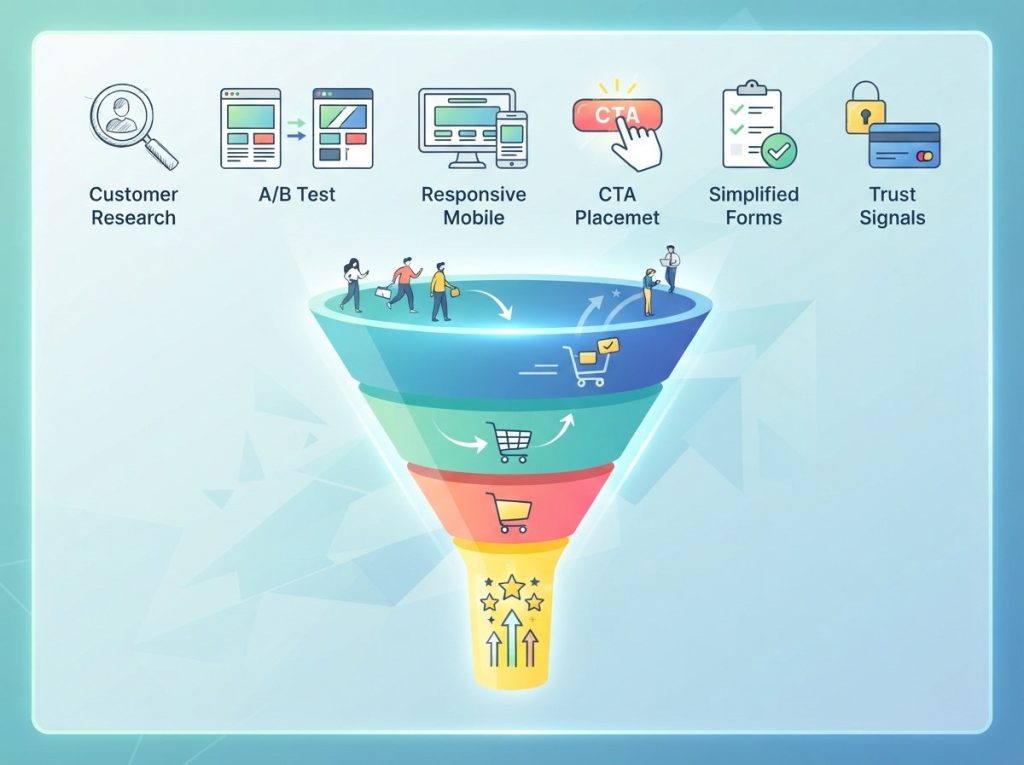 Effective Conversion Centered Design starts with a clear understanding of the target audience. Businesses should identify customer needs, objections, motivations, and decision-making patterns before designing important conversion pages. The website should communicate its value quickly and guide users through a logical sequence. Important information should be easy to find, while unnecessary distractions should be minimized.
Mobile optimization should be included from the beginning rather than treated as a later adjustment. E-commerce websites should pay particular attention to Product Page Optimization, while businesses with longer buying journeys should incorporate Sales Funnel Optimization. Finally, performance should be measured continuously. Analytics, user feedback, and structured testing can help identify areas for improvement and ensure that design decisions remain aligned with customer behavior.
Frequently Asked Questions
1. What is Conversion Centered Design?
Conversion Centered Design is a website design approach that focuses on encouraging visitors to complete specific actions. These actions may include purchases, form submissions, registrations, bookings, downloads, or other business goals.
2. How does Conversion Centered Design improve website performance?
It improves performance by reducing friction, clarifying the user journey, strengthening calls to action, improving usability, and organizing information around visitor needs and conversion goals.
3. Why is Mobile optimization important for conversions?
Mobile optimization ensures that visitors using smartphones can easily read content, navigate pages, interact with buttons, complete forms, and perform other important actions without unnecessary difficulty.
4. What is Product Page Optimization?
Product Page Optimization involves improving product pages to make product information clearer, strengthen trust, address customer questions, and create a smoother path toward purchasing.
5. How does Sales Funnel Optimization relate to web design?
Sales Funnel Optimization improves the different stages visitors experience before conversion. Conversion-centered design supports this process by providing relevant information, trust signals, navigation, and CTAs based on visitor intent.
6. What makes a CTA effective?
An effective CTA clearly communicates the action users can take and provides enough context to understand what happens next. Its wording, placement, visibility, and relevance can all influence engagement.
7. Can Conversion Centered Design improve lead generation?
Yes. A conversion-focused design can simplify lead forms, communicate value clearly, reduce uncertainty, and make the next step easier to understand, which can support more effective lead generation.
8. Should every page have a CTA?
Important pages should generally provide a relevant next step, but not every page needs the same CTA. The action should match the visitor’s intent and the purpose of that particular page.
9. How can businesses measure conversion-focused design performance?
Businesses can use analytics and conversion data to monitor metrics such as conversion rates, form submissions, purchases, engagement, cart activity, and other actions related to their objectives.
10. Is Conversion Centered Design only useful for e-commerce websites?
No. It can be used by e-commerce stores, SaaS companies, service businesses, publishers, educational websites, and many other organizations. The specific conversion goal simply changes according to the business model.
Conclusion
Conversion Centered Design brings business objectives and user needs together to create websites that are easier to understand, navigate, and interact with. Instead of treating design as purely visual, this approach considers how every element can influence the visitor journey. Clear messaging, focused layouts, strong CTAs, useful trust signals, and simple navigation can reduce friction and support better engagement. Mobile optimization ensures that these benefits extend to smartphone users, while Product Page Optimization helps e-commerce businesses create stronger purchasing experiences.
At the broader customer journey level, Sales Funnel Optimization helps businesses connect different stages of the visitor experience. When these strategies are combined with analytics, testing, and continuous improvement, businesses can build websites that are both user-friendly and focused on measurable performance.