
You spent months building an online store, sourcing products, and driving traffic through ads. Visitors are finally landing on your site in steady numbers. Then, you look at your sales dashboard. Despite the high traffic, very few people are actually buying anything.
This scenario frustrates countless online business owners every single day. Getting people to your website is only the first step of a successful online business. The real challenge is convincing those visitors to click the buy button and complete their purchase.
When your traffic numbers look great but your revenue stays flat, you have a conversion problem. Fixing this issue requires specific strategies and technology designed to turn casual browsers into paying customers.
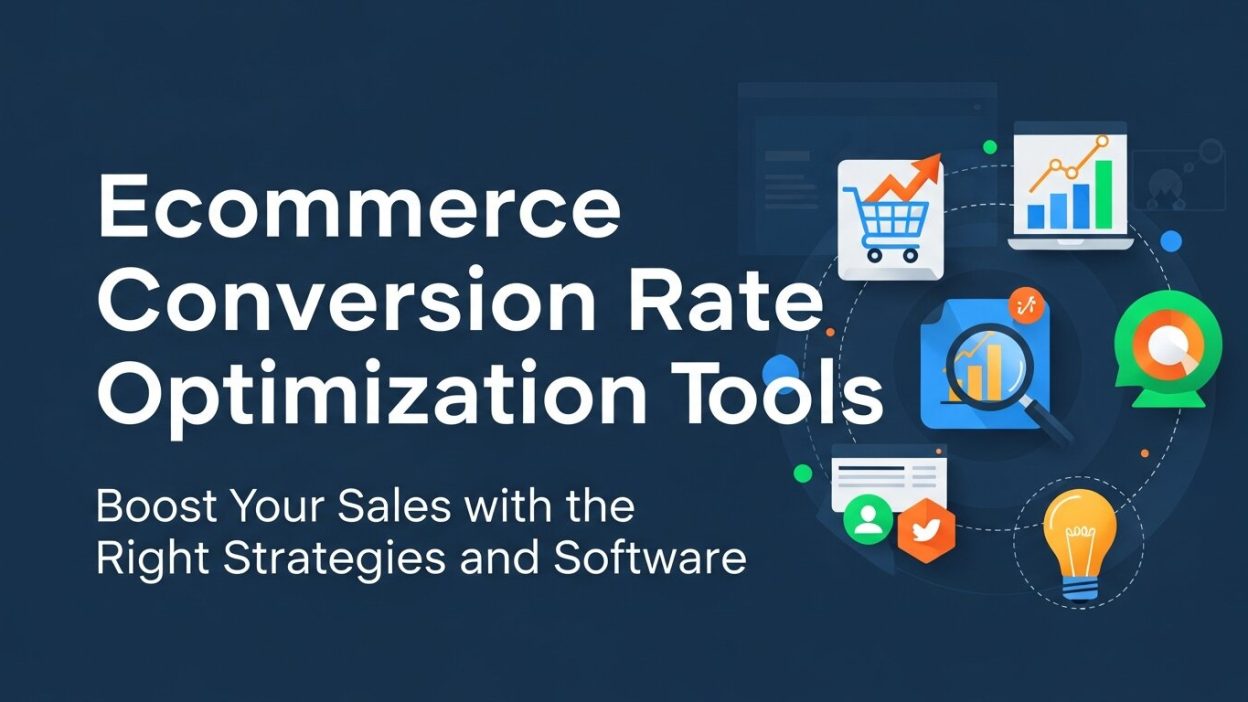
By utilizing ecommerce conversion rate optimization tools, you can figure out exactly why visitors leave without buying. These platforms highlight hidden problems on your website, test different layouts, and ultimately help you capture more sales from the traffic you already have.
Understanding Conversion Rate Optimization
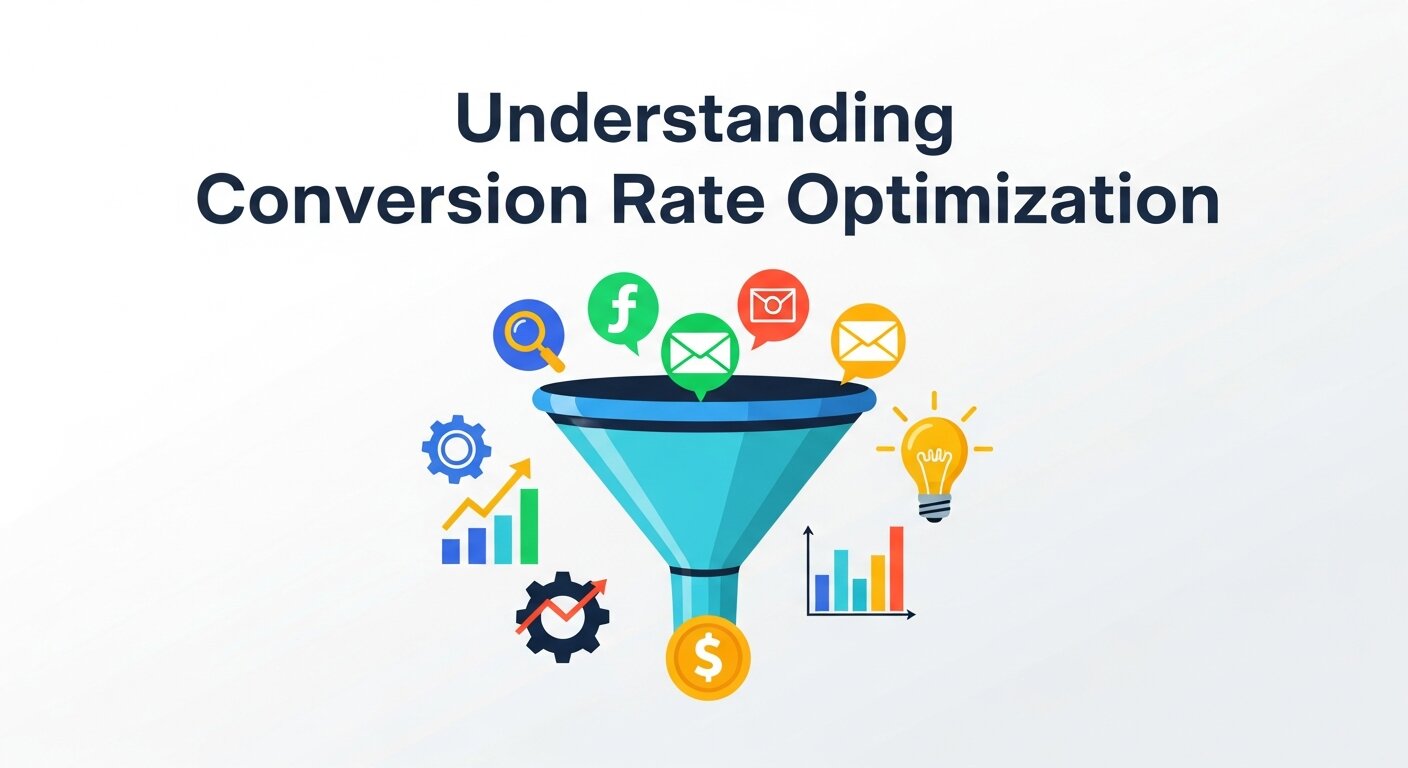 Conversion rate optimization is the systematic process of increasing the percentage of website visitors who take a desired action. For an online store, that action is usually completing a purchase. However, it can also include signing up for an email newsletter, adding an item to a wishlist, or creating a customer account.
You calculate your conversion rate by dividing the number of conversions by the total number of visitors, then multiplying that figure by 100. If your store gets 1,000 visitors a month and 20 of them buy something, your conversion rate is 2%.
Small changes to this percentage have massive impacts on your revenue. If you increase that 2% to 3%, you instantly boost your sales by 50% without spending an extra dime on advertising. This makes conversion rate optimization one of the most cost-effective strategies for growing an online business.
Why You Need Ecommerce Conversion Rate Optimization Tools
Guessing what your customers want rarely leads to success. You might think a bright red checkout button will drive more sales, but your audience might actually prefer a subtle green one. Making changes based on gut feelings can easily hurt your sales rather than help them.
Ecommerce conversion rate optimization tools eliminate this guesswork. They provide concrete data about how real human beings interact with your website. You can see exactly where people click, how far down the page they scroll, and at what specific point they decide to leave your site.
These insights allow you to make informed decisions. Instead of blindly redesigning your homepage, you can identify specific friction points and fix them. The right software essentially acts as a magnifying glass for your customer journey, revealing the obstacles standing between your visitors and their final purchase.
Top Categories of CRO Tools for Online Stores
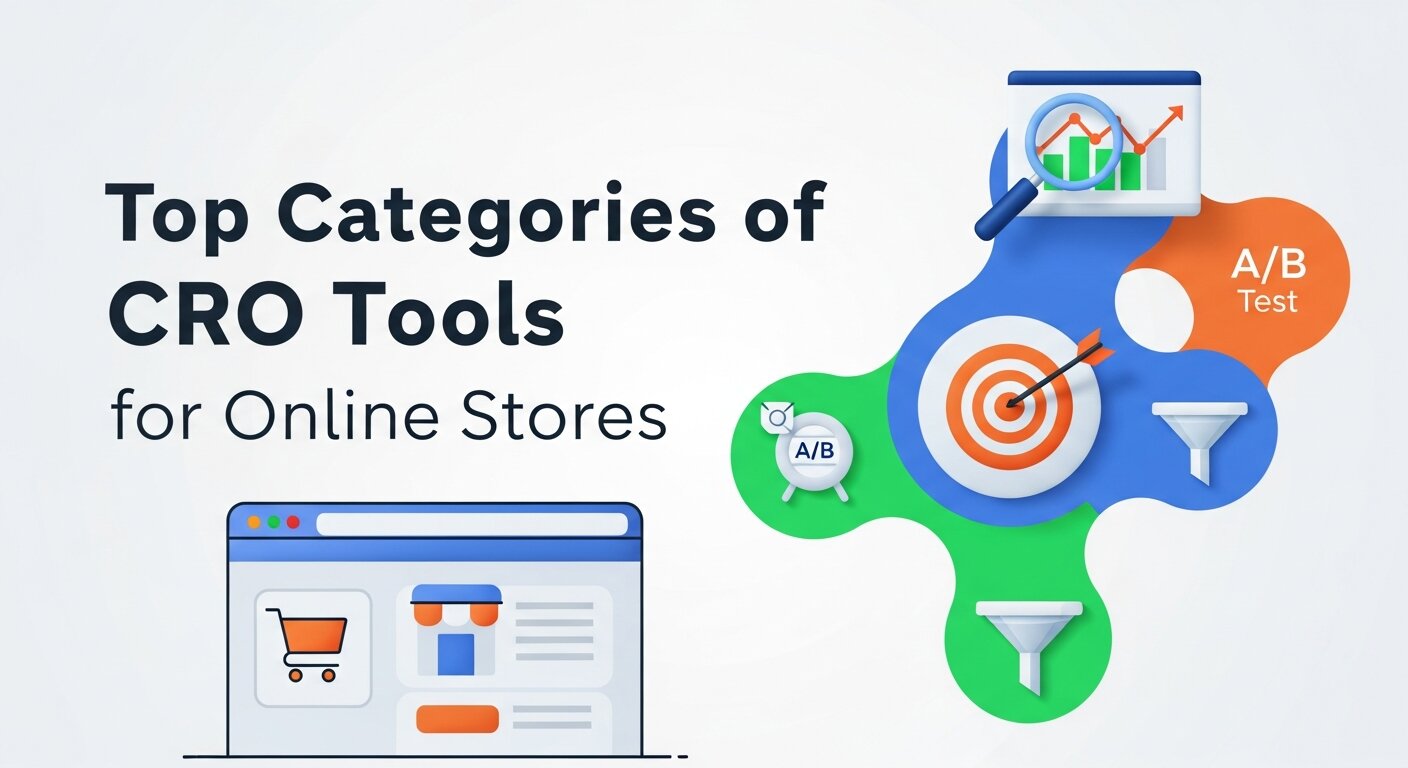 The market is filled with software designed to help you sell more. Understanding the different categories of tools will help you build a tech stack that fits your specific needs.
Web Analytics Platforms
Web analytics form the foundation of any optimization strategy. These platforms track quantitative data, showing you the hard numbers behind your website traffic. Google Analytics remains the most popular option in this category. It tells you where your visitors come from, which devices they use, and how long they stay on specific pages.
Other analytics tools, like Mixpanel or Amplitude, focus heavily on product analytics and user funnels. They help you track specific events, such as when a user adds an item to their cart but fails to complete the checkout process. By identifying these drop-off points, you know exactly which pages require your immediate attention.
Heatmap and Behavior Tracking
Analytics tell you what is happening on your site. Behavior tracking tools tell you why it is happening. Software like Hotjar and Crazy Egg generate visual heatmaps of your web pages. These maps show you exactly where visitors click, move their mouse, and scroll.
If you place an important call-to-action button at the bottom of a page, a scroll heatmap might reveal that only 10% of your visitors ever scroll down that far. Behavior tracking tools also offer session recordings. You can watch a video playback of an anonymous user navigating your site. Seeing a user repeatedly click on an unlinked image quickly highlights confusing elements in your web design.
A/B Testing Software
Once you identify a problem on your site, you need to test potential solutions. A/B testing platforms like Optimizely, VWO, or Google Optimize allow you to create two different versions of a webpage. The software then divides your incoming traffic, sending half to the original page and half to the new version.
You can test different product headlines, button colors, pricing layouts, or product images. The tool tracks which version generates more sales over a set period. This scientific approach ensures that any permanent changes you make to your website will actually improve your bottom line.
Customer Feedback and Survey Apps
Sometimes the best way to understand your customers is to ask them directly. Survey tools allow you to gather qualitative data from your audience. Typeform and Qualtrics let you build customized surveys to send via email.
Alternatively, you can use on-site polling tools. These generate small pop-ups asking specific questions based on user behavior. If a visitor sits on your checkout page for three minutes without buying, a polite pop-up can ask, “Is there anything stopping you from completing your purchase today?” The answers to these questions often provide brilliant ideas for optimization.
Cart Abandonment Solutions
A massive percentage of online shoppers add items to their cart and then leave the website. Cart abandonment tools help you recover these lost sales. Email marketing platforms like Klaviyo and Omnisend specialize in ecommerce. They automatically trigger personalized emails to users who leave items behind.
These platforms allow you to test different subject lines, email copy, and discount offers to see which combination brings the most shoppers back to your store. Recovering even a fraction of abandoned carts creates a significant boost to your overall conversion rate.
Smart Strategies to Pair With Your Tools
 Buying software will not automatically fix your website. You must pair your ecommerce conversion rate optimization tools with smart, proven strategies to see real results.
Simplify the Checkout Process
Complex checkouts kill sales. Every extra form field you ask a customer to fill out gives them another reason to abandon their purchase. Use your analytics tools to find out exactly where people drop off during checkout.
Remove mandatory account creation and always offer a guest checkout option. Condense your forms to ask only for essential shipping and billing information. Providing multiple payment options, like Apple Pay or PayPal, also speeds up the process and reduces friction for mobile shoppers.
Optimize Product Pages for Clarity
Your product page serves as your digital salesperson. It needs to answer every question a buyer might have. Use A/B testing software to experiment with different product page layouts.
Ensure your product descriptions focus on benefits rather than just listing features. High-quality images from multiple angles build trust. Adding short video demonstrations often increases conversions significantly, as buyers want to see how a product looks and functions in the real world.
Leverage Social Proof
Shoppers inherently trust other shoppers more than they trust brands. Displaying reviews and testimonials prominently on your site reduces anxiety for new buyers.
Use your tools to test the placement of your customer reviews. Sometimes moving a star rating directly below the product title performs better than hiding it at the bottom of the page. You can also test notifications that show recent purchases made by other customers to create a sense of urgency and popularity.
How to Choose the Right Software
Selecting the right ecommerce conversion rate optimization tools depends on your current traffic levels, budget, and team size. Small businesses just starting out should focus on free or low-cost tools. Setting up Google Analytics and a basic heatmap software provides plenty of data for a new store.
As your business grows and your traffic increases, you can invest in dedicated A/B testing platforms. Testing requires a statistically significant amount of traffic to yield accurate results. If you only get 100 visitors a month, an A/B test might take six months to complete. Wait until your store has consistent daily traffic before spending heavy portions of your budget on advanced testing software.
Always look for tools that integrate smoothly with your existing ecommerce platform. If you use Shopify or WooCommerce, check the app stores for optimization plugins that connect seamlessly with your backend data.
Mobile Optimization for Higher Conversions
 A significant portion of ecommerce traffic now comes from mobile devices, yet many online stores still fail to optimize the mobile experience properly. A cluttered layout, slow loading speed, or difficult navigation can quickly drive mobile users away. To improve conversions, ensure your website is fully responsive and easy to use on smaller screens. Buttons should be large enough to tap comfortably, and forms should require minimal typing. Simplifying the checkout process is even more critical on mobile, where users have less patience. Additionally, using mobile-friendly payment options like digital wallets can speed up purchases. Prioritizing mobile optimization ensures you do not lose valuable customers due to poor usability.
The Role of Page Speed in Conversion Rates
Website speed has a direct impact on user experience and conversion rates. When a page takes too long to load, visitors are more likely to leave before even seeing your products. Studies consistently show that even a one-second delay can significantly reduce conversions. Slow-loading pages create frustration and lower trust in your brand. To improve speed, optimize image sizes, use efficient coding practices, and leverage content delivery networks (CDNs). Minimizing unnecessary scripts and plugins also helps maintain performance. Regularly testing your site speed with performance tools ensures you stay competitive. A fast, smooth browsing experience keeps users engaged and increases the likelihood of turning visitors into paying customers.
Frequently Asked Questions
1. What are ecommerce conversion rate optimization tools?
Ecommerce conversion rate optimization tools are software platforms that help online store owners analyze user behavior, test website changes, and improve the percentage of visitors who complete a purchase.
2. Why is conversion rate optimization important for ecommerce businesses?
Conversion rate optimization is important because it helps businesses increase revenue without spending more on ads. Even small improvements in conversion rate can significantly boost sales from existing traffic.
3. What are the most commonly used CRO tools?
Popular CRO tools include Google Analytics for tracking traffic, Hotjar for heatmaps and session recordings, Optimizely for A/B testing, and Klaviyo for cart abandonment and email automation.
4. Do I need technical skills to use CRO tools?
Most modern CRO tools are user-friendly and do not require coding skills. They often come with visual editors and easy integrations for platforms like Shopify and WooCommerce.
5. How do heatmaps help improve conversion rates?
Heatmaps show how users interact with your website by highlighting clicks, scroll depth, and mouse movement. This helps identify confusing elements and areas where users lose interest.
6. What is A/B testing in ecommerce?
A/B testing is a method where two versions of a webpage are shown to different users to determine which one performs better in terms of conversions like sales or sign-ups.
7. What is a good ecommerce conversion rate?
A typical ecommerce conversion rate ranges between 1.5% and 3%, but this varies depending on industry, product type, and traffic quality.
8. Can CRO tools improve sales immediately?
Some improvements can show quick results, but CRO is generally a continuous process that delivers better results over time through testing and optimization.
9. Will CRO tools slow down my website?
If too many tools are used improperly, they can affect site speed. However, using proper tag management and optimizing scripts helps minimize performance issues.
10. When should I start using CRO tools?
You should start using basic CRO tools as soon as your store gets consistent traffic. As your business grows, you can invest in more advanced testing and analytics platforms.
Start Optimizing Your Store for Better Sales
Generating traffic is difficult, expensive, and time-consuming. You owe it to your business to make the most out of every single visitor who lands on your website.
By utilizing ecommerce conversion rate optimization tools, you replace guesswork with hard data. You learn exactly what your customers want, what confuses them, and what finally convinces them to buy. Start by setting up basic analytics and heatmaps to understand your current baseline. Then, formulate hypotheses, run A/B tests, and make incremental improvements to your site.
Optimization is an ongoing process, not a one-time project. Keep testing, keep listening to your customers, and watch your sales steadily climb.