
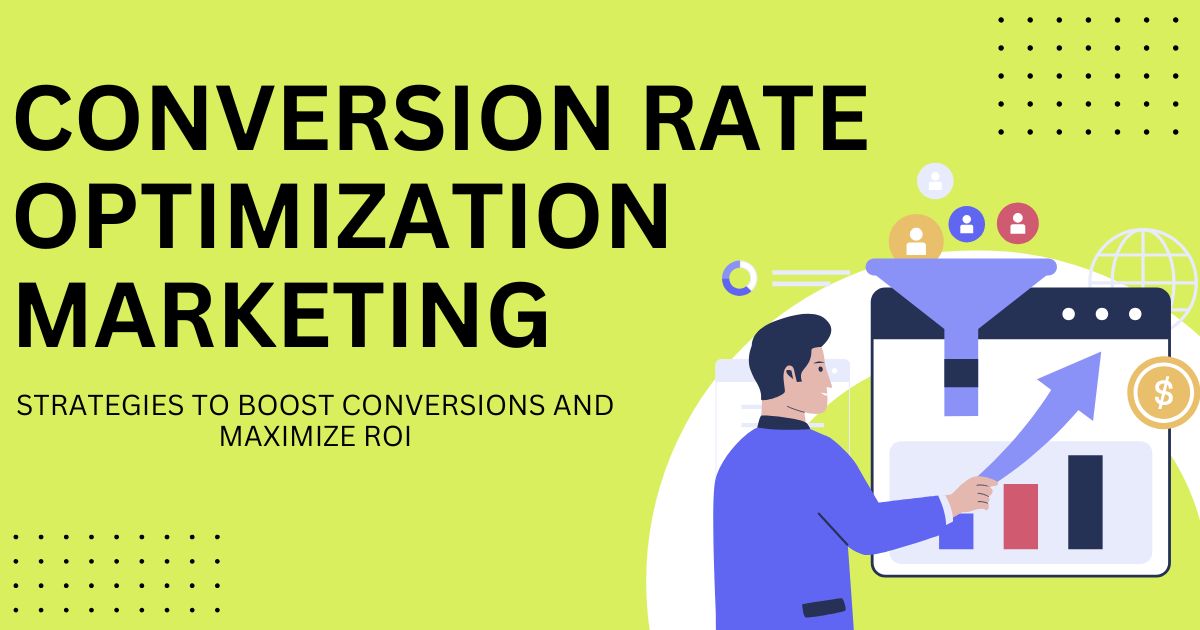
Conversion rate optimization marketing helps turn more website visitors into customers by improving user experience, website design, and targeted strategies. By analyzing behavior, testing changes, and using the right tools, businesses can increase conversions without driving extra traffic. Implementing these proven techniques ensures higher engagement, better results, and sustainable growth.
Understanding Your Audience is Everything

Before implementing any conversion rate optimization marketing strategy, it’s essential to have a thorough understanding of your website visitors. Knowing who your audience is, what drives their decisions, and the obstacles they encounter allows you to create a more effective, targeted, and personalized approach. This process involves analyzing both quantitative data—such as traffic patterns, page views, bounce rates, and click-through metrics—and qualitative insights gathered from customer feedback, surveys, and interviews. By combining these insights, you can identify visitor motivations, pain points, and behavioral patterns that influence their actions. Understanding these factors enables you to tailor your website, content, and calls-to-action in a way that resonates deeply with your audience, reduces friction in the conversion process, and maximizes the results of your conversion rate optimization marketing efforts.
Analyze Your Website Traffic
Start by examining your current website analytics. Look for patterns in user behavior, including:
- Which pages have the highest bounce rates
- Where visitors spend the most time
- At what point do users typically leave your site
- Which traffic sources bring the most engaged visitors
This data reveals valuable insights about your audience’s preferences and pain points.
Gather Direct Feedback
Numbers tell part of the story, but direct feedback fills in the gaps. Use surveys, feedback forms, and customer interviews to understand:
- What information visitors seek when they arrive
- Which elements confuse or frustrate them
- What prevents them from completing purchases
- How they discovered your business
Create Detailed User Personas
Combine analytics data with customer feedback to build comprehensive user personas. These fictional representations of your ideal customers should include demographics, goals, challenges, and preferred communication styles.
Effective personas guide every aspect of your conversion rate optimization marketing efforts, from page design to content creation.
Proven CRO Strategies That Drive Results

A/B Testing: The Foundation of Smart Optimization
A/B testing is one of the most effective ways to improve website performance because it allows you to compare two versions of a webpage to determine which performs better with real visitors. By showing each version to different segments of your audience, you can measure engagement, clicks, and conversions without relying on assumptions or guesswork. Over time, A/B testing provides data-driven insights that help you make informed decisions, refine your website’s design, and implement changes that significantly improve user experience and conversion rates. For more ideas, see Conversion Rate Optimization CRO Tips.
Test these high-impact elements:
Headlines and Value Propositions: Your headline often determines whether visitors stay or leave. Test different approaches—benefit-focused versus feature-focused, short versus long, or urgent versus informational.
Call-to-Action Buttons: Small changes can yield big results. Test button colors, text, size, and placement. Words like “Get Started,” “Try Free,” or “Learn More” can perform very differently.
Forms and Checkout Processes: Reduce form fields to essentials. Test single-step versus multi-step forms, optional versus required fields, and different form layouts.
Images and Videos: Visual elements significantly impact trust and engagement. Test product images, testimonial photos, or explainer videos.
Run tests for at least two weeks to account for weekly variations in traffic patterns. Ensure you have enough traffic to reach statistical significance before concluding.
Improving Page Load Speed
Website speed plays a critical role in keeping visitors engaged and driving conversions. Research indicates that even a one-second delay in page load time can reduce conversions by up to 7%. Fast-loading pages create a smoother, more enjoyable experience, keeping visitors on your site longer and reducing bounce rates. To improve load speed, businesses should optimize images, minimize HTTP requests, choose reliable hosting, and implement caching strategies. Regularly monitoring performance with tools like Google PageSpeed Insights or GTmetrix ensures that your website remains responsive and provides the speed users expect, directly supporting better conversion outcomes. For detailed strategies, see How to Increase Conversion Rate on Website.
Optimize Images: Compress images without sacrificing quality. Use modern formats like WebP when possible. Implement lazy loading for images below the fold.
Minimize HTTP Requests: Reduce the number of elements on each page. Combine CSS and JavaScript files where appropriate.
Choose Fast Hosting: Invest in quality web hosting with solid-state drives and content delivery networks (CDNs).
Enable Browser Caching: Allow browsers to store certain files locally, reducing load times for returning visitors.
Monitor your site speed regularly using tools like Google Page Speed Insights or GT Metrix. Set a goal of loading your most important pages in under three seconds.
Mobile Optimization is Non-Negotiable
With mobile devices now accounting for over half of all web traffic, optimizing your website for mobile users is no longer optional—it’s essential. Poor mobile experiences increase bounce rates and directly impact conversions. Learn more in Why Mobile CRO is Essential for E-commerce Success. Mobile optimization goes beyond just making a site “fit” on smaller screens; it involves designing responsive layouts that adapt seamlessly to different devices, simplifying navigation for touchscreens, ensuring buttons and links are easy to tap, and streamlining the checkout or sign-up process. Fast loading times are especially critical for mobile users, who often access websites on slower connections. By prioritizing mobile optimization, businesses can provide a smooth, engaging experience that encourages visitors to take action, ultimately boosting conversion rates and overall user satisfaction.
Responsive Design: Ensure your website adapts seamlessly to different screen sizes. Test on various devices and browsers.
Simplified Navigation: Mobile screens offer limited space. Use clear, touch-friendly menus and minimize the number of steps required to complete actions.
Thumb-Friendly Buttons: Make buttons large enough to tap easily with thumbs. Place important actions within comfortable reach zones.
Fast Mobile Loading: Mobile users expect even faster loading times. Optimize specifically for mobile connections and devices.
Enhancing User Experience Across Every Touchpoint
A great user experience removes friction from the conversion process.
Clear Website Navigation: Visitors should understand how to find information within seconds. Use descriptive menu labels and logical page hierarchies.
Trust Signals: Display security badges, customer testimonials, and money-back guarantees prominently. Include contact information and about pages to build credibility.
Compelling Content: Write clear, benefit-focused copy that addresses visitor concerns. Use bullet points, short paragraphs, and plenty of white space for easy scanning.
Streamlined Checkout: Remove unnecessary steps from your checkout process. Offer guest checkout options and multiple payment methods.
Essential Tools for Conversion Rate Optimization Marketing

Having the right tools is essential for making conversion rate optimization marketing more efficient and effective. These tools help you gather data, analyze user behavior, run experiments, and measure results with precision. From analytics platforms that track visitor activity to A/B testing software that evaluates the impact of changes, each tool plays a critical role in understanding how users interact with your website and identifying opportunities for improvement. By leveraging these resources, businesses can make data-driven decisions, streamline optimization processes, and implement strategies that maximize conversions while minimizing guesswork and wasted effort.
Google Analytics
This free platform provides fundamental insights into user behavior. Set up conversion goals to track specific actions. Use the Behavior Flow report to identify where users drop off.
Key features for CRO include:
- Conversion funnel analysis
- Audience segmentation
- Page performance metrics
- Mobile versus desktop comparisons
Hotjar
Hotjar offers heatmaps and session recordings that show exactly how users interact with your pages. Watch recordings to spot usability issues and see where users get stuck.
Heatmaps reveal which page elements attract attention and which get ignored. This visual data complements traditional analytics perfectly.
Optimizely
This A/B testing platform makes it easy to create and run experiments without technical expertise. The visual editor allows you to modify page elements and track results automatically.
Optimizely also offers advanced features like multivariate testing and personalization based on visitor segments.
Additional Useful Tools
- Unbounce: Create dedicated landing pages optimized for specific campaigns
- Crazy Egg: Another heatmap tool with click tracking capabilities
- VWO: Comprehensive testing platform with survey and feedback tools
- Google Optimize: Free A/B testing tool that integrates with Google Analytics
Measuring and Analyzing Your Success

Track these key metrics to evaluate your conversion rate optimization marketing efforts:
Overall Conversion Rate: The percentage of visitors who complete your primary goal action.
Conversion Rate by Traffic Source: Different channels may convert at different rates. Identify your best-performing sources.
Page-Specific Conversion Rates: Monitor how individual pages contribute to overall conversions.
Revenue Per Visitor: This metric helps you understand the actual business impact of improvements.
Customer Lifetime Value: Look beyond initial conversions to long-term customer value.
Set up automated reports to monitor these metrics regularly. Monthly reviews help you spot trends and identify new optimization opportunities.
Advanced CRO Techniques: Behavioral Triggers and AI
As technology continues to evolve, advanced conversion rate optimization marketing strategies are becoming increasingly accessible to businesses of all sizes. One of the most effective modern approaches involves leveraging behavioral triggers—automated prompts or actions that respond to specific user behaviors in real-time. Examples include exit-intent pop-ups that appear when a visitor is about to leave the site, scroll-based prompts that appear after a user reaches a certain section of a page, or time-sensitive offers that create urgency and encourage immediate action. These triggers help capture attention at the precise moment when users might otherwise abandon your website, increasing the chances of conversion without being intrusive.
In addition to behavioral triggers, AI-powered personalization engines are transforming how websites interact with visitors. These tools analyze large amounts of real-time data, such as browsing behavior, purchase history, location, device type, and previous interactions, to deliver highly relevant and personalized content. For example, an AI system can recommend products based on a visitor’s browsing patterns, adjust the content layout based on engagement, or even predict which users are most likely to convert and prioritize messaging for them.
When combined with a structured analytics and testing framework, these advanced techniques allow businesses to move beyond guesswork. Integrating behavioral triggers and AI personalization with your ongoing testing and optimization efforts enables more precise targeting, smarter decision-making, and a seamless user experience. Over time, this level of sophistication can dramatically improve conversion rates, customer satisfaction, and long-term engagement, making it an essential part of any forward-thinking conversion rate optimization marketing strategy.
Start Optimizing Today
Conversion rate optimization marketing transforms good websites into great ones. By understanding your audience, implementing proven strategies, and using the right tools, you can significantly increase your conversion rates without spending more on traffic.
Begin with quick wins like A/B testing your headlines and call-to-action buttons. Focus on mobile optimization if you haven’t already. Then, gradually work through more complex improvements like checkout process optimization.
Remember that CRO is an ongoing process, not a one-time project. Successful businesses continuously test, measure, and refine their approach based on data and customer feedback.
When data not only informs but also recommends actions, businesses gain a competitive edge. To understand how this advanced approach can guide smarter decisions, read Unlocking the Power of Prescriptive Analytics.
Frequently Asked Questions (FAQ)
How long does it take to see results from conversion improvements?
Some changes, like updating call-to-action buttons or headlines, can show results within weeks. Larger optimizations, such as redesigning funnels or implementing personalization, may take several months to fully impact performance. Consistent monitoring is key to measuring the success of your conversion rate optimization marketing efforts.
Do only eCommerce websites benefit from conversion optimization?
No. Any website with clear goals—whether it’s lead generation, SaaS, content platforms, or service-based businesses—can benefit from conversion rate optimization marketing. Improving how visitors interact and complete desired actions is valuable for all types of websites.
What is considered a good conversion rate?
Conversion rates vary depending on the industry, traffic source, and type of website. Average rates typically range between 2–5%, but websites that actively implement conversion rate optimization marketing strategies often achieve higher results.
How often should websites be tested for optimization?
Testing should be an ongoing process. Monthly or quarterly tests, depending on traffic and resources, help ensure that conversion rate optimization marketing efforts continue to improve results over time.
Can personalization really improve conversions?
Yes. Displaying relevant content or offers based on visitor behavior and preferences can significantly increase engagement and the likelihood of conversions. Personalization is a key tactic in successful conversion rate optimization marketing, making websites more intuitive and user-friendly.