
Conversion Rate Optimization (CRO) is a term every digital marketer knows, yet many still ask: when should I invest in it, and will it truly help my business now?
If your business has any online presence, understanding CRO is essential. It helps you get more value from your existing traffic—saving money, improving performance, and maximizing every marketing effort.
Instead of spending more to attract new visitors, Conversion Rate Optimization focuses on turning the traffic you already have into loyal customers. It’s not about working harder—it’s about working smarter for better results and higher ROI.
What is Conversion Rate Optimization?
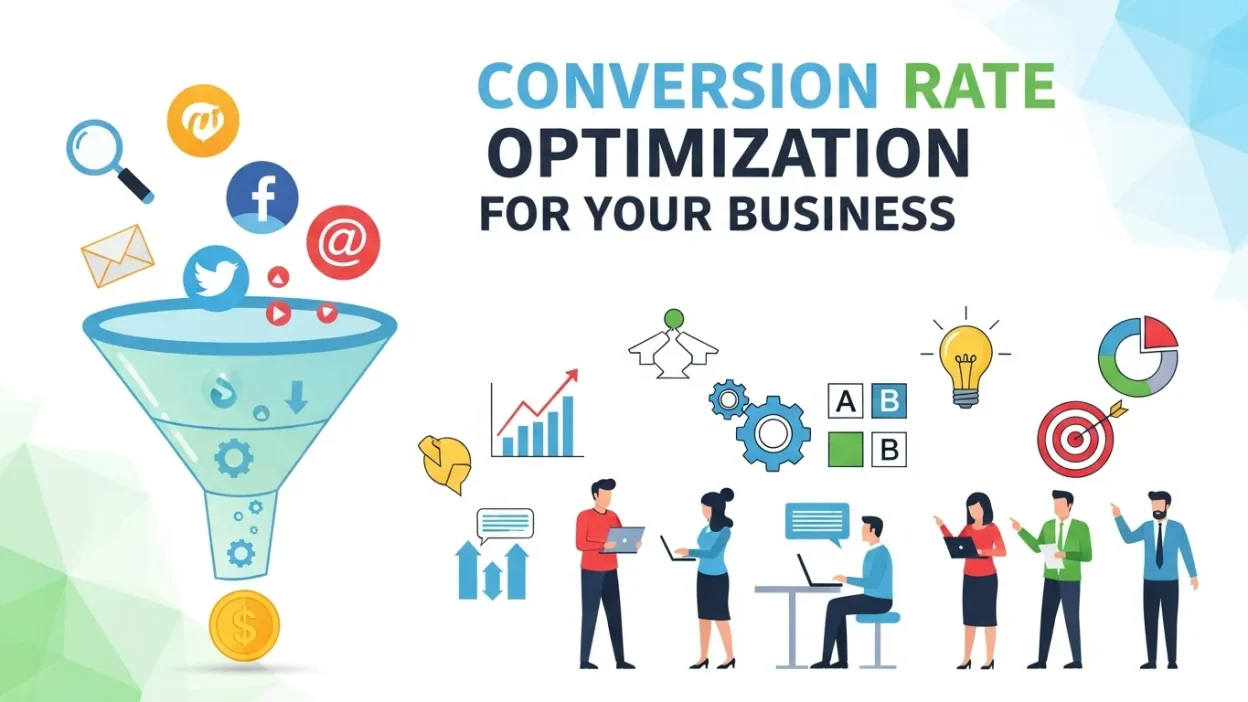
Conversion Rate Optimization (CRO) is a data-driven process aimed at improving your website, landing pages, and marketing performance to increase the percentage of users who take meaningful actions. Whether it’s a newsletter sign-up, a product purchase, or booking a product demo, the goal of CRO marketing is to refine every element that influences these key interactions—turning casual visitors into loyal customers.
At its core, CRO marketing is about maximizing the value of your existing traffic instead of solely focusing on bringing in new visitors. It helps you identify how users behave, where they drop off, and what changes can guide them more effectively toward conversion. By testing design elements, refining messaging, and improving user experience, Conversion Rate Optimization ensures every visitor has a clear, compelling reason to take action.
In other words, successful CRO marketing is not about guesswork—it’s about using real data to make smart, targeted improvements that increase engagement, boost revenue, and enhance overall business performance. With the right CRO strategy, you turn your website from a static presence into a powerful conversion engine that consistently drives measurable results.
Why Does CRO Matter?
For most businesses, the initial focus is on driving traffic. You might invest heavily in paid ads, social media campaigns, email marketing, and SEO strategies to attract more visitors. But traffic alone does not guarantee results. The critical question is: once users land on your website, how many actually take meaningful action? This is where Conversion Rate Optimization (CRO) becomes essential.
Relying solely on traffic growth can be expensive and time-consuming, and it doesn’t necessarily improve profitability. CRO marketing shifts the focus from simply attracting visitors to converting them effectively. Even a small increase in your conversion rate can produce substantial revenue gains. For example, if your website receives 10,000 visitors per month and converts at 2%, you achieve 200 conversions. By increasing your conversion rate to just 3% through CRO marketing, you gain an extra 100 conversions—without needing additional traffic. That’s a direct boost to your bottom line.
Why Conversion Rate Optimization Matters for Businesses
Conversion Rate Optimization ensures that every visitor has the best possible experience and is guided toward taking action—whether it’s signing up for a newsletter, making a purchase, or booking a demo. It maximizes the ROI from your current marketing efforts and complements other digital strategies like SEO, paid campaigns, and content marketing.
But When Should You Use CRO?
Timing is crucial. Recognizing the right moment to implement CRO marketing can be the difference between wasted resources and significant returns. Below are the key scenarios in which prioritizing CRO for your business can deliver the most impact.
When Your Traffic Isn’t Converting
Even if your website attracts a steady stream of visitors, low conversions are a clear sign that Conversion Rate Optimization (CRO) is needed. Traffic alone does not generate revenue—without action from your visitors, all your marketing efforts may go to waste. Whether you’re seeking leads, product sales, or newsletter sign-ups, a poor conversion rate indicates that something in the user experience is not resonating.
Why This Happens
Visitors can arrive at your site ready to take action, but small obstacles often prevent them from converting. Complicated forms, confusing navigation, weak call-to-action (CTA) buttons, or unclear messaging can all create friction. CRO marketing focuses on identifying these pain points and systematically testing solutions to turn hesitant visitors into customers.
What to Do
- Audit Your Website for Friction Points
Examine every step of your user journey. Are forms too long or confusing? Are CTAs hard to find or unappealing? Is the overall messaging clear and compelling? - Analyze User Behavior
Leverage tools like HotJar or Crazy Egg to create heatmaps and behavior maps. These tools show exactly where users click, how far they scroll, and where they drop off, giving insights for CRO-driven improvements. - Test and Refine
Conduct A/B tests on critical elements like form length, CTA buttons, headline copy, and page layout. Try simplified forms, bolder and more prominent CTAs, or more persuasive messaging to see what resonates with your audience. - Reduce Friction Throughout the Funnel
Ensure that each step—landing page, product page, checkout, or registration—is smooth, intuitive, and user-friendly. Remove distractions and provide clear, actionable guidance so visitors can complete the desired action effortlessly.
The ultimate objective of Conversion Rate Optimization is to understand why users hesitate and eliminate these obstacles. By addressing friction points, optimizing the user experience, and continuously testing, CRO marketing helps you transform your existing traffic into measurable business outcomes—more leads, more sales, and stronger ROI.
When You’re Launching a New Marketing Campaign
When beginning a new ad campaign, email marketing program, or social media initiative, the aim is often to send visitors to one specific landing page or website function. But driving traffic without first putting together a CRO strategy almost invariably results in missed chances to up the impact and effectiveness of your campaign.
Indeed, you could be giving away free caused record any capossery by addicts to an addicted user. Yet if this page is not optimized for response, large parts of your promotional wad will be squandered on bouncers who take themselves away without doing anything?
What to Do:
- Design campaign-specific landing pages optimized for your targets.
- Use A/B testing to experiment with different layouts, offers, or CTAs to deliver the best results.
- Track performance metrics like bounce rates and goal completions to enhance page experience.
When You’re Scaling Your Business
If you’ve recently good time execution, new marketing channels, or turn to any new market, CRO is will make sure your website can handle as it grows and goes huge. One of the benefits of scaling is that more people with different backgrounds enter your user base. CRO lets you change your website’s writing to meet its different audiences and cultures, stopping users who could have been highly valuable potential customers from thinking, “No, this isn’t for me at all.”
What to Do:
- Use multivariate testing to personalize designs or headlines for different user personas.
- Create segmented funnels to track which parts of your website resonate most with specific customer demographics.
- Localize content or features to meet regional expectations when entering new markets.
When You’re Losing to Competitors
Are your potential clients visiting your website but ending up purchasing from your competitor? This can happen when your user experience, pricing page, or offer isn’t as compelling as others in the market.
CRO allows you to better identify what your competitors are doing right and adjust your strategy to stay ahead.
What to Do:
- Perform a competitor analysis to see how their sites are converting visitors. Take note of differences in clarity, trust signals, or ease of use.
- Add credibility to your website with trust elements like testimonials, case studies, or industry certifications.
- Make your unique selling proposition (USP) stand out by featuring it prominently on your homepage and landing pages.
When You’re Optimizing for Mobile Users

In today’s digital landscape, mobile optimization is no longer optional—it’s essential. With over half of global web traffic now coming from smartphones and tablets, a website that fails to deliver a smooth mobile experience risks losing a significant portion of potential customers. Mobile visitors behave differently from desktop users—they’re often multitasking, have shorter attention spans, and expect lightning-fast performance.
This is where Conversion Rate Optimization (CRO) plays a critical role. CRO helps you understand how mobile users interact with your site, where they encounter friction, and what design or content changes can boost engagement and conversions. A website optimized for mobile users not only enhances usability but also increases trust and conversion rates dramatically.
Why Mobile CRO Matters for Business Growth
When users visit your website from their mobile devices, their experience directly affects how they perceive your brand. Slow load times, hard-to-click buttons, or poorly formatted content can frustrate users and drive them away within seconds. On the other hand, a seamless mobile experience keeps them engaged and encourages them to take action—whether that’s signing up for a newsletter, making a purchase, or requesting a demo.
Conversion Rate Optimization for mobile ensures your site looks great, functions smoothly, and guides visitors effortlessly toward conversion goals. It transforms mobile traffic from passive browsing into measurable business results.
Best Practices for Mobile Conversion Rate Optimization
1. Prioritize Responsive Design
Your website should adapt automatically to all screen sizes—whether it’s a phone, tablet, or desktop. A responsive layout ensures users never need to zoom in or scroll awkwardly to find information. Test across multiple devices to make sure images, buttons, and text remain visually balanced and accessible.
2. Simplify Navigation and Layout
Mobile users prefer straightforward experiences. Limit the number of menu options, use collapsible navigation, and display the most important actions (like “Buy Now” or “Contact Us”) prominently. Clean layouts reduce decision fatigue and guide users to your CTA faster.
3. Optimize Loading Speed
Even a one-second delay in load time can drastically lower your conversion rate. Compress images, use lightweight code, and leverage caching to enhance site performance. Tools like Google PageSpeed Insights can help identify and fix speed-related issues that slow down your site.
4. Use Mobile-Friendly Interactive Elements
Incorporate tap-friendly features such as large, easy-to-press buttons, swipeable product galleries, and click-to-call options. For e-commerce, ensure that checkout fields are simplified and that autofill options are enabled for faster form completion.
5. Focus on Content Readability
Large, readable fonts and concise copy are key. Avoid long paragraphs or heavy text blocks—mobile users skim, so highlight essential details, benefits, and CTAs. Use bullet points, subheadings, and whitespace effectively to improve scannability.
6. Implement Mobile-Specific CRO Testing
Run A/B tests exclusively for mobile experiences. Test variations of headlines, button placements, and color contrasts to see which design drives higher engagement. Remember: what works on desktop might not work on mobile.
7. Reduce Distractions and Pop-Ups
Intrusive pop-ups and excessive banners can harm user experience and even trigger Google penalties on mobile. Instead, use subtle slide-ins or timed messages that enhance conversions without interrupting browsing flow.
8. Enable Local and Voice Search Optimization
Many mobile users perform searches on the go—looking for nearby businesses or quick answers. Optimizing for local SEO and voice commands can help you capture high-intent users and drive immediate conversions.
Mobile optimization is not just about making your website “look good” on smaller screens—it’s about creating a conversion-friendly environment that aligns with how people use their devices. Conversion Rate Optimization ensures every touchpoint—from page load to purchase—is fast, intuitive, and persuasive.
By focusing on mobile CRO, you not only improve usability but also unlock higher engagement, longer session durations, and stronger brand loyalty. In a mobile-first world, this isn’t an enhancement—it’s a competitive necessity.
In short, when you optimize for mobile users with a CRO mindset, you’re not just improving the browsing experience—you’re improving your bottom line.
When You’re Rebranding or Launching a New Product
Rebranding or launching a new product is one of the most exciting yet delicate phases in a business’s journey. It represents evolution—an opportunity to reach new markets, refresh your identity, and elevate your message. However, it can also be a risky period if not handled strategically. Customers who are familiar with your previous brand identity might feel disconnected or confused, while new visitors may struggle to understand what your business stands for.
This is where Conversion Rate Optimization (CRO) becomes a critical success factor. CRO ensures that your rebranding or product launch doesn’t just look great—but also performs effectively. It bridges the gap between visual appeal and measurable business results by focusing on user perception, engagement, and clarity.
A successful rebrand is not just about changing your logo, colors, or tagline. It’s about ensuring that every design decision, content update, and messaging adjustment contributes to higher conversions and stronger customer relationships. The same applies to new product launches: no matter how innovative your offering is, it won’t succeed if your audience doesn’t understand its value or can’t navigate the experience easily.
How Conversion Rate Optimization Strengthens a Rebrand or Product Launch
When you go through a rebrand, your customers’ expectations and behaviors often shift. CRO helps you monitor these changes and make data-driven adjustments that keep users engaged and confident in your brand’s evolution. It allows you to test different elements of your website, landing pages, and product messaging to discover what resonates best.
Similarly, when introducing a new product, Conversion Rate Optimization enables you to measure how visitors respond to your content, visuals, and calls-to-action (CTAs). It ensures that your new positioning aligns with what your target audience wants—helping you build credibility faster and drive conversions from day one.
Actionable Strategies to Optimize Rebranding and Launches
1. Start with Deep Audience Research
Before you launch, use surveys, polls, and interviews to understand your audience’s perceptions of your brand or product. This insight helps you shape messaging that aligns with their expectations while maintaining authenticity.
2. Analyze and Rebuild Key Conversion Paths
Rebranding can disrupt your existing website structure or funnel performance. Use CRO tools like Google Analytics, Hotjar, or Crazy Egg to identify pages with high drop-off rates and optimize them with clear navigation, improved visuals, and stronger CTAs that reflect your new identity.
3. Run A/B Tests for Branding Elements
Colors, taglines, and visuals all influence user behavior. Test variations of your logo placement, color palette, and CTA copy to see which combinations perform best. CRO testing ensures that your brand changes not only look appealing but also convert more effectively.
4. Create Cohesive Messaging Across Channels
Consistency is key during rebranding. Make sure your tone, visuals, and offers are unified across your website, emails, and social platforms. When users see harmony in your brand message, trust increases—and so do conversions.
5. Optimize Onboarding for New Products
When launching a new product, make the user journey as simple as possible. Minimize registration steps, guide users with clear onboarding prompts, and provide instant value through product demos, tutorials, or quick-start guides. A seamless introduction improves adoption rates and builds long-term customer loyalty.
6. Leverage Social Proof and Testimonials
Showcase early user feedback, reviews, or success stories related to your rebrand or product launch. Social proof reinforces trust and validates your new direction in the eyes of potential customers.
7. Track and Iterate Based on Data
Use analytics and feedback to monitor how users react to your new branding or product experience. Conversion Rate Optimization thrives on continuous improvement—collect real data, analyze it, and make evidence-based refinements that strengthen both brand image and sales performance.
A rebrand or product launch is not just a marketing milestone—it’s a conversion opportunity. Conversion Rate Optimization ensures that your audience doesn’t just notice your transformation but embraces it. By refining design, messaging, and usability through testing and analysis, you turn uncertainty into confidence, confusion into clarity, and casual visitors into loyal customers.
In essence, a thoughtful CRO strategy transforms your rebrand from a visual facelift into a measurable success story—one that boosts engagement, builds trust, and drives real business growth.
When You Want to Maximize ROI on Existing Traffic
For many businesses, generating new traffic often becomes the main marketing obsession—more ads, more visitors, more reach. But there’s a smarter and far more cost-efficient approach: getting more value from the traffic you already have. This is where Conversion Rate Optimization (CRO) becomes one of the most powerful tools in your marketing arsenal.
At its core, Conversion Rate Optimization is an ROI-maximization strategy. Instead of spending heavily to bring new users, CRO focuses on turning current visitors into customers, subscribers, or qualified leads. Every visitor that lands on your website has potential value—CRO ensures you’re not letting that value slip away.
Even a small increase in conversion rate can have a massive financial impact. For instance, if your site attracts 20,000 monthly visitors and converts just 2% of them, that’s 400 conversions. Improving that rate to 3% through CRO means 600 conversions—a 50% boost in results without a single extra visitor. That’s the magic of optimizing ROI through better conversion performance.
Why Maximizing ROI Through CRO Is Essential
| Challenge | CRO-Focused Solution | Benefit |
|---|---|---|
| Limited marketing budget | Improve existing funnel performance instead of spending more on ads | Higher ROI with lower costs |
| Traffic plateau | Analyze and optimize conversion paths | Boost conversions without traffic growth |
| Low lead quality | Personalize user journeys based on behavior and intent | More qualified leads and higher lifetime value |
| High acquisition cost | Increase conversion efficiency | Lower cost per acquisition (CPA) |
Steps to Maximize ROI Using Conversion Rate Optimization
- Audit Your Current Performance:
Start with a comprehensive CRO audit using analytics tools like Google Analytics, Hotjar, or Optimizely. Identify where users drop off in your funnel—be it product pages, forms, or checkout flows. - Refine Your Conversion Funnel:
Break down your user journey step-by-step. Use funnel visualization to locate friction points and optimize them with better CTAs, simpler forms, and more relevant copy. - Personalize the User Experience:
Implement dynamic personalization to show users content or offers tailored to their behavior, interests, or location. Personalized experiences drive engagement and conversion rates significantly higher. - Use Behavioral Triggers and Urgency:
Apply urgency tactics such as countdown timers, “limited stock” alerts, or special discounts. When used carefully, these motivate quicker decisions and boost conversions without additional marketing spend. - Leverage AI and Automation:
AI-driven content and smart recommendation engines can analyze user behavior in real time and adjust the experience accordingly. For example, automated pop-ups or chatbot recommendations can convert uncertain visitors into customers effortlessly. - Test, Measure, Repeat:
Conversion Rate Optimization is not a one-time task. Continuously run A/B or multivariate tests to compare design elements, offers, and user flows. Even incremental gains, when compounded over time, lead to exponential ROI growth. - Focus on User Retention:
The easiest conversion is a repeat conversion. Use CRO to optimize your post-purchase experience with thank-you pages, loyalty incentives, and personalized email follow-ups that encourage long-term engagement.
The Bottom Line
If your marketing costs are rising but your traffic isn’t, Conversion Rate Optimization is your most effective path to better ROI. By improving conversion efficiency, refining the customer journey, and personalizing content, you can achieve remarkable growth without increasing your ad spend.
In short, CRO turns your website into a profit engine—one that continuously extracts more value from the same amount of visitors. Instead of working harder to attract more people, work smarter to convert more of the ones you already have.
When You’re Running an E-commerce Store
For e-commerce businesses, every visitor counts—and every abandoned cart hurts. If your store attracts steady traffic but struggles to turn visitors into buyers, that’s a clear signal you need to implement Conversion Rate Optimization (CRO). Unlike simply trying to increase traffic, CRO ensures that the visitors you already have are guided smoothly from curiosity to checkout.
A well-executed e-commerce CRO strategy identifies bottlenecks in the buying journey—like complicated checkout forms, poor product descriptions, or lack of trust signals—and fixes them to improve sales and revenue.
Why CRO is Essential for E-commerce Growth
| Common E-commerce Challenge | CRO Solution | Expected Impact |
|---|---|---|
| High cart abandonment rates | Simplify checkout steps, add a guest checkout option, and provide clear shipping details | Lower abandonment and faster sales completion |
| Low engagement and short sessions | Add interactive elements like product quizzes or personalized recommendations | Increase time on site and page interactions |
| Poor mobile shopping experience | Adopt a responsive design and mobile-first optimization | Reduce friction and increase mobile conversions |
| Unclear CTAs or weak product messaging | Test CTA wording, colors, and button placement | Encourage quicker purchasing decisions |
Actionable Steps to Boost Store Performance
- Optimize Product Pages – Use high-quality visuals, persuasive copy, and urgency elements (like “Only 3 left in stock!”) to motivate purchases.
- Leverage Social Proof – Display customer reviews, ratings, and trust badges prominently.
- Use Exit-Intent Popups – Offer discounts or limited-time deals to users about to leave your site.
- Test Checkout Flows – Remove unnecessary steps that slow down conversions.
- Introduce Conversational AI or Chatbots – Real-time chat support can help users find products, answer questions, and push hesitant buyers toward checkout. Tools like this chatbot-based e-commerce solution demonstrate how automated conversations can lead to higher conversions and customer satisfaction.
By refining every interaction point, e-commerce CRO turns browsing into buying, ensuring that your traffic delivers actual business value.
When You’re Building or Protecting Your Brand Reputation
Your brand reputation plays a silent yet crucial role in Conversion Rate Optimization. Even if your site looks great and your products are strong, users will hesitate to convert if they don’t trust you. Online reputation directly influences conversion rates because trust is the foundation of every successful transaction.
A positive brand reputation reassures customers that they are making the right choice. On the other hand, unclear branding, inconsistent tone, or negative reviews can destroy conversion opportunities—even when traffic is high.
How Reputation Ties into Conversion Success
| Reputation Element | CRO Tactic | Outcome |
|---|---|---|
| Trust and authenticity | Use verified reviews, testimonials, and real customer stories | Builds credibility |
| Transparency | Clearly state pricing, refund, and privacy policies | Reduces buyer hesitation |
| Consistent messaging | Align voice and visuals across all touchpoints | Strengthens brand recall |
| Customer engagement | Respond promptly to inquiries and reviews | Increases retention and loyalty |
Strategic Steps to Strengthen Brand Credibility
- Audit Your Online Presence – Search your brand name and assess how customers perceive your business across platforms.
- Highlight Your Strengths – Feature client case studies, press mentions, or awards on your website.
- Showcase Authentic Testimonials – Use video testimonials or verified buyer reviews that potential customers can trust.
- Communicate Transparently – Explain your pricing, product sourcing, or business process to establish trust.
- Align Content with Brand Values – Ensure your web copy, visuals, and CTAs reflect the same tone and principles.
Reputation management is an ongoing process that enhances both trust and conversions. You can explore insights from this detailed guide on personal reputation management, which shows how first impressions and consistent branding lead to long-term impact.
When reputation management and CRO work together, the result is a stronger brand presence and a higher conversion rate that comes naturally through credibility.
When You’re Investing in Paid Campaigns or CPC Advertising
Paid campaigns, especially CPC (Cost Per Click) advertising, can bring a flood of visitors to your website—but without proper Conversion Rate Optimization, that traffic can easily go to waste. Many businesses focus heavily on ad targeting and creative design but forget that the post-click experience is where the real revenue happens.
CRO ensures that every click you pay for has the highest possible chance of converting into a lead or sale. This alignment between advertising and website experience can drastically improve ROI, reduce wasted ad spend, and increase profitability.
How CRO Enhances Paid Campaign Efficiency
| Advertising Element | CRO Optimization | Benefit |
|---|---|---|
| Ad copy relevance | Match ad messaging with landing page headlines | Improves user trust and lowers bounce rate |
| Landing page layout | Simplify and focus on one key CTA | Encourages faster action |
| Target audience | Segment users based on intent and behavior | Delivers more personalized experiences |
| Conversion funnel | Shorten post-click pathways | Maximizes conversion opportunities |
Tactical Improvements for CPC Success
- Create Dedicated Landing Pages – Don’t send all your ads to the homepage. Each campaign should have a custom landing page aligned with the ad’s promise.
- Use Consistent Messaging – Ensure the headline and offer from your ad are repeated clearly on your landing page to maintain continuity.
- Run A/B Tests – Compare versions of your landing page design, CTA, and images to identify what drives the most conversions.
- Track Beyond Clicks – Focus on conversion data (sign-ups, sales) instead of just click-through rates.
- Optimize for Speed and Clarity – A slow or cluttered landing page kills conversion potential, no matter how effective the ad is.
Paid advertising and CRO complement each other perfectly. To get the most out of your campaigns, explore this CPC advertising guide for e-commerce, which details how integrating CRO into your paid strategies can dramatically boost sales while minimizing ad costs.
With both ad precision and conversion optimization in sync, every dollar you spend on marketing can produce exponentially greater returns.
The Right Timing Makes CRO Truly Powerful
Whether you’re running an e-commerce store, building your brand reputation, or scaling your paid ad campaigns, Conversion Rate Optimization is the hidden multiplier that amplifies all your efforts. It doesn’t just improve your website—it transforms how your business grows, how customers engage, and how every marketing dollar performs.
Instead of constantly chasing more traffic, CRO helps you get more from what you already have—turning visitors into loyal buyers, and data into predictable growth.
When done right and done consistently, CRO ensures that your website doesn’t just attract visitors—it converts them into your strongest source of business success.
Start Optimizing Your Conversions Today
A key consideration for deciding when to begin conversion rate optimization is your own company’s specific short-term goals as well as its long-term challenges too. However, for the majority of businesses, CRO brings beneficial results sooner rather than later. People whose websites lack traffic will find it harder to engage users; those who are launching new products and want or those rapidly scaling up operations need CRO just as much. The purpose of this is to get your web site where it counts most – in terms of efficiency.
Want to make CRO simpler? First choose products that take all the hard work out of optimization. Investigate optimization platforms, user analysis tools, and even a network of channels dedicated to connecting with CRO professionals – for example, your own website or blogs about conversion rate optimization.
Regardless of where optimization takes root, just remember that this isn’t finishing a project once and for all but rather constantly trying to improve things. And what you get in return? A more effective business and happier customers.
Frequently Asked Questions (FAQ) About Conversion Rate Optimization (CRO)
1. What exactly is Conversion Rate Optimization (CRO), and why does it matter for my business?
Conversion Rate Optimization (CRO) is the process of improving your website’s ability to turn visitors into leads, subscribers, or customers. Instead of focusing solely on bringing in more traffic, CRO helps you make the most of your existing audience by enhancing user experience, testing variations, and refining messaging. It matters because even a small increase in conversion rate can lead to a large boost in revenue—without increasing your marketing spend.
2. How do I know if my website actually needs CRO?
You need CRO if your site receives steady traffic but few conversions—meaning people visit but don’t take action. Other signs include high bounce rates, short session durations, low engagement with CTAs, or frequent cart abandonments. A CRO audit can identify weak spots in your funnel and show where users hesitate or drop off.
3. What are micro-conversions and why should I track them?
Micro-conversions are the smaller actions users take before reaching your main goal (macro-conversion). Examples include subscribing to a newsletter, adding items to a cart, or watching a demo video. Tracking these helps you understand engagement and where visitors show intent.
For more insight, you can check out this guide on boosting engagement through micro-conversions — it shows how optimizing small steps can lead to big results over time.
4. What’s the difference between CRO and SEO? Do they work together?
SEO (Search Engine Optimization) focuses on bringing traffic to your site, while CRO ensures that traffic converts into measurable results like sales or leads. They’re complementary—SEO attracts visitors, and CRO converts them. A balanced digital marketing strategy includes both for long-term success.
5. How often should I perform CRO tests or updates?
CRO is not a one-time project—it’s a continuous improvement process. Ideally, you should review your performance metrics monthly and run A/B tests quarterly. However, if your business undergoes major changes such as a rebrand, campaign launch, or traffic surge, you should conduct fresh CRO testing immediately afterward.
6. How important are landing pages in Conversion Rate Optimization?
Landing pages are the backbone of CRO. They’re designed to convert visitors arriving from ads, emails, or social media. A high-performing landing page includes a clear headline, strong CTA, trust signals, and minimal distractions.
If you want to learn practical steps to create them effectively, this landing page creation guide provides excellent insights on layout, design, and testing methods that boost conversions.
7. What CRO tools can help improve website performance?
Some top CRO tools include:
- Google Optimize or Optimizely for A/B and multivariate testing
- Hotjar and Crazy Egg for behavior heatmaps
- Google Analytics for tracking user flow and conversion funnels
- VWO for full-scale experimentation
- Survicate for gathering user feedback
Choosing the right tool depends on your website type, budget, and CRO maturity level.
8. Can CRO improve my paid advertising results?
Yes. CRO directly enhances ROI from CPC or PPC campaigns. When your landing pages and forms are optimized, the same paid traffic produces higher conversion rates. That means you’ll get more leads or sales from the same ad spend—essentially turning clicks into customers more efficiently.
9. How can I develop a complete CRO marketing strategy for my business?
Developing a successful CRO marketing strategy starts with setting measurable goals, analyzing user data, running consistent A/B tests, and optimizing based on evidence—not assumptions. It’s also essential to align CRO with your overall brand and content strategy.
To dive deeper into building a professional, structured plan, check this comprehensive guide to CRO marketing strategies, which outlines proven frameworks and best practices.
10. Is CRO suitable for small businesses or only for large organizations?
CRO is valuable for businesses of all sizes. For small businesses, it helps make limited traffic more profitable and maximizes every marketing dollar spent. For larger organizations, it fine-tunes complex funnels and customer journeys at scale. No matter the size, CRO delivers measurable results by focusing on efficiency and user experience.
11. How long does it take to see results from Conversion Rate Optimization?
The timeline varies based on the complexity of your website and the volume of data available. Typically, meaningful insights from A/B testing appear within 2–6 weeks. Small adjustments like CTA redesigns may show faster results, while full-funnel optimization can take several months. Patience and consistency are key—CRO is about sustainable, data-driven growth.
12. What metrics should I track to measure CRO success?
Some of the most important CRO metrics include:
- Conversion rate (overall success percentage)
- Bounce rate (users leaving without action)
- Average session duration (engagement time)
- Cart abandonment rate (for e-commerce)
- Lead-to-customer ratio
- Revenue per visitor (RPV)
Tracking these metrics regularly helps identify improvement areas and quantify the effectiveness of your optimization strategy.