
Conversion Rate Optimization (CRO) improves website performance by turning visitors into customers. By optimizing user experience, testing elements, and refining content, CRO boosts conversions, increases ROI, reduces costs, and provides a scalable, data-driven strategy for sustainable business growth.
Every business with a website shares a single fundamental goal: turning visitors into customers. But attracting traffic is only half the battle. The real challenge lies in convincing those visitors to take meaningful action—whether that’s making a purchase, signing up for a newsletter, downloading a resource, or requesting a demo.
This is where Conversion Rate Optimization (CRO) comes in. CRO is the process of enhancing your website or landing pages to increase the percentage of visitors who convert, making your website work harder for you without the need to drive additional traffic. By applying proven Conversion Rate Optimization strategies, businesses can extract more value from every visitor, improve user experience, and ultimately boost revenue.
But what exactly is Conversion Rate Optimization, why is it so important, and how can it be effectively implemented? In this comprehensive guide, we’ll break down everything you need to know—from core principles and essential strategies to actionable tips and real-life examples—so you can start turning more visitors into loyal customers today.
What is Conversion Rate Optimization?
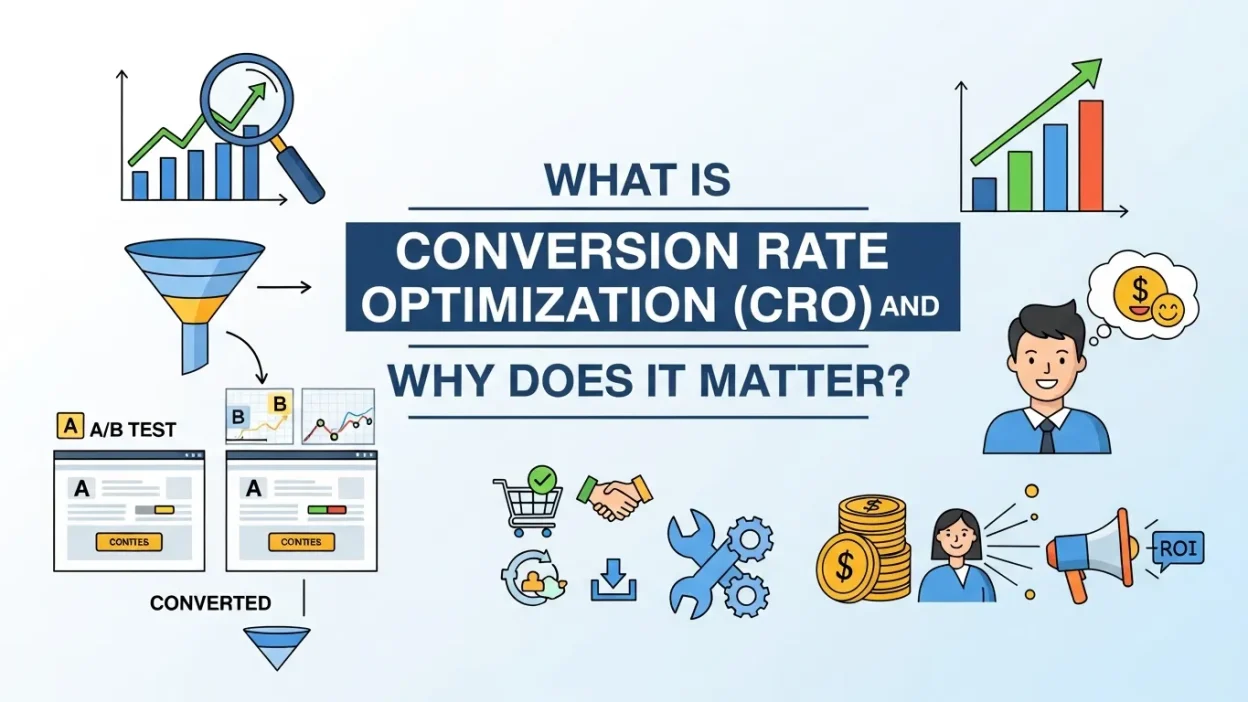
Conversion Rate Optimization (CRO) means arranging your website or your landing page in such a manner that most of the people who come take whatever action it is you want them to perform. This wanted action is up to you, it could be anything from placing an order to registering for an e-newsletter or downloading one of our e-books.
Here’s the formula for conversion rate calculation:
Conversion Rate = (Conversions ÷ Total Visitors) × 100
For example, if you have 1000 visitors to your site in a month and 50 of them make a purchase, your conversion rate is 5%.
The core idea of CRO is simple–maximize the effectiveness of your existing traffic without needing to invest additional resources in driving new traffic.
Why Does Conversion Rate Optimization Matter?
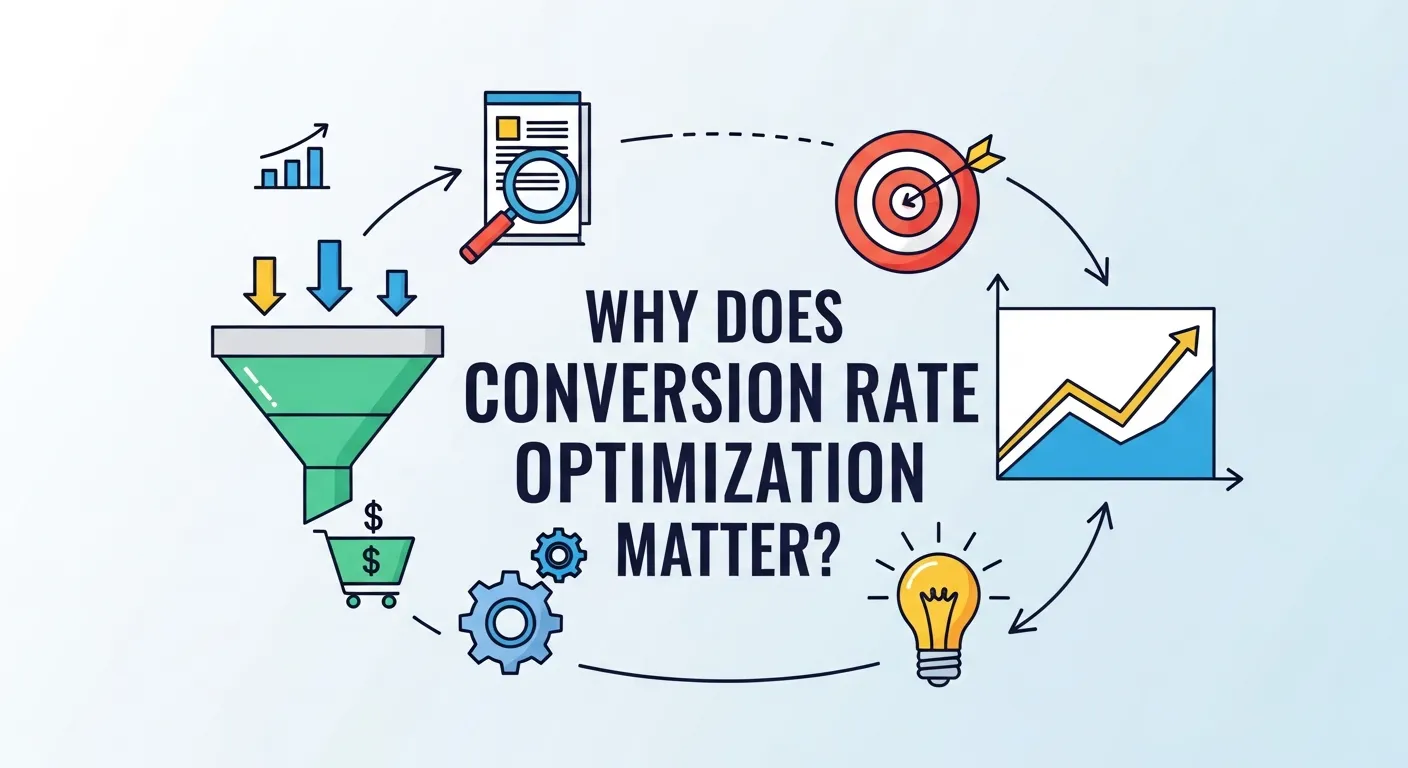
Focusing on Conversion Rate Optimization (CRO) is one of the most effective strategies to grow your business online. While attracting traffic to your website is important, it’s the conversion rate—the percentage of visitors who take a desired action—that ultimately drives revenue. By prioritizing Conversion Rate Optimization, businesses can make every visitor count, improve efficiency, and gain a measurable competitive advantage.
Here’s why Conversion Rate Optimization matters and how it can transform your website into a powerful revenue-generating tool:
1. Higher Return on Investment (ROI)
You invest time, effort, and money into driving traffic through SEO, paid advertising, content marketing, and social media campaigns. Without Conversion Rate Optimization, much of this traffic may leave without taking action. CRO ensures that every visitor has a higher chance of converting, maximizing the value of your marketing spend.
Benefits of Conversion Rate Optimization for ROI:
- Increases the effectiveness of existing marketing campaigns.
- Boosts revenue without increasing ad spend.
- Turns casual visitors into paying customers, increasing lifetime value.
Example: An e-commerce site optimized product pages and checkout flows, resulting in a 20% higher conversion rate from the same ad spend, directly improving ROI through CRO.
2. Cost Efficiency
Acquiring new visitors can be expensive. Paid campaigns, social media ads, and SEO efforts all come at a cost. With Conversion Rate Optimization, you can generate more conversions from the visitors you already have, reducing the need for additional acquisition costs.
Key CRO cost-efficiency benefits:
- Lower cost per conversion by improving existing traffic performance.
- Reduces waste from visitors who would otherwise leave without taking action.
- Makes marketing campaigns more sustainable over time.
Example: A SaaS company used CRO techniques like A/B testing and improved CTA placement, increasing sign-ups by 30% without increasing their ad budget.
3. Improved User Experience (UX)
At its core, Conversion Rate Optimization is about creating a better experience for your visitors. When your website is visually appealing, easy to navigate, fast-loading, and mobile-friendly, users are more likely to stay longer and take the actions you want.
CRO and UX go hand in hand:
- Clear navigation reduces frustration and drop-offs.
- Faster loading pages keep visitors engaged.
- Well-structured content guides visitors toward conversion.
- Personalized experiences create a sense of relevance and trust.
Example: A travel booking site applied CRO to improve mobile usability and page speed. The result: visitors spent more time on the site, and conversions increased by 25%.
4. Competitive Advantage
In today’s competitive digital landscape, a conversion-optimized website can set your business apart. Many competitors may focus solely on traffic generation without improving conversion processes. Conversion Rate Optimization ensures your website not only attracts visitors but also converts them into customers, giving you a significant edge in the market.
How CRO provides a competitive advantage:
- Better conversion rates mean higher revenue from the same traffic.
- Optimized websites create stronger brand credibility.
- Businesses can adapt faster to changing user behavior and market trends.
Example: A local retailer implemented CRO techniques like trust signals, testimonials, and simplified checkout, outperforming competitors with similar traffic levels.
5. Scalable Results
Once you implement Conversion Rate Optimization successfully, the benefits scale across your entire website traffic. Small improvements in conversion rates can have a snowball effect, producing substantial revenue growth as traffic increases.
CRO scalability benefits:
- Every visitor benefits from optimized pages, multiplying the effect of improvements.
- Long-term gains continue as traffic grows, without proportional increases in cost.
- Creates a foundation for data-driven decision-making, enabling continuous growth.
Example: An online education platform optimized landing pages and enrollment forms. Even as traffic doubled over six months, conversion rates remained high, resulting in exponential growth in paid subscriptions.
Key Elements of CRO
Transformation doesn’t happen without effort, so what should you focus on when optimizing conversions? Here are the critical elements of CRO:
1. Call to Action (CTA):
Your CTA is one of the most important elements of CRO. These are buttons or links designed to steer users into taking action, such as “Buy Now,” “Subscribe Today,” or “Learn More.” The clearer and more compelling your CTA, the higher the chances of conversion.
2. Landing Page Design:
A clean and user-friendly design is vital. Ensure your content is visually engaging, mobile-friendly, and well-structured. Too much clutter can easily push visitors away.
3. Website Speed:
Studies show that even a single extra second in load time can significantly lower conversion rates. Optimize your website’s performance to reduce loading times for both desktop and mobile users.
4. Social Proof:
People trust the opinions and experiences of others. Leveraging reviews, testimonials, case studies, and user-generated photos can significantly boost credibility.
5. A/B Testing:
Experimenting with different versions of your website or landing page can show you what works best. For example, you might test various headlines, button colors, or CTA wording to determine what drives the most conversions.
6. Personalization:
Customers crave personalized experiences. Tailor content, recommendations, and offers based on user behavior or targeting data to create a more relevant experience.
7. Ease of Navigation:
A complicated or confusing website frustrates users and kills conversion potential. Simplify your design and use consistent navigation to make the user experience seamless.
A Step-by-Step CRO Process
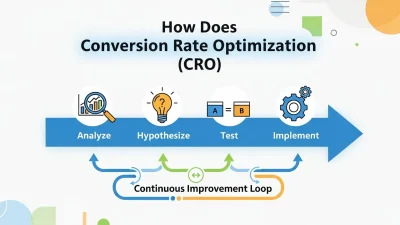
To implement CRO effectively, follow these steps:
Step 1: Set Clear Goals
Understand what actions you want users to take on your site. Is it purchases, downloads, sign-ups, or something else? Identify a primary conversion goal to guide your optimization efforts.
Step 2: Analyze Current Performance
Dive into your analytics tools to assess your current conversion rate and identify trouble areas. For instance, where do visitors drop off? What pages have high bounce rates? Tools like Google Analytics can uncover valuable insights.
Step 3: Understand Your Audience
Use heatmaps, surveys, and customer feedback tools to understand user behavior, pain points, and preferences. What are users looking for, and why might they leave before converting?
Step 4: Run A/B Tests
Create two versions of a page (or specific element) and test them to analyze what performs best. For example:
– Test different CTA placements or designs
– Experiment with form lengths and required fields
– Adjust headlines or images
Step 5: Implement Changes
Roll out the most effective changes site-wide. But remember, CRO is an ongoing process, so regularly revisit and make improvements as user behavior evolves.
Step 6: Measure Results
Track how your changes impact the conversion rate. Use tools like Google Optimize, Crazy Egg, or Optimizely to assess what’s working.
Optimize Media Buying for Conversions
Paid advertising can generate traffic quickly, but without optimization, it may fail to drive meaningful conversions. Media buying is the practice of strategically purchasing ad space to reach the right audience at the right time. When combined with CRO, media buying ensures every ad click has the potential to turn into a paying customer.
Why It Matters:
Many businesses spend heavily on ads but fail to see ROI because they target the wrong audience or fail to direct visitors to conversion-friendly pages. Optimizing media buying allows you to maximize the value of every click.
Key Tactics:
- Audience Segmentation: Group your audience by behavior, demographics, or previous engagement. Tailored messaging resonates more, increasing conversion chances.
- Retargeting Campaigns: Re-engage visitors who didn’t convert the first time, reminding them of your products or services.
- Ad Placement Optimization: Place ads where your ideal customers are most active—on the right websites, social media platforms, or search results.
- Performance Monitoring: Continuously track metrics like CTR (Click-Through Rate), CPA (Cost Per Acquisition), and ROAS (Return on Ad Spend) to refine your campaigns.
Businesses seeking expert guidance can explore From Clicks to Conversions: How Media Buying Services Drive Growth.
| Strategy | Benefit | Key Metric |
|---|---|---|
| Audience Segmentation | Higher ad relevance and engagement | CTR, Conversion Rate |
| Retargeting Campaigns | Re-engage potential customers | ROAS, CPA |
| Ad Placement Optimization | Reduce wasted spend, improve targeting | CPC, CTR |
| Performance Monitoring | Continuous improvement of ad ROI | Conversion Rate, ROI |
Example in Practice: A clothing e-commerce store segmented audiences by age and purchase behavior. They retargeted users who abandoned their carts with tailored discount ads. Within a month, their conversion rate from paid campaigns increased by 25%, demonstrating the power of combining CRO with strategic media buying.
Leverage Email Marketing to Nurture Leads
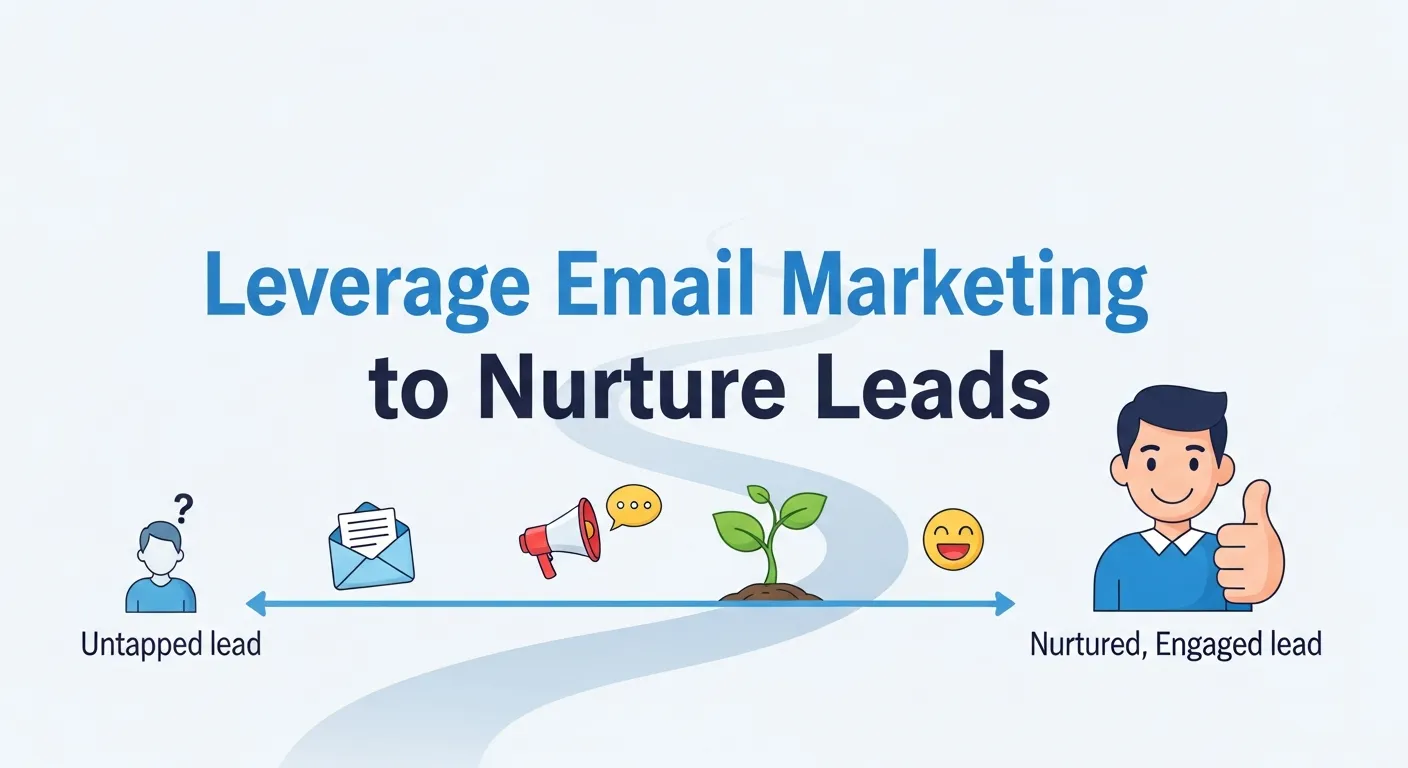
Email marketing is still one of the most cost-effective ways to drive conversions, especially when your website already attracts visitors. CRO principles can be applied to emails by optimizing content, design, personalization, and timing.
Why It Matters:
Email allows direct communication with potential customers who have already expressed interest in your product or service. A well-optimized email can turn hesitant leads into paying customers without additional advertising spend.
Key Strategies:
- Segmentation: Divide your email list by behavior, interests, or past purchases to send relevant content.
- Personalization: Include recipient names, relevant offers, or product recommendations.
- Strong CTAs: Encourage immediate action with clear and compelling calls-to-action.
- Timing & Frequency: Test sending emails at different times or days to maximize engagement.
- A/B Testing: Test subject lines, email copy, images, and CTA placement to see what works best.
For more tips on improving email engagement and conversions, see B2B Email Marketing: Open Rates and Conversions.
| Email Element | Optimization Tip | Expected Result |
|---|---|---|
| Subject Line | Keep it concise, relevant, and intriguing | Higher Open Rate |
| CTA Placement | Place prominently, use action-oriented text | Higher Click-Through Rate |
| Personalization | Tailor content based on user data | Better Engagement |
| Email Design | Mobile-friendly, visually appealing | Lower Bounce Rate |
| Send Timing | Test time and frequency | Improved Engagement |
Example in Practice: A software company sent segmented emails to leads who downloaded a free trial. Personalized recommendations and clear CTAs increased trial-to-paid conversions by 18% in two months, highlighting the synergy between CRO and email marketing.
Prepare for Voice Search Optimization
Voice search is redefining how users find information online, especially with the rise of smart speakers and mobile voice assistants. Businesses that optimize for voice search position themselves to capture this growing audience, which can directly impact conversion rates.
Why It Matters:
Voice search queries are often conversational and question-based, meaning your content must align with how people naturally speak. Optimizing your site for voice search improves visibility, enhances user experience, and attracts highly motivated visitors ready to act.
Key Strategies:
- Use Conversational Keywords: Focus on long-tail, question-based phrases like “How do I buy eco-friendly running shoes near me?”
- Mobile Optimization: Ensure fast load times and responsive designs, since most voice searches occur on mobile devices.
- Local SEO: Many voice searches are local queries, so optimizing Google Business profiles and local schema markup is critical.
- Content Structuring: Create FAQ sections, step-by-step guides, or lists that directly answer user questions.
- Featured Snippets: Optimize content to appear as snippets in search results, which are often read aloud by voice assistants.
Learn how to adapt to this trend at Voice Search Optimization: Preparing Your Brand.
| Optimization Focus | Implementation | Conversion Benefit |
|---|---|---|
| Conversational Keywords | Include FAQs and natural questions | Matches voice queries |
| Mobile Optimization | Responsive design, fast load times | Lower bounce rate |
| Local SEO | Google Business Optimization, local schema | More local leads |
| Content Structuring | Use lists, headings, and clear answers | Higher engagement |
| Featured Snippets | Optimize content for rich answers | Increased visibility |
Example in Practice: A local bakery optimized its website content for queries like “best cupcakes near me” and structured FAQs to answer common questions. Within three months, they saw a 30% increase in store visits from local searches, proving that voice search optimization directly influences conversions.
Real-Life Examples of Conversion Rate Optimization in Action
To truly understand the impact of Conversion Rate Optimization (CRO), it’s helpful to examine real-world examples where businesses applied these strategies effectively and achieved measurable results. These case studies highlight how targeted Conversion Rate Optimization can significantly boost engagement, conversions, and revenue.
Dropbox – Simplifying the User Journey
Dropbox, the cloud storage leader, leveraged Conversion Rate Optimization by introducing a simple explainer video on their homepage. The goal was to make the product’s value immediately clear to visitors, reducing friction and confusion.
Key Results of Conversion Rate Optimization:
- Conversion rate increased by over 10%.
- Millions of new users were acquired without additional ad spend.
- The homepage became more intuitive, improving overall user engagement.
CRO Takeaways:
- Clarity drives conversions: When visitors quickly understand the value proposition, Conversion Rate Optimization works more effectively.
- Visual content enhances CRO: Explainer videos or interactive demos make complex ideas easier to digest.
- Data-driven testing: Even small CRO interventions, like a video, should be tested to confirm their impact on conversion rate.
Basecamp – Refining Headlines and Messaging
Basecamp focused its Conversion Rate Optimization efforts on landing page messaging. By simplifying the headline and clearly communicating the value proposition, Basecamp made it easier for visitors to understand the benefits of their platform.
Key Results of Conversion Rate Optimization:
- Conversion rates rose by 14%.
- More trial sign-ups and higher customer acquisition were achieved.
- Simplified messaging reduced confusion and enhanced trust.
CRO Takeaways:
- Effective messaging is critical for Conversion Rate Optimization: Clear, concise headlines and copy are essential to guide visitor action.
- Simplicity matters: Overly complex pages can hinder conversion rate improvements.
- Continuous A/B testing: Headlines, CTA wording, and layout elements must be tested systematically to maximize CRO impact.
Other Notable CRO Success Stories
- Airbnb: Applied Conversion Rate Optimization by personalizing search results and streamlining booking flows.
- Shopify: Improved checkout experience and product page layout to increase conversion rates.
- Amazon: Uses ongoing Conversion Rate Optimization with A/B testing across all pages, ensuring every visitor interaction maximizes conversions.
Insight: These examples illustrate that Conversion Rate Optimization is not just about design tweaks—it’s about understanding visitor behavior, testing hypotheses, and implementing data-driven changes. Even small CRO efforts can lead to substantial revenue gains.
Take Action and Start Conversion Rate Optimization
Conversion Rate Optimization is not a trendy buzzword—it’s an essential strategy for businesses of all sizes to maximize the value of website traffic. By systematically analyzing visitor behavior, testing potential improvements, and implementing changes, businesses can turn casual visitors into loyal customers.
Steps to Implement Conversion Rate Optimization Today
-
Analyze User Behavior for CRO
Use analytics, heatmaps, and session recordings to understand visitor interactions. Identify friction points where conversions drop and focus your CRO efforts there. -
Prioritize High-Impact CRO Elements
Focus on elements that most influence conversions:
- Headlines and landing page copy
- Call-to-action (CTA) buttons
- Forms and checkout flows
- Visual content like images and videos
-
Conduct A/B Testing for CRO
Test different versions of pages, CTAs, or content to determine which drives the best conversion rate. Always test one variable at a time to ensure accurate CRO insights. -
Implement and Scale CRO Changes
Apply successful changes across your site. Monitor the results continuously, as Conversion Rate Optimization is an ongoing process, not a one-time fix. -
Personalize Experiences to Boost CRO
Tailor content, recommendations, and offers based on visitor behavior. Personalized experiences increase engagement and conversion likelihood. -
Measure and Iterate
Track metrics like conversion rate, bounce rate, and session duration to gauge the impact of CRO. Continuously refine your strategies to align with evolving visitor behavior.
Why Conversion Rate Optimization is Crucial
Whether you are a small business or a large enterprise, Conversion Rate Optimization provides measurable benefits:
- More conversions without additional traffic: Maximize the ROI from existing visitors.
- Enhanced user experience: CRO forces websites to become faster, more intuitive, and visually engaging.
- Data-driven outcomes: Every change is guided by actual visitor behavior, producing tangible results.
Bottom Line: Start implementing Conversion Rate Optimization today. Test continuously, iterate intelligently, and refine every page. Effective CRO transforms ordinary websites into conversion machines, turning more visitors into loyal customers and driving long-term business growth.
FAQ: Conversion Rate Optimization (CRO)
1. What is Conversion Rate Optimization (CRO)?
Conversion Rate Optimization (CRO) is the process of improving your website or landing page so that more visitors take desired actions, such as purchasing a product, signing up for a newsletter, or downloading resources. CRO combines data analysis, user behavior insights, A/B testing, and strategic design changes to maximize conversions without needing extra traffic.
2. Why is Conversion Rate Optimization important for my business?
CRO increases the value of your existing website traffic, enhances user experience, reduces acquisition costs, and boosts ROI. A higher conversion rate means more customers from the same traffic, giving your business a competitive edge and sustainable growth over time.
3. How do I calculate my website’s conversion rate?
The formula is simple:
Conversion Rate = (Conversions ÷ Total Visitors) × 100
For example, if your website has 5,000 visitors and 250 take action, your conversion rate is 5%. Tracking this metric helps measure the success of your CRO strategies.
4. What are the key elements of a successful CRO strategy?
Successful Conversion Rate Optimization focuses on:
- Strong, clear CTAs (Call-to-Actions)
- Landing page design and layout
- Website speed and performance
- Social proof like testimonials and reviews
- Personalization based on user behavior
- A/B testing to refine elements
Each component contributes to increasing conversions and improving overall site performance.
5. How long does it take to see results from CRO?
The timeline depends on your website traffic, the complexity of your site, and the changes you implement. Small adjustments like CTA placement or headline tweaks can show results in weeks, while major redesigns or personalization strategies may take a few months. CRO is a continuous, iterative process.
6. Can small businesses benefit from Conversion Rate Optimization?
Absolutely. CRO is not just for large enterprises. Small businesses can see significant ROI by optimizing high-traffic pages, simplifying checkout processes, and improving user experience. Even small improvements can lead to measurable increases in conversions without additional marketing spend.
7. What tools can help with Conversion Rate Optimization?
Popular tools for CRO include:
- Google Optimize – for A/B testing and personalization
- Hotjar or Crazy Egg – for heatmaps and session recordings
- Optimizely – for experimentation and analytics
Using these tools allows businesses to make data-driven CRO decisions.
8. How can I start a career in Conversion Rate Optimization?
If you’re interested in making a career in CRO, it’s important to learn the strategies, testing techniques, and analytics tools involved. You can explore resources like Build a Career in CRO Strategies to get started with practical guidance and skill-building.
9. What advanced strategies can take my CRO to the next level?
Beyond basic CRO, advanced strategies include:
- Personalization at scale
- Predictive analytics for user behavior
- AI-driven A/B testing and optimization
- Multi-channel CRO campaigns
For a deeper dive, see Advanced CRO Strategies for Business Growth.
10. How can CRO strategies improve overall business growth?
CRO ensures that every visitor has a higher chance of becoming a paying customer. Implementing CRO improves ROI, reduces acquisition costs, enhances UX, and scales revenue over time. You can explore detailed techniques at CRO Strategies to Take Your Business Further to expand your growth potential.