

What is Conversion Rate Optimization?

At its core, conversion rate optimization (CRO) is the process of increasing the percentage of website visitors who take a desired action. A “conversion” could mean different things depending on your goals, such as:
- Making a purchase
- Subscribing to a newsletter
- Filling out a form
- Downloading a resource
- Booking a demo
CRO focuses on understanding visitor behavior, eliminating friction points, and optimizing the user experience to encourage these actions.
For example, imagine you have an online store with 10,000 monthly visitors and a 2% conversion rate. This means 200 people are making a purchase each month. By improving your conversion rate to 4% through CRO efforts, you could double your sales without needing to drive additional traffic. That’s the power of CRO.
Why is Conversion Rate Optimization Important?
Conversion Rate Optimization (CRO) has become a crucial component of modern digital marketing strategies, and for good reason. By focusing on improving the effectiveness of your website, CRO ensures that your traffic—whether organic, paid, or referral—translates into tangible results. Here are some key benefits explained in detail:
Maximizing ROI
Driving traffic to your website through paid ads, SEO, social media campaigns, or influencer marketing often requires significant investment. CRO ensures that every visitor counts. By optimizing landing pages, calls-to-action, forms, and checkout flows, you reduce the number of lost opportunities and improve the percentage of visitors who take desired actions. Learn how to increase conversion rate on your website to get the most from your traffic.
Enhancing User Experience
CRO and user experience (UX) go hand in hand. When a website is optimized for conversions, it naturally becomes easier to navigate, faster to load, and simpler to interact with. Clear messaging, intuitive layouts, and smooth workflows reduce friction for users. A positive user experience not only encourages immediate conversions but also builds trust, increases repeat visits, and fosters word-of-mouth referrals. Essentially, a site optimized for conversions is a site that visitors actually enjoy using.
Boosting Revenue Without Increased Costs
Unlike strategies that rely on driving more traffic—such as PPC campaigns, content marketing, or social media ads—CRO focuses on improving the value of the traffic you already have. For more advanced strategies, you can explore our CRO optimization guide for conversion success.
Gaining Actionable Insights
CRO is more than tweaking buttons or colors—it’s a data-driven process. By analyzing user behavior, heatmaps, click patterns, funnel drop-offs, and A/B test results, businesses gain deep insights into their audience’s preferences, pain points, and motivations. To learn about mastering analysis, check out how to master conversion rate analysis.
Staying Competitive
In today’s fast-paced digital marketplace, competitors are constantly testing and optimizing their websites to capture market share. If your site isn’t optimized, you risk losing potential customers to more user-friendly, conversion-focused competitors. CRO helps ensure that your business remains relevant, competitive, and appealing to visitors. A site that converts efficiently not only retains customers but also strengthens your brand reputation and positions your business for long-term growth.
Core Elements of Conversion Rate Optimization
Before you can effectively improve your website’s conversion rate, it’s crucial to understand the foundational elements that drive CRO success. These core components act as the building blocks for optimizing user experience, guiding visitors through your sales funnel, and turning casual browsers into loyal customers. Focusing on these areas ensures that your optimization efforts are strategic, measurable, and impactful:
User Experience (UX)
A slow-loading page, cluttered layout, or confusing navigation can frustrate visitors and lead them to abandon your site before converting. CRO emphasizes improving user experience by ensuring seamless site navigation, fast page load times, mobile responsiveness, and intuitive design. Clear visual hierarchy, well-placed call-to-action (CTA) buttons, and consistent branding also contribute to a frictionless experience that keeps users engaged and encourages them to complete desired actions.
A/B Testing
A/B testing, also called split testing, is a core CRO strategy that compares two or more versions of a webpage to determine which performs better. For example, you might test different headlines, CTA text (“Buy Now” vs. “Add to Cart”), button colors, or even page layouts. By systematically experimenting with these elements, you can make data-driven decisions that improve conversions and reduce guesswork in your marketing strategy.
Copy and Messaging
The words on your website have a direct impact on conversion rates. Conversion-focused copy includes persuasive headlines, benefit-driven product descriptions, and concise explanations that resonate with your target audience. Strong messaging communicates value clearly, builds trust, and guides visitors toward the next step in the sales funnel. Additionally, addressing potential objections, highlighting guarantees, or using social proof can further enhance the effectiveness of your website copy.
Landing Pages
Landing pages often serve as the first point of interaction for potential customers. Optimizing these pages for relevance, clarity, and perceived value can dramatically improve conversion rates. Key elements include a compelling headline, engaging visuals, a prominent CTA, minimal distractions, and trust signals such as reviews or security badges. Every landing page should focus on a single, clear objective to maximize user engagement and conversion potential.
Data Analysis
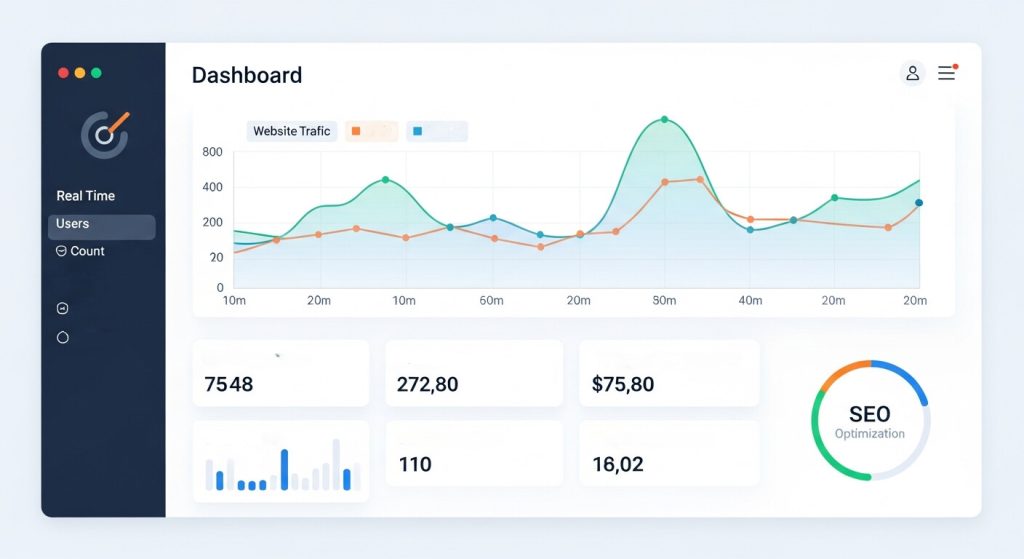
Data analysis is the backbone of effective CRO. Tools like Google Analytics, Hotjar, or Crazy Egg help track metrics such as bounce rates, click patterns, scroll depth, and time on page. By carefully reviewing this data, you can uncover trends, identify friction points, and prioritize areas for improvement. Continuous monitoring allows marketers to iterate and refine strategies, ensuring that every change is backed by actionable insights rather than guesswork.
How to Start Implementing Conversion Rate Optimization

If you’re ready to start improving your website’s performance, implementing Conversion Rate Optimization requires a structured approach. CRO isn’t just about making random changes—it’s a systematic process of analyzing user behavior, testing hypotheses, and refining your site to maximize conversions. By following a clear, step-by-step strategy, you can identify pain points in the user journey, enhance the overall experience, and turn more visitors into customers. The process typically involves evaluating your current performance, setting measurable goals, prioritizing changes based on impact, and continuously testing and iterating to achieve sustained growth.
If you’re ready to get started, here’s a step-by-step guide to help you maximize your conversions:
Define Your Goals
Before making any changes to your website, it’s essential to clearly define your objectives. Understanding exactly what you want to achieve will guide every decision in your CRO strategy. Your goals could range from increasing the number of purchases, boosting email newsletter sign-ups, generating more demo or trial requests, or even encouraging users to engage with specific content.
It’s important that these goals are specific, measurable, and time-bound. For example, instead of saying “increase sales,” define it as “increase online purchases by 15% over the next three months.” Clear goals not only help you prioritize which pages or elements to optimize first but also make it easier to measure the success of your efforts. Setting defined targets ensures that every test, tweak, and improvement is aligned with tangible business outcomes.
Understand Your Audience
Gather insights into your audience’s behavior through:
- Surveys to understand their needs
- Heatmaps to identify areas of interest
- Session replays to see how users interact with your website
Knowing why users aren’t converting is crucial for identifying areas of improvement.
Start Small with A/B Testing
Select a single element to test at a time. For instance:
- Modify your CTA button color, size, or text
- Experiment with pricing displays or eBook covers
- Simplify your checkout process by removing unnecessary steps
Test these variations with a portion of your audience and identify the version that performs best.
Use Compelling Visuals and Copy
Visual appeal matters. Use high-quality images and videos to showcase your products or services. Pair this with compelling copy that speaks to pain points and highlights clear benefits.
For instance:
- Instead of “Sign up now,” try “Get your free guide instantly!”
- Instead of generic product photos, include action shots or testimonials highlighting real-world use cases.
Optimize for Mobile
With mobile devices now accounting for more than half of all web traffic, providing a seamless mobile experience is no longer optional—it’s essential. If your site isn’t mobile-friendly, users may struggle with slow-loading pages, tiny buttons, hard-to-read text, or complicated forms, all of which can drastically reduce conversions.
Focus on responsive design that automatically adjusts layouts to fit different screen sizes. Simplify navigation menus, streamline checkout processes, and make forms easy to fill out on smaller screens. Mobile optimization isn’t just about appearance; it’s about functionality, speed, and usability. Even small improvements—like tap-friendly buttons or faster page load times—can significantly boost engagement and conversion rates.
Continuously Monitor and Adapt
Conversion Rate Optimization is never a one-time task—it’s an ongoing process. Consumer behavior, market trends, and technology evolve constantly, so a strategy that works today might not work tomorrow. Regularly review analytics to track metrics like bounce rates, time on page, click-through rates, and completed conversions.
Gather qualitative feedback through surveys, heatmaps, or session recordings to understand user pain points. Use this data to make informed adjustments, test new ideas, and refine your messaging or layout. By continuously monitoring, analyzing, and adapting your CRO strategy, you ensure that your website evolves with your audience’s needs and consistently drives higher conversions over time.
Examples of Successful CRO in Action
Some of the most successful companies prioritize CRO as part of their growth strategy. Here are two real-life examples:

Booking.com
Booking.com constantly engages in A/B testing to optimize its user interface. Features like urgency signals (“Only 2 rooms left!”) have helped significantly increase bookings.
Dropbox
By simplifying its homepage and focus on clear, minimalist design, Dropbox boosted sign-ups by over 10%. Their messaging directly addressed the pain point of file sharing.
Unlock Your Website’s Potential with CRO
Conversion rate optimization isn’t just about improving numbers or fixing a leaky funnel; it’s about creating meaningful interactions between your business and its users. By implementing CRO strategies, you can provide better experiences for your visitors while driving tangible business results.
Understanding conversion rate optimization is essential for improving user actions across digital platforms, and this knowledge becomes especially valuable when creating an effective mobile app marketing plan, where driving downloads and in-app engagement relies heavily on optimizing every user interaction.
Frequently Asked Questions (FAQ)
How long does it take to see results from CRO?
Results vary depending on website traffic, the complexity of changes, and testing cycles. Some improvements, like faster load times or simplified forms, can yield immediate boosts, while A/B testing for messaging or design may take weeks to gather statistically significant data.
Do I need a lot of traffic for CRO to work?
While higher traffic provides faster insights, even small websites can benefit from CRO. The key is testing strategically, prioritizing high-impact changes, and focusing on key conversion points.
Can CRO increase sales without increasing traffic?
Absolutely. By optimizing your existing visitors’ experience, CRO helps you get more conversions from the traffic you already have, improving revenue without additional marketing spend.
What tools are best for conversion rate optimization?
Popular CRO tools include Google Analytics, Hotjar, Crazy Egg, Optimizely, and VWO. These help track user behavior, run A/B tests, and analyze results for data-driven decision-making.
How often should I update my CRO strategy?
CRO is ongoing. Regularly review analytics, conduct new tests, and refine your approach based on changing user behavior, new traffic sources, and evolving business goals. A quarterly or bi-monthly review is often effective for most businesses.
Does CRO only apply to e-commerce websites?
No. CRO is relevant for any website where you want users to take a specific action—whether that’s signing up for a newsletter, downloading a guide, booking a service, or making a purchase.