
Conversion rate optimization (CRO) improves website performance by turning visitors into customers or leads. By enhancing user experience, optimizing headlines, CTAs, forms, mobile responsiveness, and using strategies like A/B testing, personalization, and funnel optimization, businesses can increase conversions, reduce acquisition costs, and maximize revenue from existing traffic. Continuous testing, analytics, and user insights are key to ongoing improvement.
What is Optimization Conversion?
Conversion optimization is the act of adjusting your website to bump the customers who land there to make desired actions. These behaviors may be purchasing a product, signing up for a newsletter, downloading something valuable, or scheduling a demo.
The percentage at visitors to your page who take a desired action is the conversion rate. For instance, if 100 people come to your landing page and three of them purchase something, your conversion rate is 3%.
Every little bit of uplift in conversion rate is a game changer. Improving your conversion rate from 2% to 3% equals 50% more customers from the same traffic.
Why optimization of conversion is so important for your Business
Maximize Marketing ROI
Every dollar you invest in marketing has the potential to generate significantly more value when your conversion rates improve. Conversion rate optimization allows you to extract maximum benefit from the traffic you already have, meaning you don’t need to spend extra on acquiring more visitors to see measurable results. For a comprehensive guide on boosting ROI through CRO, see Marketing Conversion Rate Optimization: Your Complete Guide.
Reduce Customer Acquisition Costs
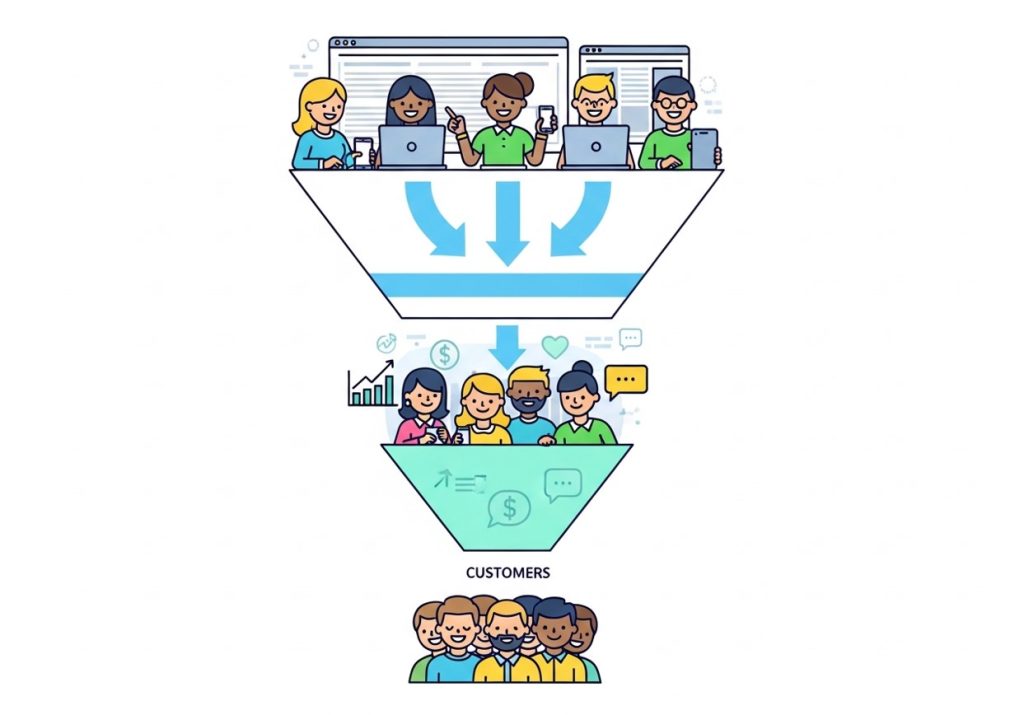
Higher conversion rates directly reduce the cost of acquiring new customers. When more visitors complete your desired actions, you get more value from the same marketing budget. For instance, imagine spending $1,000 on an advertising campaign that brings in 500 visitors. If your conversion rate is 2%, you acquire 10 customers. By improving your conversion rate to 4% through optimization strategies, you double that number to 20 customers—without spending any additional money on ads. This demonstrates how effective conversion optimization not only increases revenue but also makes marketing budgets far more efficient.
Gain Competitive Advantage
While many businesses focus solely on driving traffic, those that combine traffic acquisition with conversion optimization gain a significant edge. It’s not just about getting visitors to your website—it’s about turning those visitors into customers. Businesses that prioritize both aspects outperform competitors who neglect CRO because they generate more results from the same or even lower investment. Conversion-focused businesses can leverage insights from testing, analytics, and user behavior to stay ahead, continuously improving their sales, lead generation, and overall digital performance.
Improve User Experience
At its core, conversion optimization is about reducing friction for your visitors. Every barrier on a page—whether slow-loading sites, complicated forms, or unclear messaging—can prevent conversions. Understanding visitor behavior and addressing pain points improves user satisfaction, trust, and loyalty. For detailed tactics, see Why Your Business Needs CRO Services.
Essential Elements of High-Converting Pages
Clear Value Proposition
Your value proposition explains why a visitor should choose your product or service. A strong value proposition is clear, benefit-focused, and immediately understandable—showing visitors what problem you solve, how you do it better than competitors, and why it matters to them.
Questions for a Strong Value Proposition
Strong value propositions will address the following three questions:
-
What do you offer?
-
How is it solving this customer problem?
-
Why would clients prefer to collaborate with you over your competitors?
Compelling Headlines
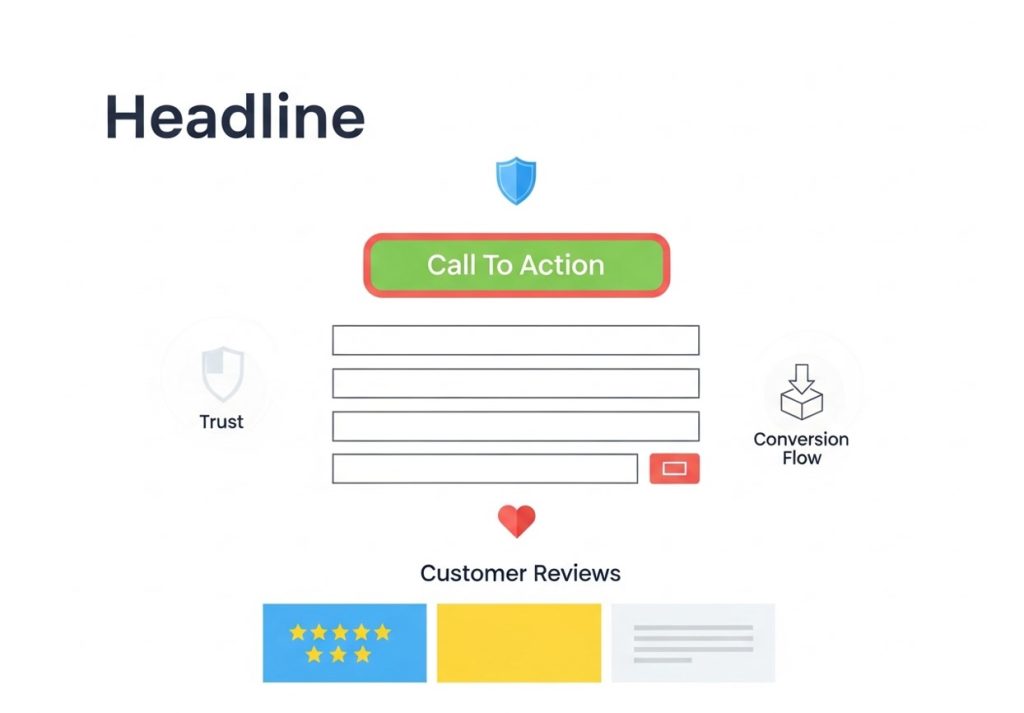
Your headlines are the first thing visitors notice and play a crucial role in determining whether they stay on your page or leave. A strong headline grabs attention immediately, clearly communicates the main message, and sparks curiosity, encouraging users to read further. Great headlines balance immediacy with intrigue—they quickly convey the benefit or result the visitor will gain while creating enough interest to keep them engaged. Whether you use benefit-driven, question-based, or data-focused headlines, the goal is to make the value obvious within seconds, helping guide readers deeper into your content and ultimately toward conversion.
Test different headline approaches:
-
Benefit-driven: “Boost Your Sales by 40% Using Email Marketing”
-
Question-based: “Do You Make Any of These SEO Mistakes?”
-
Data centric: “7 Proven Ways to Increase Your Website’s Conversion Rate”
Strategic Call-to-Action Buttons
CTA buttons steer visitors to the directions you want them to take. If that CTA is highly converting than it uses action oriented language, it creates urgency and it is visually attractive.
CTA best practices include:
-
First person language (“Start My Free Trial”)
-
Create urgency (“Get Instant Access”)
-
Opt for contrasting colors that stand out
-
Put buttons above the fold and at natural pauses
Social Proof and Trust Signals
‘Social proof’ proofs that people like it; others have made use of your service/product. Trust signals lower stress and establish confidence in what you’re offering.
Effective social proof includes:
-
Customer reviews with photos and specific results
-
Company logos of satisfied clients
-
User reviews and ratings
-
Industry awards and certifications
-
Security badges and guarantees
Proven Strategies for Optimization Conversion

A/B Testing
A/B testing involves creating two different versions of a webpage, email, or element and showing them to separate segments of your audience to determine which version performs better. This scientific approach eliminates guesswork by relying on real user behavior and measurable data rather than assumptions. By testing elements like headlines, images, call-to-action buttons, layouts, or even form fields, you can identify what resonates most with your visitors. Over time, continuous A/B testing provides actionable insights that help you optimize your site, increase conversions, and make data-driven decisions for your marketing strategy.
Common A/B testing opportunities:
-
Headlines and subheadings
-
Colors, text, and placement of CTA buttons
-
Images and videos
-
Page layouts and designs
-
Form fields and checkout processes
Page Speed Optimization
Slow-loading pages kill conversions. Amazon determined that if their pages were 100ms slower, sales would drop by 1%. [3] Statistics provided by Google show that 53% of mobile site visitors will leave if a webpage takes more than 3 seconds to load.
Speed optimization techniques:
-
Compress images without sacrificing quality
-
Minimize HTTP requests
-
Enable browser caching
-
Use content delivery networks (CDNs)
-
Streamline the code & remove unnecessary plugins
Mobile Optimization
With half of all internet traffic from mobile devices, a poor mobile experience can cost conversions. Ensure responsiveness, touch-friendly navigation, fast load times, and simplified checkout processes. Check Why Mobile CRO is Essential for E-commerce Success.
Mobile optimization requirements:
-
Design is responsive for all devices sizes
-
Touch-friendly buttons and navigation
-
Good load times on mobile networks
-
Simplified checkout processes
-
Easy-to-read text without zooming
Form Optimization
Forms are key conversion points where visitors provide information or complete purchases. Poorly designed forms create friction, frustrate users, and reduce completions. Optimizing forms with clear labels, minimal required fields, helpful error messages, and streamlined multi-step processes improves usability and increases conversion rates.
Form optimization strategies:
-
Minimize required fields
-
Use clear, descriptive labels
-
Provide helpful error messages
-
Display step progress indicator on multi-steps forms
-
Offer guest checkout options
Personalization
Personalized experiences drive higher conversion rates than generic ones. By tailoring content, product recommendations, and special offers based on visitor behavior, preferences, or demographics, you make interactions more relevant and engaging, increasing the likelihood that users take the desired action.
Personalization tactics:
-
Geographic targeting for local relevance
-
Behavior targeting of user directed by his/her browsing history
-
Traffic source-based dynamic content
-
Personalized product recommendations
-
Customized email marketing campaigns
Advanced Conversion Optimization Techniques

Heat Map and User Behavior Analysis
Heat mapping tools show where visitors click, scroll, and spend the most time on your pages. This visual insight highlights both obvious and hidden patterns of user behavior that simple conversion metrics might miss, helping you optimize layout, content placement, and navigation for better engagement.
User behavior insights help you:
-
Identify confusing page elements
-
Optimize content placement
-
Improve navigation flow
-
Reduce bounce rates
-
Enhance user experience
Exit-Intent Popups
Exit-intent popups detect when a visitor is about to leave your site and display a targeted message. They give you a final opportunity to engage users, offering incentives like discounts, content, or special offers to encourage conversions before they leave.
Effective exit-intent strategies:
-
Offer exclusive discounts or bonuses
-
Give in exchange for email addresses
-
Address common objections or concerns
-
Create urgency with limited-time offers
-
Suggest alternative products or services
Retargeting Campaigns
Not all visitors convert on their first visit. Retargeting helps by showing ads to people who have already visited your site while they browse other websites, keeping your brand top-of-mind and encouraging them to return and complete a desired action.
Retargeting best practices:
-
Segment audiences based on behavior
-
Tailor-make ads for different visitors on the page
-
Use dynamic ads with products viewed (PV) ads.
-
Ad fatigue can be reduced by setting frequency caps
-
Track conversions to measure ROI
Conversion Funnel Optimization
Break down your entire conversion funnel to spot where visitors drop off or experience friction. Optimizing multiple steps in the journey, rather than just one page, ensures a smoother process and improves overall conversion performance.
Funnel optimization process:
-
Map the complete customer journey
-
Identify high-abandon points
-
Test improvements at each stage
-
Streamline the path to conversion
-
Remove unnecessary steps or distractions
Conversion Optimization Tools and Resources
Analytics and Testing Tools
-
Google Analytics: Free, full-featured web analytics for everyone
-
Mehr Stats by Reach.vs
-
Reactro – Free and simple visitor stats for WordPress
-
StatsPlugin by Huseyin Yilmaz – Simple yet consistent web analytics plugin
-
Google OptimizeAB testing and personalization Available starting Tuesday, Google Optimize will also be a part of the suite of testing and personalization products that Google provides, like A/B testing and personalization.
-
D. Heat map and user recording Hotjar
-
Optimizely: Enterprise-level testing platform
-
Unbounce: Landing page builder with testing capability.
Conversion Rate Optimization Platforms
-
ConvertKit: Email marketing with a focus on conversion
-
Leadpages: High-converting landing page templates
-
ClickFunnels: Complete sales funnel builder
-
Instapage: Advanced landing page optimization
-
VWO: Testing and optimization suite
Measuring and Analyzing Conversion Success
Key Metrics to Track
Track these critical measurements in order to measure your success at optimizing:
-
Conversion rate by traffic source
-
Average order value
-
Customer lifetime value
-
Cost per acquisition
-
Return on ad spend (ROAS)
Setting Up Proper Tracking
For accurate measurement, you need proper tracking setup:
-
Set Up Goals in Google Analytics
-
Install conversion pixels for ad platforms
-
Track micro-conversions (email signups, downloads)
-
Monitor mobile vs. desktop performance
-
Segment data by audience characteristics
Continuous Improvement Process
Optimization conversion is a continuous process, not a project:
-
Regular testing and experimentation
-
Quarterly conversion rate reviews
-
Competitor analysis and benchmarking
-
User feedback collection and analysis
-
Technology updates and improvements
Start Optimizing Your Conversions Today
Your digital brochure becomes a money making machine, with optimization conversion. The tactics presented here act as a blueprint for incremental progress, but ongoing testing, tracking and gradual iteration are needed to succeed.
Start with the easy wins, like making better headlines, call to actions and faster load times. Then advanced tactics such as A/B testing, personalization and funnel optimization.
Driving traffic is only half the battle—once visitors land on your site, conversion strategies matter. Leveraging smart blogging techniques can bring in highly relevant, organic traffic that’s more likely to convert.
Frequently Asked Questions (FAQs)
How often should I test my website for conversions?
Testing should be ongoing. Start with major changes such as headlines, CTA buttons, or layout adjustments, and continue with minor tweaks. Regular A/B testing cycles every few weeks can help maintain and improve conversion performance.
Is CRO only for eCommerce websites?
No. CRO benefits any website with a desired visitor action, including lead generation sites, SaaS platforms, service-based businesses, and content publishers. Any action—newsletter signups, form submissions, demo requests—can be optimized.
How long does it take to see results from conversion optimization?
It depends on traffic volume and the changes implemented. Minor improvements might yield results within days, while larger strategies like personalization and funnel optimization may take weeks. Consistency and monitoring are key.
Can CRO increase revenue without increasing traffic?
Yes. One of the main advantages of CRO is that it maximizes the value of existing traffic. Even small increases in conversion rate can significantly impact revenue without spending more on attracting visitors.
Which tools are essential for effective CRO?
Essential tools include Google Analytics, heat mapping and user behavior tools like Hotjar, A/B testing platforms such as Optimizely or VWO, and landing page builders like Unbounce or Leadpages.
How does personalization affect conversions?
Personalized experiences improve relevance and engagement, making visitors more likely to convert. Personalized content, product recommendations, and offers aligned with user behavior significantly boost conversion rates.