

The Ultimate Guide to CRO Marketing shows how to turn website traffic into real conversions by analyzing user behavior, running tests, and optimizing pages. It covers key strategies, tools, and best practices for boosting engagement, improving ROI, and staying ahead of competitors. Whether for small businesses or large enterprises, this guide helps you implement data-driven CRO to maximize results and enhance customer experience.
What is CRO, and why does CRO matter
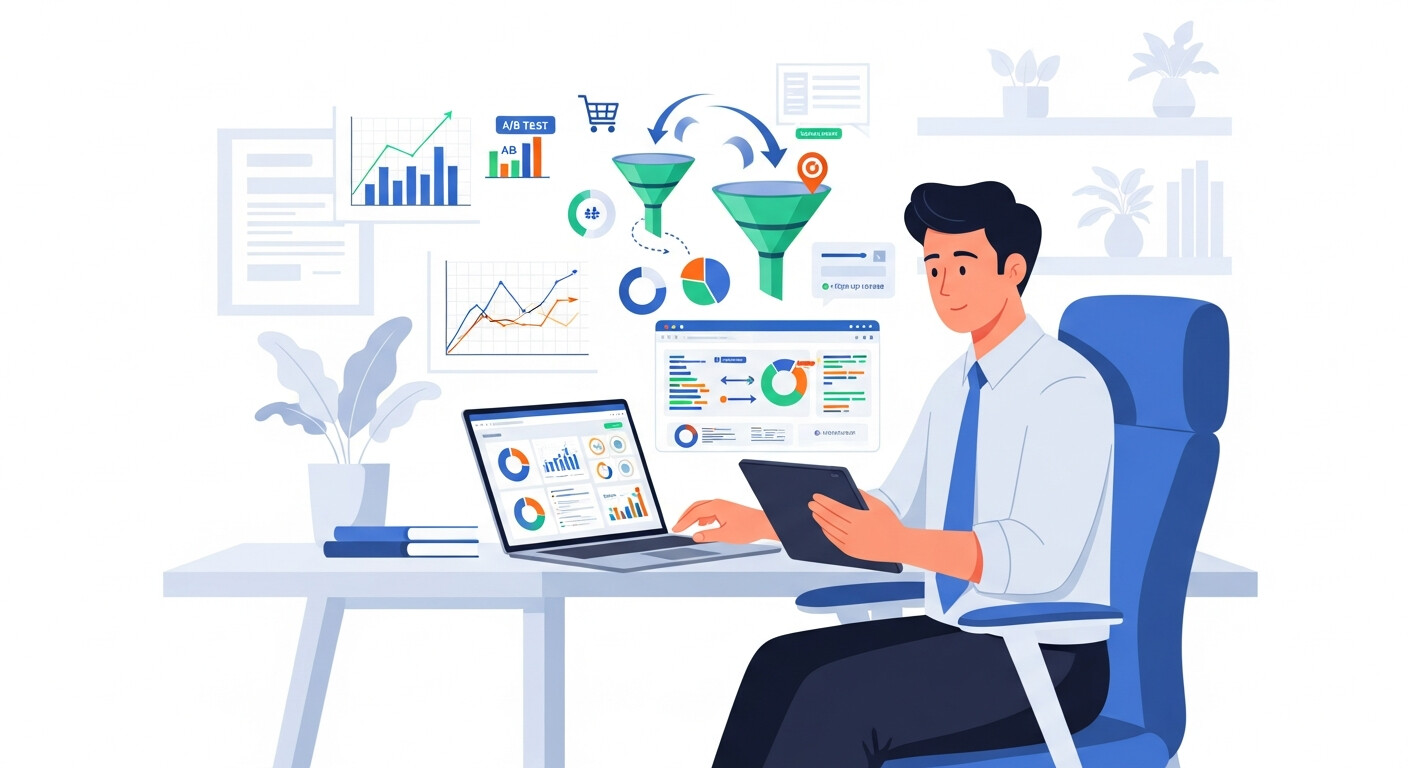
Conversion Rate Optimization (CRO) is the process of systematically improving your website, landing pages, and other digital assets to increase the likelihood that visitors complete a desired action—whether that’s filling out a form, making a purchase, signing up for an email newsletter, or downloading a resource. In essence, CRO focuses on turning more of your existing traffic into customers, leads, or engaged users, rather than just driving more traffic to your site.
Effective CRO involves analyzing user behavior, running A/B tests, optimizing page layouts, improving site speed, crafting persuasive copy, and designing intuitive user experiences. By understanding what motivates visitors and removing barriers to conversion, businesses can significantly boost their ROI without increasing ad spend. For a comprehensive roadmap on this topic, check out our Ultimate Guide to CRO Marketing, which covers strategies, tools, and real-world examples to help you maximize conversions at every stage of the customer journey. This Ultimate Guide to CRO Marketing is an essential resource for anyone looking to systematically increase conversions and stay ahead in competitive markets.
But why is CRO so important?
- Increasing ROI: If you have a good site, the dollars spent on traffic should work more hours for you. This results in more leads and sales without the need to spend more on traffic.
- Knowing Your Customers: CRO is more than just metrics. It is about learning what your users do, what they struggle with, and what they really want to receive.
- Remaining Competitive: A dissatisfying user experience or an ineffective website can send customers to competitors with a quick click. CRO gives you the arsenal to be ahead in the game.
Key Elements of CRO Marketing
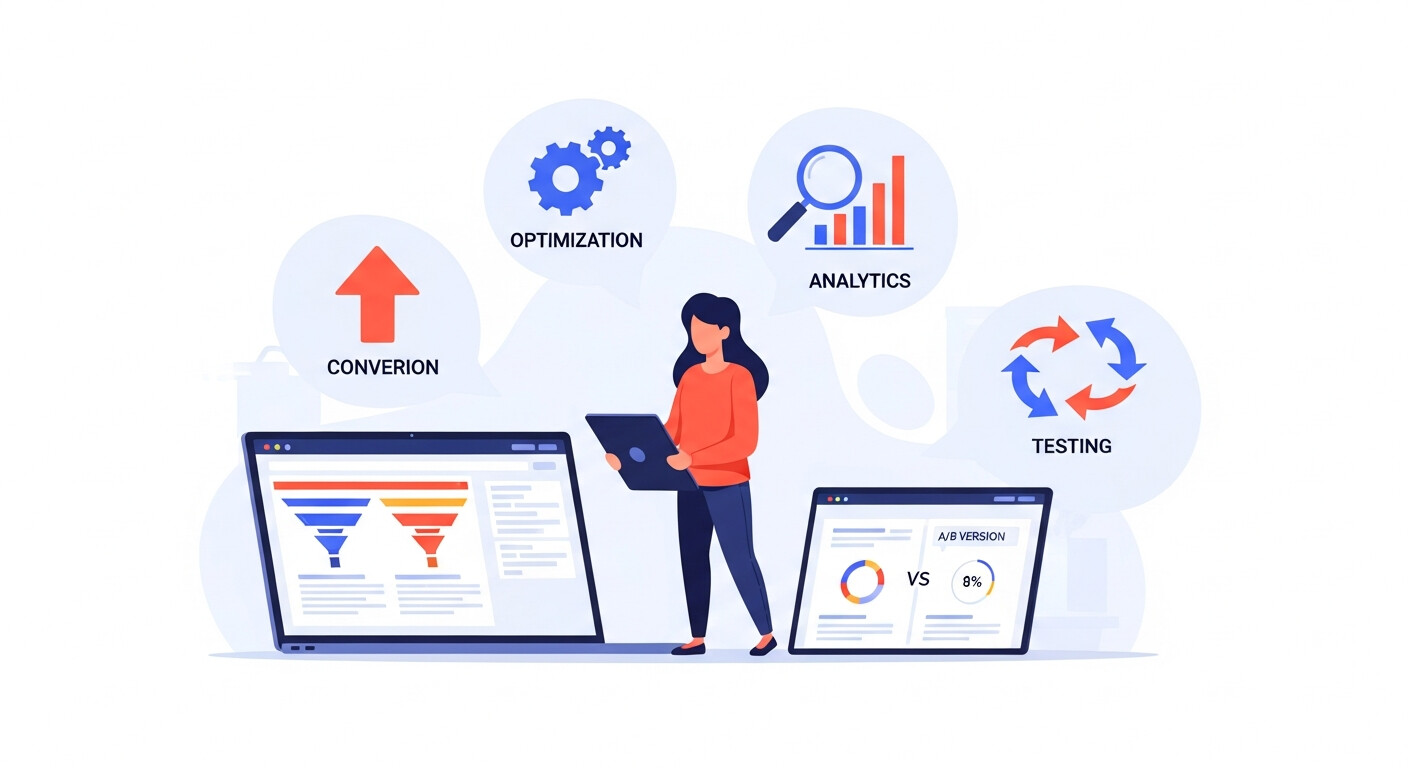
To adopt the right CRO strategy, you should concentrate on the following main components:
- Ease-of-use: A straightforward interface tends to encourage actions to be performed. This could involve speeding up your pages, simplifying your navigation, or making your site mobile-friendly.
- Message Match: Do the messages on your landing pages match the promises being made by your ads or CTAs? Clear, consistent communication builds a relationship of trust and minimizes confusion.
- Value Propositions: Your value proposition needs to explain what makes your offer unique. Why should visitors act now? What will their entitlements be?
- Design and Look: A sleek, uncluttered, and nice-looking design helps the users to concentrate. Help them get there by using visual hierarchy deliberately.
Data Analysis and A/B Testing
Data analysis and experimentation are the backbone of CRO. Tools like Google Analytics, heatmaps, and session recordings provide insights into user behavior. For a structured approach, explore How to Run a Conversion Rate Optimization Analysis. The core facet of CRO marketing is data-focused. It’s not about gut feel, it’s about real numbers you can act on. The following are two core aspects of CRO:
Data Analysis
Start with data drilldowns to focus on the lower-performing sections. Tools, such as Google Analytics, heatmaps (or Hotjar), and session recordings, provide insights to user behavior. Key metrics to track include:
- Bounce rate
- Time on page
- Exit rate
- Conversion rate
A/B Testing
Once you pinpoint where improvements must be made, experiment with variations of your pages using A/B tests. Test variables such as:
- Headlines
- Images
- CTAs (Call-to-Action)
- Form placements
For instance, if you operate an SaaS website, you can A/B test your sign-up button copy to learn if you should use “Get Started for Free” versus “Start Your Free Trial.”
Implementing CRO Strategies

A structured strategy is critical to CRO marketing success, much of the time. And here’s how to implement CRO strategies that will lead to conversions — but first, understand what is a good conversion rate for digital marketing?
- Establish Your Goals: Know exactly what you want to optimize for (email signups, product purchases, trial subscriptions, etc).
- Segment Your Audience: Not everyone who visits your site behaves in the same way. Target experiences by demographics, behavior, or traffic source through segmentation.
- Form Hypotheses: Determine what changes will increase conversions. For example, “If we make our CTA button more visible, the number of clicks on it will increase by 15%.”
- Test in Increments: Make changes step-by-step and measure. By taking a structured approach to rolling out new projects, you reduce risks and ensure you’re learning from every experiment.
Tools for Effective CRO
Get CRO marketing tools that make your life easier. The following are reliable options:
- Google Analytics: A must for observing user behavior and spotting bottlenecks.
- Hotjar: Offers heatmaps and session recordings to give you a more detailed understanding of how people navigate through your site.
- Optimize: An advanced A/B and multivariate testing tool.
- Unbounce: Best for creating and testing super-optimized landing pages.
- Crazy Egg: Heatmap overlayed with scroll tracking and other visual data to help you take action.
Measuring Success and ROI
Tracking your CRO campaign is crucial. In terms of metrics other than conversions, pay attention to these key performance indicators (KPIs):
- Acquire: Cost Per Acquisition (CPA) Are you driving cheaper customer costs?
- Customer Lifetime Value (CLV): More effective lead generation can lead to happier customers for a longer time.
- Reduction in Bounce Rate: Are your changes keeping people’s attention/getting people to spend longer on site?
- Revenue Per Session (RPS): If this increases, it means that CRO is extracting value out of every visitor.
- Track these numbers before, during, and after campaigns to accurately calculate ROI and inform future initiatives.
Best Practices and Typical Pitfalls
Best Practices:
- Keep it simple by requesting the minimum of information on a form.
- Leverage urgency to push procrastinating users (i.e., special offers).
- Design for mobile, because a lot of the time, that’s more than 50% of traffic.
Avoid These Pitfalls:
- Discounting the data: You must always make decisions based on the numbers, not your gut.
- Testing Too Many Variables at Once: Run controlled experiments to figure out what works.
- Lack of follow-up experience post conversion – make sure your users are happy post conversion (sexy dashboard or fast confirmation pages).
CRO Marketing Case Studies
Real-world examples are the best way to demonstrate the power of Conversion Rate Optimization (CRO). Businesses across industries have transformed their websites and boosted revenue by applying the strategies outlined in The Ultimate Guide to CRO Marketing. These case studies show how data-driven testing, user-focused design, and strategic optimizations can produce measurable results. No examples demonstrate the potency of CRO more than those of the real world:
Landing Page
A SaaS company tested two landing pages. Their control page was crushing it with an impressive 16% conversion rate, but the simpler version they came up with (with updated CTAs) performed even better at 24%…with 50% more leads.
E-commerce Optimization
An online store ran an A/B test on the product checkout button. They tested a New CTA. Cutting the text from “Proceed” to “Buy Now”, they saw a 12% increase in conversions across all product categories in three weeks.
Future Trends in CRO
The future of CRO is increasingly driven by AI, automation, and predictive analytics. Personalized content delivery, predictive modeling, and automated testing make it possible to boost conversions smarter and faster. Explore more in Proven Website Conversion Optimization Tactics. The world of CRO marketing is ever-changing with developments in technology. Here’s what’s next:
- AI-Generated Personalization: AI will personalize events in a very targeted way, delivering content specific to an individual based on their behavior, in real-time.
- Voice Search Optimization: Given the increase in voice search, optimizing for conversational queries will be crucial.
- Interactive Content: Things like quizzes, calculators, and AR tools are a great way to generate leads and increase conversions.
Future of CRO: AI, Automation, and Predictive Analytics

The future of CRO marketing is being shaped by advanced technologies like AI, automation, and predictive analytics, which allow businesses to optimize conversions in smarter, faster, and more personalized ways. Artificial intelligence can analyze massive amounts of user data in real-time, identifying patterns and behaviors that humans might miss. This enables highly targeted personalization—such as recommending products, content, or offers tailored to individual visitors—boosting the likelihood of conversion.
Automation also plays a key role in streamlining CRO processes. Routine tasks like running A/B tests, segmenting audiences, and analyzing results can now be handled by automated systems, freeing marketers to focus on strategy and creative optimization. Predictive analytics takes things a step further by forecasting which changes are most likely to drive conversions, allowing businesses to prioritize high-impact optimizations and reduce trial-and-error testing.
Chatbots and AI-driven customer interactions are another powerful tool. By providing instant, personalized assistance, answering questions, or guiding users through purchase funnels, businesses can remove friction and significantly improve the user experience.
For companies that want to stay ahead of the competition, leveraging these technologies is no longer optional—it’s essential. The Ultimate Guide to CRO Marketing explores these future-focused strategies in depth, showing how AI, automation, and predictive analytics can help your business maximize conversions, reduce costs, and deliver a seamless, personalized experience for every visitor.
Start Getting More Sales Mentioned Today
CRO marketing is a game-changer for any business that wants to boost engagement, drive more conversions, and improve its bottom line. By following the Ultimate Guide to CRO Marketing, you can unlock the full potential of your website traffic through data-driven strategies, experimentation, and the use of optimized tools designed to maximize results.
Even if you’re just getting started, thinking strategically and implementing small, focused changes can make a huge difference over time. Whether you’re a marketer, entrepreneur, or business owner, integrating CRO into your digital strategy is a proven way to outpace your competition and turn visitors into loyal customers.
Not sure where to begin? Focus on CRO-focused tools that simplify the process, streamline testing, and address your business’s unique conversion needs—helping you achieve measurable results without unnecessary complexity.
Understand how to track and enhance your brand’s image online by reading our guide on mastering online reputation management.
Frequently Asked Questions (FAQs)
What is the primary goal of CRO?
The main goal of CRO is to increase the percentage of website visitors who complete desired actions, such as signing up for newsletters, making purchases, or filling out forms. Unlike traffic acquisition, CRO focuses on maximizing the value of your existing audience. For more insights and practical examples, see our Ultimate Guide to CRO Marketing, which explains how to set conversion goals and track them effectively.
How long does it take to see results from CRO?
Results depend on traffic volume, testing complexity, and current site performance. Small improvements may show results within weeks, while larger structural changes or multivariate tests can take several months. Continuous monitoring ensures long-term growth. Our Ultimate Guide to CRO Marketing provides a detailed timeline for testing, analysis, and implementation to help businesses set realistic expectations.
Can CRO work for small businesses with limited traffic?
Absolutely. Even sites with modest traffic can benefit from CRO by focusing on high-impact changes and optimizing key user journeys. Personalized experiences and targeted testing can lead to significant conversion improvements without huge traffic numbers. The Ultimate Guide to CRO Marketing includes strategies specifically designed for small and medium businesses to maximize conversions efficiently.
What is the difference between CRO and UX (User Experience)?
While UX focuses on the overall usability and satisfaction of your site, CRO specifically aims to increase conversions. However, the two are closely connected—better UX often leads to higher conversions, making UX optimization a key part of any CRO strategy. Our Ultimate Guide to CRO Marketing explains how to align UX improvements with CRO goals to achieve measurable results.
What tools are recommended for effective CRO?
Tools like Google Analytics, Hotjar, Optimizely, Crazy Egg, and Unbounce help marketers analyze user behavior, run A/B tests, and optimize landing pages. For a deeper dive into comprehensive CRO strategies, check out our Ultimate Guide to CRO Marketing, which includes both essential tools and actionable techniques for every stage of optimization.
Is CRO a one-time project?
No. CRO is an ongoing process. User behavior changes, competitors adjust strategies, and technologies evolve. Continuous testing, analysis, and iteration are necessary to maintain and improve conversion rates over time.
How long does it take to see results from CRO?
The timeline for CRO results can vary depending on your traffic volume, the complexity of your website, and the types of tests you run. Typically, significant insights from A/B or multivariate tests can start appearing within 2–6 weeks. However, meaningful improvements in conversion rates and ROI may take several months as you iterate, analyze data, and refine your strategies.
For those seeking a structured roadmap, our Ultimate Guide to CRO Marketing outlines a realistic timeline for implementing CRO campaigns, including testing cycles, analysis periods, and optimization checkpoints to achieve sustainable results.
Do small websites benefit from CRO, or is it only for large sites?
CRO is valuable for websites of all sizes. Even small sites or startups can dramatically improve their conversions by focusing on user behavior, optimizing landing pages, and running targeted A/B tests. In fact, CRO can be more critical for smaller sites because each visitor represents a higher percentage of potential revenue, so optimizing their experience can yield a substantial impact.
Our Ultimate Guide to CRO Marketing provides tailored strategies for small and medium businesses, showing how data-driven optimization can level the playing field against larger competitors.
Which tools are essential for effective CRO?
There’s a wide range of tools to support CRO, including analytics platforms, A/B testing software, heatmaps, and session recording tools. Key options include Google Analytics for tracking user behavior, Hotjar or Crazy Egg for visual heatmaps, and Optimizely or Google Optimize for A/B testing.
Integrating these tools into a cohesive CRO strategy allows marketers to analyze, test, and refine their website experience effectively. The Ultimate Guide to CRO Marketing offers a curated list of essential CRO tools and explains how to use them together for maximum conversion improvement.
How does CRO relate to improving customer experience (CX)?
CRO and customer experience (CX) are closely linked because optimizing conversions often involves removing friction points, clarifying messaging, and improving usability—all of which enhance the overall user experience. When visitors find it easy to navigate your site, understand your value, and take action, their satisfaction increases, and so do your conversions.
Our Ultimate Guide to CRO Marketing emphasizes the importance of designing tests and optimizations that not only improve conversion rates but also deliver a seamless, enjoyable experience for your customers, creating long-term loyalty and repeat business.