
Conversion rate optimization (CRO) focuses on turning website visitors into customers by improving user experience, reducing friction, and leveraging data-driven strategies. Key tactics include optimizing landing pages, using social proof, A/B testing, and creating urgency to boost conversions. Continuous testing, personalization, and providing value ensure long-term success and higher ROI.
What is Conversion Rate Optimization and Why Does It Matter?
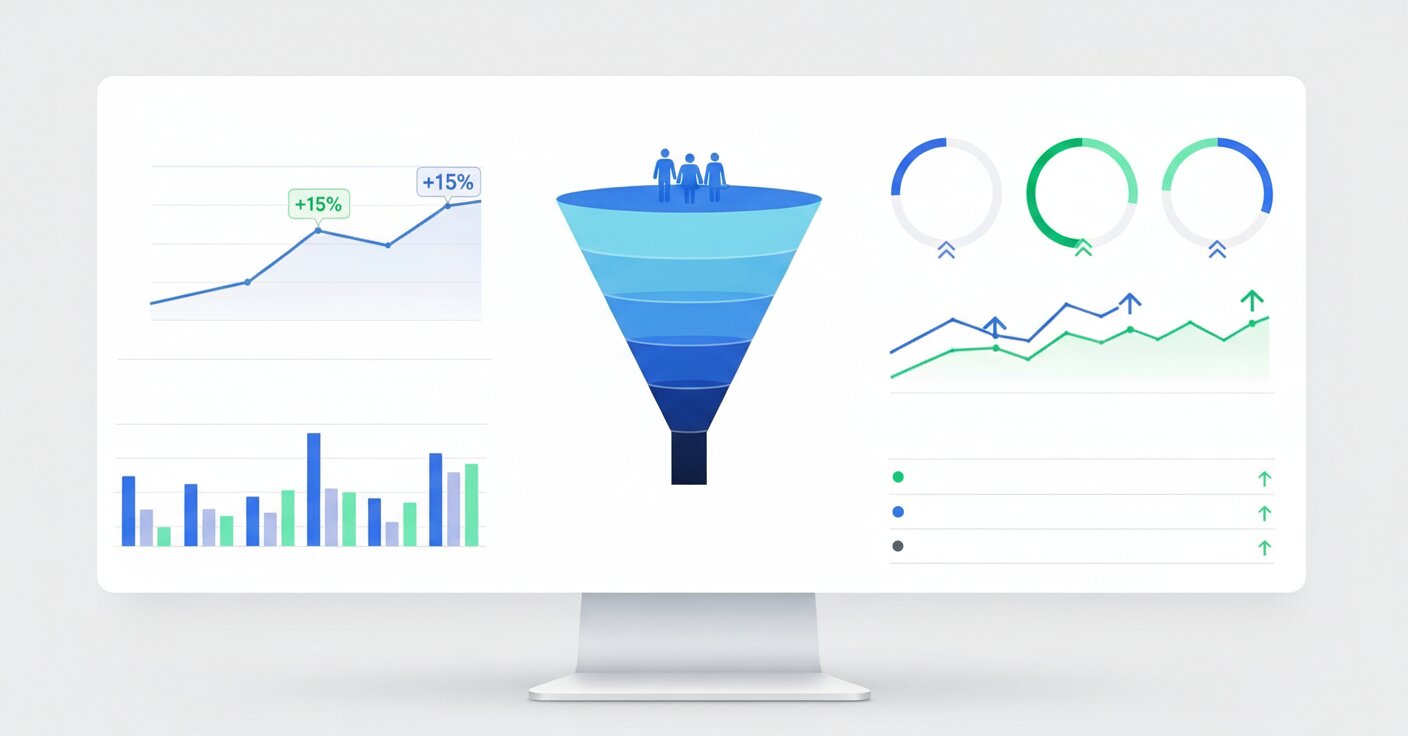
Conversion rate optimization, commonly known as CRO, is the process of strategically improving your website or landing pages to increase the percentage of visitors who complete a desired action—whether that’s making a purchase, signing up for a newsletter, filling out a contact form, or downloading a resource. In essence, CRO focuses on turning your existing traffic into measurable results rather than just attracting more visitors. By analyzing user behavior, identifying friction points, and implementing data-driven improvements, businesses can significantly Improve Your Conversion Rate Optimization, maximize the value of every visitor, and ultimately boost revenue without necessarily increasing marketing spend. Effective CRO not only drives more conversions but also enhances user experience, builds trust with your audience, and ensures that your website delivers tangible business outcomes.
Why is CRO important?
- Maximize ROI: If you’re already driving traffic to your site through paid ads or organic means, CRO helps you get the most value from that traffic.
- Improve User Experience: When you optimize for conversions, you’re also making your website intuitive and user-friendly.
- Stay Competitive: If your website isn’t optimized for conversions, you’re leaving potential revenue on the table.
For example, imagine you operate an eCommerce site. If your current conversion rate is 2% and your average monthly traffic is 10,000 visitors, optimizing to a 3% conversion rate means increasing your sales by 50% without increasing your traffic.
Now that you fully understand why conversion rate optimization (CRO) is crucial for your business success, it’s time to take a closer look at actionable strategies to implement it effectively—beginning with essential insights on good conversion rates for digital marketing.
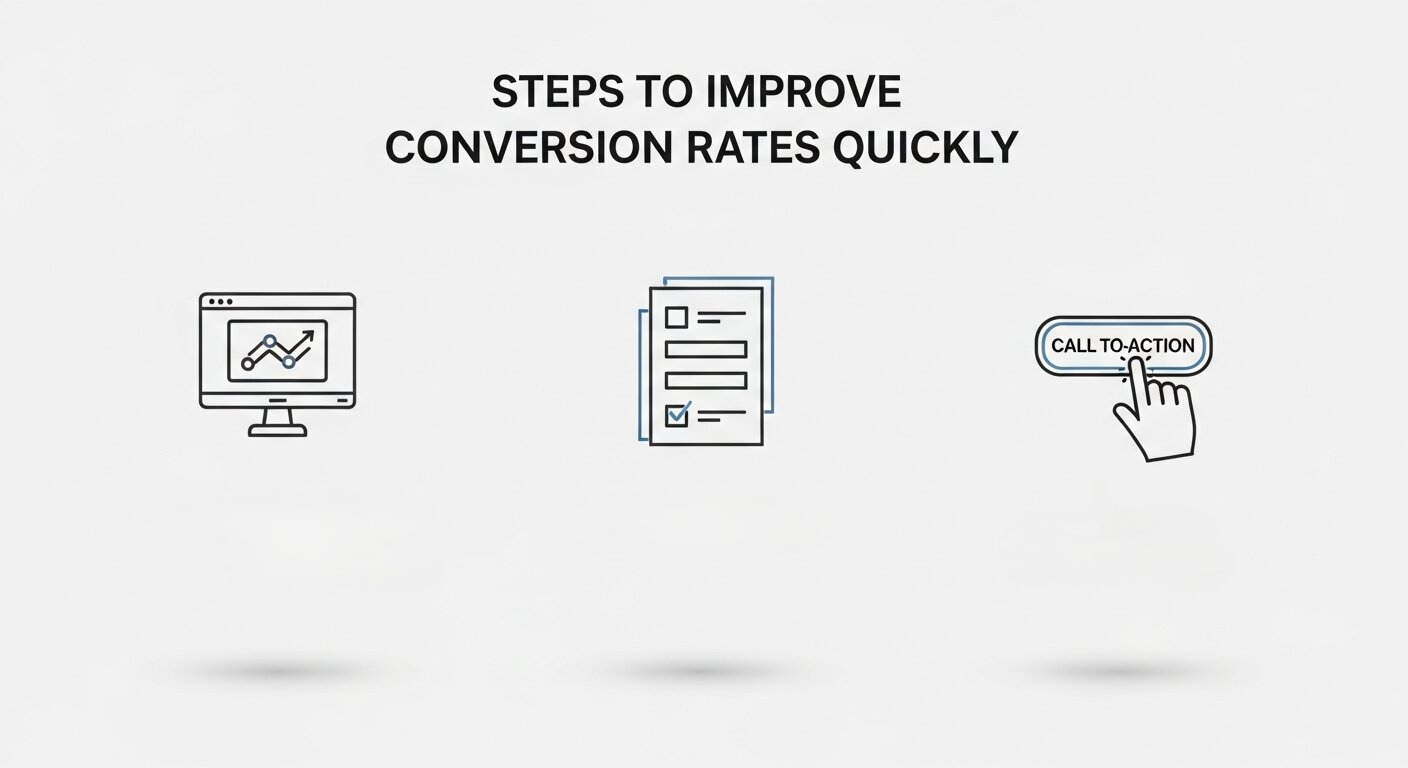
Steps to Improve Conversion Rates Quickly
Understand Your Audience
One of the primary reasons many websites struggle with low conversion rates is a disconnect between what visitors want and what your website delivers. Understanding your audience is the foundation of any successful conversion strategy. Without knowing your users’ needs, motivations, and pain points, even the most visually appealing website may fail to drive meaningful actions. By focusing on your audience, you can make intentional improvements that directly influence behavior and Improve Your Conversion Rate Optimization.
Use Analytics Tools
Data is key to understanding user behavior. Platforms like Google Analytics, Hotjar, or Mixpanel provide detailed insights into how visitors interact with your site, such as page views, bounce rates, click paths, and time spent on specific sections. For instance, if analytics show users frequently leaving a product page without taking action, it may indicate unclear messaging, confusing navigation, or a missing call-to-action (CTA). Leveraging these insights allows you to make informed changes that enhance engagement and conversion, helping you consistently Improve Your Conversion Rate Optimization.
Conduct Surveys
Direct feedback from your audience can reveal what’s working and what isn’t on your website. Surveys and polls using tools like Typeform, Google Forms, or on-site feedback widgets allow visitors and customers to share their opinions in real-time. Asking questions about usability, content clarity, or purchase hesitation provides actionable insights to refine your offerings. Incorporating this feedback into your website strategy can significantly Improve Your Conversion Rate Optimization by aligning your content and design with what your audience truly wants.
Create Personas
Creating detailed user personas is another critical step in understanding your audience. A persona represents the typical behaviors, goals, demographics, and challenges of your ideal customer. With clear personas, you can tailor your website copy, design, and offers to address their specific needs. This personalization makes it easier for visitors to relate to your site and take action, helping you systematically Improve Your Conversion Rate Optimization while building a more meaningful connection with your audience.
Optimize Your Landing Pages
Landing pages are central to your conversion strategy. They act as a focused environment that guides visitors toward a single, clear action—whether it’s a purchase, newsletter signup, or download. Poorly designed landing pages can confuse visitors and reduce conversions, so it’s essential to optimize every element thoughtfully to Improve Your Conversion Rate Optimization.
Use Clear Headlines
Your headline should communicate value instantly. Avoid jargon and keep it direct. For example:
- Before optimization: “Revolutionary Solutions for Workflow Efficiency”
- After optimization: “Save 5 Hours a Week with Our Workflow Tool”
Make Your CTAs Stand Out
Ensure your call-to-action buttons are easy to find. Use contrasting colors, action-oriented text (“Get Started Today”), and place them prominently.
Create Mobile-Friendly Experiences
With more than half of all website traffic coming from mobile devices, a poorly optimized mobile experience can seriously impact your CRO. Make sure buttons are easy to tap, forms are simple to complete, and navigation is seamless on smaller screens—learn why your next campaign must be mobile-first.
Reduce Friction in the Buyer Journey
Even when visitors are interested in your product or service, a complicated or confusing process can prevent them from converting. Every extra step, unnecessary field, or unclear instruction adds friction, making it less likely for users to complete the desired action. By minimizing obstacles and creating a smooth, intuitive experience, you can guide visitors naturally through the buyer journey and increase your overall conversion rates.
Simplify Forms
Forms are often one of the biggest barriers to conversion. Asking for too much information can overwhelm users and lead to abandonment. Instead, focus on collecting only essential details. For example, requesting just a name and email address for a newsletter signup is far less intimidating than a 10-field form asking for phone numbers, addresses, and additional personal data. Simplified forms make the process quick, reduce user frustration, and encourage more completions.
Offer Guest Checkout Options
For eCommerce sites, requiring account creation can be a major conversion killer. Many users are unwilling to go through extra steps before making a purchase. Offering a guest checkout option streamlines the process, allowing visitors to buy immediately without feeling forced to register. Once a user completes a purchase, you can still present an option to create an account, making it feel optional rather than mandatory.
Streamline Navigation
Clear and intuitive navigation is essential for keeping users engaged. Complicated menus, buried links, or inconsistent site architecture can confuse visitors and lead to drop-offs. Ensure that your main sections are easily accessible, clickable buttons are consistent across pages, and menus are organized logically. When users can quickly find what they’re looking for, they are more likely to proceed to conversion.
Leverage Social Proof
Social proof is one of the most effective ways to build trust and influence decisions. People tend to follow the actions of others, especially when uncertain.
Display Testimonials
Authentic testimonials from satisfied customers provide real-world validation of your product or service. Whenever possible, include photos or brief bios of the customers to add credibility and make the endorsements feel more personal.
Showcase Reviews and Ratings
Positive reviews and ratings reassure potential buyers that your offerings are reliable and high-quality. Platforms like Trustpilot, Google Reviews, or product-specific review systems make it easy to collect and display customer feedback prominently on your site.
Highlight Real-time Data
Sharing real-time metrics, such as “5,000 clients trust us” or “256 people purchased this product today,” creates urgency and reinforces trust. These numbers show social proof in action, subtly encouraging visitors to take action themselves.
Use A/B Testing to Experiment
Not every change you make will have the expected impact. A/B testing allows you to compare two or more versions of a page or element to determine which performs better. This data-driven approach removes guesswork and ensures that your optimization efforts are effective.
Tweak One Variable at a Time
For reliable results, test one element at a time—like changing the color of a CTA button, modifying headline text, or adjusting an image. This approach isolates the effect of each change and helps you understand what truly influences user behavior.
Analyze and Act on Results
Once your test is complete, review the data carefully and implement the version that performs best. Tools like Optimizely, Google Optimize, or VWO make it simple to run experiments, track results, and apply winning changes efficiently.
Don’t Assume Anything
Every website and audience is different. Just because a particular tactic worked on another site doesn’t guarantee it will work for yours. Continuous testing and iteration based on real user data are the only reliable ways to optimize your conversion process effectively.
Provide Value Through Content

Your website’s content needs to resonate with your audience. Visitors should immediately understand how your product or service solves their problem.
Create Benefit-Focused Copy
Avoid focusing solely on product features. Instead, emphasize how those features benefit the user. For instance:
- Feature-focused copy: “10-ounce stainless steel water bottle.”
- Benefit-focused copy: “Stay hydrated longer with a durable, perfectly sized water bottle that fits in your bag.”
Include FAQs
Including a Frequently Asked Questions (FAQ) section can dramatically reduce hesitation and help visitors make informed decisions. By addressing common concerns—such as shipping policies, return procedures, or product specifications—you remove uncertainty that might prevent a conversion. FAQs are especially effective on product pages, pricing pages, or signup forms, as they provide immediate clarity and reassurance without requiring the visitor to contact support.
Offer Free Resources
Free resources are powerful tools for attracting and converting visitors. Options include free trials, downloadable eBooks, webinars, checklists, or toolkits. These resources allow potential customers to experience value firsthand and take the first step toward engaging with your business. For example, a free trial lets users test a product risk-free, while an informative eBook can position your brand as a trusted authority in your field. By providing value upfront, you create goodwill and make conversions more likely.
Create a Sense of Urgency
Urgency encourages visitors to take action immediately rather than delaying or abandoning the process. When implemented thoughtfully, urgency can significantly improve conversion rates.
Countdown Timers
Countdown timers are effective at visually highlighting limited-time offers. Displaying a live countdown—such as “Sale ends in 2 hours 15 minutes”—creates a sense of immediacy and encourages users to act before time runs out.
Scarcity Messaging
Scarcity messaging leverages the psychological principle that people value items that appear rare or limited. Phrases like “Only 3 left in stock!” or “Limited spots available” tap into FOMO (fear of missing out) and can nudge visitors to complete their purchase or signup quickly.
Exclusive Deals
Offering exclusive, time-limited promotions is another way to create urgency. Examples include special discounts for first-time visitors, early access to a product, or limited-time bundles. These incentives not only motivate immediate action but also make visitors feel they are getting something unique that won’t be available later.
Ensuring Long-Term CRO Success
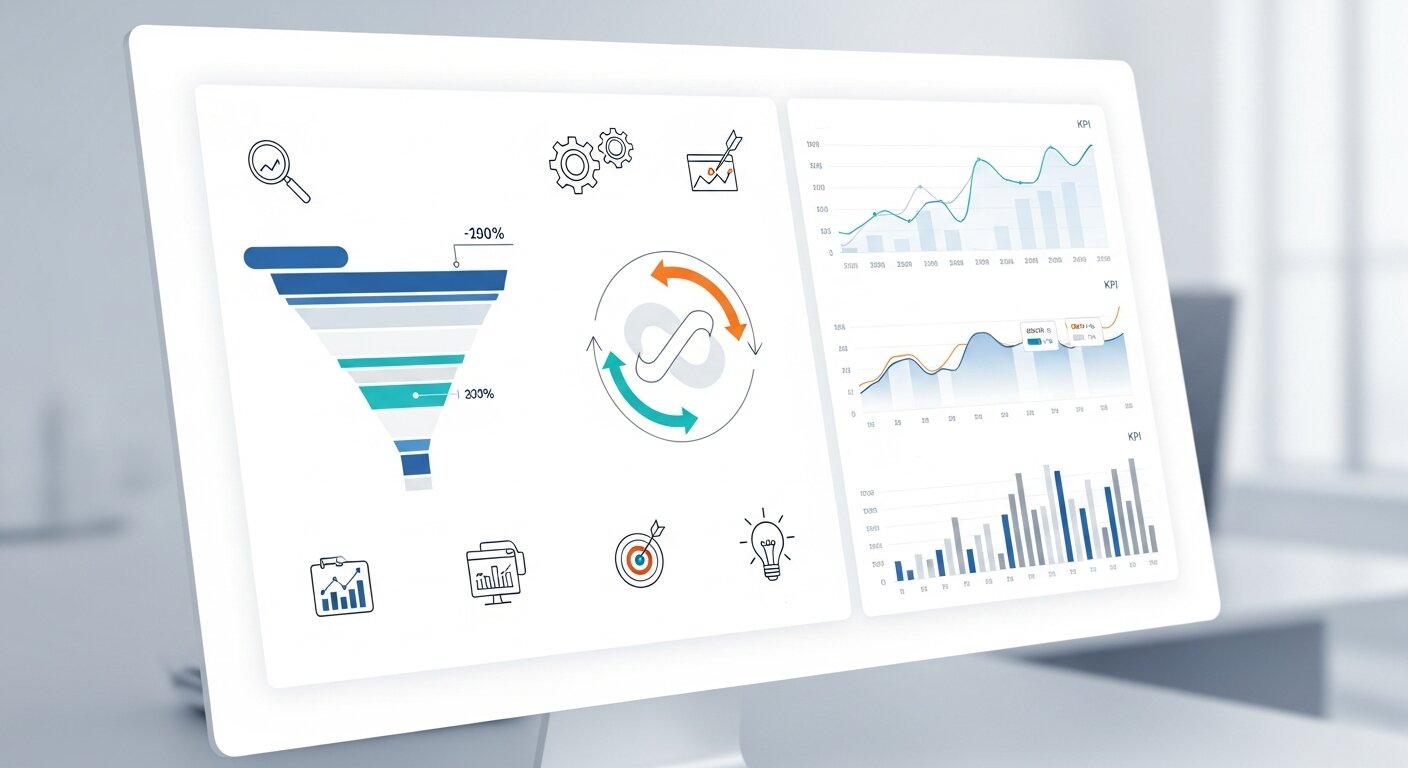
Improving your conversion rates is not a one-and-done process. It requires ongoing monitoring and adjustments as your audience evolves.
- Continuously evaluate your website’s performance through analytics.
- Regularly test new strategies to stay ahead of the competition.
- Keep up with industry trends to ensure your content and design remain relevant.
Take Your CRO to the Next Level
Implementing these conversion rate optimization strategies can significantly impact your business, but putting them into practice may feel overwhelming. Start small, focus on one area at a time, and you’ll begin to see positive results.
For continued improvements and additional support, reach out to our team of CRO experts. They’re ready to help you realize your business goals faster than you thought possible.
Frequently Asked Questions (FAQ)
What is the fastest way to Improve Your Conversion Rate Optimization?
The fastest way to Improve Your Conversion Rate Optimization is by fixing high-impact areas such as landing page clarity, page speed, strong call-to-actions, and reducing friction in forms or checkout processes. Small improvements in these areas often produce quick results.
How long does it take to see results from CRO?
You can start seeing measurable improvements within weeks, especially if you focus on data-driven changes. However, long-term success requires continuous testing and refinement to consistently Improve Your Conversion Rate Optimization.
Why is user experience important for conversion optimization?
User experience directly affects how easily visitors can navigate, trust, and interact with your website. A smooth and intuitive experience reduces frustration and helps Improve Your Conversion Rate Optimization by guiding users toward desired actions.
Does website speed really affect conversion rates?
Yes, slow websites increase bounce rates and reduce engagement. Improving page load time is one of the most effective ways to Improve Your Conversion Rate Optimization and keep users moving through your conversion funnel.
Is A/B testing necessary for CRO success?
A/B testing is essential because it allows you to compare variations and identify what truly works. Continuous testing helps businesses make informed decisions and steadily Improve Your Conversion Rate Optimization over time.
Can small businesses benefit from conversion rate optimization?
Absolutely. CRO helps businesses maximize results from existing traffic without increasing marketing spend. Even small improvements can significantly Improve Your Conversion Rate Optimization and boost revenue.