

What Role Models Are Worth Consulting

When Michael Dell started with just three engineers in his dorm room, selling computers, many dismissed it as a passing fad. Yet, his focus on understanding customer needs, optimizing his sales process, and creating a seamless user experience laid the foundation for a business model that consistently converts interest into action. Dell’s early approach serves as a valuable example for anyone looking to improve website conversion rates.
Similarly, Yahoo! has long been recognized for its attention to detail in form, function, and content. By prioritizing usability, intuitive navigation, and well-structured interfaces, Yahoo! has become a benchmark in online design. Its YUI User Interface Library and comprehensive design guidelines for web developers highlight how careful planning and user-centric design can enhance engagement and directly improve website conversion rates.
Across the web, countless services and platforms adopt these principles—using clear layouts, strategic content placement, and visually engaging design elements—to optimize user interactions. Studying these role models can provide actionable insights for your own website, helping you refine your approach and ultimately improve website conversion rates while delivering a superior experience for visitors.
Why Website Conversion Rates Matter
Attracting visitors to your website is only the first step—what truly drives business growth is ensuring those visitors take meaningful action. By implementing strategies to improve website conversion rates, you can extract more value from your existing traffic without spending extra on advertising. Higher conversion rates mean more newsletter sign-ups, product purchases, or service inquiries, directly boosting revenue and supporting sustainable business growth.
A well-optimized website does more than just look good—it collects and analyzes detailed user behavior data, such as clicks, navigation paths, and engagement patterns. These insights allow you to make informed decisions that are closely aligned with your customers’ needs and preferences. Understanding what drives action, which elements capture attention, and where visitors may drop off provides the roadmap for continuous improvement.
Ultimately, focusing on ways to improve website conversion rates helps you turn passive visitors into active customers, enhances the efficiency of your marketing efforts, and ensures that your website is not just a digital brochure, but a powerful engine for revenue generation. By creatively engaging your audience with targeted messaging, intuitive design, and clear calls to action, you can maximize the impact of every visitor and grow your business more effectively.
Benefits of Website Conversion Optimization:
- Maximize ROI: A higher CR means that for any given level of website traffic you are getting more out of it without having to put into other forms of promotion.
- Boost Revenue: Making more people buy directly means more money made and greater business growth overall.
- Improve User Insights: A site that is optimized well not only provides the actions themselves…
Conversion rate optimization (CRO) is not just about making the numbers go up; it’s about making those numbers contribute something.
Make Your Site Mobile Friendly

With over 60% of internet traffic coming from mobile devices, mobile optimization is essential. Fast load times, responsive layouts, and clear navigation significantly impact conversions. Businesses focusing on mobile conversion rate optimization often see higher engagement and reduced bounce rates. A cluttered or poorly optimized mobile site can frustrate visitors, leading them to abandon pages before taking any action. By designing an uncluttered interface with intuitive navigation, concise content, and clearly visible calls-to-action, users can easily find what they’re looking for and complete desired actions. Mobile optimization also includes fast-loading pages, responsive layouts that adjust seamlessly to different screen sizes, and touch-friendly buttons to ensure smooth interactions. Websites that prioritize mobile usability not only enhance user experience but also increase engagement, reduce bounce rates, and directly contribute to higher conversion rates.
Tips:
- Simplify your menu bar with clearly-organized left-hand links.
- Direct users to key actions using a visual hierarchy, such as bold buttons or alternation of warm and cool color for CTAs (call-to-action buttons).
- Make sure your site is mobile-friendly; 60% of all internet traffic now comes from somewhere else.
Pro Tip: Employ tools like Google Analytics and Leadfeeder to pinpoint pinch spots in website use, then mend them.
Use Compelling Calls to Action (CTAs)

Your calls to action are what change clicks into cash. They prompt users to take the action you want, such as “Buy Now”, “Sign Up” or “Learn More”. Poorly designed or ambiguous CTAs can sever conversion scores.
Tips:
- Contrast your CTA buttons so that they stand out.
- Use action language and denote benefits, rather than making your CTA sound like work (e.g., “Try It Today Risk-Free” not “Submit”).
- Put your CTAs at strategic points over your site, so that they are inescapable without being oppressive.
Example: A clothing retailer might employ CTAs like “Discover Your Perfect Fit Today” or “Shop The Look Now” to allure fashion freak shoppers.
Use Social Proof
Humans are naturally influenced by the behavior and experiences of others, which makes social proof a powerful tool to improve website conversion rates. By showcasing positive reviews, testimonials, case studies, and user-generated content, you provide potential customers with evidence that others trust and value your products or services. This helps reduce hesitation and builds credibility, making visitors more likely to take action. Social proof can take many forms: star ratings and customer reviews highlight satisfaction, detailed case studies demonstrate real-world results, while endorsements from industry experts or recognizable brands lend authority. Real-time data, such as “5,000 people purchased this item this week,” creates urgency and encourages action. Effectively leveraging social proof not only strengthens trust but also reinforces the perception that your business delivers value, ultimately driving higher conversions and improving overall website performance.
Social proof builds trust and reduces hesitation. Reviews, testimonials, and case studies validate your value and influence decisions. High-performing websites often combine trust signals with conversion-focused landing page optimization to reinforce credibility and increase action.
Types of Social Proof:
- Customer reviews and gold star ratings
- Case studies or success stories
- Real-time data (e.g., “20,000 customers signed up this month!”)
- Endorsements from reliable and respectable figures in your field
Example: A SaaS like Zoom uses testimonials from top companies to reassure potential buyers.
Streamline Forms and Checkout
Did you know that a complex checkout process is one of the top reasons for cart abandonment? If you’re collecting lead information or completing a transaction, simplicity is key.
Complicated checkout processes are a major cause of abandonment. Simplifying forms improves completion rates and user satisfaction.
Advanced businesses often rely on automation and scripting to optimize form behavior. Understanding how Python is used in analytics and automation can help streamline user journeys and data processing.
Suggestions:
- Only request the most needed of information (less input fields = more form completions).
- Give people a chance to pay for things quickly via guest checkout.
- Put progress indicators up so users can see how close they are to finishing the process.
Pro Tip: To find the highest completions, try different forms or wordings.
Page Load Time and Site Speed
According to Google, a one-second delay in page load time can cause 7% fewer conversions. The speed of your site might well make all the difference for you.
Recommendations:
- Use a CDN to quickly handle traffic and compress images.
- Avoid JavaScript and CSS files like the plague.
- Check your site’s speed using Google PageSpeed Insights regularly and watch for falling numbers in any place.
Make Specialized Pages for Landing Points
Are you drawing traffic through ads or other targeted campaigns? Then the landing pages on your site must feel one with what users expect.
Suggestions:
- Align your landing page headline with the message of your ad.
- Remove navigation links from your landing page so users are focused on the CTA.
- Emphasize certain benefits or testimonials and reinforce trust in your offer by doing so.
Model: A gym brand sets up an ad for a free trial on Instagram. What will be the headline on their landing page?
Answer: “Start Your Free 7-Day Wellness Trial Today”
A/B Test
Content optimization is not only a discipline, the word which and can add a small sentence may differ greatly like a replaced header will make a tidal change in performance. Even small changes can produce major results. A/B testing helps identify what works best by comparing variations using real traffic. Many teams rely on structured frameworks from this ultimate A/B testing guide for conversion rates to improve performance consistently.
How A/B Testing Works:
- When live traffic is divided among two different search results
- Rank different locations on the search engine results page.
- Split live search results into pages that have a parameter difference, use your analytics data to compare.
- Paid testing tools such as Optimize or Google Optimize can make this process simple.
Look at Audience Behavior
Measuring these metrics over time will help you to understand and accommodate your audience tests and their priorities change based on major life events like marriage birthdays or procreation. There isn’t anything that is harder than sleeping carefree.
Monitoring Your Success
Now that you’ve implemented these measures, in due course it’s bound to bear fruit –. Use the following indicators so that you can monitor your performance:
- Conversion Rate = (Conversions ÷ Total Visitors) x 100
- Bounce Rate
- Average Time on Page
- Pages Per Session
Set clear benchmarks and see how different changes to your website impact these measurements. If a specific element is not performing as expected, make it better and try again later.
Increase Your Conversion Rate
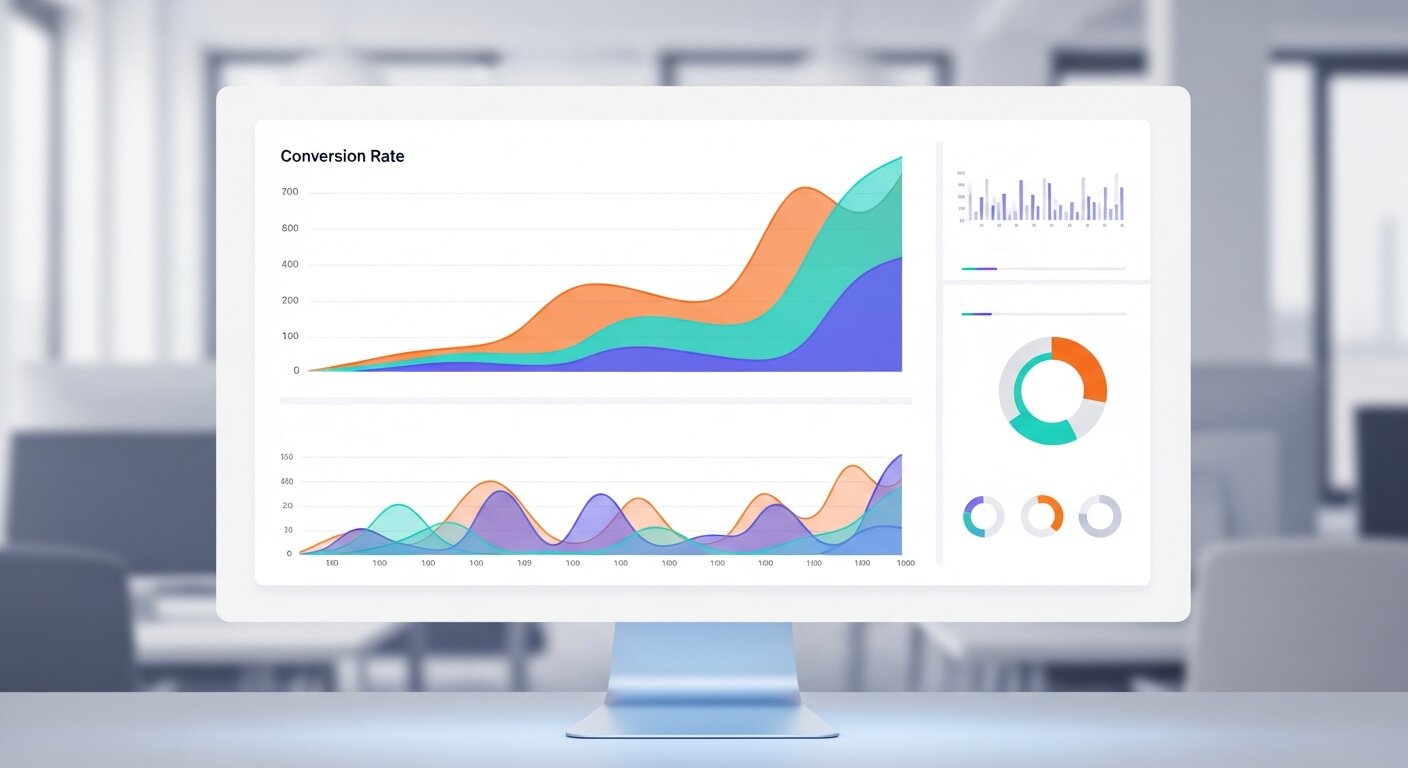
When you focus on the small but impactful details that guide visitors toward action, the results can be substantial. Every element on your website—from the clarity of your messaging to the placement of buttons and the speed of page loading—plays a role in influencing user behavior. By systematically refining these aspects, you create an environment that encourages visitors to engage, subscribe, or make a purchase, ultimately boosting revenue.
Whether it’s crafting a compelling sales pitch, streamlining your site’s navigation, or optimizing forms and checkout processes, each improvement contributes to a higher rate of conversions. Paying attention to user experience, testing different layouts, and responding to real-time analytics can help you identify friction points and opportunities for enhancement.
Consistently applying these strategies allows you to not only convert more visitors into customers but also maximize the value of the traffic you already have. By prioritizing ways to improve website conversion rates, you turn passive browsing into measurable business outcomes, strengthen customer relationships, and build a more profitable, growth-oriented online presence.
Frequently Asked Questions (FAQ)
What does it mean to improve website conversion rates?
Improving website conversion rates means increasing the percentage of visitors who take a desired action on your site, whether that’s making a purchase, signing up for a newsletter, or submitting a form. It’s about getting more value from your existing traffic without increasing ad spend.
Why is website conversion optimization important for my business?
Optimizing conversions allows your business to extract more value from every visitor, increase revenue, and better understand customer behavior. Even small improvements can lead to significant gains over time.
How can I measure improvements in conversion rates?
Key metrics to monitor include the conversion rate itself, bounce rate, average session duration, pages per session, and the completion rate of forms or transactions. Tools like Google Analytics, Hotjar, and Leadfeeder can provide actionable insights.
Can improving website conversion rates reduce my marketing costs?
Absolutely. By converting more visitors without increasing traffic, you effectively reduce the cost per acquisition. This allows you to get more results from existing marketing efforts.
Which elements have the biggest impact on conversion rates?
Critical elements include website speed, mobile-friendliness, calls-to-action, social proof, forms and checkout design, and personalized content. Regular testing and refinement of these areas can yield substantial results.
How often should I test for conversion improvements?
Continuous testing is ideal. Implementing A/B testing, multivariate testing, and behavioral analytics on an ongoing basis ensures that your site evolves with visitor expectations and industry trends.
Does personalization really improve conversion rates?
Yes. Personalization ensures that visitors see relevant content, offers, and messaging. By aligning your website with visitor intent and behavior, you increase the likelihood of engagement and action.
How can social proof help improve website conversion rates?
Social proof, such as customer reviews, testimonials, and case studies, builds trust with your audience. By showcasing positive experiences, visitors feel more confident in taking action, which directly helps improve website conversion rates.
Can website speed impact conversion rates?
Yes, site speed is critical. Slow-loading pages frustrate visitors and increase bounce rates. Optimizing your website’s performance ensures a smooth experience, which is essential to improve website conversion rates effectively.
Do call-to-action (CTA) designs affect conversion rates?
Absolutely. Clear, visually distinct, and benefit-focused CTAs guide users to take action. Optimizing CTA placement, text, and colors is one of the most effective ways to improve website conversion rates.
How does mobile optimization influence conversion rates?
With a majority of traffic coming from mobile devices, a mobile-friendly design is crucial. Ensuring fast load times, responsive layouts, and intuitive navigation on mobile devices can significantly improve website conversion rates.