
Your website might look great and attract plenty of visitors, but that alone doesn’t guarantee success. What truly matters is how many of those visitors take the next step — whether that’s making a purchase, signing up, or getting in touch. That’s the real measure of performance, and it’s where Conversion Rate Optimization (CRO) becomes essential.
Whether you run an e-commerce store trying to increase sales or a SaaS company looking to grow your user base, the right CRO strategy helps you reach your goals faster and more efficiently. Improving conversions isn’t about chasing more traffic — it’s about using your existing traffic more effectively.
By focusing on Conversion Rate Optimization, you can turn ordinary website visits into meaningful results. Small improvements can create big differences, helping your business grow stronger, smarter, and more sustainable over time.
What is Conversion Rate Optimization?
Before diving deeper into strategies and techniques, it’s essential to understand exactly what Conversion Rate Optimization (CRO) means and why it’s so important for online growth. In simple terms, Conversion Rate Optimization is the systematic process of increasing the percentage of website visitors who take a desired action — whether that’s making a purchase, filling out a form, signing up for a newsletter, or starting a free trial.
At its core, CRO focuses on understanding user behavior, identifying obstacles that prevent conversions, and implementing data-driven improvements to remove those barriers. It’s not just about adding flashy buttons or persuasive copy — it’s about refining your website experience so that every element works together to encourage visitors to act.
Common Conversion Goals Include
- Making a purchase: Encouraging customers to complete a transaction in your online store.
- Subscribing to a newsletter: Building an engaged audience for future marketing efforts.
- Filling out a contact form: Capturing leads for follow-ups or consultations.
- Starting a free trial or demo: Allowing users to experience your product or service firsthand.
- Downloading resources: Such as eBooks, guides, or whitepapers that nurture prospects through the sales funnel.
Essentially, Conversion Rate Optimization aims to improve every step of the customer journey — from the moment a visitor lands on your site to the moment they complete an action that aligns with your business goals. By focusing on usability, relevance, and persuasion, CRO helps you create a smoother and more rewarding experience for your audience.
What makes CRO especially powerful is that it’s not just about getting more visitors — it’s about making the most of the traffic you already have. Rather than pouring additional money into ads or SEO campaigns to attract new users, you can generate more value from your existing audience by optimizing your conversion funnel.
When done right, Conversion Rate Optimization transforms your website from a static digital space into a dynamic, results-driven platform that actively supports your business objectives. It blends psychology, design, analytics, and marketing strategy into one continuous process of testing, learning, and improving. The result? A website that doesn’t just attract attention — it converts it into measurable success.
Why Does CRO Matter?
If you’re investing time, energy, and budget to drive visitors to your website, Conversion Rate Optimization (CRO) ensures that none of those efforts go to waste. At its core, CRO helps you make the most of the traffic you already have — turning passive visitors into active customers, subscribers, or leads. Even a small increase in your conversion rate can lead to dramatic growth in your bottom line.
For example, if your website currently converts 2% of visitors and you manage to increase that rate to 3%, that’s not just a 1% gain — it’s a 50% boost in conversions without spending an extra dollar on advertising or promotions. This simple improvement demonstrates why CRO is one of the most cost-effective and impactful digital marketing strategies available today. Instead of chasing more traffic, it helps you focus on what truly matters: making the most of every visitor who lands on your site.
But CRO isn’t just about numbers — it’s about understanding and optimizing human behavior. When you analyze how users interact with your website, where they click, and where they drop off, you gain powerful insights that can shape not only your marketing but your entire business strategy.
The Key Benefits of Conversion Rate Optimization:
Higher ROI (Return on Investment)
CRO helps you get more value from your existing audience. Instead of spending more on paid ads or new traffic sources, you’re improving what’s already working. This efficiency directly translates into higher profitability and long-term growth.
Better Customer Insights
One of the most underrated advantages of CRO is the depth of understanding it provides. By testing different headlines, layouts, and user flows, you uncover valuable data about what motivates your audience to take action — and what holds them back. These insights can inform product development, content strategy, and even customer service improvements.
Enhanced User Experience
A well-optimized website is also a more user-friendly one. Many Conversion Rate Optimization tactics — like simplifying navigation, improving load times, or clarifying messaging — directly improve usability. As a result, visitors find it easier to engage, trust your brand, and ultimately convert. Better user experiences also lead to higher satisfaction, loyalty, and retention rates.
Sustainable Business Growth
Unlike short-term campaigns, CRO builds momentum over time. Each improvement compounds, helping your website evolve based on real data rather than assumptions. This approach leads to consistent performance, stronger brand authority, and greater customer lifetime value.
In essence, Conversion Rate Optimization bridges the gap between attracting attention and driving action. It transforms casual interest into meaningful engagement — helping your business grow smarter, not just faster. When implemented strategically, CRO becomes one of the most powerful tools for maximizing the return on every marketing effort you make.
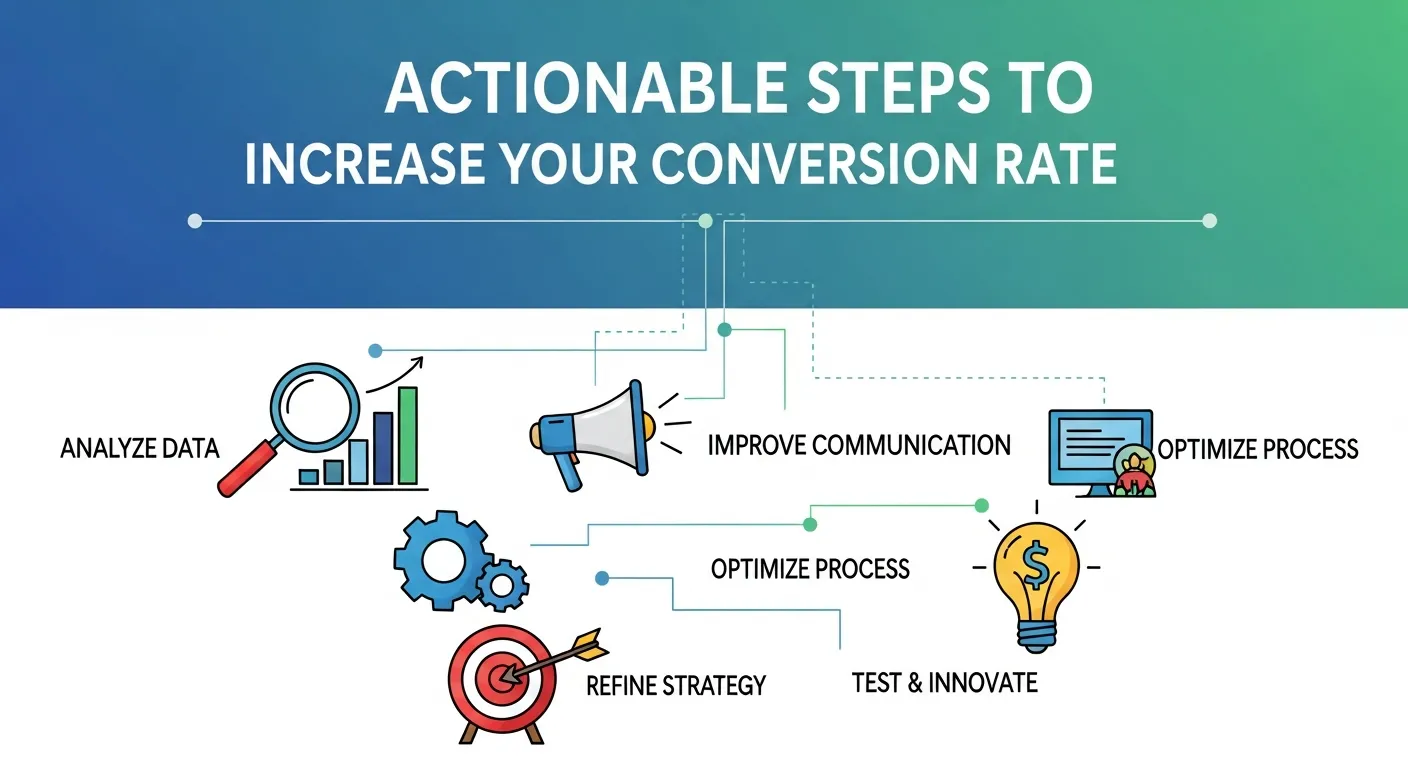
Actionable Steps to Increase Your Conversion Rate
1. Understand Your Audience
To optimize for conversions, you must understand who your audience is and what they’re looking for. Use tools like Google Analytics and heatmap software like Hotjar to gather behavioral insights. Identify:
- How they’re navigating through your website
- Where they’re dropping off
- Which pages generate the most conversions
Customer surveys also offer valuable insights. Ask your audience what challenges they face and why they may or may not have completed their intended action. Use their answers to refine your strategy.
2. Optimize Landing Pages
Landing pages often make or break conversions. Here’s how to ensure they’re performing their best:
- Craft a clear headline: Within seconds, visitors should understand the value you are offering. For example, “Lose Weight Faster with Our 30-Day Meal Plan” is more impactful than “Discover Our Product.”
- Simplify the layout: Don’t overload your page with unnecessary elements. Include white space and a single, clear call-to-action (CTA).
- Use visuals wisely: High-converting pages include visuals that enhance understanding, such as product images or videos.
3. Prioritize Speed and Mobile Friendliness
Pages that load slowly can hurt conversions. A study by Google found that a 1-second delay in mobile page load can lower conversions by up to 20%. Here’s what you can do:
- Compress images to reduce loading time.
- Implement caching tools and CDNs (content delivery networks) to optimize performance.
- Test your website on mobile devices to ensure it’s responsive and loads properly.
4. Craft Engaging Calls-to-Action (CTAs)
Your CTA is your final push to get users to convert, so make it count. Instead of generic phrases like “Click here” or “Submit,” use action-oriented and value-driven text. For example:
- “Start My Free Trial” (emphasizes action and benefit)
- “Get My Discount Code” (creates urgency and value)
The design of your CTA matters too. Choose contrasting colors to make it stand out and position it somewhere prominent on the page.
5. Leverage Social Proof
People are inherently more likely to act when they see others doing the same. Social proof reduces hesitation by showing users that your product, service, or offer has been vetted by others. Examples include:
- Customer Reviews and Testimonials: Place positive reviews near CTAs to build trust.
- Trust Badges: Showcase security seals, awards, or certifications.
- Real-Time Stats: Highlight how many people have purchased your product or signed up recently.
6. A/B Test Everything
What works well for one audience or industry may not work for another. That’s why testing is crucial.
- Test different headlines, button colors, images, and CTAs.
- Example A/B test scenario: Use “Sign Up Today for Free” as one CTA and “Start Your 7-Day Free Trial Now” for another. Compare which one performs best.
- Tools like Optimizely and VWO make it easy to run A/B tests without disrupting your site.
7. Use Retargeting & Follow-Up Strategies
Not every visitor will convert the first time they interact with your brand. Retargeting campaigns are a great way to bring them back. Use platforms like Google Ads or Facebook to show custom ads reminding them of the product or service they viewed.
Additionally, follow up with abandoned cart emails or nurture campaigns personalized to their interests. A gentle nudge can remind them of why they visited your website in the first place.
Using Chatbots to Boost E-Commerce Conversions
Conversion Rate Optimization is not just about optimizing your landing pages — it’s about enhancing every touchpoint where a customer interacts with your brand. One of the most effective ways to achieve this in e-commerce is by using AI-powered chatbots. Chatbots create a personalized, interactive, and frictionless experience that helps turn curious visitors into confident buyers. Instead of waiting for human responses or browsing endlessly for information, customers can get instant answers, product suggestions, and checkout support — all in real time.
By implementing intelligent chatbots, e-commerce brands can optimize user journeys and reduce bounce rates. Chatbots help answer FAQs, manage order tracking, and even offer discounts based on browsing behavior, creating a sense of convenience and urgency. When integrated effectively, they don’t just improve user experience but significantly enhance your Conversion Rate Optimization by bridging the gap between interest and action.
Key Benefits of Chatbots for CRO:
- Instant assistance: Customers receive real-time support, improving satisfaction and reducing drop-offs.
- Personalized shopping experience: Bots can analyze user data and suggest relevant products.
- Automated lead qualification: Chatbots capture leads and filter high-quality prospects for follow-up.
- Lower operational cost: Reduces dependency on live agents without sacrificing quality.
- 24/7 availability: Ensures constant support, leading to increased conversions during off-hours.
Performance Comparison Before and After Chatbot Integration
| Metric | Before Chatbots | After Chatbots | Improvement |
|---|---|---|---|
| Average Conversion Rate | 2.3% | 3.9% | +70% |
| Cart Abandonment Rate | 68% | 49% | -19% |
| Average Response Time | 2–3 hours | Instant | 100% Faster |
| Customer Retention Rate | 45% | 60% | +15% |
For more insight on this topic, check out e-commerce conversion chatbots for higher sales — a detailed guide on how conversational AI can drive measurable results for online stores.
Building Trust Through Personal Reputation Management
Trust plays a central role in Conversion Rate Optimization. Visitors are far more likely to convert when they feel confident about your brand’s credibility. That’s why investing in personal and brand reputation management is essential for long-term growth. Today’s digital users research brands, compare reviews, and look for authenticity before making any purchase decision. A single negative impression can lower your conversions drastically, while a strong online reputation can turn new visitors into lifelong customers.
Establishing authority in your niche through content, customer interaction, and transparency enhances your conversion success. When people see your brand as genuine, consistent, and reliable, they’re not just buying a product — they’re buying into trust. Every touchpoint, from your website’s “About” page to your social media presence, contributes to this perception.
Ways to Build a Strong Online Reputation:
- Showcase authentic testimonials and success stories: Real voices build trust.
- Respond to feedback promptly: Positive or negative, engagement shows accountability.
- Maintain consistent branding: Unified tone and visuals reflect professionalism.
- Be transparent: Clear pricing, policies, and guarantees encourage conversions.
- Invest in personal branding: Position yourself or your leaders as industry experts.
Impact of Reputation on CRO
| Reputation Factor | Conversion Impact | User Trust Growth |
|---|---|---|
| Positive reviews and ratings | Boosts buyer confidence | +22% |
| Expert content and thought leadership | Establishes credibility | +18% |
| Transparent policies | Reduces hesitation | +27% |
| Active social engagement | Increases brand familiarity | +25% |
To explore how personal credibility shapes digital growth, visit Mastering Personal Reputation Management — it offers valuable insights into building a strong first impression that converts.
Leveraging CPC Advertising for Fast Conversion Growth
While organic strategies build lasting results, paid campaigns like CPC (Cost-Per-Click) advertising offer the speed and precision needed for fast Conversion Rate Optimization gains. A well-structured CPC strategy allows businesses to target high-intent audiences, test different messaging, and scale what works — all while tracking every click and conversion in real time. This makes CPC advertising an ideal testing ground for CRO, enabling you to discover which headlines, offers, and visuals truly resonate.
With platforms like Google Ads and Meta Ads, you can refine your campaigns using audience insights, demographic filters, and behavioral targeting. The data collected from CPC campaigns can also be repurposed to improve your landing pages and content strategy. Moreover, running retargeting ads for users who previously visited your site but didn’t convert can lead to a significant boost in ROI.
CPC Optimization Strategies for Higher Conversions:
- Craft compelling CTAs: Strong calls-to-action improve click-through and conversion rates.
- Run A/B tests on ad copy and visuals: Identify what triggers your audience’s response.
- Use retargeting: Bring back users who didn’t convert the first time.
- Leverage lookalike audiences: Expand reach to similar high-value prospects.
- Optimize landing pages: Match ad intent with page messaging for a smoother journey.
CPC Campaign Metrics for Measuring CRO Success
| Metric | Definition | Why It’s Important | Ideal Range |
|---|---|---|---|
| CTR (Click-Through Rate) | The percentage of people clicking your ad | Measures relevance of ad copy | 3–5% |
| Conversion Rate | % of users completing desired action | Tracks ad-to-sale efficiency | 2–6% |
| CPA (Cost Per Acquisition) | Cost to gain one customer | Determines ad profitability | As low as possible |
| ROAS (Return on Ad Spend) | Revenue earned per $ spent | Measures campaign success | 3:1 or higher |
To learn how to scale your digital advertising effectively, explore CPC advertising for e-commerce — a proven method to boost online sales rapidly through targeted campaigns.
The Relationship Between CRO and SEO
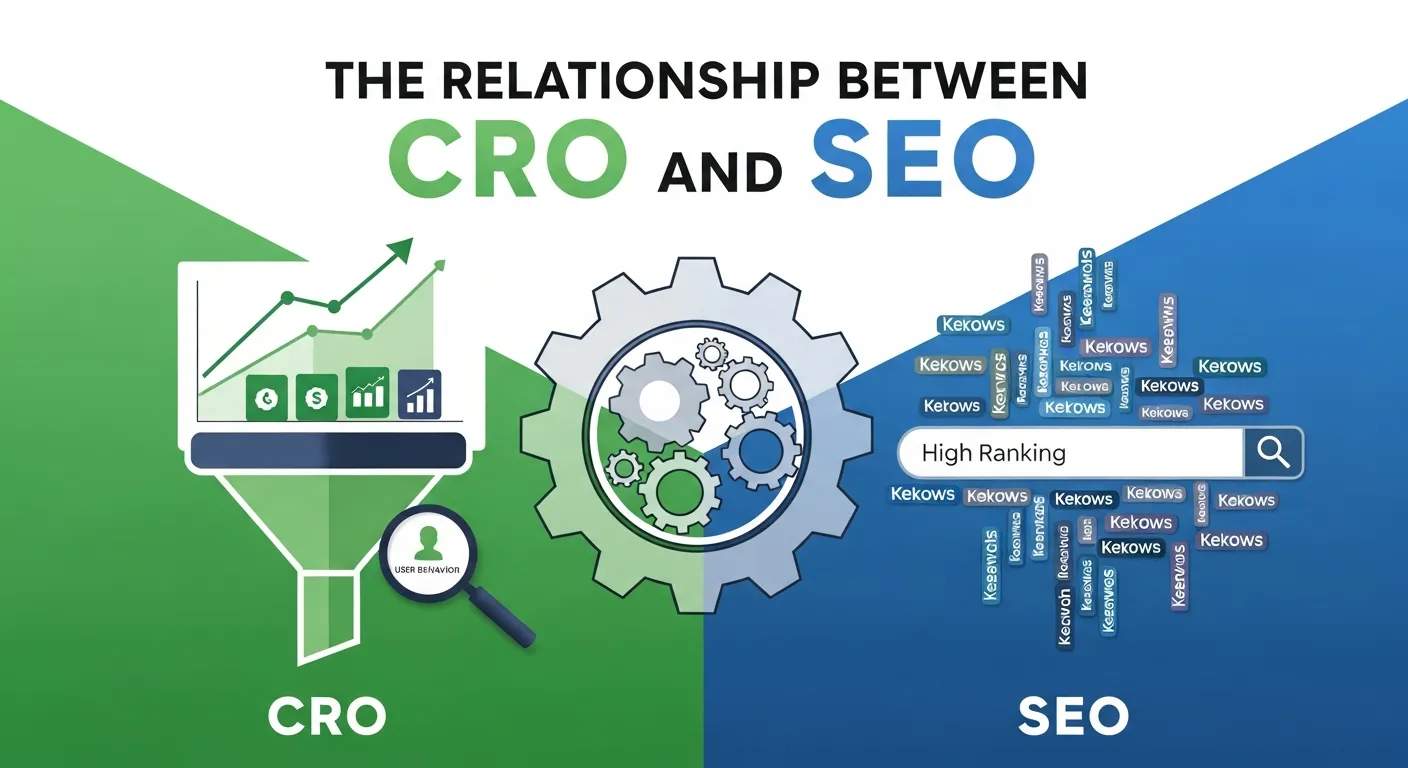
Conversion Rate Optimization (CRO) and Search Engine Optimization (SEO) are often treated as separate strategies — one focuses on attracting visitors, while the other focuses on converting them. However, in reality, they are deeply interconnected and mutually reinforcing. A well-optimized website not only ranks higher in search results but also delivers a user experience that encourages visitors to take action.
When you apply CRO techniques to your website — such as improving navigation, simplifying forms, speeding up page load times, or enhancing your content readability — you’re also improving your SEO performance. Google’s algorithms reward websites that deliver strong user engagement metrics like longer session duration, lower bounce rates, and higher conversion activity. These behavioral signals indicate to search engines that your content is relevant, valuable, and user-friendly.
How Conversion Rate Optimization Strengthens SEO:
- Improved user experience: CRO enhancements like intuitive layouts and faster page speeds reduce bounce rates and increase dwell time, both of which signal quality to search engines.
- Higher engagement metrics: Optimized CTAs, engaging headlines, and relevant content encourage users to explore more pages, boosting site interaction.
- Better content alignment: CRO testing helps identify which messages and keywords resonate with users — allowing you to refine content for both SEO and conversions.
- Reduced bounce and exit rates: When users find what they need quickly, they’re more likely to stay, which improves overall SEO health.
- Enhanced credibility and trust: A website that converts well typically reflects authority, clarity, and professionalism — qualities that naturally improve your brand’s SEO visibility.
Comparing CRO and SEO Impacts on Business Growth
| Element | CRO Focus | SEO Focus | Combined Result |
|---|---|---|---|
| Goal | Increase conversions from existing traffic | Attract more qualified traffic | Sustainable growth with higher ROI |
| Key Metrics | Conversion rate, bounce rate, engagement | Organic traffic, ranking positions, CTR | Balanced visibility and profitability |
| Tools | A/B testing, heatmaps, analytics | Keyword research, backlinks, and content optimization | Unified data-driven strategy |
| Long-Term Impact | Higher customer value and retention | Increased brand awareness | Continuous performance improvement |
In essence, Conversion Rate Optimization transforms your SEO success into measurable business outcomes. Attracting visitors is only half the battle — converting them completes the cycle. By aligning both strategies, you not only drive more qualified traffic to your site but also ensure that traffic leads to real, revenue-generating results.
Tools to Help You Start CRO
Starting your Conversion Rate Optimization (CRO) journey doesn’t have to be complicated — especially with the right tools to guide you. The best CRO tools help you understand how users interact with your website, identify points of friction, and experiment with design or content improvements that drive measurable results. From data analytics to heatmaps and A/B testing platforms, these tools empower you to make smarter, data-driven decisions that lead to higher conversions and better user experiences.
1. Google Analytics (Free)
One of the most essential tools for Conversion Rate Optimization is Google Analytics. It allows you to monitor visitor behavior, track traffic sources, set up conversion goals, and analyze key metrics like bounce rate and session duration. By studying which pages attract engagement and which ones lose visitors, you can identify optimization opportunities that directly impact your conversion funnel.
2. Hotjar or Crazy Egg (Paid/Free Tiers Available)
Understanding why visitors behave the way they do is just as important as knowing what they do. Tools like Hotjar and Crazy Egg give you visual insights through heatmaps, scroll maps, and session recordings. These tools show where users click, how far they scroll, and which areas they ignore. This behavioral data is invaluable for improving page layouts, CTA placements, and overall usability — all crucial aspects of effective Conversion Rate Optimization.
3. Unbounce or Instapage (Paid)
Landing pages are often the first point of conversion, and their design can make or break your CRO success. Platforms like Unbounce and Instapage let you build, customize, and test high-converting landing pages without needing advanced coding skills. Their drag-and-drop editors make experimentation easy, and A/B testing capabilities allow you to identify which design or message converts better. These tools are perfect for businesses looking to increase sign-ups, sales, or downloads with data-backed precision.
4. Optimizely or VWO (Paid)
When it comes to advanced experimentation, Optimizely and VWO (Visual Website Optimizer) are among the most powerful tools available. They enable you to run A/B tests, multivariate tests, and split URL tests to determine which elements — such as headlines, images, or CTAs — perform best. By testing variations and analyzing outcomes, you can continually refine your website for maximum conversion impact. These platforms also integrate well with analytics tools, giving you a complete picture of your CRO performance.
Incorporating these tools into your Conversion Rate Optimization strategy helps you move from assumptions to evidence-based improvements. They don’t just show you what’s happening — they help you understand why it’s happening, giving you the clarity to enhance your user experience and drive sustainable growth over time.
Take the First Step Towards Better Conversions
Conversion Rate Optimization (CRO) isn’t a one-time project — it’s an ongoing commitment to understanding your audience and continuously improving their experience. A successful CRO is built on curiosity, testing, and learning. Every click, scroll, and form submission on your website holds valuable data that can help you make smarter business decisions. By paying attention to user behavior and acting on real insights, you can transform your website into a high-performing conversion engine.
CRO is ultimately about progress, not perfection. Small, consistent improvements — whether it’s refining your call-to-action, simplifying navigation, or redesigning a landing page — can lead to significant growth over time. What may seem like a minor tweak today could result in measurable increases in leads, sales, or customer retention tomorrow. The goal is to align your website’s design, content, and functionality with the needs and expectations of your visitors.
Every business, no matter its size or industry, can benefit from a well-planned Conversion Rate Optimization strategy. The key is to start small, measure everything, and build from what works. Use analytics to track your performance, run A/B tests to validate assumptions, and continually adapt based on results. The process is iterative — test, learn, and optimize — but it pays off through sustained growth, stronger engagement, and higher ROI.
If you’ve read through this guide and feel ready to take action, now is the perfect time to begin. Ask yourself: Is my business truly moving in the right direction? Start by identifying one or two areas of improvement and conducting small-scale tests. You might be surprised at how a few thoughtful changes can create a meaningful impact.
Remember — Conversion Rate Optimization isn’t just about boosting numbers. It’s about building trust, creating better user experiences, and ensuring every visitor feels guided toward the right action. Take that first step today, and you’ll be setting your business up for long-term success powered by continuous improvement and data-driven decisions.
Frequently Asked Questions About Conversion Rate Optimization (CRO)
1. What is Conversion Rate Optimization (CRO)?
Conversion Rate Optimization (CRO) is the process of increasing the percentage of website visitors who take a desired action, such as making a purchase, filling out a form, or subscribing to a newsletter. CRO focuses on understanding user behavior, reducing friction in the conversion funnel, and testing improvements to maximize results.
2. Why is CRO important for my business?
Even if your website attracts significant traffic, low conversion rates mean potential leads and revenue are lost. CRO ensures that the visitors you already have are more likely to take action, increasing ROI without additional marketing spend. It also provides valuable insights into user behavior that can guide broader business strategies.
3. How can micro-conversions improve CRO?
Micro-conversions are small, incremental actions that indicate user engagement, like newsletter sign-ups, clicks on product pages, or video plays. Tracking these can highlight areas of friction or opportunity in your funnel. For more insights, see boost engagement with micro-conversions.
4. How do I measure CRO success?
CRO success is measured using conversion rates, but also other metrics like bounce rates, session duration, click-through rates, and average order value. By combining these metrics, you get a complete picture of how well your website is turning visitors into customers.
5. What are the most effective CRO strategies?
Some of the most effective strategies include A/B testing, improving page load speed, simplifying navigation, enhancing CTA placement, and creating persuasive landing pages. These methods ensure visitors can complete desired actions smoothly. Explore more in guide to CRO marketing strategies.
6. How important are landing pages for CRO?
Landing pages are critical because they are often the first step in the conversion funnel. A well-optimized landing page focuses on a single goal, with clear messaging, compelling CTAs, and a user-friendly design. Learn practical tips on how to create landing pages.
7. Should I focus on CRO before driving more traffic?
Yes. While traffic generation is important, CRO ensures you maximize the value of the visitors you already have. Optimizing your current audience can produce faster, more cost-effective results than acquiring new visitors alone.
8. What role does user experience (UX) play in CRO?
User experience is at the heart of Conversion Rate Optimization. A confusing layout, slow-loading pages, or unclear navigation can prevent users from converting. CRO focuses on removing these friction points, creating a smoother journey that guides visitors toward desired actions.
9. How often should I update my CRO strategy?
CRO is a continuous process. User behavior, technology, and market trends change over time, so it’s important to regularly analyze performance, run new tests, and implement improvements. Regular updates ensure your website remains optimized and competitive.
10. Can small businesses benefit from CRO?
Absolutely. Even small businesses with limited traffic can see significant gains from Conversion Rate Optimization. By improving website usability, testing changes, and tracking user behavior, small businesses can increase conversions without a large marketing budget.