

Your website gets thousands of visitors each month, but only a handful convert into customers. Sound familiar? You’re not alone. Most businesses struggle with low conversion rates, leaving money on the table every single day.
Conversion rate optimization (CRO) is the systematic process of increasing the percentage of website visitors who complete a desired action—whether that’s making a purchase, signing up for a newsletter, or downloading a resource. The beauty of CRO lies in its efficiency: instead of spending more money to drive traffic, you maximize the value of visitors already coming to your site.
The average conversion rate across industries hovers around 2-3%, but top-performing companies achieve rates of 10% or higher. The difference? They’ve mastered the art and science of conversion optimization.
This guide explores twelve proven techniques that can transform your website from a digital brochure into a conversion machine. Each strategy has been tested across thousands of websites and consistently delivers measurable results.
Understanding Your Conversion Funnel
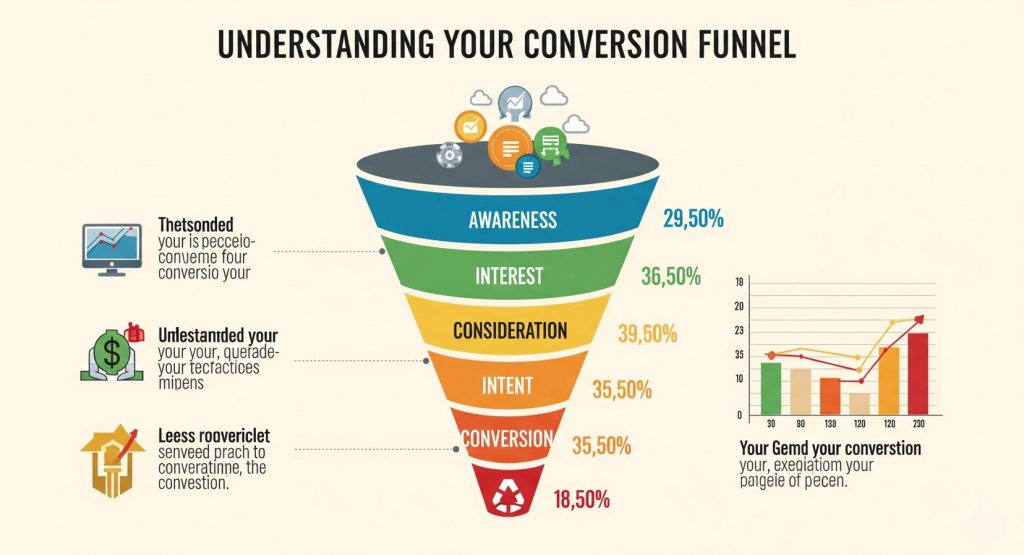
Before diving into specific techniques, you need to understand how visitors move through your conversion funnel. Most users don’t convert on their first visit—they need multiple touchpoints and trust signals before taking action.
Your conversion funnel typically includes awareness, interest, consideration, and conversion stages. Visitors might discover your brand through search or social media, browse your product pages, read reviews, and eventually make a purchase or inquiry. Each stage presents optimization opportunities.
Track user behavior using tools like Google Analytics, Hotjar, or Crazy Egg. Identify where visitors drop off most frequently. These friction points become your optimization priorities.
Technique 1: Optimize Your Value Proposition
Your value proposition is the single most important element on your homepage. It answers the fundamental question: “Why should I choose you over your competitors?”
A compelling value proposition is clear, specific, and benefit-focused. Instead of saying “We provide excellent customer service,” try “Get answers to your questions within 2 minutes, guaranteed.” The second version is measurable and creates a specific expectation.
Place your value proposition prominently above the fold. Use simple language that your target audience understands. Test different versions to see which resonates most with your visitors.
Technique 2: Simplify Your Forms
Long, complicated forms are conversion killers. Every additional field you require reduces your completion rate. Research shows that reducing form fields from 11 to 4 can increase conversions by up to 120%.
Only ask for information you absolutely need at this stage. You can always gather additional details later in the customer journey. Consider using progressive profiling, where you collect more information over time rather than all at once.
Make your forms mobile-friendly with large input fields and clear labels. Use smart defaults and auto-fill features when possible. Group related fields together and use visual indicators to show progress on multi-step forms.
Technique 3: Leverage Social Proof
People follow the actions of others, especially when uncertain about a decision. Social proof reduces perceived risk and builds trust with potential customers.
Customer testimonials work best when they’re specific and include the customer’s name, photo, and company. Generic testimonials like “Great service!” carry little weight. Instead, feature testimonials that address specific objections or highlight particular benefits.
Display customer logos, review counts, and trust badges prominently. Show real-time activity like “127 people viewed this product today” or “Sarah from New York just made a purchase.” These elements create urgency and demonstrate popularity.
Technique 4: Create Urgency and Scarcity
Urgency motivates immediate action by creating a fear of missing out. However, artificial urgency can backfire if visitors don’t believe it’s genuine.
Limited-time offers work well when they’re authentic. “Sale ends Friday” is more believable than a countdown timer that resets every day. Stock scarcity (“Only 3 left in stock”) creates natural urgency without seeming manipulative.
Flash sales, early-bird pricing, and seasonal promotions tap into natural urgency. Communicate deadlines clearly and stick to them to maintain credibility with your audience.

Technique 5: Improve Page Loading Speed
Website speed directly impacts conversion rates. A one-second delay in page load time can reduce conversions by 7%. Mobile users are particularly impatient—53% abandon sites that take longer than 3 seconds to load.
Optimize images by compressing them and using modern formats like WebP. Minimize HTTP requests by combining CSS and JavaScript files. Use a content delivery network (CDN) to serve content from servers closer to your users.
Test your site speed using Google PageSpeed Insights or GTmetrix. Focus on the metrics that matter most: First Contentful Paint and Largest Contentful Paint affect user perception of loading speed.
Technique 6: Optimize Your Call-to-Action Buttons
Your call-to-action (CTA) buttons guide visitors toward conversion. Small changes to button text, color, or placement can significantly impact results.
Use action-oriented language that tells users exactly what happens when they click. “Get My Free Quote” is more compelling than “Submit.” Create urgency with phrases like “Start Now” or “Claim Your Spot.”
Make buttons visually prominent with contrasting colors that stand out from your page design. Size matters too—buttons should be large enough to tap easily on mobile devices but not so large they overwhelm the page.
Technique 7: Implement Exit-Intent Technology
Exit-intent popups detect when visitors are about to leave your site and present a last-chance offer. When implemented thoughtfully, they can recover 10-15% of abandoning visitors.
Offer something valuable in exchange for contact information—a discount, free resource, or exclusive content. Timing is crucial: show the popup only when visitors demonstrate clear exit behavior, not immediately upon arrival.
Keep exit-intent offers simple and focused. Use compelling headlines like “Wait! Don’t Miss Out on 20% Off” and make it easy to claim the offer. Always provide a clear way to dismiss the popup for users who aren’t interested.
Technique 8: Personalize User Experiences
Personalization makes visitors feel understood and valued. It can increase conversion rates by up to 19% when done effectively.
Start with basic personalization like showing different content to new versus returning visitors. Display recently viewed products or recommend items based on browsing behavior. Use geographic data to show local information, pricing, or shipping options.
Dynamic content based on traffic sources can be highly effective. Show different messaging to visitors from Google Ads versus organic search versus social media. Each source represents different user intent levels.
Technique 9: Optimize for Mobile Devices
Mobile traffic accounts for over half of all website visits, yet many sites still prioritize desktop experiences. Mobile optimization isn’t just about responsive design—it’s about creating experiences tailored for smaller screens and touch interactions.
Simplify navigation for mobile users with clear, tappable menu items. Use larger fonts and buttons that are easy to tap with thumbs. Minimize the number of steps required to complete actions on mobile devices.
Test your mobile experience regularly on actual devices, not just browser emulators. Pay attention to form completion, checkout processes, and page loading on slower connections.
Technique 10: Use Live Chat and Chatbots
Live chat provides immediate assistance when visitors have questions or concerns. It’s particularly effective for high-consideration purchases where customers need reassurance before converting.
Proactive chat invitations work better than passive chat widgets. Trigger messages based on user behavior—offer help when someone spends significant time on a pricing page or starts to exit during checkout.
Chatbots can handle common questions 24/7 and qualify leads before routing them to human agents. Train bots to recognize when complex issues require human intervention. The goal is to provide helpful, not frustrating, automated assistance.
Technique 11: Reduce Checkout Friction
Shopping cart abandonment rates average around 70% across e-commerce sites. Most abandonment happens during checkout due to unexpected costs, complicated processes, or security concerns.
Offer guest checkout options—forcing account creation adds unnecessary friction. Display shipping costs and taxes upfront rather than surprising customers at the final step. Provide multiple payment options including digital wallets like PayPal and Apple Pay.
Use trust signals throughout checkout including security badges, money-back guarantees, and clear return policies. Show progress indicators so customers know how many steps remain in the process.
Technique 12: A/B Testing and Continuous Improvement
Conversion rate optimization is an ongoing process, not a one-time fix. A/B testing allows you to make data-driven decisions about what works for your specific audience.
Test one element at a time to isolate what drives results. Common testing opportunities include headlines, button colors, form fields, pricing displays, and product descriptions. Run tests long enough to achieve statistical significance—usually at least two weeks for most sites.
Document your testing results and build a knowledge base of what works. Sometimes losing tests provide as much insight as winning ones. Small improvements compound over time to create significant conversion rate increases.
Measuring and Tracking Success
Successful conversion rate optimization requires consistent measurement and analysis. Set up proper tracking for all conversion goals, not just final purchases. Track micro-conversions like email signups, content downloads, and video views that lead to eventual sales.
Use Google Analytics or similar tools to monitor conversion funnels and identify drop-off points. Heat mapping tools show how visitors interact with your pages and where they focus their attention.
Calculate the lifetime value impact of conversion improvements, not just immediate revenue increases. A 1% conversion rate improvement might seem small, but it compounds significantly over time.

Turning Visitors Into Customers
Conversion rate optimization combines psychology, technology, and data analysis to create experiences that guide visitors toward desired actions. The twelve techniques outlined here provide a solid foundation for improving your website’s performance.
Start with quick wins like optimizing your value proposition and simplifying forms before moving to more complex personalization and testing strategies. Focus on reducing friction and building trust at every step of the user journey.
Remember that optimization is an iterative process. What works for other businesses might not work for yours, so test everything and let data guide your decisions. With consistent effort and the right approach, you can transform your website into a conversion-generating asset that grows your business month after month.